
.webp)
.png)
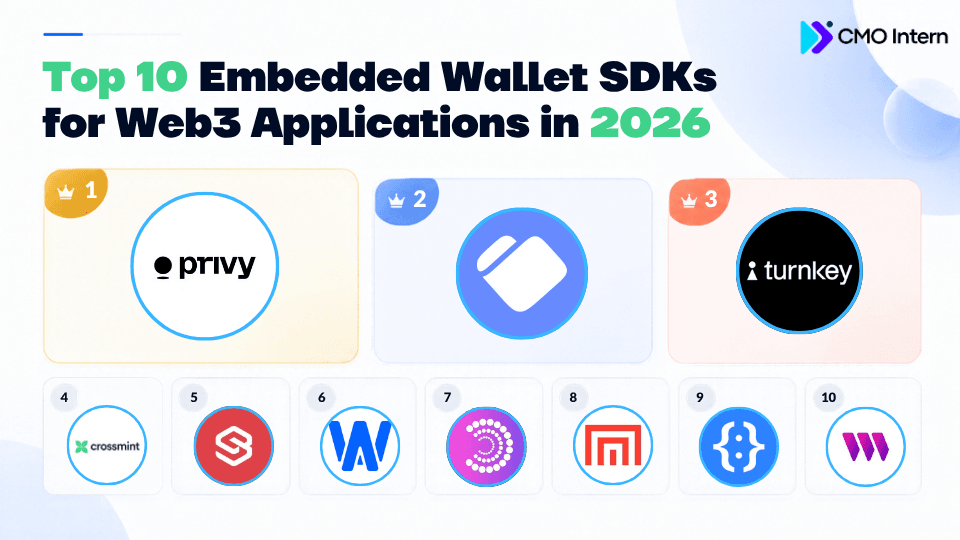
To simplify user onboarding and interaction with blockchain features, developers often turn to embedded wallet SDKs. This guide explores the Top 10 embedded wallet SDKs for Web3 applications, which allow developers to integrate wallet creation, authentication, signing, and transaction flows directly into an application without requiring users to install a browser extension or manage seed phrases.
For users, the experience can look much closer to a traditional Web2 product: sign in with email, a social account, or a passkey, and interact with blockchain features without leaving the application. For developers, the wallet becomes part of the application infrastructure rather than a separate product that users must install and configure.
The market has also expanded beyond simple wallet creation. Modern embedded wallet platforms can include account abstraction, smart accounts, gas sponsorship, multi-chain support, recovery mechanisms, transaction policies, and developer APIs. Recent industry comparisons highlight these capabilities as key areas developers evaluate when selecting a provider.
This guide compares 10 notable embedded wallet SDKs for Web3 applications in 2026, focusing on their positioning, core capabilities, developer use cases, and the types of products they may fit.
Note: This is a market overview rather than a universal ranking. Features, supported networks, pricing, and SDK capabilities can change, so development teams should verify current documentation before implementation.
What Is an Embedded Wallet SDK?
An embedded wallet SDK is a software development kit that allows a Web3 application to create and manage blockchain wallets within its own user experience.
Instead of sending users to an external wallet application, developers can integrate wallet functionality directly into a website, mobile application, game, or other digital product.
A typical embedded wallet flow can look like this:
User signs up → Authentication → Wallet creation → Asset management → Transaction signing
The user may never need to interact directly with a seed phrase or browser extension.
Embedded wallets are therefore particularly relevant for applications where blockchain functionality is important but the target audience may not already be familiar with the web3 wallet list options available today.
Common authentication options include:
- Phone number
- Google or other social accounts
- Passkeys
- OAuth
- Existing external wallets
- Custom authentication systems
- Guest or pre-generated accounts
Modern platforms can also connect embedded wallets with smart accounts and account-abstraction infrastructure, enabling capabilities such as sponsored transactions, batching, session permissions, and programmable transaction flows.
Top 10 Embedded Wallet SDKs for Web3 Applications
1. Privy
Privy combines authentication and wallet infrastructure, making it particularly relevant for applications that want to introduce users to decentralized applications without requiring them to already own a wallet.

Its approach centers around progressive onboarding. A user can begin with familiar authentication methods and later connect an external wallet if they want to use one. Privy also supports flows where an application can connect an existing external wallet or create an embedded wallet for users who do not have one.
Key capabilities
- Embedded wallet creation
- Email, SMS, social and passkey authentication
- External wallet connections
- Authentication infrastructure
- Wallet APIs
- Server-side wallet delegation
- Support for Ethereum and Solana wallet experiences
- Integration with broader Web3 application flows
One useful aspect of Privy's approach is the ability to combine Web2-style authentication with Web3 wallet functionality. Developers can also integrate their existing authentication systems rather than necessarily replacing them with a new identity layer.
Best suited for: Consumer Web3 applications, marketplaces, fintech products, social applications, and products prioritizing a familiar onboarding experience.
2. Dynamic
Dynamic focuses on wallet authentication and wallet management for applications that need to support both embedded and external wallets.
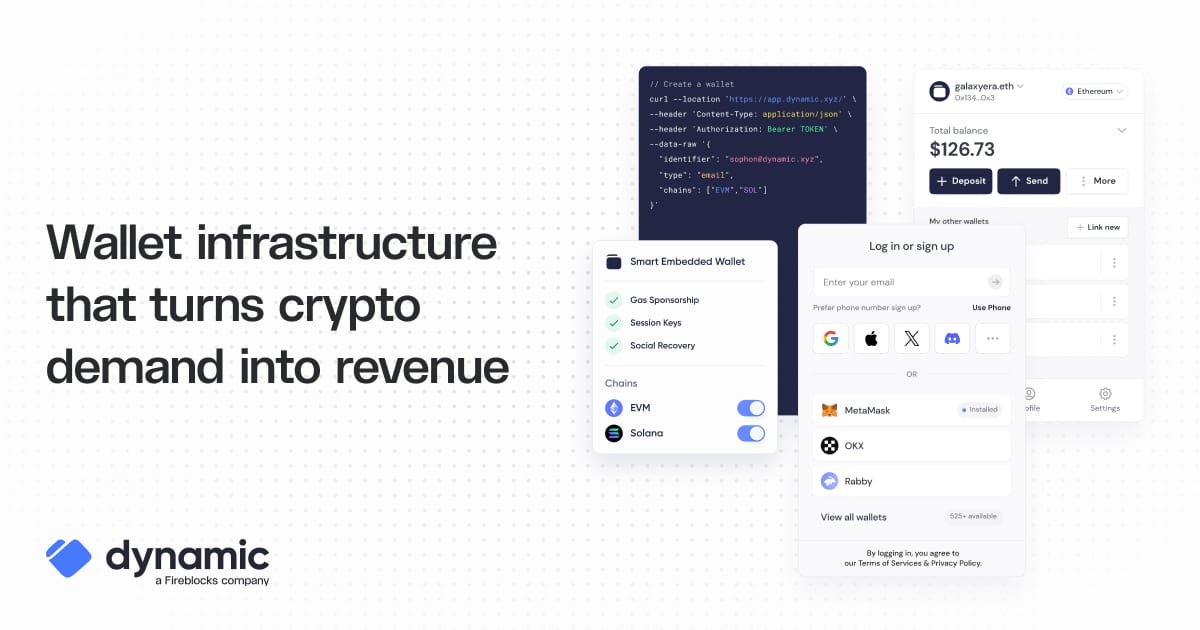
Its embedded wallet infrastructure allows wallets to be created during signup, including when users authenticate through social, email, or phone-based methods. Dynamic also supports both EVM and SVM-compatible networks.
Key capabilities
- Embedded wallet creation
- Email, phone and social authentication
- External wallet connectivity
- EVM and Solana ecosystem support
- Smart wallet functionality
- Wallet export
- React and React Native integrations
- Custom wallet creation flows
A notable part of Dynamic's positioning is flexibility between embedded and externally connected wallets. This can be useful for applications serving both crypto-native users and newcomers.
Dynamic's documentation also describes embedded wallets as non-custodial and provides mechanisms for users to export their wallet keys, which can be important when evaluating portability and long-term vendor dependency.
Best suited for: Applications that need flexible authentication, embedded wallets, external wallet connectivity, and multi-wallet user experiences.
3. Turnkey
Turnkey takes a more infrastructure-oriented approach to embedded wallets. Rather than focusing only on the front-end wallet experience, it provides key management, authentication, signing, policies, and developer infrastructure.
Its Embedded Wallet Kit provides pre-built components for creating embedded wallet experiences, while its lower-level SDKs allow developers to build more customized implementations.
Key capabilities
- Embedded wallet infrastructure
- Secure enclave-based key generation
- Passkey authentication
- Email and social login
- Wallet import and export
- Pre-generated wallets
- Policy controls
- Developer SDKs
- Chain-agnostic signing infrastructure
- White-label wallet infrastructure
Turnkey can be especially interesting for teams that want more control over the wallet stack rather than relying entirely on a preconfigured wallet experience.
Its infrastructure also supports customized policies, including spending controls and co-signing requirements, making it relevant beyond consumer-facing wallets.
Best suited for: Fintech applications, developer platforms, trading products, automated signing systems, and teams that want deeper control over wallet infrastructure.
4. Crossmint
Crossmint has developed beyond its original NFT-focused positioning into broader wallet and blockchain infrastructure.
Its wallet stack allows developers to create programmable wallets for users and integrate authentication, wallet creation, and financial functionality through SDKs and APIs. Crossmint's current wallet infrastructure supports client- and server-side integrations and provides SDKs for multiple development environments.
Key capabilities
- Embedded wallets
- Smart wallet architecture
- Email and passkey-based authentication
- React and React Native SDKs
- Server-side wallet management
- EVM and Solana support
- Onramp functionality
- Payment infrastructure
- Wallet policies
- Recovery mechanisms
Crossmint's smart-wallet approach can be useful for applications that want wallet functionality closely connected to payments, digital assets, or financial workflows.
The company also emphasizes programmable policies such as spending limits, role-based permissions, multi-signature controls, and delegated approvals.
Best suited for: Digital commerce, NFT platforms, consumer applications, stablecoin products, payments, and applications combining wallets with financial infrastructure.
5. Sequence
Sequence provides wallet and web3 brand marketing infrastructure with a particularly strong presence in gaming and consumer applications.

Its SDK ecosystem includes wallet connectivity, embedded wallets, checkout, and application-specific Web3 functionality. Sequence supports social authentication, email and passkeys while also providing wallet experiences across web and game development environments.
Key capabilities
- Embedded wallets
- Social login
- Email and passkey authentication
- Smart sessions
- Web SDKs
- React Native support
- Unity integration
- Unreal integration
- Checkout functionality
- Gas-sponsored experiences
- Cross-application wallet experiences
Sequence's ecosystem-wallet model is designed around giving users a wallet that can work across multiple applications rather than creating an isolated wallet for every product.
This makes the platform particularly relevant for web3 gaming labs ecosystems where users may move between several titles or experiences while maintaining their digital assets and identity.
Best suited for: Web3 games, gaming ecosystems, marketplaces, consumer applications, and products requiring cross-application wallet experiences.
6. Web3Auth
Web3Auth provides wallet infrastructure designed to simplify Web3 onboarding by allowing users to access blockchain wallets through familiar authentication methods. Its approach focuses on abstracting much of the traditional wallet setup process while retaining compatibility with existing blockchain applications and wallets.
For developers, Web3Auth provides SDKs and APIs that can be integrated into applications to create wallet experiences based on social login, email, OAuth, and other authentication methods. This makes it relevant for applications that want to reduce the friction associated with seed phrases and external wallet extensions.
Key capabilities
- Embedded wallets
- Social login
- Email and OAuth authentication
- MPC-based key management
- Wallet recovery
- External wallet interoperability
- Multi-chain development
- Web and mobile SDKs
- Custom authentication flows
- Support for blockchain application onboarding
One of Web3Auth's notable characteristics is its focus on MPC-based wallet infrastructure. Instead of requiring users to manage a conventional single private key from the beginning, the infrastructure can distribute key management across multiple components. This can help applications design authentication and recovery experiences that feel more familiar to Web2 users.
Best suited for: Consumer Web3 applications, gaming platforms, DeFi products, marketplaces, and applications looking for social-login-based wallet onboarding.
7. Particle Network
Particle Network focuses heavily on wallet abstraction, account abstraction, and multi-chain application infrastructure.
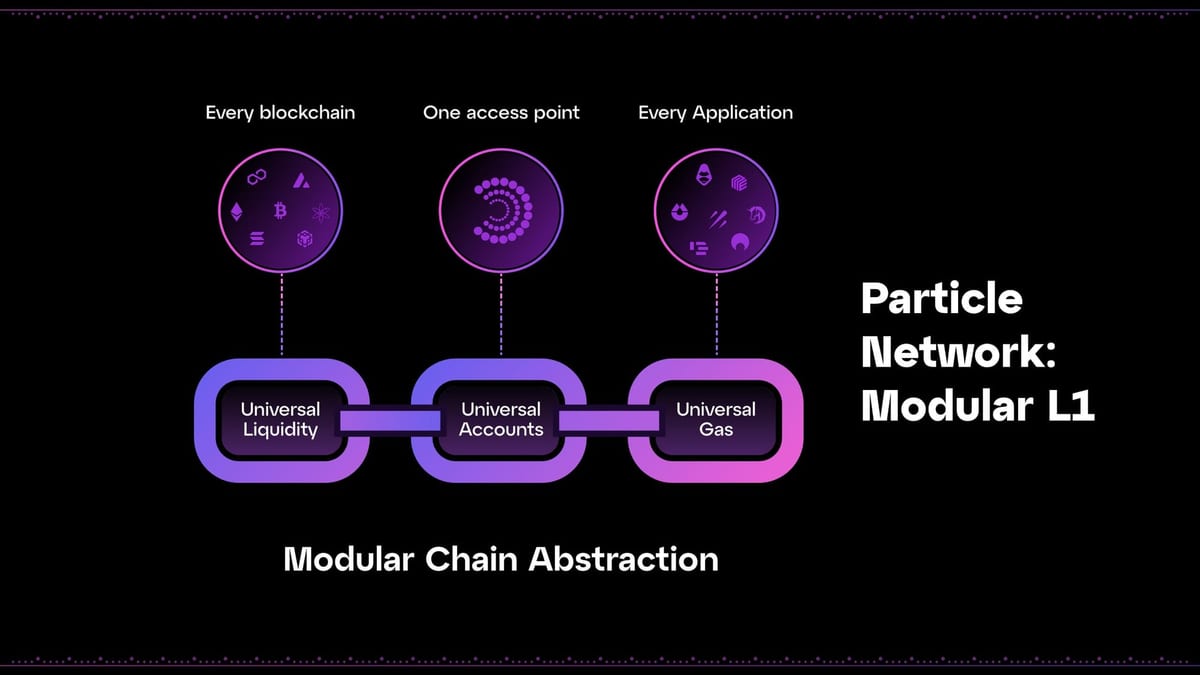
Its Smart Wallet-as-a-Service architecture combines embedded wallet onboarding with account-abstraction functionality. Particle describes its wallet infrastructure as using MPC-TSS alongside social authentication and ERC-4337-based account abstraction.
Key capabilities
- Embedded wallets
- Social login
- MPC-TSS wallet infrastructure
- Smart Wallet-as-a-Service
- ERC-4337 account abstraction
- Gasless transactions
- Transaction batching
- Programmable accounts
- Multi-chain infrastructure
- Developer SDKs
One of Particle's notable characteristics is its modular approach to account abstraction. Developers can work with different components such as smart-account implementations, bundlers, and paymasters rather than treating the entire wallet stack as a single fixed component.
Best suited for: Multi-chain Web3 applications, DeFi products, gaming, consumer dApps, and teams experimenting with account abstraction.
8. Openfort
Openfort focuses on embedded wallets combined with account abstraction and gaming-oriented infrastructure.

Its embedded wallet stack supports web, mobile, and game-development environments, including React, React Native, Swift, JavaScript, and Unity.
Key capabilities
- Embedded wallets
- Smart accounts
- Account abstraction
- Passkeys
- Social authentication
- Gas sponsorship
- Session keys
- EVM and Solana support
- Gaming SDKs
- Cross-application wallet infrastructure
Openfort places particular emphasis on combining the wallet layer with smart-account functionality. This can allow developers to design experiences where users do not have to manually manage gas or approve every individual operation in the traditional way.
The platform also promotes an open-source key-management component, which is relevant for teams evaluating portability and infrastructure control.
Best suited for: Web3 games, consumer applications, account-abstraction projects, and products requiring gas-sponsored or session-based transactions.
9. ZeroDev
ZeroDev provides smart account infrastructure for Web3 applications, with its platform covering embedded wallets, account abstraction, gasless transactions, permissions, recovery, and transaction automation.
Rather than treating the wallet as a standalone authentication component, ZeroDev focuses on the programmable account layer behind the application. This allows developers to create wallet experiences where blockchain interactions can be simplified through smart accounts and automated transaction logic.
Key capabilities
- Embedded wallets
- Smart accounts
- Account abstraction
- Gasless transactions
- Transaction sponsorship
- Passkey-based onboarding
- Wallet recovery
- Permission management
- Session-based transaction flows
- Transaction automation
- Developer SDKs
A key part of ZeroDev's positioning is its focus on account abstraction infrastructure. Developers can use smart accounts to build experiences where users do not necessarily need to manage gas tokens or manually approve every transaction through a conventional externally owned account.
Best suited for: Web3 games, DeFi applications, fintech products, web3 marketing roles, and consumer applications that need programmable smart-wallet experiences.
10. thirdweb
thirdweb approaches embedded wallets as part of a broader Web3 development stack.
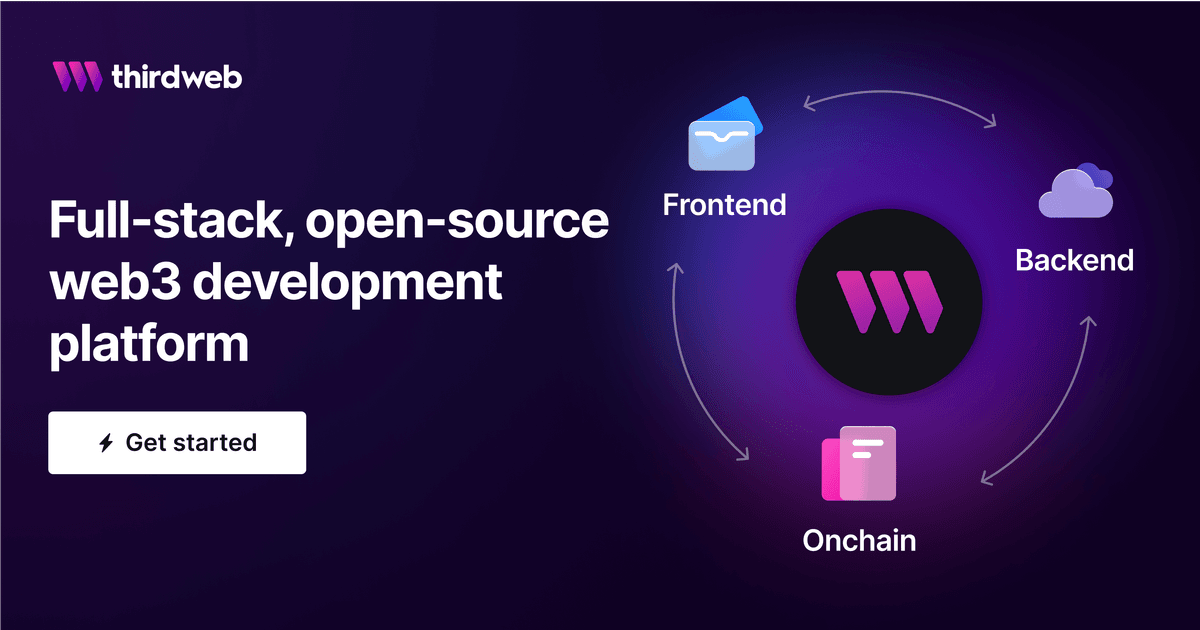
Its current TypeScript SDK provides in-app wallets that can authenticate users through email, phone, passkeys, social accounts, guest accounts, external wallets, and custom authentication methods. Developers can also connect these wallets to account-abstraction functionality.
Key capabilities
- In-app wallets
- Email and phone authentication
- Social login
- Passkeys
- Guest wallets
- Custom OIDC/JWT authentication
- Account abstraction
- Gas sponsorship
- Smart wallets
- EVM development tools
- Unity and Unreal integrations
A major advantage of this approach is that wallet infrastructure sits alongside other developer tools for contracts, transactions, RPC, and application development.
For teams already using thirdweb's broader ecosystem, an embedded wallet can therefore become part of a more unified development workflow.
Best suited for: EVM applications, Web3 startups, games, marketplaces, and developers looking for an integrated blockchain development stack.
How to Choose an Embedded Wallet SDK
Choosing between embedded wallet SDKs should start with the architecture of your application rather than the number of features listed on a provider's homepage.
1. Start With Your Target Users
If your users are already familiar with crypto, external wallet connectivity may be more important.
If your audience is new to Web3, email, social authentication, passkeys, and invisible wallet creation can become much more important.
For consumer applications, onboarding friction can be just as important as the underlying wallet architecture.
2. Evaluate the Key Management Model
The wallet's security architecture should be one of the first technical questions your team asks.
Different providers use different approaches, including:
- MPC or TSS
- Secure enclaves
- Hardware-isolated environments
- Smart-contract wallets
- Key-sharding approaches
- Combinations of authentication and wallet infrastructure
Developers should understand where key material exists, who can authorize transactions, how recovery works, and whether users can export their keys.
These details can have significant implications for security, user ownership, recovery, and vendor migration.
3. Check Chain Support
Do not assume that an SDK supporting one blockchain automatically provides the same experience across every ecosystem.
Before choosing a provider, verify:
- EVM support
- Solana support
- Other non-EVM chains
- Mainnet availability
- Testnet support
- Custom network support
- Cross-chain transaction capabilities
- SDK availability for your target platform
For example, Dynamic documents support for EVM and SVM environments, while Para is positioned around a broader multi-chain architecture.
4. Consider Account Abstraction
Account abstraction is increasingly important for applications that want to hide blockchain complexity from users.
Depending on the implementation, smart accounts can support:
- Gas sponsorship
- Batch transactions
- Session keys
- Spending policies
- Programmable permissions
- Custom transaction logic
- Alternative fee mechanisms
However, not every embedded wallet provider treats account abstraction as a native part of its wallet architecture.
If your application requires gasless transactions or sophisticated transaction permissions, evaluate the entire account-abstraction stack rather than looking only at the login experience.
Key Takeaways
The embedded wallet market in 2026 includes a wide range of approaches rather than one standardized wallet architecture.
Privy and Dynamic are closely associated with authentication and user onboarding. Turnkey focuses heavily on key-management infrastructure and developer control. Crossmint connects wallets with payments and digital-asset infrastructure, while Sequence has a strong gaming and ecosystem orientation. Magic emphasizes passwordless onboarding, while Particle Network focuses on wallet abstraction and account abstraction. Openfort combines embedded wallets with smart-account infrastructure, Para emphasizes portable wallet experiences, and thirdweb integrates in-app wallets into a broader Web3 development stack.
The most important evaluation criteria are therefore not simply the number of supported login methods. Development teams should examine security architecture, chain coverage, account abstraction, recovery, wallet portability, SDK quality, infrastructure control, and long-term vendor dependency.
For a new Web3 application, choosing an embedded wallet SDK is ultimately an architectural decision. The provider you select can influence onboarding, transaction UX, security, development workflow, and how easily your wallet infrastructure can evolve as the product grows.
Frequently Asked Questions
1. What is an embedded wallet SDK?
An embedded wallet SDK is a developer toolkit that allows applications to create and manage blockchain wallets directly inside their own user experience. Users can often authenticate with email, social accounts, or passkeys instead of installing a separate wallet application.
2. Are embedded wallets custodial?
Not necessarily. Different providers use different custody and key-management architectures. Some are designed around non-custodial wallets, while others may offer different infrastructure models. Developers should examine how private keys are generated, stored, recovered, and authorized before integrating a provider.
3. Do embedded wallets support account abstraction?
Many modern embedded wallet platforms support account abstraction, smart accounts, or integrations with account-abstraction infrastructure. The exact implementation varies by provider and blockchain, so developers should verify whether ERC-4337, EIP-7702, paymasters, session keys, or other features are supported for their specific use case.
4. Can users export an embedded wallet?
This depends on the provider and wallet architecture. Some platforms provide private-key or wallet export functionality, while others use different recovery or migration mechanisms. Exportability should be evaluated before selecting a provider if wallet portability is important.
5. What should developers look for in an embedded wallet SDK?
The main factors include authentication options, supported blockchains, security architecture, account abstraction, recovery, key export, developer experience, SDK availability, transaction performance, pricing, and vendor lock-in.

