
.webp)
.png)
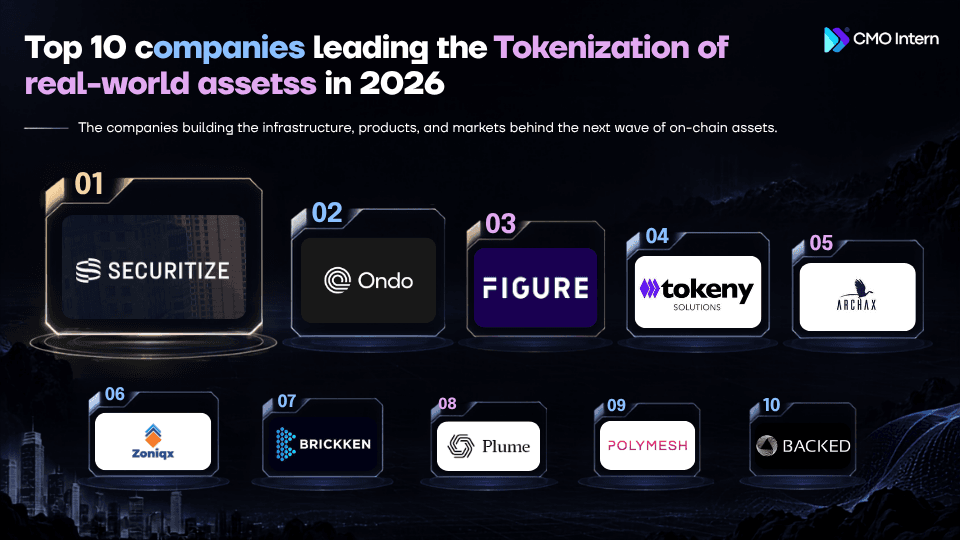
The top 10 companies leading the tokenization of real-world assets in 2026 are transforming financial infrastructure by moving beyond proof-of-concept experiments into a mature, regulated phase. U.S. Treasuries, private credit, investment funds, equities, commodities, and real estate are increasingly represented as blockchain-based assets that can be issued, transferred, managed, and used across digital financial markets.
The market has also expanded considerably. RWA.xyz currently tracks more than $27 billion in distributed tokenized asset value, alongside more than 700,000 asset holders. RWA Centrifuge's September 2026 market snapshot similarly reports that tokenized asset value increased from roughly $25 billion to $37 billion during the first seven months of 2026, illustrating how quickly the category is developing.
But the companies shaping this market are not all doing the same thing. Some specialize in regulated securities issuance, while others focus on tokenized Treasuries, private credit, compliance infrastructure, secondary trading, or purpose-built blockchain networks. Many of these initiatives benefit from the expertise of web3 consulting companies.
This list focuses on specialized companies and platforms whose core businesses are closely connected to tokenization, rather than giant technology companies, global banks, payment networks, or household-name corporations that have merely launched a tokenization initiative.
Note: This is an editorial ranking based on specialization, product maturity, infrastructure, adoption, asset coverage, and relevance to the RWA market in 2026. It is not a ranking by market capitalization or investment potential.
What Is Real-World Asset Tokenization?
Real-world asset tokenization is the process of creating a blockchain-based digital representation of an asset or financial interest connected to an asset that exists outside the blockchain.
These assets can include:
- U.S. Treasuries and government bonds
- Private credit
- Investment funds
- Public equities and ETFs
- Real estate
- Commodities
- Corporate debt
Instead of relying entirely on traditional databases and intermediaries to record ownership and transfers, tokenization places part of the asset lifecycle on blockchain infrastructure. This also creates new opportunities for blockchain data companies to provide insights and analytics.
This can enable 24/7 transferability, programmable compliance, faster settlement, fractional ownership, transparent records, and integration with digital financial applications.
The appeal is particularly strong for institutional markets. A 2026 Coinbase Institutional survey found that 64% of crypto asset managers surveyed were interested in tokenizing their assets, up from 40% in 2025.
The result is a growing ecosystem of specialized web3 development companies building the infrastructure required to bring traditional assets onchain.
Top 10 companies leading the tokenization of real-world assets in 2026
1. Securitize
Focus: Digital securities, tokenized funds, institutional RWA infrastructure
Securitize is one of the most important specialized companies in the tokenization of real-world assets, particularly for institutional investors and asset managers.
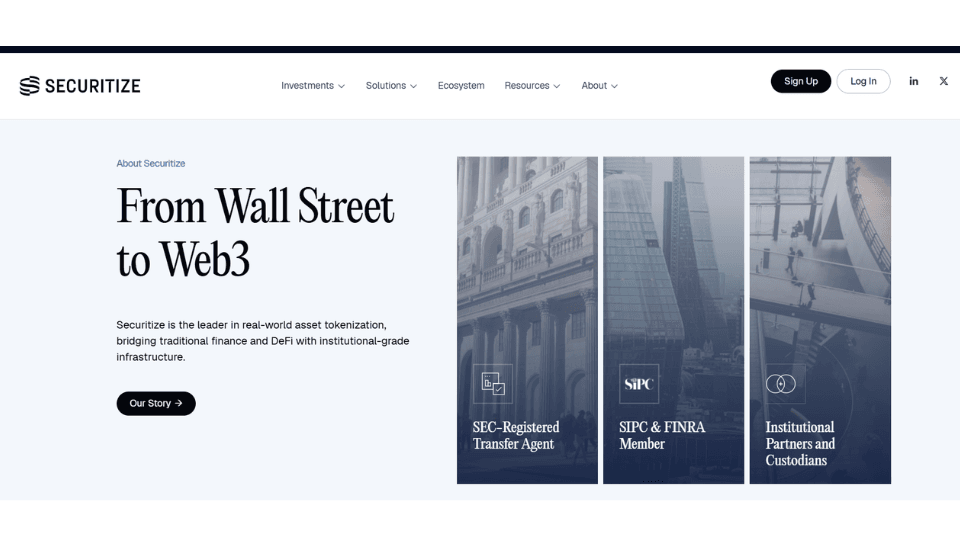
Rather than focusing on a single asset class, Securitize provides infrastructure for issuing, managing, distributing, and trading digital securities. Its platform has been used for tokenized investment products from major asset managers, including BlackRock, Apollo, Hamilton Lane, VanEck, and others.
The company's importance comes from its combination of technology and regulated financial infrastructure. Its U.S. operations include an SEC-registered transfer agent, broker-dealer and Alternative Trading System, investment adviser, and fund administration capabilities.
As of July 2026, Securitize reported approximately $5 billion in AUM, with more than $4 billion in tokenized assets on its platform.
Why Securitize stands out
- Strong institutional focus
- Regulated digital securities infrastructure
- Supports tokenized funds and securities
- Multi-chain infrastructure
- Deep relationships with traditional asset managers
- Covers issuance, trading, and asset administration
Securitize is particularly relevant for institutions that want to move beyond experimental blockchain projects and build tokenized financial products within a regulated framework.
2. Ondo Finance
Focus: Tokenized Treasuries, equities and institutional financial products
Ondo Finance has become one of the most recognizable specialist companies in the RWA sector by focusing heavily on bringing traditional financial exposure onto blockchain networks.
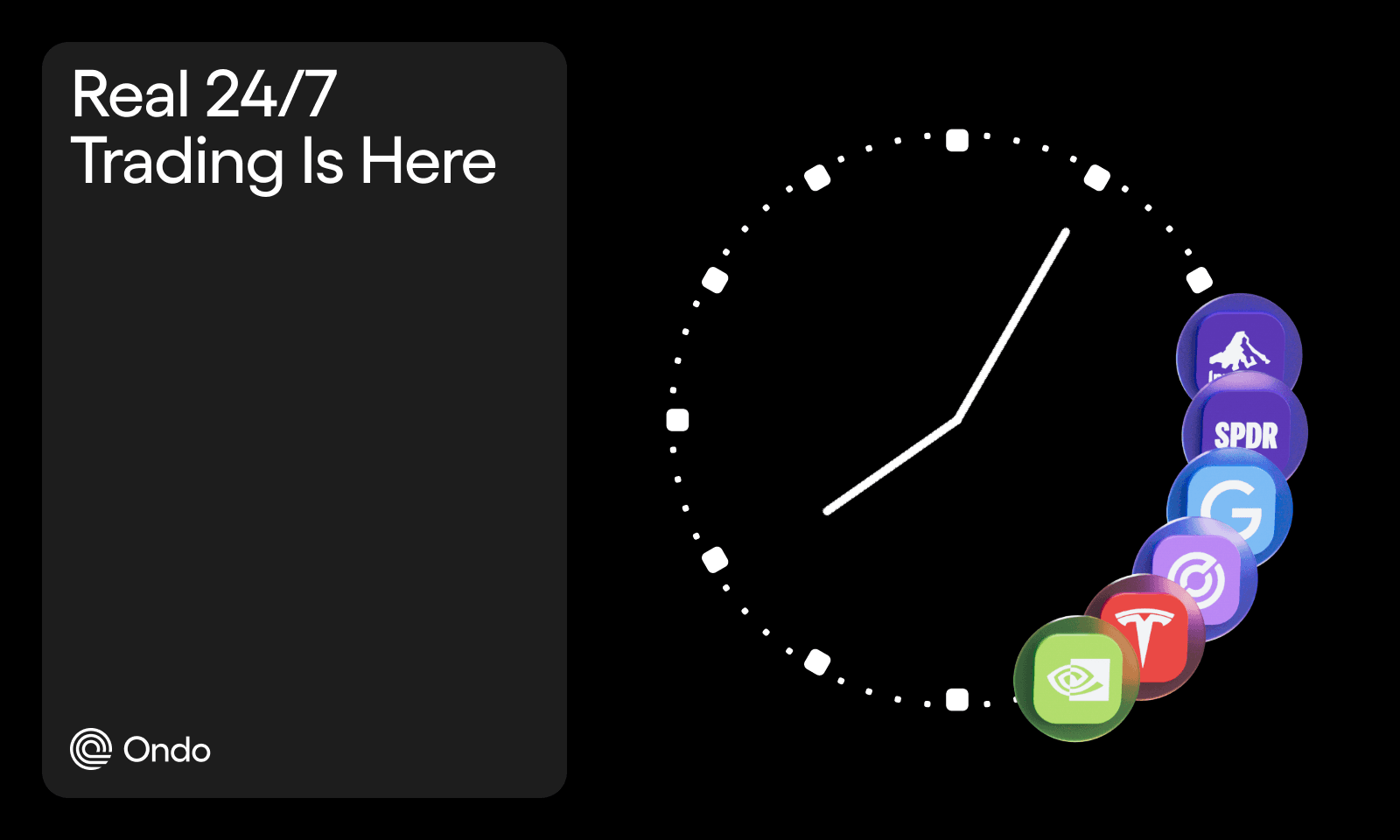
Its product ecosystem includes tokenized U.S. Treasuries, yield-bearing products, and tokenized stocks and ETFs. In January 2026, Ondo reported more than $2.5 billion in TVL across its tokenized products and described itself as the largest provider of tokenized Treasuries and stocks at that time.
Ondo has also expanded its tokenized-equity offering significantly. Ondo Stocks brought more than 200 tokenized U.S. stocks and ETFs to Solana, alongside exposure to commodities-linked ETFs and other securities.
One of Ondo's biggest advantages is its focus on assets that already have deep demand in traditional financial markets. Tokenized Treasuries, for example, can provide yield-bearing assets that are also usable within blockchain-based financial applications.
Why Ondo Finance stands out
- Strong focus on tokenized Treasuries
- Growing tokenized-equity offering
- Multi-chain distribution
- Bridges traditional finance and DeFi
- Focus on liquid, recognizable financial assets
- Significant adoption and asset value
Ondo is therefore one of the clearest examples of a company attempting to make tokenized RWAs useful beyond simply representing ownership on a blockchain.
3. Figure
Focus: Tokenized private credit, home equity, loans & blockchain capital markets
Figure Technologies is one of the more established specialized companies in the tokenization of real-world assets, particularly in private credit and lending. Unlike global financial or technology giants, Figure focuses specifically on building blockchain-based infrastructure for financial assets and capital markets.
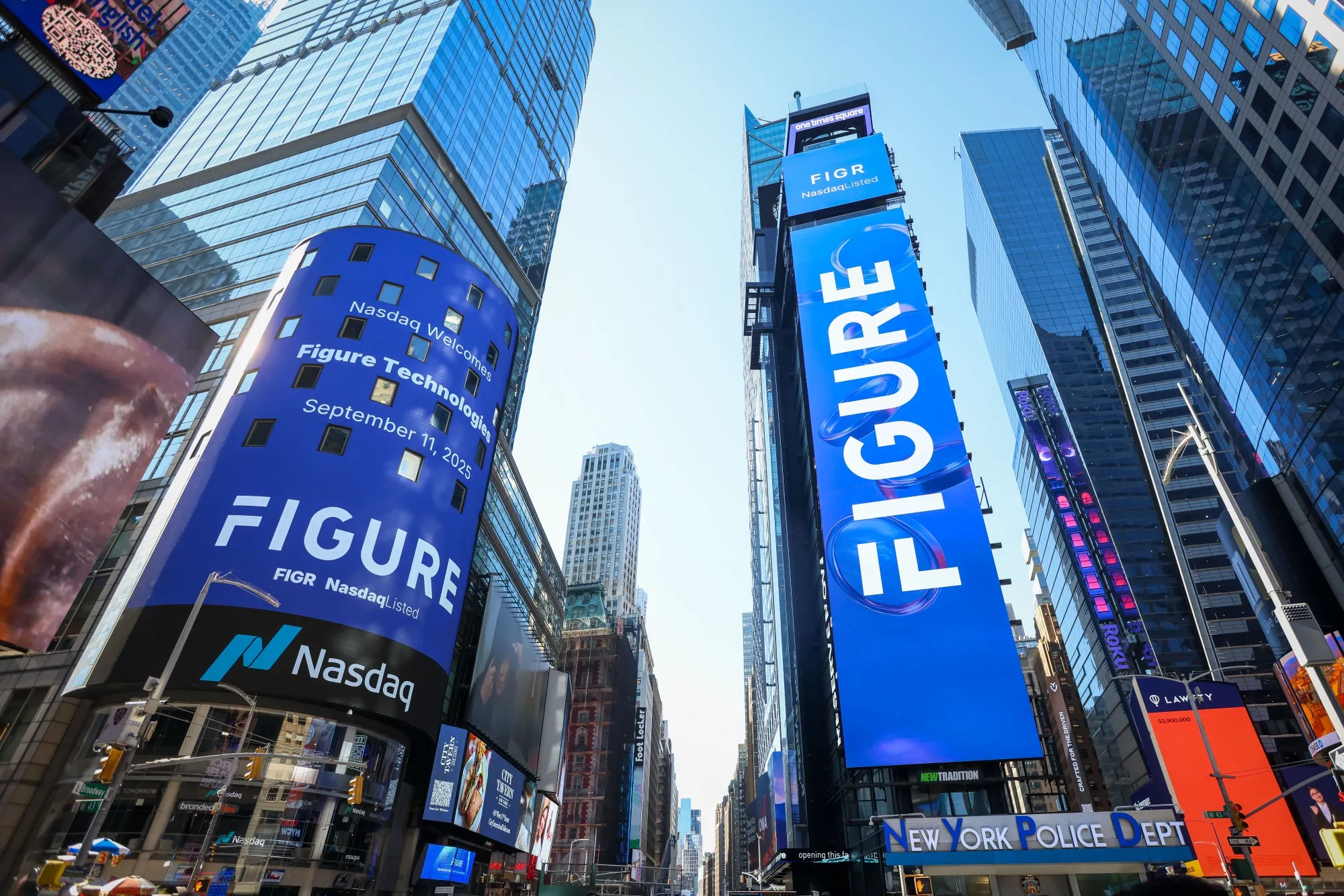
The company operates a blockchain-native capital marketplace designed to support the origination, funding, sale, and trading of tokenized assets. Its ecosystem spans a broad network of financial institutions and partners, with Figure reporting more than $30 billion in loans originated by Figure and its partners and more than 480 partners across its platform.
Figure's strongest position is in tokenized private credit. The company has built infrastructure around assets such as home equity lines of credit (HELOCs), consumer loans, and other credit products, allowing these assets to be represented and managed on blockchain infrastructure.
Why Figure Technologies stands out
- Large-scale RWA tokenization infrastructure
- Strong focus on tokenized private credit
- More than $30 billion in loans originated across Figure and its partners
- A network of more than 480 partners
- Blockchain-native capital market infrastructure
- Tokenized HELOC and consumer-loan products
- Figure Connect for loan marketplaces and secondary-market activity
- Expanding into new asset classes such as auto loans
What makes Figure particularly interesting is its end-to-end approach to tokenized financial assets. Rather than simply providing technology for issuing tokens, the company is building infrastructure across multiple stages of the asset lifecycle - from origination and ownership records to funding, trading, and secondary-market activity.
As RWA tokenization moves beyond simply putting traditional assets onchain toward creating fully functioning digital capital markets, Figure Technologies is positioned as one of the specialized companies worth watching.
4. Tokeny
Focus: Tokenization infrastructure and compliance
Tokeny operates at a different layer of the RWA ecosystem. Instead of primarily creating its own investment products, it provides the technology and compliance infrastructure that financial institutions can use to tokenize assets.
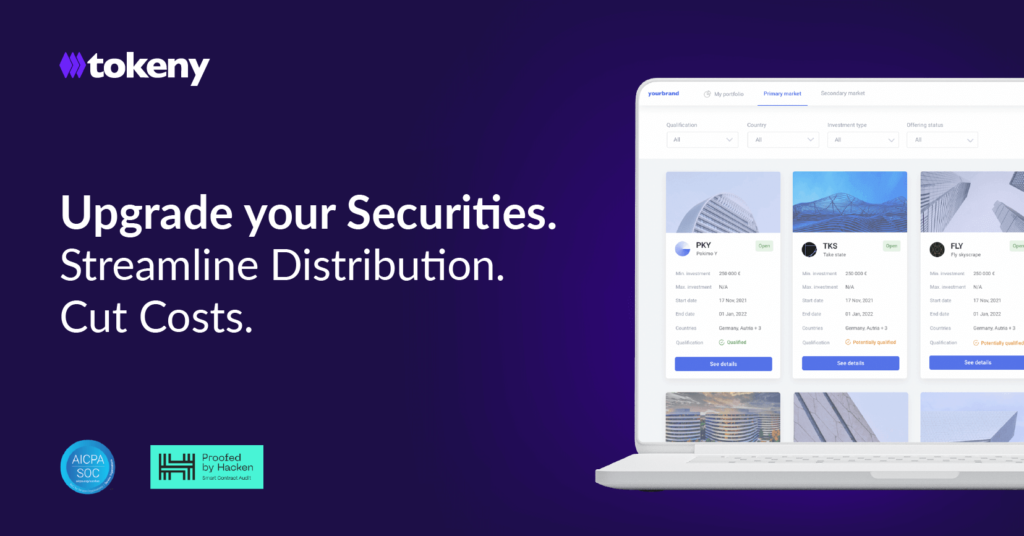
Its most significant contribution is ERC-3643, an open-source standard designed for compliant permissioned tokens. The standard allows issuers to embed identity, investor eligibility, transfer restrictions, and compliance requirements directly into token infrastructure.
Tokeny reports that more than $32 billion in assets have been tokenized through its infrastructure, with more than 120 customers and deployments across more than 180 jurisdictions.
That makes Tokeny important even when its name may not appear directly on a tokenized asset that investors see.
Why Tokeny stands out
- Created the ERC-3643 standard
- Compliance embedded at the token level
- Institutional-focused infrastructure
- Identity and permissioning capabilities
- Supports issuance, management and distribution
- Useful for regulated securities
As tokenization scales, standards become increasingly important. Tokeny is therefore positioned closer to the infrastructure layer of the tokenized financial system.
5. Archax
Focus: Regulated tokenization, digital asset trading and custody
Archax is a UK-based regulated digital asset company combining tokenization, trading, custody and brokerage into one institutional ecosystem.

Its tokenization engine supports real-world assets including funds, bonds, commodities and equities across public and permissioned blockchains.
What makes Archax particularly interesting is that it does not stop at token issuance. The company also provides regulated venues where tokenized assets can potentially be traded, alongside custody and brokerage services.
Its tokenization workflow covers asset structuring, legal analysis, token creation, investor onboarding, secondary-market trading and ongoing asset management.
Why Archax stands out
- UK and EU regulatory positioning
- Multi-chain tokenization
- Tokenized securities trading
- Custody infrastructure
- Primary and secondary markets
- Full digital-asset lifecycle
This makes Archax a strong example of how the tokenization of real-world assets is becoming connected to actual market infrastructure rather than existing as a standalone blockchain experiment.
6. Zoniqx
Focus: Compliance-native RWA infrastructure
Zoniqx is building infrastructure designed to help institutions issue, manage and distribute tokenized real-world assets across multiple platforms and jurisdictions.
The company positions its technology as an operating system and distribution layer for tokenized RWAs, with an emphasis on compliance, interoperability and lifecycle management.
Its infrastructure includes a compliance and policy layer, settlement rails and tools for corporate actions, reporting and reconciliation.
This focus addresses one of the biggest challenges facing institutional tokenization: simply putting an asset on a blockchain does not automatically solve the problems of identity, regulatory restrictions, ownership records or cross-border compliance.
Zoniqx is attempting to address these operational issues at the infrastructure level.
Why Zoniqx stands out
- Compliance-native architecture
- Cross-chain infrastructure
- Multi-jurisdiction support
- Asset lifecycle management
- Institutional orientation
- Focus on interoperability
In other words, Zoniqx is less about creating one famous tokenized product and more about building the operational infrastructure needed for tokenization to scale.
7. Brickken
Focus: Multi-asset tokenization and issuer infrastructure
Brickken provides an end-to-end platform for companies looking to tokenize and manage real-world assets.
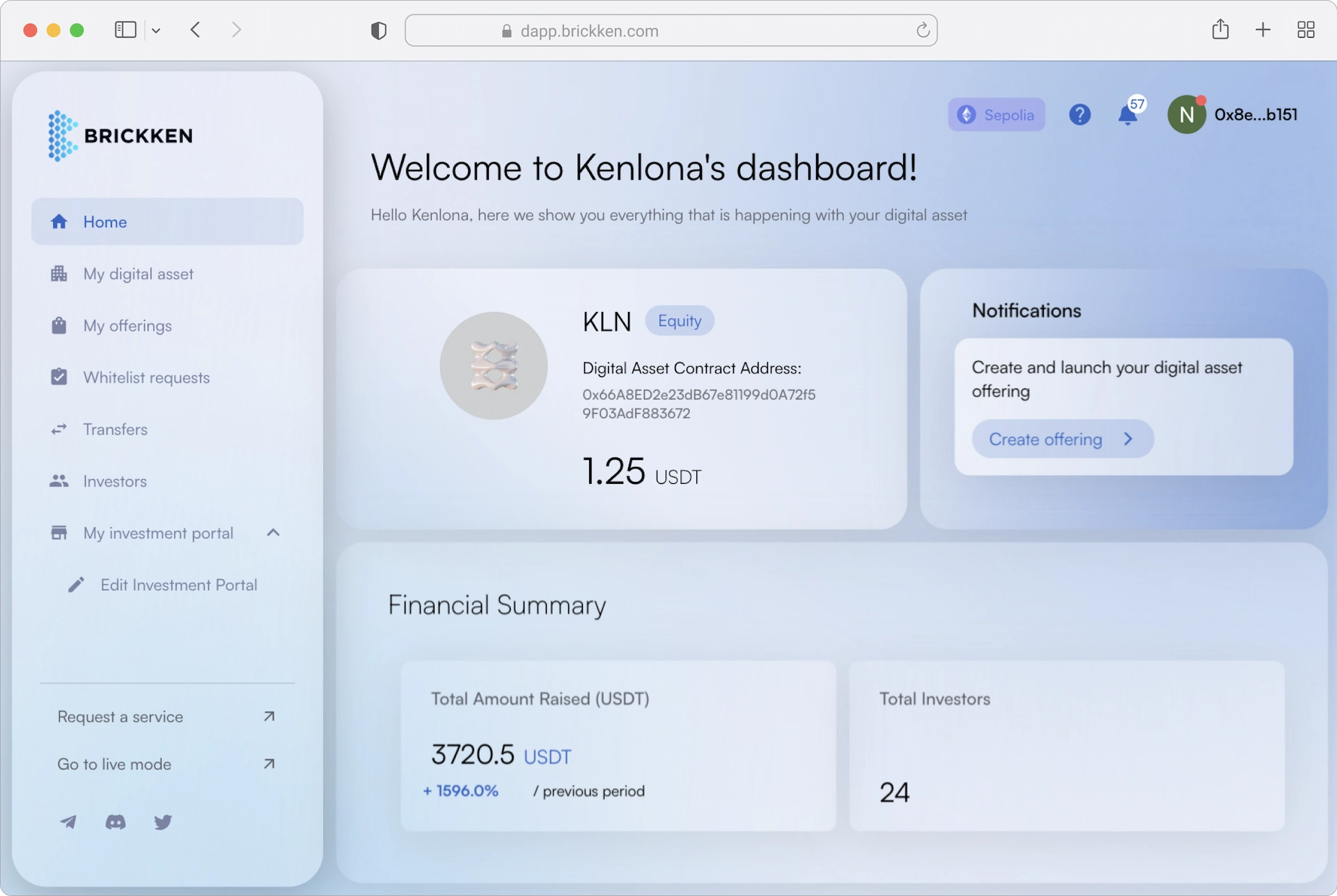
Its platform supports assets such as equity, debt, funds, bonds, commodities, private credit and real estate, while also providing investor onboarding, KYC/KYB, cap-table management, distributions and reporting.
One of Brickken's biggest differentiators is its relatively accessible, no-code approach. Instead of requiring companies to build an entire tokenization stack from scratch, Brickken offers SaaS, white-label and API-based solutions.
The company currently reports more than 150 clients, over $660 million in total tokenized value and operations across more than 40 countries.
Why Brickken stands out
- End-to-end tokenization platform
- Supports multiple asset classes
- Built-in KYC/KYB
- No-code issuance tools
- White-label infrastructure
- Real estate tokenization capabilities
Brickken is particularly relevant for businesses that want to launch and manage tokenized assets without building the entire technical infrastructure internally.
8. Plume
Focus: Purpose-built blockchain infrastructure for RWAs
Plume takes a different approach from companies that operate primarily as tokenization platforms. It is building a blockchain ecosystem specifically designed around real-world asset finance, or RWAfi.
Its architecture combines blockchain infrastructure with tools for tokenization, compliance, liquidity and distribution. The goal is to create an environment where tokenized assets can move directly into financial applications rather than remaining isolated on an issuance platform.
Plume's specialization is significant because generic blockchains are not necessarily optimized for the legal, compliance and operational requirements of real-world assets.
RWA.xyz currently lists Plume among the largest networks by distributed RWA value, with approximately $352 million in tokenized assets tracked on the network.
Why Plume stands out
- Purpose-built for RWAs
- Integrated tokenization infrastructure
- RWA-focused blockchain ecosystem
- DeFi and liquidity integration
- Compliance-oriented architecture
- Focus on composability
Plume is therefore competing not simply to tokenize individual assets, but to provide the blockchain environment where an entire RWA financial ecosystem can develop.
9. Polymesh
Focus: Regulated securities and real-world asset infrastructure
Polymesh is a purpose-built blockchain designed around the requirements of regulated assets and securities.
Its RWA ecosystem supports tokenization across asset classes including equity, commodities, debt, real estate, structured products, carbon credits, art and collectibles.
The key idea behind Polymesh is that regulated assets require more than a generic token standard. Identity, compliance, ownership and transfer rules need to be incorporated into the infrastructure itself.
That makes Polymesh particularly relevant for financial institutions and asset issuers that need blockchain development companies designed around regulated markets.
Why Polymesh stands out
- Purpose-built for regulated assets
- Strong focus on security tokens
- Multiple RWA use cases
- Compliance-oriented blockchain design
- Institutional infrastructure
- Focus on regulated capital markets
Polymesh represents an important part of the RWA landscape: the development of blockchain networks specifically designed around regulated financial assets.
10. Backed Finance
Focus: Tokenized equities and ETFs
Backed Finance focuses on bringing traditional securities onto blockchain rails through its xStocks ecosystem.

Its products are tokenized tracker certificates designed to follow the value of publicly traded equities and ETFs. Backed states that its xStocks are fully collateralized 1:1 by the corresponding underlying assets and designed to be transferable across multiple blockchains.
The company's product range has expanded across a wide selection of publicly traded securities, giving blockchain users exposure to traditional market assets through onchain instruments.
Backed is particularly interesting because tokenized equities represent one of the most visible next steps in the RWA market. Coinbase Research has identified tokenized equities as a rapidly developing segment, although regulatory and liquidity considerations remain important.
Why Backed Finance stands out
- Focused on tokenized equities and ETFs
- 1:1 collateralization model
- Multi-chain availability
- Transferable onchain products
- Strong integration with crypto infrastructure
- Specialized rather than a general-purpose financial conglomerate
Backed demonstrates how tokenization can connect traditional securities with blockchain-native wallets, exchanges and DeFi applications.
Why These Companies Matter to the Future of Tokenization
The most interesting development in RWA tokenization is that the market is no longer built around one single use case.
Early tokenization projects largely focused on demonstrating that a traditional asset could be represented on a blockchain. The next phase is about making those assets useful, transferable and integrated with financial infrastructure.
Several trends are particularly important.
1. Tokenized Treasuries remain a major entry point
Government bonds and money-market products are among the most established RWA categories because they combine relatively familiar underlying assets with the efficiency of blockchain settlement.
Companies such as Ondo and Securitize are helping make these instruments accessible through blockchain-based financial products.
2. Private credit is becoming increasingly important
Private credit represents another major opportunity because blockchain infrastructure can improve transparency, reporting, servicing and distribution.
Centrifuge's work demonstrates how tokenization can connect private credit and institutional funds with onchain liquidity.
3. Compliance is becoming part of the technology
Institutional tokenization cannot rely solely on smart contracts and wallets.
Identity, investor eligibility, transfer restrictions, KYC, AML and jurisdictional rules are becoming integral parts of tokenization infrastructure. This is why companies such as Tokeny, Zoniqx, Archax and Polymesh are important to the broader ecosystem.
4. Secondary liquidity matters
Creating a token is only the beginning.
For tokenization to deliver meaningful economic value, investors need ways to transfer, trade, collateralize or otherwise use the resulting asset. This is why trading and distribution infrastructure — such as that developed by Archax — is becoming increasingly important.
5. RWAs are moving toward composability
The long-term opportunity is not simply to put traditional assets onchain. It is to allow those assets to interact with other digital financial products.
A tokenized Treasury fund, for example, could potentially become collateral in a lending protocol or be integrated into another financial strategy.
That transition from tokenized ownership to programmable financial infrastructure could be one of the most important developments in the RWA market.
The Future of Real-World Asset Tokenization
The tokenization of real-world assets is increasingly becoming an infrastructure story rather than simply a cryptocurrency trend.
The market now includes regulated issuance platforms, compliance providers, specialized blockchains, tokenized fund managers, private-credit infrastructure, trading venues and tokenized securities issuers.
The companies leading this transformation are also becoming more specialized. Securitize and Archax are building regulated market infrastructure. Ondo and Backed Finance are bringing specific financial assets onchain. Centrifuge is connecting institutional assets with DeFi. Tokeny and Zoniqx are working on the infrastructure and compliance layers required for scale. Meanwhile, Brickken, Plume and Polymesh are building accessible or purpose-built environments for launching regulated digital assets.
The market is still developing, and the winners may ultimately be determined less by who can create the most tokens and more by who can solve compliance, liquidity, custody, interoperability and distribution at scale.
For that reason, these 10 companies are worth watching as the RWA ecosystem moves from experimentation toward a more mature digital capital market.
Frequently Asked Questions
1. What is the tokenization of real-world assets?
The tokenization of real-world assets is the process of creating blockchain-based digital representations of traditional assets or financial interests, such as bonds, real estate, private credit, equities, funds and commodities.
2. What are the main benefits of RWA tokenization?
Potential benefits include faster settlement, programmable transactions, improved transparency, fractional ownership, broader distribution, automated compliance and greater interoperability with blockchain-based financial applications.
3. Which company is the largest RWA tokenization platform?
There is no single answer because companies operate at different layers of the market. Securitize is one of the largest institutional tokenization platforms, while Ondo has become a major issuer of tokenized Treasuries and securities. Securitize reported approximately $5 billion in AUM as of July 2026.
4. What assets can be tokenized?
Almost any asset with a clearly defined legal and economic structure can potentially be represented through tokenization. Common examples include government bonds, investment funds, private credit, equities, real estate, commodities, carbon credits and other financial or physical assets.
5. Is RWA tokenization the same as cryptocurrency?
No. RWA tokenization uses blockchain technology, but the underlying asset is generally connected to a traditional financial or physical asset. A tokenized Treasury, for example, represents an interest connected to a Treasury-related financial product rather than being a native cryptocurrency.
6. Why is compliance important for tokenized assets?
Many tokenized assets are securities or represent regulated financial interests. Compliance infrastructure can determine who is allowed to hold, transfer or trade the token and under what conditions. Standards such as ERC-3643 are designed specifically to support these requirements.

