
.webp)
.png)
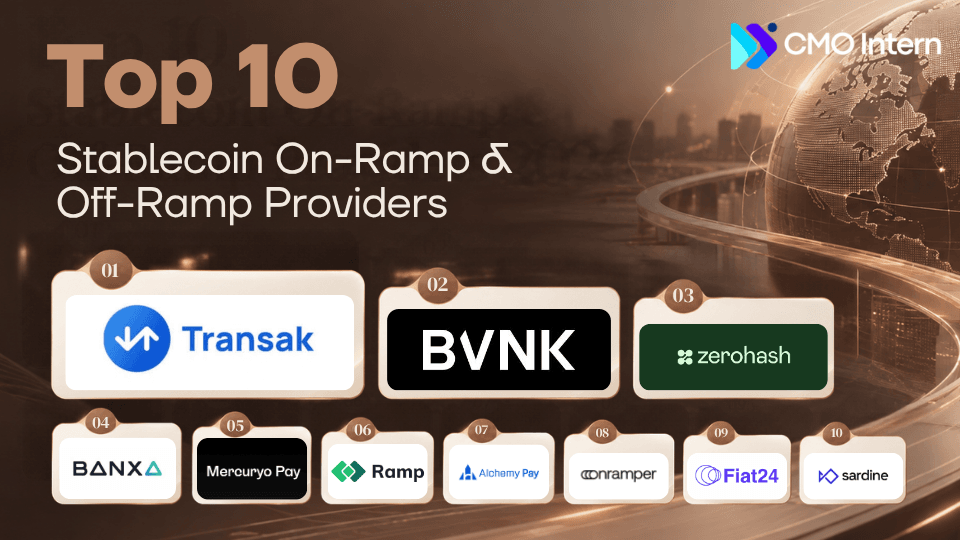
Businesses looking to bridge traditional finance with blockchain applications often rely on the top 10 stablecoin on-ramp & off-ramp providers to manage fiat-to-crypto conversion. These platforms provide the necessary infrastructure, including payment processing, KYC compliance, and liquidity, to move money into stablecoins and back into fiat currencies.
An on-ramp generally converts fiat money into crypto or stablecoins, while an off-ramp enables users or businesses to convert digital assets back into fiat. Depending on the provider, the infrastructure can include payment processing, KYC/KYB, transaction monitoring, liquidity, banking connections, APIs, widgets, payouts, and virtual accounts.
The market has also become more specialized. Some providers focus on consumer wallet integrations, while others are increasingly targeting fintechs, exchanges, payment companies, neobanks, and B2B applications. Many of these firms now partner with specialized web3 service providers to streamline their operational workflows.
This guide reviews 10 stablecoin on-ramp and off-ramp providers that are relevant to businesses building or expanding fiat-to-stablecoin infrastructure in 2026.
Editorial note: This list is an industry-focused comparison rather than a universal ranking. Availability, supported assets, payment methods, licensing coverage, and regional restrictions can change frequently. Businesses should verify current availability and regulatory requirements for their specific markets before integration.
How We Selected the Providers
This list focuses on providers with publicly documented capabilities relevant to fiat-to-crypto or fiat-to-stablecoin conversion.
The comparison considers:
- Stablecoin support
- On-ramp availability
- Off-ramp availability
- API or SDK integration
- Widget or embedded checkout options
- Business and fintech use cases
- Payment and payout infrastructure
- Geographic coverage
- Compliance infrastructure
- Suitability for Web3 applications
The providers below are not all identical. Some are primarily retail ramps, while others operate more like B2B financial infrastructure.
Top 10 Stablecoin On-Ramp & Off-Ramp Providers
1. Transak
Transak has developed from a crypto on-ramp provider into broader payment infrastructure for applications that need fiat and stablecoin connectivity.

Its current product stack covers on-ramp and off-ramp functionality, with widget and API-based integration options. Transak also markets programmatic decentralized stablecoin protocol settlement and virtual-account infrastructure for financial applications.
For businesses, one of its notable characteristics is the range of integration models. A team can use a pre-built widget when speed is the priority or move toward API-based integration when it needs more control over the user experience.
Transak also supports stablecoin flows such as fiat-to-USDC and fiat-to-USDT, while its broader asset coverage extends beyond stablecoins. Its documentation shows separate BUY and SELL flows for on-ramp and off-ramp experiences.
Key capabilities
- Fiat-to-stablecoin on-ramp
- Stablecoin-to-fiat off-ramp
- Widget integration
- API integration
- Virtual account infrastructure
- KYC and compliance workflows
- Multi-market payment support
- Programmatic settlement
Potential fit
Transak can be relevant to wallets, exchanges, fintech applications, remittance products, marketplaces, and other platforms that want embedded fiat-to-crypto functionality without building the entire payment layer internally.
2. BVNK
BVNK takes a more B2B-oriented approach to stablecoin infrastructure.
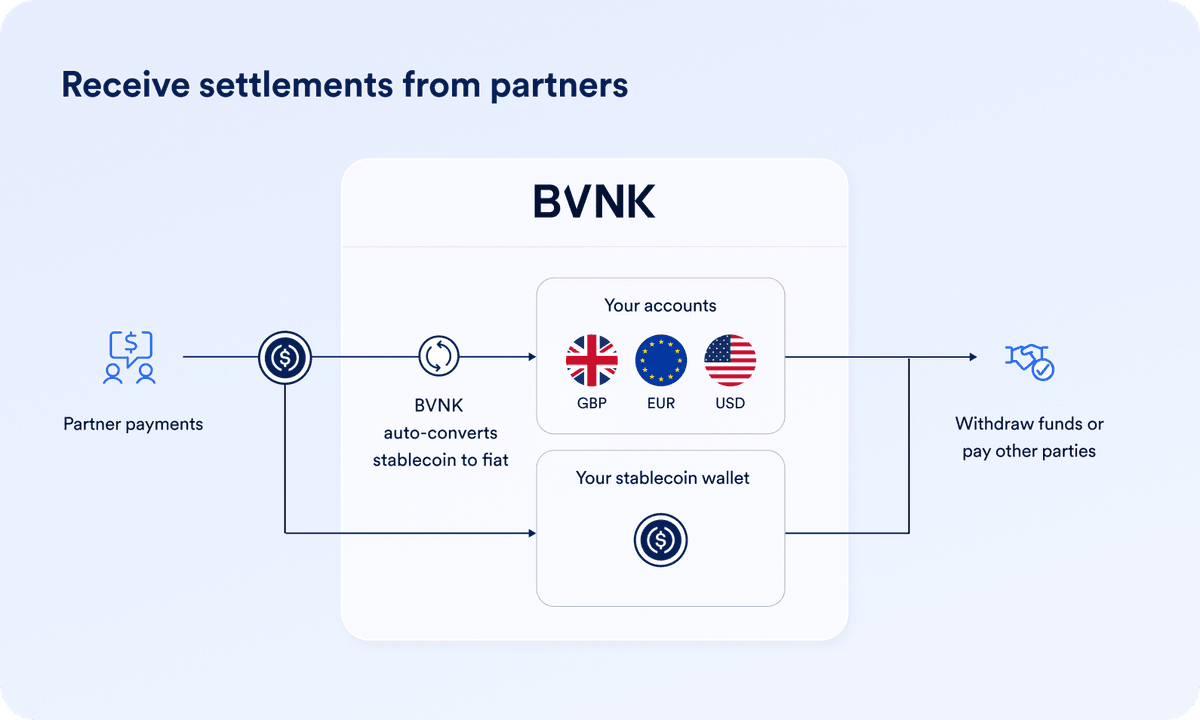
Rather than focusing primarily on consumer checkout, its infrastructure is designed around businesses that need to move between fiat currencies and digital assets as part of payments, treasury, settlement, or financial workflows.
BVNK describes support for USD, EUR, GBP, and stablecoins, including the ability to embed on- and off-ramp functionality into a platform. Its infrastructure also includes virtual accounts and fiat payment capabilities.
One documented use case is a business accepting fiat into a platform, converting the balance into stablecoins, holding the stablecoin balance, and later converting it back into fiat for withdrawal.
Key capabilities
- Stablecoin-to-fiat conversion
- Fiat-to-stablecoin conversion
- Virtual accounts
- Business payments
- Treasury infrastructure
- API-based integration
- USD/EUR/GBP support
- Stablecoin settlement
Potential fit
BVNK is particularly relevant for fintechs, payment companies, marketplaces, and businesses that need stablecoins to operate behind the scenes rather than as a consumer-facing crypto feature.
3. Zero Hash
Zero Hash provides B2B infrastructure for companies that want to integrate digital assets without building the underlying crypto stack themselves.
Its infrastructure covers trading infrastructure, payments, tokenization, custody, and fiat on-ramp and off-ramp capabilities. Public documentation describes it as infrastructure for fintechs, payment providers, and other businesses.
Its on/off-ramp infrastructure is particularly relevant when the business wants a single technical integration covering multiple parts of the transaction lifecycle.
The company's solution materials also describe ACH deposits, crypto-to-fiat conversion, withdrawals, balance checks, and transaction monitoring.
Key capabilities
- Fiat on-ramp
- Fiat off-ramp
- Stablecoin infrastructure
- Trading infrastructure
- Custody
- Settlement
- Transaction monitoring
- API-based integration
Potential fit
Zero Hash can be considered by fintechs, brokerages, payment companies, and financial platforms that want a broader digital-asset infrastructure layer rather than a simple consumer checkout widget.
4. Banxa
Banxa operates as a fiat-to-crypto payment infrastructure provider and has expanded its focus toward larger business and stablecoin transactions.
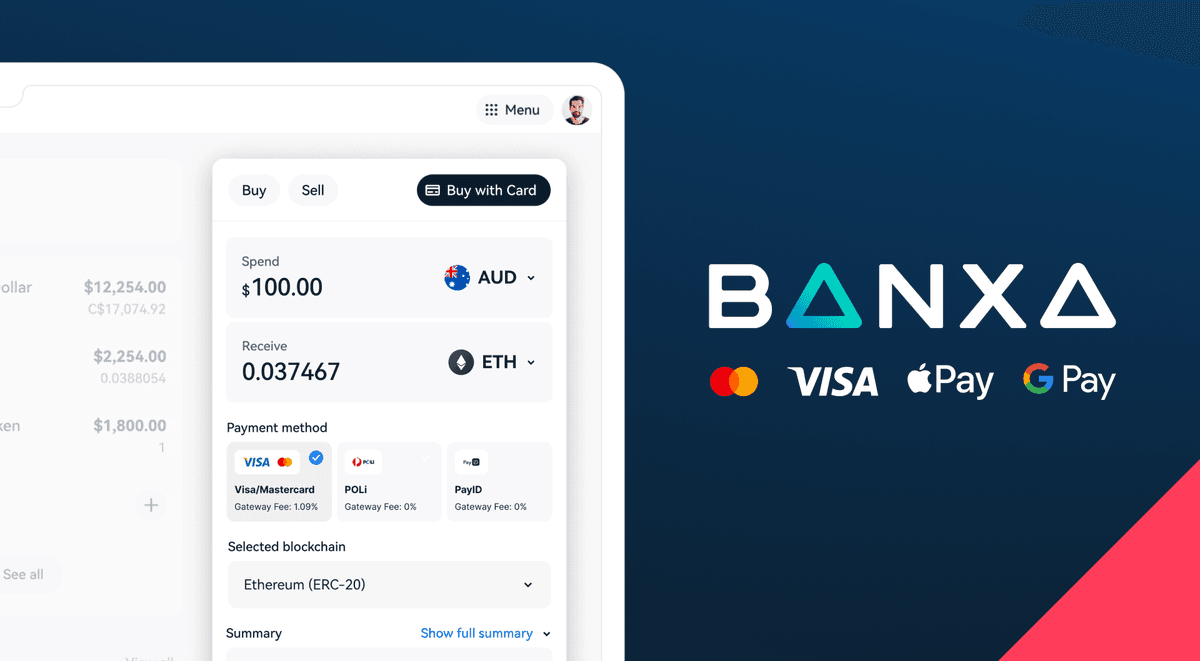
Its Business Ramp product is specifically designed for high-volume stablecoin on-ramp and off-ramp flows for corporate customers. Banxa documents support for USDT and USDC within this business-focused product, alongside corporate KYC onboarding and high transaction limits.
The Business Ramp is positioned differently from a typical retail crypto checkout. It targets B2B platforms, exchanges, and enterprise partners handling larger transactions.
Key capabilities
- Stablecoin on-ramp
- Stablecoin off-ramp
- Corporate KYC
- Business-focused checkout
- High transaction limits
- Widget integration
- USDC and USDT support
Potential fit
Banxa can be relevant for exchanges, enterprise platforms, fintech applications, and businesses that need larger-volume fiat-to-stablecoin flows.
5. Mercuryo
Mercuryo provides crypto payment infrastructure with dedicated on-ramp and off-ramp APIs.
Its API documentation describes functionality for exchanging cryptocurrency into fiat and fiat into cryptocurrency directly inside an application or website. Both buying and selling flows are supported.
The infrastructure also incorporates KYC-related checks and transaction limits. For example, its documented off-ramp flow requires verified users before crypto can be sold for fiat through supported payment methods.
Key capabilities
- On-ramp API
- Off-ramp API
- Card payments
- Fiat withdrawals
- KYC workflows
- Transaction limits
- Embedded payment experiences
Potential fit
Mercuryo may suit wallets, Web3 applications, exchanges, and fintech products that want an API-oriented approach to fiat-crypto conversion.
6. Ramp Network
Ramp Network provides both on-ramp and off-ramp functionality and supports buying and selling digital assets through supported payment and payout methods.
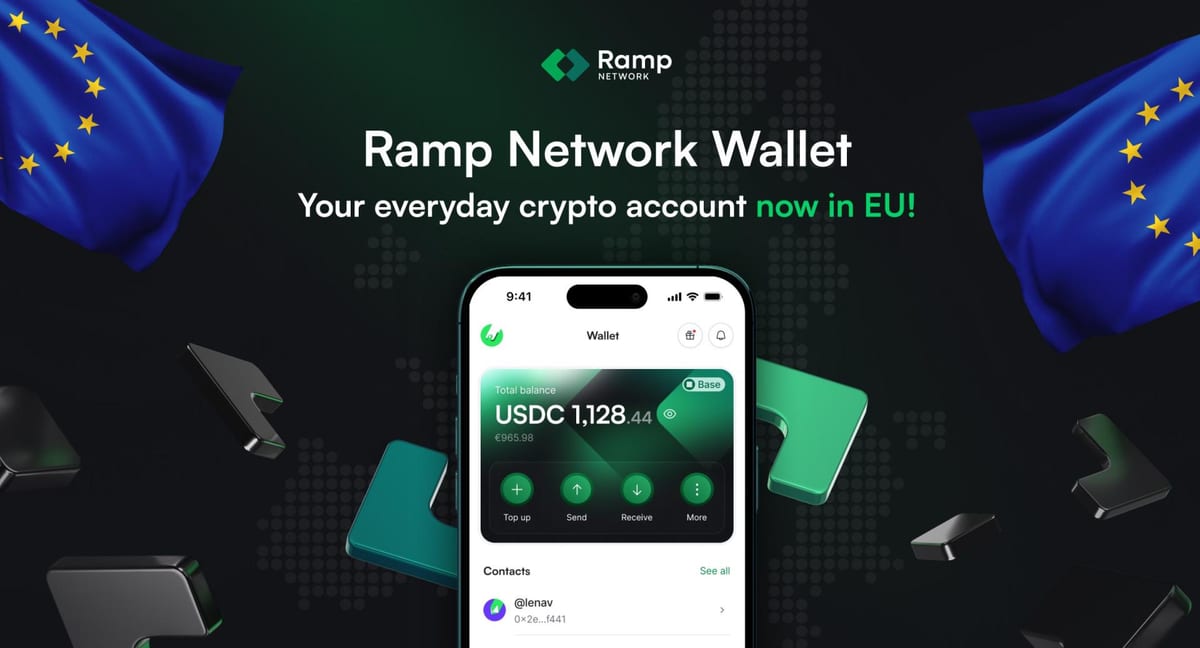
Its current documentation shows asset-specific differences between buying and selling depending on geography. This is particularly important for stablecoin applications because availability can vary by jurisdiction.
Ramp Network's terms also explicitly describe both on-ramp and off-ramp services, including USDC-related flows.
Key capabilities
- Fiat on-ramp
- Fiat off-ramp
- Stablecoin support
- Bank transfers
- Card payments
- Wallet integration
- Web3 integrations
- Regional asset restrictions
Potential fit
Ramp Network can be relevant for wallets, Web3 applications, exchanges, and consumer-facing platforms that need established fiat payment methods alongside crypto conversion.
One important consideration is geographic availability. Stablecoin support can differ substantially between the US, EU/EEA, UK, and other markets.
7. Alchemy Pay
Alchemy Pay focuses on connecting traditional payment methods with Web3 applications.

Its infrastructure supports fiat on-ramp and off-ramp functionality, allowing users to purchase crypto using supported fiat payment methods and convert digital assets back into fiat.
The platform is particularly relevant for Web3 applications that want to make fiat entry and exit part of the product experience.
Its off-ramp documentation describes crypto-to-fiat conversion followed by delivery to bank accounts, with geographic availability depending on the supported market.
Key capabilities
- Fiat on-ramp
- Fiat off-ramp
- Card payments
- Bank payments
- Stablecoin transactions
- Web3 integrations
- API-based infrastructure
Potential fit
Alchemy Pay may be suitable for wallets, DeFi platforms, NFT marketplaces, gaming products, and other Web3 applications that want fiat payment functionality embedded into their user journeys.
8. Onramper
Onramper takes a different approach from most providers on this list.

Instead of being a single ramp provider, it acts as an aggregator connecting applications to multiple on-ramp and off-ramp providers through one integration.
Its documentation states that the platform connects applications to more than 30 ramp providers and supports more than 130 payment methods. Its off-ramp product separately connects applications to multiple crypto-to-fiat providers.
This model can be useful when geographic coverage, payment-method availability, and transaction success rates vary significantly between providers.
Key capabilities
- On-ramp aggregation
- Off-ramp aggregation
- Multiple provider connections
- Smart routing
- API integration
- Widget integration
- Payment-method optimization
Potential fit
Onramper can be relevant for wallets, exchanges, and dApps that prefer one integration rather than maintaining separate integrations with multiple ramp providers.
9. Fiat24
Fiat24 approaches the market from a financial-account and payment-infrastructure perspective.

Its developer documentation describes REST APIs for integrating payment, card, account, and financial infrastructure into third-party applications.
This makes it somewhat different from a pure crypto checkout provider. The platform sits closer to the intersection of banking-style accounts, payments, and blockchain infrastructure.
Key capabilities
- API-based financial infrastructure
- Payment accounts
- Card functionality
- Fiat infrastructure
- Blockchain integration
- Stablecoin-related payment flows
Potential fit
Fiat24 may be worth considering for businesses looking for a broader financial infrastructure layer rather than a standalone crypto purchase widget.
10. Sardine
Sardine approaches crypto payments with a strong emphasis on payment infrastructure and fraud prevention.

The provider is relevant to companies that need to manage the risk layer around crypto transactions in addition to simply accepting fiat payments. Many firms also look to web3 infrastructure providers to bolster their backend security.
For stablecoin businesses, this distinction matters because payment approval, fraud detection, identity verification, and transaction monitoring can materially affect the success of a ramp flow.
Key capabilities
- Fiat-to-crypto payments
- Crypto-to-fiat functionality
- Fraud prevention
- KYC infrastructure
- Payment risk controls
- Embedded payment experiences
- API integration
Potential fit
Sardine can be considered by fintechs, wallets, and Web3 businesses where payment risk and fraud management are particularly important parts of the on-ramp experience.
What Should Businesses Compare Before Choosing a Provider?
The number of supported countries alone is not enough to evaluate stablecoin on-ramp and off-ramp providers.
A provider may support a large number of countries but have limited availability for a particular stablecoin, payment method, or payout rail.
1. Stablecoin coverage
Check whether the provider supports the stablecoins your users actually need.
Common examples include:
- USDC
- USDT
- EURC
- PYUSD
- Regional or emerging stablecoins
Also check the blockchain networks supported for each asset.
2. On-ramp and off-ramp symmetry
Some platforms have broader on-ramp coverage than off-ramp coverage.
For example, a provider may let users purchase USDC in a particular country but not sell USDC back to local fiat there.
This distinction is especially important for wallets and fintech applications offering a complete money-in/money-out experience.
3. API versus widget
A widget can significantly reduce implementation time.
An API or white-label integration provides more control over:
- UI
- User experience
- Authentication
- Data flow
- Error handling
- Branding
- Transaction orchestration
The right choice depends on how deeply the ramp needs to be embedded into the product.
4. KYC and compliance
Compliance infrastructure is one of the most important parts of a ramp integration.
Businesses should examine:
- KYC requirements
- KYB requirements
- AML screening
- Transaction monitoring
- Sanctions screening
- Geographic restrictions
- Travel Rule requirements where applicable
Stablecoin On-Ramp & Off-Ramp Providers: Final Considerations
The stablecoin ramp market is moving beyond simple "buy crypto with a card" experiences.
For fintechs and Web3 companies, the infrastructure increasingly includes stablecoin settlement, virtual accounts, bank connectivity, APIs, compliance, payouts, and treasury functionality.
Transak, BVNK, Zero Hash, Banxa, Mercuryo, Ramp Network, Alchemy Pay, Onramper, Fiat24, and Sardine illustrate different approaches to the same underlying problem.
The right provider depends on the product architecture, target markets, supported stablecoins, transaction volume, payment methods, and degree of control required over the customer experience.
For that reason, businesses should compare providers based on their actual intended transaction flows, rather than simply choosing the company with the largest geographic coverage claim.
Frequently Asked Questions
1. What is a stablecoin on-ramp?
A stablecoin on-ramp allows users or businesses to convert fiat money into stablecoins such as USDC or USDT.
2. What is a stablecoin off-ramp?
A stablecoin off-ramp allows users or businesses to convert stablecoins back into fiat and receive the proceeds through supported bank accounts, cards, or other payout methods.
3. What is the difference between a crypto ramp and a stablecoin ramp?
A crypto ramp may support many types of digital assets, including BTC and ETH. A stablecoin ramp focuses specifically or significantly on assets designed to maintain a relatively stable value against fiat currencies.
4. Do stablecoin on-ramp providers handle KYC?
Many providers incorporate KYC and other compliance controls, but the exact process and responsibilities vary by provider, product, jurisdiction, and integration model.
5. Can businesses integrate stablecoin ramps through an API?
Yes. Many providers offer APIs, SDKs, widgets, or combinations of these integration models.

