
.webp)
.png)
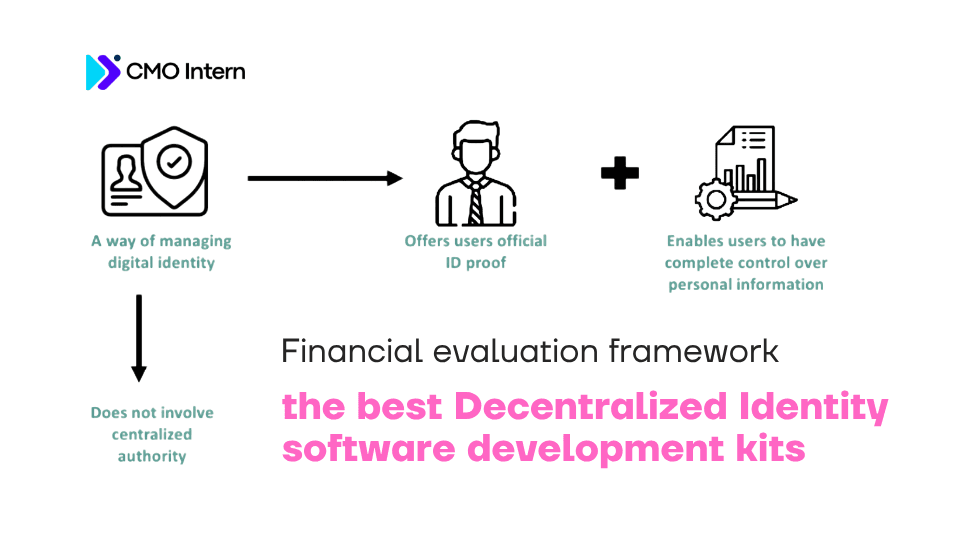
Direct cost components of best decentralized identity software development kits
Integrating decentralized identity (DID) infrastructure requires a precise balance between upfront licensing, cloud infrastructure, and long-term engineering maintenance. Organizations must move beyond initial procurement costs to account for the total cost of ownership (TCO) inherent in managing verifiable credentials and decentralized identifiers.
Licensing models and vendor lock-in risks
Selecting the best decentralized identity software development kits involves evaluating two primary models: open-source frameworks and proprietary enterprise SDKs. Open-source solutions, such as those built on Hyperledger Aries or DIF (Decentralized Identity Foundation) standards, eliminate licensing fees but demand higher internal expertise to manage security patches and interoperability updates.
Conversely, proprietary SDKs often charge per-seat or per-verification fees, offering managed services that reduce immediate engineering burden but introduce significant vendor lock-in risks. Transitioning from a proprietary stack can cost up to 40% of the original implementation budget due to data migration and schema re-mapping requirements.
Engineering resource allocation and maintenance
Engineering overhead represents the largest variable cost in DID adoption. A typical integration project requires a dedicated team of at least two full-stack developers for a minimum of three to six months to handle cryptographic key management, wallet integration, and credential issuance flows. For complex implementations, many firms now look to blockchain development companies to bridge the talent gap.
Beyond the initial build, maintenance requires continuous monitoring of W3C standard updates and security auditing of the credential exchange protocols. Organizations should budget for at least 15% of the initial development cost annually for ongoing security patching and infrastructure scaling.
Quantifying ROI through operational efficiency
Decentralized identity systems provide measurable ROI by shifting the burden of identity verification from the service provider to the user. This shift reduces the costs associated with manual KYC (Know Your Customer) processes and centralized database security. As the industry matures, many firms are also exploring how to build a decentralized identity system for enterprise to further streamline their user-facing workflows.
Reduction in customer onboarding friction
By utilizing reusable verifiable credentials, businesses can reduce customer onboarding drop-off rates by an estimated 20% to 30%. When users can present previously verified credentials rather than re-uploading documents, the time-to-onboard drops significantly. This efficiency directly correlates to higher conversion rates and lower customer acquisition costs (CAC), providing a clear financial justification for the initial investment in DID infrastructure.

Lowering data compliance and storage overhead
Centralized identity databases are high-risk, high-cost assets requiring expensive encryption, regular penetration testing, and GDPR-compliant storage solutions. Decentralized identity allows organizations to verify claims without storing sensitive PII (Personally Identifiable Information) on their own servers. This reduction in data footprint lowers compliance audit costs and minimizes the financial liability associated with potential data breaches.
Strategic trade-offs in SDK selection
The decision to adopt a specific SDK involves balancing immediate development velocity against the risk of future technical debt. Choosing a tool that adheres strictly to W3C standards ensures long-term interoperability, whereas choosing a highly customized, proprietary SDK may offer faster time-to-market but creates a siloed identity ecosystem that is difficult to integrate with external partners. Companies often refine these Decentralized Identity Implementation Guide principles to communicate the value of these secure identity solutions to their end-users.
Interoperability versus proprietary ecosystem dependence
Interoperability is the primary hedge against technical debt. SDKs that support universal resolver patterns allow your application to verify credentials from multiple issuers, preventing dependence on a single vendor's ecosystem. If a vendor ceases operations or changes pricing, an interoperable system allows for a modular replacement of the identity provider without requiring a complete rewrite of the user-facing application.
Evaluating SDK support and community health
When assessing the best decentralized identity software development kits, look beyond the feature list to the health of the underlying repository. Check the commit frequency on GitHub, the responsiveness of maintainers to security issues, and the availability of comprehensive documentation.
An SDK with a stagnant community or poor documentation creates a hidden cost in the form of increased developer training time and the potential need for custom-built workarounds to bridge functionality gaps. In competitive markets, firms that prioritize decentralizing power deep initiatives often find it easier to attract top-tier technical talent for these specialized projects.
Measuring long-term value beyond initial deployment
Successful identity infrastructure requires a framework for tracking performance beyond the initial launch. Stakeholders should focus on metrics that reflect the efficiency of the identity lifecycle, such as the cost-per-verification and the rate of successful credential presentations.
Key performance indicators for identity verification
To justify the investment, organizations should track the following KPIs:
- Credential Issuance Success Rate: The percentage of users who successfully receive and store a credential.
- Verification Latency: The time taken to validate a credential against a decentralized ledger or peer-to-peer connection.
- Support Ticket Reduction: The decrease in identity-related support requests (e.g., password resets, account recovery) following the implementation of self-sovereign identity.
Frequently Asked Questions
Distinction between a DID and a traditional username
A DID is a globally unique, cryptographically verifiable identifier controlled by the user, whereas a traditional username is a database entry controlled by a central service provider.
Mechanism of user privacy in decentralized identifiers
DIDs allow users to share only the specific claims required for a transaction without revealing their full identity or providing access to a centralized database.
Operational requirements for non-blockchain identity systems
Yes, DIDs can function using any distributed ledger, peer-to-peer network, or even centralized registries that support the W3C DID specification.
Recovery protocols for lost DID private keys
If a user loses their private key, they may lose access to their identity and associated credentials unless they have implemented a social recovery or multi-signature backup mechanism.
Legal recognition status of verifiable credentials
Legal recognition varies by jurisdiction, but frameworks like the EU's eIDAS 2.0 are actively establishing standards to make verifiable credentials legally binding for digital identity.
- Financial framework for Decentralized Identity Implementation Guide
- Economic evaluation of how to build a Decentralized Identity System for enterprise
- Financial evaluation of Decentralized Identity vs Traditional Identity Management
- Financial modeling for W3C decentralized identifiers standard explained

