
.webp)
.png)
Core cost drivers in identity infrastructure: Decentralized Identity vs Traditional Identity Management
Traditional identity management relies on centralized silos where organizations act as the sole custodians of user data. This model shifts the entire financial burden of security, compliance, and infrastructure maintenance onto the enterprise.
In contrast, decentralized identity shifts the architecture toward user-controlled credentials. This alters the capital expenditure profile from server-side storage to protocol integration and public key infrastructure management.
Operational overhead of Traditional Identity Management
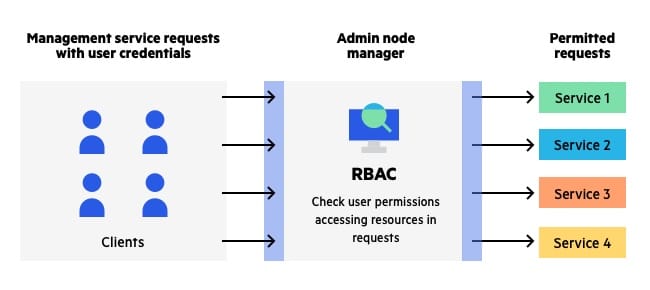
Centralized identity systems incur significant recurring costs rooted in the necessity of protecting monolithic databases. Organizations must invest heavily in high-availability server clusters and robust disaster recovery protocols to prevent downtime.
Beyond hardware, the regulatory cost of compliance is substantial. Under frameworks like GDPR and CCPA, companies face steep penalties for data breaches, necessitating continuous investment in encryption at rest, regular security audits, and dedicated data protection officers.
Furthermore, the cost of managing identity lifecycle—onboarding, credential recovery, and offboarding—scales linearly with the user base. As the number of accounts grows, the complexity of managing access control lists (ACLs) and maintaining synchronization across disparate internal systems creates a compounding operational tax. These systems often require expensive proprietary software licenses and specialized personnel to manage legacy authentication stacks.
Infrastructure investment for Decentralized Identity
Decentralized identity (DID) fundamentally changes the cost structure by removing the need for massive, centralized identity repositories. Instead of securing a honeypot of user data, the primary investment shifts toward developing or integrating with decentralized identifiers and verifiable credential protocols, often leveraging decentralized identity software development kits, such as W3C-compliant standards.
Organizations no longer pay to store sensitive PII (Personally Identifiable Information); instead, they invest in the technical capability to verify cryptographic proofs presented by the user. The financial commitment involves integrating digital wallets and managing public key infrastructure (PKI) to facilitate secure, peer-to-peer verification.
While this reduces the long-term liability associated with data breaches, it requires an upfront investment in developer talent capable of working with blockchain-based ledgers to build a decentralized identity system. The trade-off is clear: firms exchange the high, ongoing operational costs of database maintenance for a one-time, albeit complex, integration of decentralized protocols that offload data custody to the user.
Quantifying risk reduction as a return on investment
Traditional identity management relies on centralized honeypots—massive databases containing PII (Personally Identifiable Information) that serve as primary targets for cyberattacks. The ROI of shifting to decentralized identity (DID) is found in the drastic reduction of these high-value targets, which lowers both insurance premiums and potential regulatory fines.
Mitigating data breach liabilities
Under frameworks like GDPR and CCPA, a single breach can cost millions in fines, legal fees, and remediation. Centralized systems require organizations to hold the "keys to the kingdom," making them liable for the entire lifecycle of user data.
By adopting decentralized identity, the organization no longer stores raw user data. Instead, the user holds their own credentials in a digital wallet, providing only cryptographic proof of verification to the service provider. This architectural shift minimizes the scope of compliance audits and removes the organization from the blast radius of large-scale credential theft, effectively converting a massive operational liability into a negligible security overhead.
Reducing customer acquisition costs through portability
Customer acquisition costs (CAC) often spike during the onboarding phase due to high abandonment rates caused by cumbersome Know Your Customer (KYC) processes. Traditional identity management forces users to repeatedly upload passports, utility bills, and selfies for every new service, creating significant friction.

Decentralized identity allows for verifiable credential portability, where a user can present a pre-verified identity token from a trusted third party. This reduces the time-to-onboard from days to seconds. By eliminating manual document review and reducing the reliance on third-party identity verification APIs—which can cost between $0.50 and $5.00 per check—companies see a direct improvement in conversion rates and a lower cost per acquisition. The result is a streamlined funnel where the user experience is prioritized, and the operational expense of identity verification is shifted away from the service provider, much like the death traditional funnel logic suggests.
Comparative ROI modeling for enterprise adoption
Transitioning from centralized databases to self-sovereign models requires shifting focus from infrastructure maintenance to cryptographic verification costs. Traditional identity management relies on high-availability server clusters, database licensing, and extensive security audits to protect PII (Personally Identifiable Information).
Decentralized identity (DID) shifts the burden of storage to the user, reducing the enterprise's regulatory exposure under GDPR and CCPA.
Calculating total cost of ownership over five years
Traditional systems incur significant 'hidden' costs through data breach insurance premiums, manual identity proofing, and the maintenance of siloed legacy databases. Over a five-year horizon, a centralized IAM (Identity and Access Management) suite typically requires an annual 15-20% increase in security spend to combat evolving phishing and credential stuffing attacks.
In contrast, DID architectures leverage public key infrastructure (PKI) on distributed ledgers, such as Hyperledger Indy or Polygon ID, which eliminates the need for expensive centralized credential repositories. While a DID implementation guide suggests an upfront investment in blockchain integration and staff training, the long-term TCO is often 30-40% lower due to the removal of PII storage liabilities.
Enterprises no longer need to pay for high-security data vaults, as they only store public keys and revocation registries rather than raw user data.
Measuring efficiency gains in user onboarding
The primary ROI driver for decentralized identity vs traditional identity management is the drastic reduction in KYC (Know Your Customer) cycle times. Traditional onboarding processes often take 24 to 48 hours for manual document verification, costing firms between $50 and $150 per successful sign-up in administrative labor and third-party API fees.
By utilizing verifiable credentials (VCs), enterprises can automate the verification process. When a user presents a cryptographically signed credential from a trusted issuer, the enterprise verifies the signature instantly without needing to contact the original issuing authority. This shift reduces the onboarding window from days to milliseconds.
Organizations using DID frameworks report a 60% reduction in support tickets related to password resets and account recovery, as users maintain control over their own keys and recovery phrases, effectively offloading the identity management burden from the help desk to the end user.
Strategic trade-offs in identity migration
Transitioning from centralized databases to self-sovereign models requires balancing immediate operational stability against future-proofing requirements. Organizations must weigh the reduction in data breach liability against the complexity of decentralizing power through distributed ledger interactions and cryptographic key recovery.
Hidden costs of legacy system integration
Integrating decentralized identity (DID) frameworks into existing enterprise stacks often creates a "middleware tax." Legacy systems typically rely on centralized LDAP or Active Directory protocols that lack native support for Verifiable Credentials (VCs).
Engineering teams frequently encounter significant friction when building bridges between legacy identity providers (IdPs) and decentralized wallets. This process requires custom API development to map traditional user attributes to W3C-compliant DID documents. Beyond initial development, the overhead of maintaining these translation layers—ensuring that legacy authorization logic correctly interprets decentralized proofs—often exceeds the projected savings of retiring older database infrastructure.
Long-term maintenance and protocol evolution
Decentralized identity standards remain in a state of rapid technical maturation. Unlike established protocols such as SAML or OIDC, which have reached a high level of industry standardization, DID methods and credential exchange formats are still evolving. Companies looking to dominate decentralized future markets must stay agile.
Organizations that adopt early-stage DID implementations face the risk of "protocol obsolescence." If a specific DID method or ledger integration becomes deprecated or loses community support, the cost of migrating thousands of issued credentials to a new standard can be substantial.
Furthermore, the responsibility for long-term key management shifts from the service provider to the user, yet the support burden often falls back on the enterprise help desk when users lose access to their wallets. Companies must account for the specialized training required for IT staff to troubleshoot decentralized authentication flows, which differ fundamentally from password-reset workflows. A realistic ROI analysis must include a contingency budget for these inevitable protocol shifts and the specialized technical debt associated with maintaining hybrid identity environments during the multi-year transition period.
Frequently Asked Questions
Structural cost differences between decentralized and traditional identity management
Traditional identity management relies on centralized servers, licensing fees, and high maintenance costs for security audits. Decentralized identity shifts these costs toward initial integration of blockchain-based protocols for decentralized applications and decentralized identifier (DID) management, often reducing long-term data breach liability costs.
Key performance indicators for measuring decentralized identity ROI
Key metrics include the reduction in customer onboarding friction, decrease in identity verification costs (KYC/AML), lower data storage overhead, and the mitigation of potential regulatory fines associated with centralized data breaches. For those scaling, understanding decentralized growth building is essential for long-term success.
- Financial framework for Decentralized Identity Implementation Guide
- Economic evaluation of how to build a Decentralized Identity System for enterprise
- Financial evaluation framework for the best Decentralized Identity software development kits
- Financial modeling for W3C decentralized identifiers standard explained

