
.webp)
.png)
The trade-off between rigid planning and agile discovery
Selecting the best SaaS product management frameworks for early stage SaaS requires balancing the need for a structured roadmap against the reality of rapid market feedback. Rigid planning offers predictability for investors, but it frequently leads to building features that users do not actually value.
Conversely, pure agile discovery maintains high flexibility but can result in a disorganized product direction that lacks a coherent long-term vision. The most effective approach requires selecting a framework that matches your current team size and the maturity of your product-market fit.
When to prioritize RICE for objective prioritization
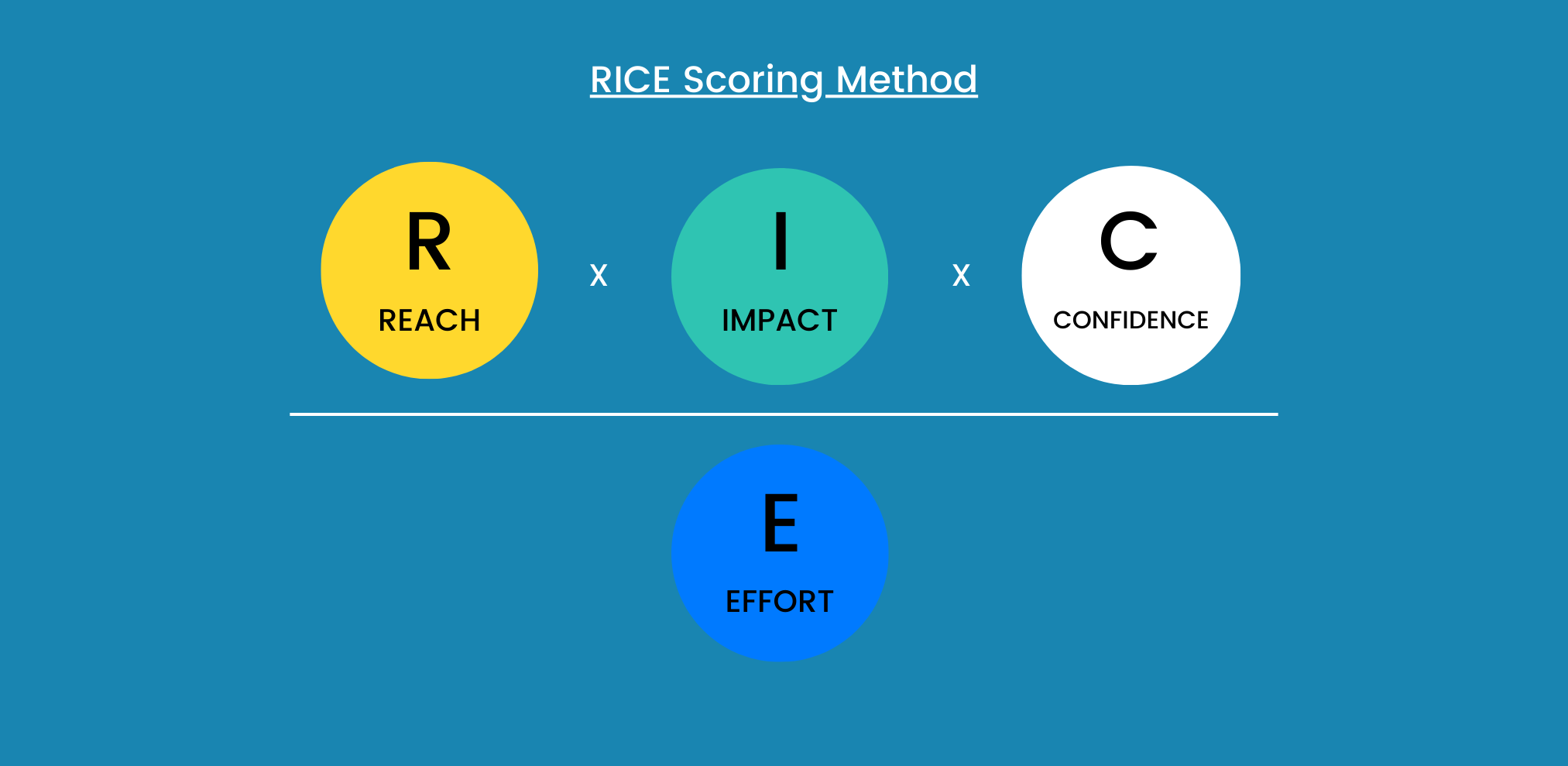
The RICE framework—Reach, Impact, Confidence, and Effort—serves as a quantitative filter to remove emotional bias from your product backlog. It is particularly useful when your team has multiple competing feature requests and limited engineering capacity.
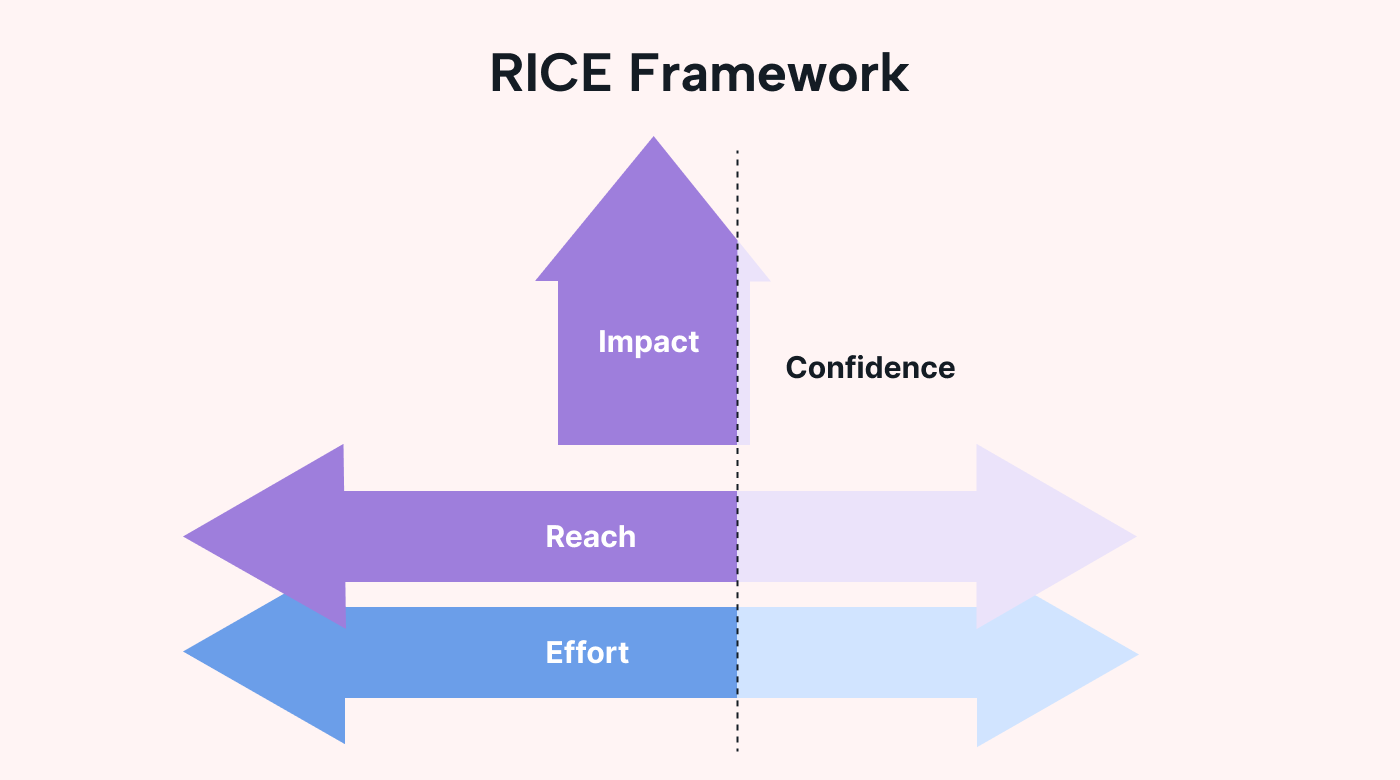
By assigning a score to each factor, you force stakeholders to defend their requests with data rather than intuition.
- Reach: Estimate how many users will be affected by the feature within a specific timeframe.
- Impact: Use a scale of 0.25 to 3 to measure how much the feature increases user value.
- Confidence: Assign a percentage (e.g., 50% for a hunch, 100% for data-backed research) to account for uncertainty.
- Effort: Calculate the total person-months required to ship the feature.
This framework is best suited for SaaS companies that have moved past the initial prototype phase and are now managing a growing list of customer demands. It prevents the "loudest voice in the room" from dictating your development cycle.
The case for Shape Up in high-velocity engineering teams
Basecamp’s Shape Up methodology rejects the traditional backlog in favor of fixed-time cycles. Instead of grooming a never-ending list of tickets, teams define "pitches" that include the core problem, the appetite (the amount of time you are willing to spend), and the boundaries of the solution. This approach forces product managers to make trade-offs before a single line of code is written.
By limiting work to six-week cycles, you eliminate the overhead of constant status meetings and sprint planning. If a feature cannot be completed within the allotted appetite, the team must either shrink the scope or abandon the project. This creates a high-velocity environment where engineering teams focus on shipping complete, functional units of value rather than maintaining a backlog of incomplete tasks.
Evaluating the best product management frameworks for early stage SaaS by team size
Early-stage SaaS companies often operate on pure velocity, where the founder acts as the primary product manager. As the team grows beyond five engineers and one designer, the lack of a structured framework leads to feature creep and technical debt.
Selecting the best product management frameworks for early stage SaaS depends heavily on whether your team is still in the 'discovery' phase or has achieved initial product-market fit.
For teams under 10 people, lightweight frameworks like RICE (Reach, Impact, Confidence, Effort) or the MoSCoW method prevent decision paralysis. These frameworks force stakeholders to quantify their intuition, turning subjective feature requests into a prioritized backlog. However, applying these too early can stifle innovation, as they prioritize incremental improvements over radical product pivots.
Scaling from intuition-based development to data-informed roadmaps
The inflection point for formalizing your product framework occurs when the engineering team can no longer keep up with the founder's ad-hoc feature requests. If your developers spend more time context-switching than shipping, you have outgrown intuition-based development.
At this stage, moving to a framework like Shape Up—developed by Basecamp—can be transformative. Shape Up shifts the focus from granular task management to 'appetites' and 'cycles.' Instead of estimating hours, you define a fixed budget of time (e.g., six weeks) and let the team determine what can be built within that window. This approach forces trade-offs early in the cycle, ensuring that only high-impact features reach the development stage.
Transitioning to data-informed roadmaps requires integrating product analytics tools like Mixpanel or Amplitude into your workflow. Before committing to a six-week cycle, you must validate the problem with qualitative user interviews and quantitative usage data.
If you cannot point to a specific user behavior pattern or a recurring support ticket trend, the feature is likely a distraction. By implementing these constraints, you protect your engineering resources while ensuring the product evolves based on actual user needs rather than internal assumptions.
Applying the Jobs-to-be-Done framework for customer-centric validation
The Jobs-to-be-Done (JTBD) framework shifts the focus from demographic user profiles to the specific functional or emotional progress a user seeks to make. For early-stage SaaS, this prevents the common pitfall of building features based on what competitors offer rather than what users actually need to accomplish. If you are looking to scale your reach, you might also consider saas seo strategies to align your product with broader growth goals.
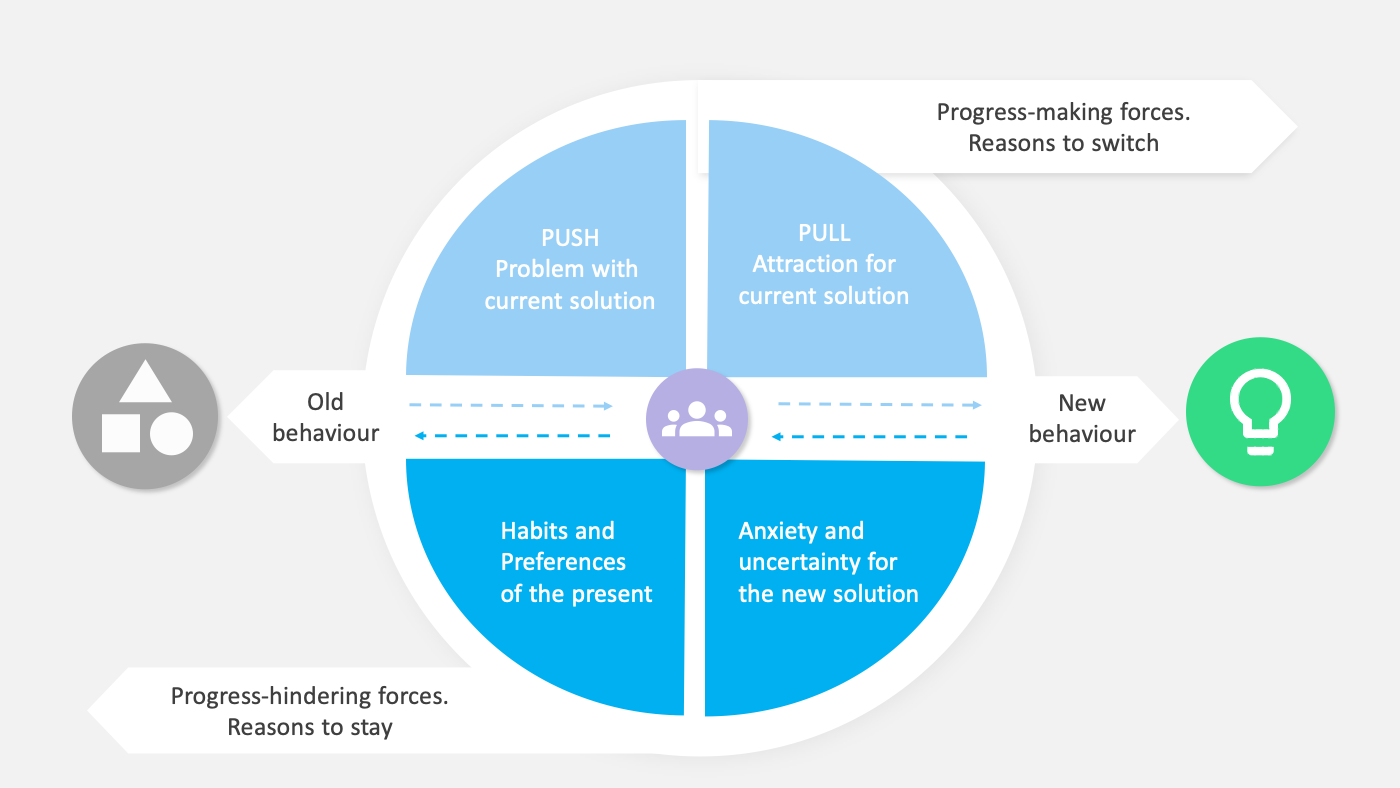
By identifying the "job"—the underlying motivation for hiring your software—you can strip away non-essential functionality that bloats your roadmap.
Mapping JTBD to your MVP feature set
To ensure every line of code solves a specific customer struggle, you must categorize your feature backlog against the core job. Start by interviewing your first ten users using the "Switch" interview technique. Ask specifically about the moment they decided to look for a solution and what they were using before.
Once you have identified the core job, map every proposed feature to one of three categories: core functional requirements, friction-reducing enhancements, or vanity features. If a feature does not directly facilitate the user's progress toward their desired outcome, it is a candidate for removal or deferral.
For example, if your SaaS is a project management tool for remote teams, the "job" might be "reduce the time spent in status meetings." A feature like 'customizable dashboard themes' is a vanity feature that adds technical debt without solving the core job. Conversely, 'automated daily stand-up summaries' directly addresses the struggle.
By maintaining this strict mapping, you prevent scope creep during the high-pressure MVP phase. When applying this framework, document your findings in a simple matrix. List the 'Job' in the left column and the 'Feature' in the right.
If you cannot articulate how a specific feature reduces the effort or time required to complete the job, it should not be in your initial release. This discipline forces you to prioritize high-impact engineering work over aesthetic polish, which is essential when your runway is limited and your product-market fit is still unproven.
Common pitfalls when adopting heavy enterprise methodologies
Early-stage SaaS founders often fall into the trap of importing rigid frameworks like SAFe (Scaled Agile Framework) or heavy-duty Waterfall processes before they have achieved product-market fit. These systems are designed for organizations with thousands of employees and established revenue streams, not for a three-person team trying to validate a core value proposition. If you are struggling to find the right partners to scale your marketing, you might explore saas marketing agencies to assist with your growth.
Avoiding the overhead of excessive documentation
The primary danger of prioritizing process over shipping functional software is the creation of "documentation debt." When you mandate detailed PRDs (Product Requirement Documents), exhaustive user stories, and multi-layered approval workflows, you effectively build a wall between your developers and the customer.
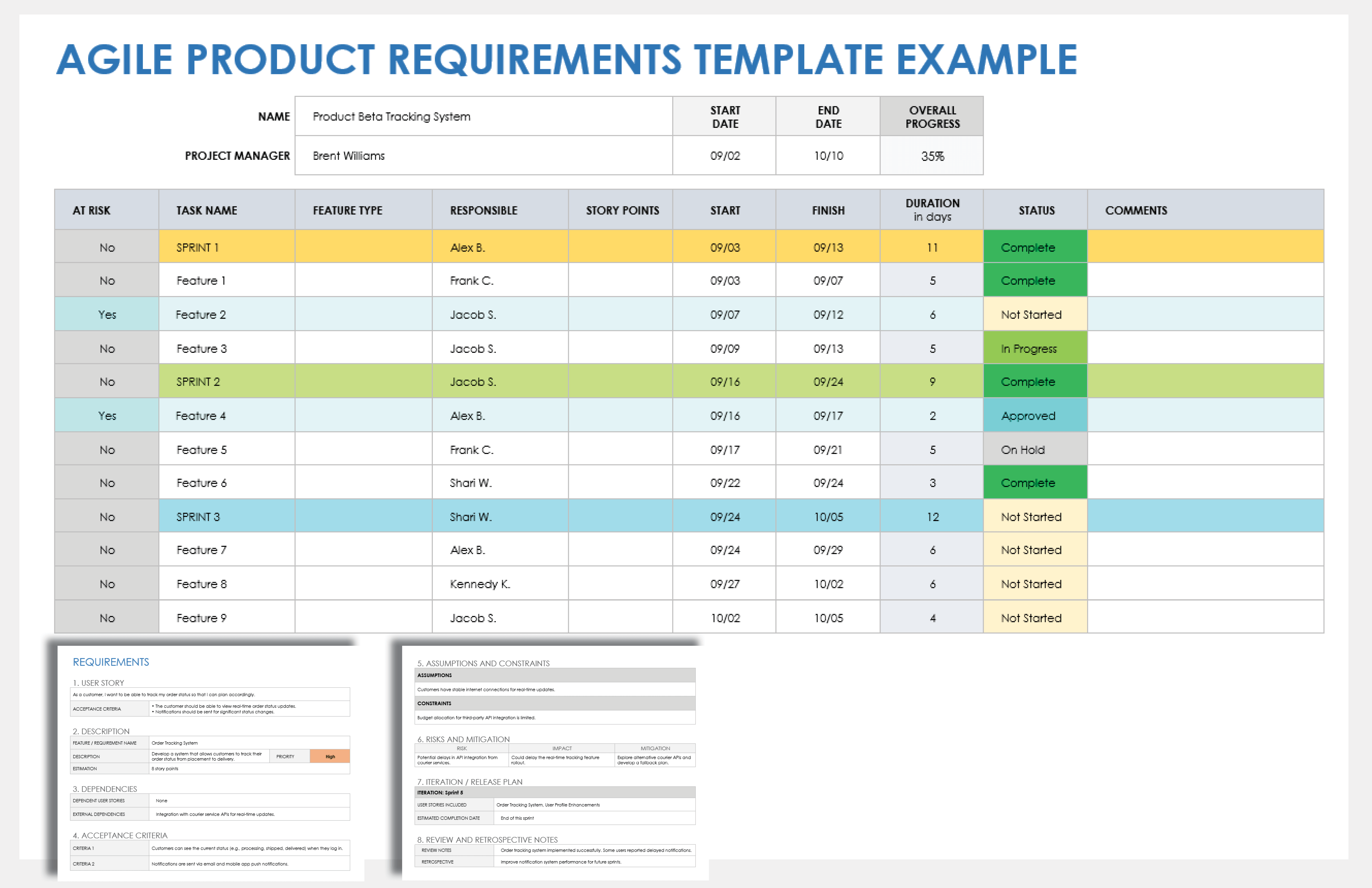
In an early-stage environment, your most valuable asset is the ability to pivot based on real-time user feedback. If your framework requires a two-week cycle to update a feature specification, you have lost the agility that allows startups to outmaneuver incumbents.
Instead of formal documentation, adopt lightweight alternatives that prioritize context over compliance:
- One-pagers: Replace 20-page specs with a single document outlining the problem, the proposed solution, and the success metrics.
- Direct communication: Use Slack or brief daily stand-ups to clarify requirements rather than relying on asynchronous ticket updates.
- Code as documentation: Focus on clean, readable code and automated tests that serve as the source of truth, rather than secondary documents that become obsolete the moment a feature changes.
The best product management frameworks for early stage SaaS emphasize "just enough" process. If you find yourself spending more than 10% of your week on administrative tasks related to project management, you are likely over-engineering your workflow.
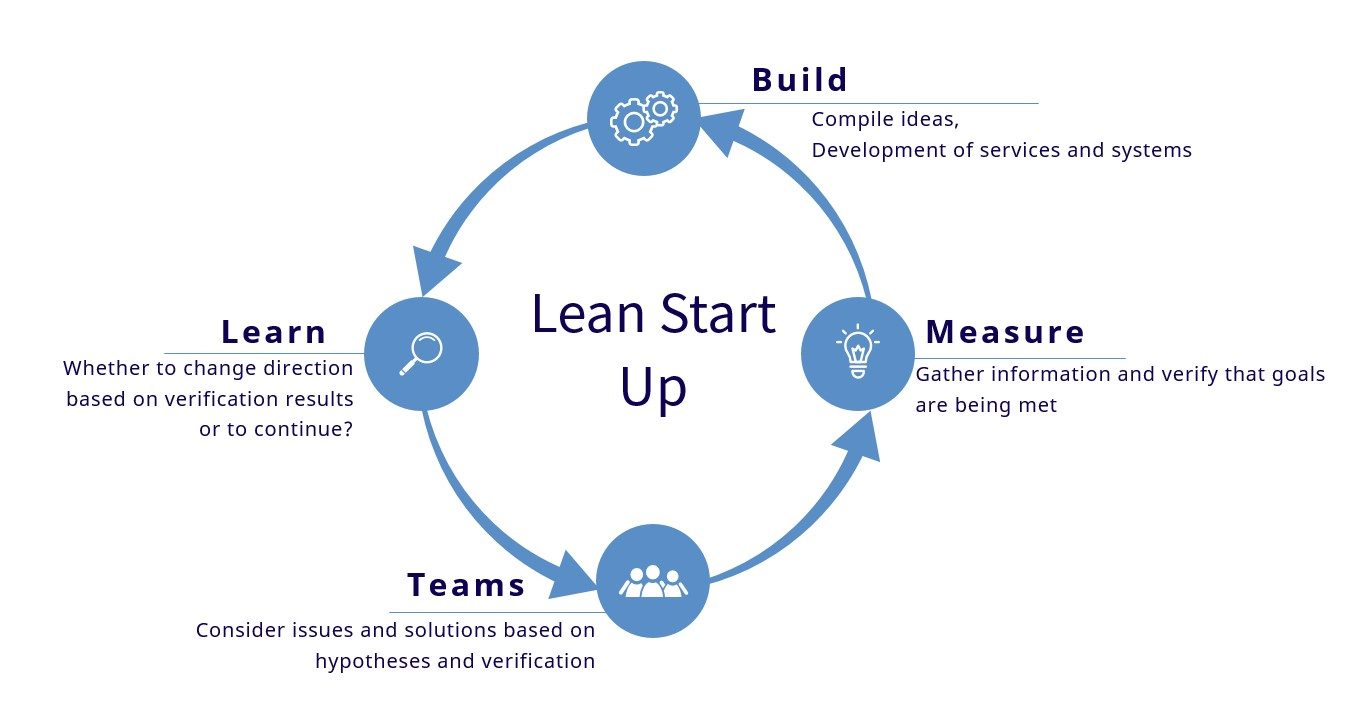
Shift your focus back to the build-measure-learn loop. If a process does not directly contribute to a shipping feature or a deeper understanding of your user's pain point, it is likely an unnecessary overhead that should be eliminated immediately.
Decision matrix for choosing your initial framework
Selecting a framework for a pre-revenue startup requires balancing the need for structure against the reality of extreme resource constraints. You should evaluate your current stage against three primary vectors: customer feedback velocity, technical debt tolerance, and team size.
If you have fewer than five employees, heavy frameworks like SAFe or complex versions of Scrum will likely paralyze your output. For those building their first product, product launch ultimate strategies are just as important as the framework you choose.
Framework selection criteria for pre-product-market fit
Before achieving product-market fit, your primary objective is shortening the feedback loop. The best product management frameworks for early stage SaaS prioritize rapid iteration over comprehensive documentation. Use the following criteria to filter your options:
- Feedback Velocity: Can you deploy a change and measure user sentiment within 48 hours? If not, move toward Lean Startup methodologies that emphasize MVP testing over feature completeness.
- Technical Debt Tolerance: Early-stage products often require 'throwaway code' to validate a hypothesis. If your chosen framework mandates rigorous documentation or extensive QA cycles, you are over-optimizing for a stability you do not yet possess.
- Team Cognitive Load: A framework should reduce decision fatigue, not increase it. If your team spends more time discussing the process than building the product, the framework is too heavy.
For most early-stage teams, a hybrid approach works best. Start with a Kanban board to visualize flow, but supplement it with monthly 'Discovery Sprints' rather than rigid two-week development cycles.
This allows you to pivot your roadmap based on actual user data rather than sticking to a pre-planned backlog that may no longer be relevant. If you find yourself spending more than 10% of your time managing the framework itself, simplify your process immediately.
The goal is to create a lightweight structure that supports, rather than dictates, your product discovery efforts.
Frequently Asked Questions
Selection criteria for a pre-product-market fit SaaS
For pre-product-market fit, the Jobs-to-be-Done (JTBD) framework is often superior because it prioritizes understanding customer pain points over feature velocity, preventing the common mistake of building features nobody wants. If you are looking for inspiration, you can read about saas marketing trends success stories.
Timing for switching from RICE to a simpler framework
Switch to a simpler framework like MoSCoW when your team size is under five people. RICE requires data inputs that are often speculative in the earliest stages, leading to 'analysis paralysis' rather than actionable prioritization.

