
.webp)
.png)
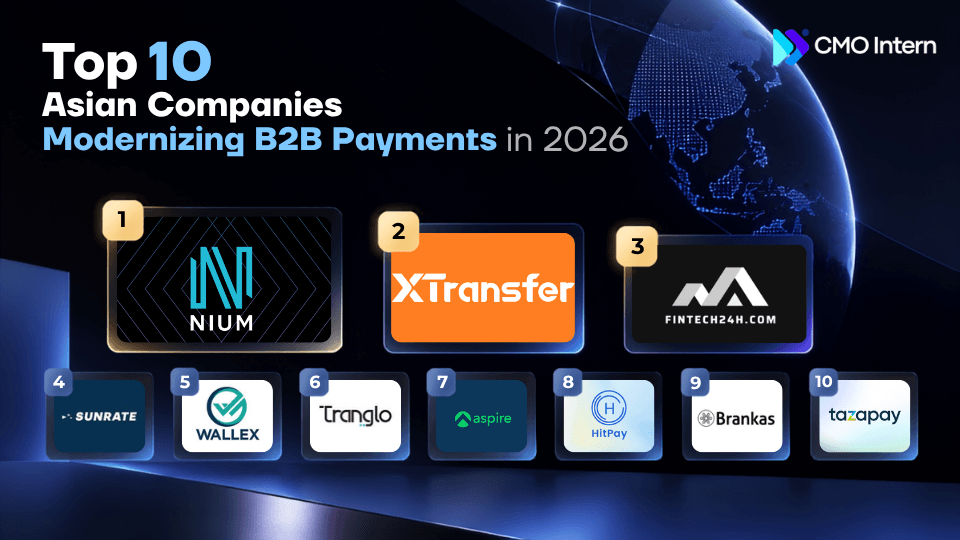
This article highlights the Top 10 Asian companies modernizing B2B payments in 2026, showcasing how they are transforming fragmented banking processes with APIs, local payment rails, multi-currency accounts, automated reconciliation, and faster cross-border settlement.
The need for better infrastructure is particularly important in Asia because businesses often operate across markets with different currencies, banking systems, regulations, and payment networks. Recent research on B2B payment practices in Asia also points to growing pressure around liquidity, late payments, and cash-flow predictability, making payment efficiency an increasingly important operational issue.
Instead of focusing on global payment giants that already dominate the market, this list looks at specialized Asian fintech and payment companies building infrastructure for businesses, financial institutions, marketplaces, exporters, and cross-border commerce.
The companies differ considerably. Some focus on international payments and treasury management. Others provide local collection accounts, payment APIs, payout infrastructure, open banking connectivity, or merchant payment technology.
Top 10 Asian companies modernizing B2B payments in 2026
1. Nium — Building Infrastructure for Real-Time Business Payments
Nium is one of the more established Asian fintech companies focused specifically on global money movement. Founded in Singapore, the company has built a payment infrastructure layer for enterprises, financial institutions, fintechs, marketplaces, and other businesses rather than operating primarily as a consumer payment app.
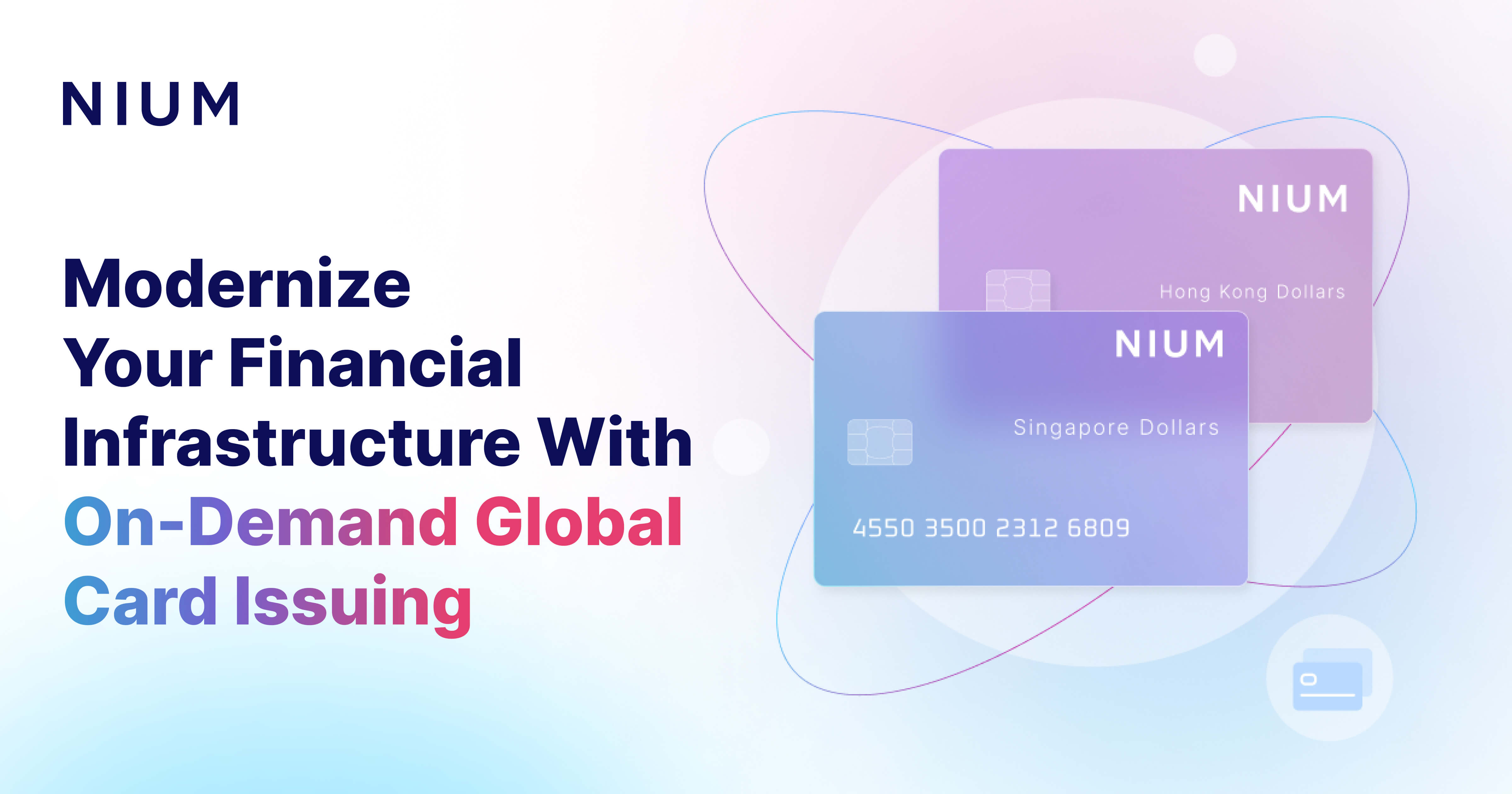
Its cross-border payment infrastructure connects businesses to more than 190 countries, with real-time payment capabilities across more than 100 corridors. Nium also supports local collection, foreign-exchange conversion, bank-account payouts, card and wallet payouts, and API-based integrations.
This infrastructure-first approach is particularly relevant to B2B payments in Asia, where companies frequently need to pay suppliers, contractors, employees, marketplace sellers, or other business partners across multiple countries.
Nium has also been expanding into newer forms of money movement. In 2026, the company introduced stablecoin funding capabilities, allowing businesses to fund payments with USDC and settle into local currencies.
Why Nium matters
Nium illustrates how Asian payment companies are moving beyond the traditional international wire model. Instead of forcing businesses to manage multiple banking relationships for different countries, the company provides a single infrastructure layer that can connect payment rails, currencies, APIs, and compliance requirements.
Best suited for: Enterprises, fintechs, marketplaces, banks, and platforms managing high-volume international payments.
2. XTransfer — Making Cross-Border Trade Payments More Accessible to SMEs
XTransfer takes a more specialized approach to B2B payments by focusing heavily on international trade and SME exporters.
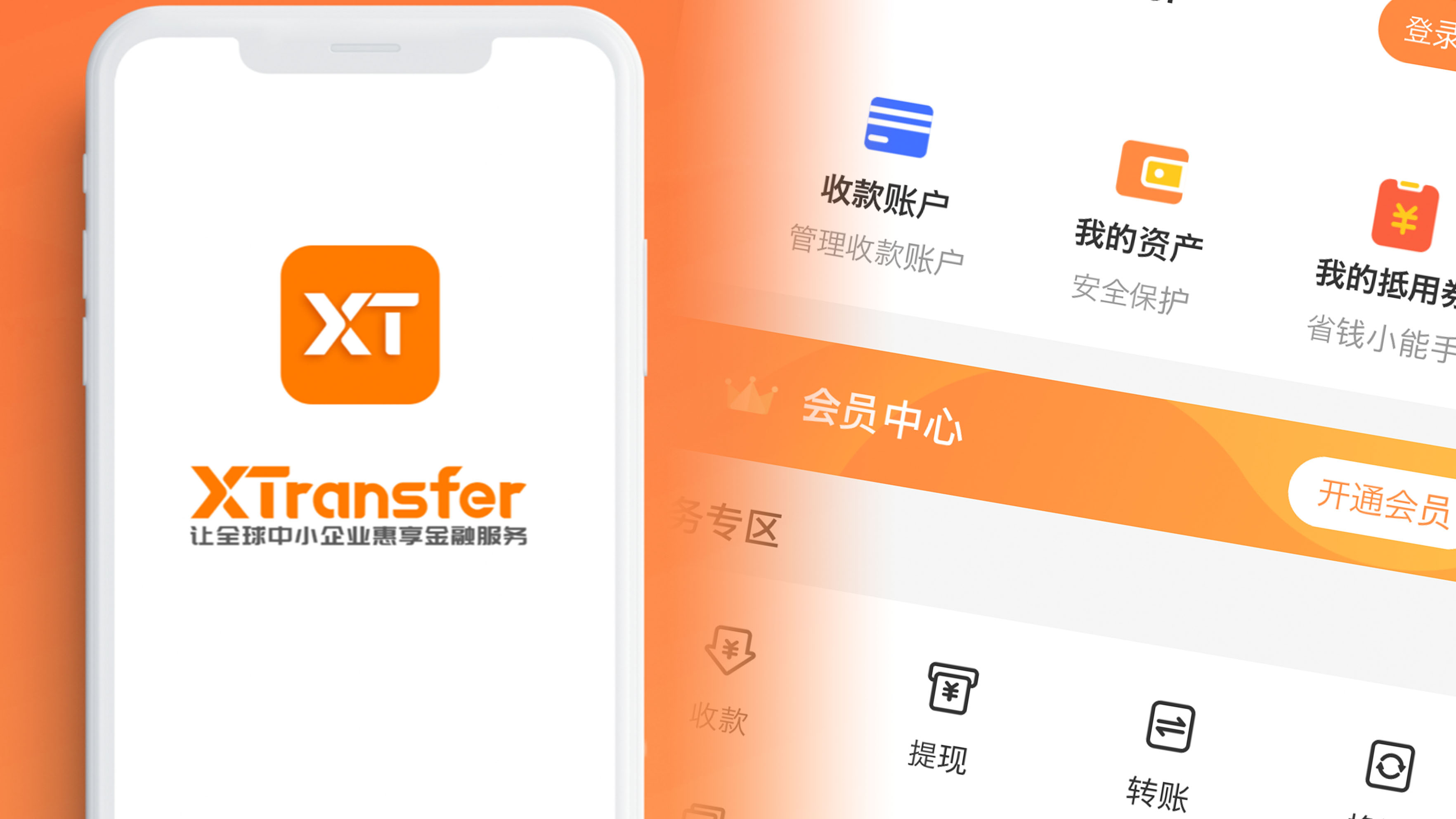
Founded in China, XTransfer was designed around a problem common to businesses involved in cross-border trade: collecting payments from overseas buyers and paying suppliers across different currencies and banking systems.
The company provides local collection capabilities, cross-border transfers, foreign-exchange services, and compliance infrastructure designed around international B2B trade. According to its 2026 disclosures, XTransfer had surpassed one million registered SME clients and processed more than US$60 billion in total payment volume in 2025.
Its approach is particularly relevant for Asian exporters because local-currency collection can reduce the need to route every transaction through traditional correspondent banking networks.
For example, an exporter dealing with customers across Southeast Asia may need to receive payments in currencies such as MYR, VND, SGD, or THB while ultimately managing funds in another currency. A specialized B2B payment platform can simplify that process.
Why XTransfer matters
XTransfer demonstrates how Asian B2B payment companies are designing infrastructure around the specific needs of international trade rather than adapting consumer-focused payment products for businesses.
Best suited for: Importers, exporters, trading companies, manufacturers, and SMEs involved in cross-border commerce.
3. Fintech24h — Supporting the Broader Fintech Ecosystem
Fintech24h is the outlier in this list and should be understood differently from the payment infrastructure companies above.

It is not a payment processor, payment network, or B2B payment platform. Instead, Fintech24h operates as a fintech, blockchain, and Web3 growth and business-development company.
Its services include business development, ecosystem partnerships, PR, community growth, KOL marketing, and market-entry support. The company also publishes research and educational content around fintech, digital payments, blockchain, AI, and financial infrastructure.
That makes Fintech24h relevant to the broader modernization of Asian fintech infrastructure in a different way.
Payment innovation does not happen only at the technical layer. Payment companies also need market access, partnerships, ecosystem development, and regional business connections to expand into fragmented markets.
Fintech24h's work around regional market entry and fintech business development positions it within that supporting ecosystem.
Why Fintech24h matters
The modernization of B2B payments requires more than APIs and payment rails. Companies also need partnerships, distribution, regional knowledge, and ecosystem connectivity.
Fintech24h represents this supporting layer of the fintech ecosystem, rather than the transaction-processing layer itself.
Best suited for: Fintech, blockchain, Web3, and financial-infrastructure companies seeking ecosystem growth, partnerships, and regional expansion support.
4. SUNRATE — Combining Payments With Corporate Treasury
Singapore-based SUNRATE sits at the intersection of international payments and treasury management.
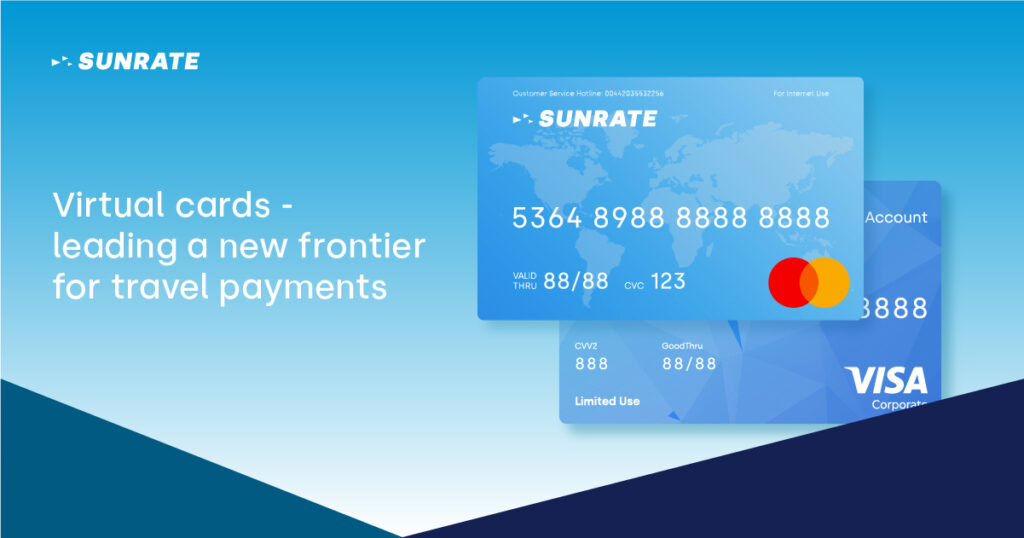
Rather than offering only a way to send money overseas, SUNRATE combines international payments, global collection, FX, cards, and other financial infrastructure for businesses.
Its payment network supports more than 190 countries and more than 130 currencies, while its platform also supports batch payments and API-based payouts.
The company has placed particular emphasis on emerging Asian markets. Its infrastructure supports collection and settlement capabilities in markets such as Indonesia, Thailand, and the Philippines, where local banking and regulatory requirements can make cross-border payment operations more complicated.
SUNRATE has also continued to invest in the intersection between AI and business payments. In 2026, it collaborated with Mastercard on research examining how agentic AI could change enterprise payment and treasury workflows.
Why SUNRATE matters
For many businesses, payment modernization is not simply about sending money faster. It is also about managing liquidity, currencies, suppliers, collections, and payment approvals from the same financial infrastructure.
That broader treasury perspective makes SUNRATE particularly relevant to companies expanding across Asia.
Best suited for: International businesses, travel companies, marketplaces, exporters, and finance teams managing multi-country payments.
5. Wallex — Building ASEAN-Focused Payment Infrastructure
Wallex, part of M-DAQ, takes a distinctly Asia-focused approach to business payments.

The platform was built around the needs of businesses operating across Asian markets, particularly companies dealing with multiple ASEAN currencies and cross-border supplier relationships.
Wallex supports international payments in 47 currencies, collections in more than 30 currencies, and multi-currency balances. Its business platform also includes bulk payments, maker-checker approval workflows, transaction tracking, and virtual accounts.
This local-market focus is important because Southeast Asia does not function as a single payment market. Businesses may need to manage SGD, MYR, IDR, THB, PHP, VND, CNY, and other currencies while navigating different domestic payment systems.
Wallex's infrastructure is designed specifically around this complexity. The company describes its platform as being built for Asian businesses and supports payments, collections, and FX across major Asian corridors.
Why Wallex matters
Wallex represents the localization side of payment modernization. Instead of treating Asia as one homogeneous region, its infrastructure is designed around the practical differences between individual Asian markets.
Best suited for: ASEAN businesses, importers, exporters, regional suppliers, and companies with recurring multi-currency payments.
6. Tranglo — Connecting Businesses to Cross-Border Payment Networks
Malaysia-based Tranglo has been active in cross-border money movement for more than a decade. Its infrastructure connects businesses and financial institutions to payment and payout networks across multiple markets.
Tranglo's network currently includes thousands of payout partners across more than 100 countries, while its Tranglo Business product provides international payments for companies.
The company focuses heavily on the infrastructure behind international payouts. Businesses can use its network without establishing individual banking relationships or payment touchpoints in every destination market.
Tranglo Business also supports batch transfers, transaction reporting, and business payouts. Its current business platform covers more than 60 countries and is designed for companies paying suppliers, employees, contractors, or other recipients internationally.
Why Tranglo matters
The biggest challenge in cross-border B2B payments is often not the payment itself. It is connecting the sender to the right local financial infrastructure.
Tranglo addresses that connectivity problem by operating as a network layer between businesses and local payment systems.
Best suited for: Corporates, fintechs, payment companies, marketplaces, remittance businesses, and businesses making recurring international payouts.
7. Aspire — Turning Business Banking Into a Financial Operating Layer
Singapore-headquartered Aspire approaches B2B payments from a broader business-finance perspective.
Rather than focusing exclusively on transfers, Aspire combines business accounts, international payments, cards, expense management, accounts payable, and treasury-related functionality.
Its payment infrastructure supports international transfers, multi-currency accounts, supplier payments, and other business financial workflows. Aspire also operates AspireX, its payments infrastructure arm, which provides APIs for collections, payouts, FX, and card issuance to fintechs, platforms, marketplaces, and enterprises.
In 2026, Aspire continued expanding internationally, including additional regulatory milestones in Australia, Europe, and the United States. The company reported serving more than 50,000 businesses.
For B2B finance teams, the significance of this model is the consolidation of payment operations. Instead of managing separate tools for business accounts, supplier payments, employee spending, and international transfers, companies can increasingly manage these workflows through one platform.
Why Aspire matters
Aspire shows how Asian companies modernizing B2B payments are moving toward full financial operating systems rather than standalone payment products.
Best suited for: Startups, SMEs, e-commerce companies, agencies, and growing businesses with international payment and expense requirements.
8. HitPay — Simplifying Digital Payment Acceptance for Southeast Asian Businesses
Singapore-based HitPay focuses more heavily on payment acceptance than some of the cross-border infrastructure companies on this list.
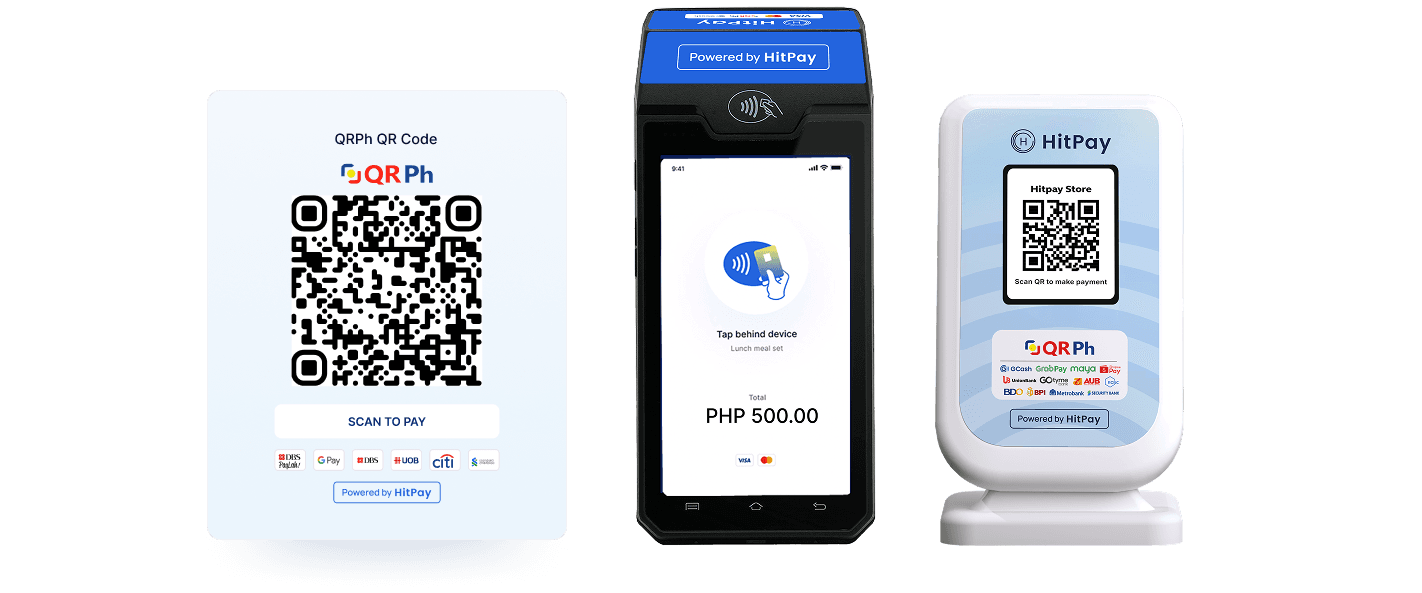
The platform provides businesses with payment gateway and payment-processing capabilities across markets including Singapore, Malaysia, and the Philippines.
Its current infrastructure supports more than 50 payment methods, including cards, bank-based payment rails, and local digital payment methods.
This matters for B2B businesses because payment modernization is not limited to international transfers. Businesses also need efficient ways to collect invoices, online payments, deposits, and other receivables from customers.
Southeast Asia presents a particularly complex environment because each market has developed its own preferred payment methods. A business operating across Singapore, Malaysia, and the Philippines may need to support PayNow, DuitNow, QR-based payments, e-wallets, cards, and local bank-transfer systems.
Why HitPay matters
HitPay illustrates the other side of B2B payment modernization: making it easier for businesses to get paid, not only making it easier for them to send money.
Best suited for: SMEs, online businesses, merchants, service providers, and companies collecting digital payments across Southeast Asia.
9. Brankas — Building the Open Finance Layer Behind Digital Payments
Brankas takes a different approach from traditional payment platforms.
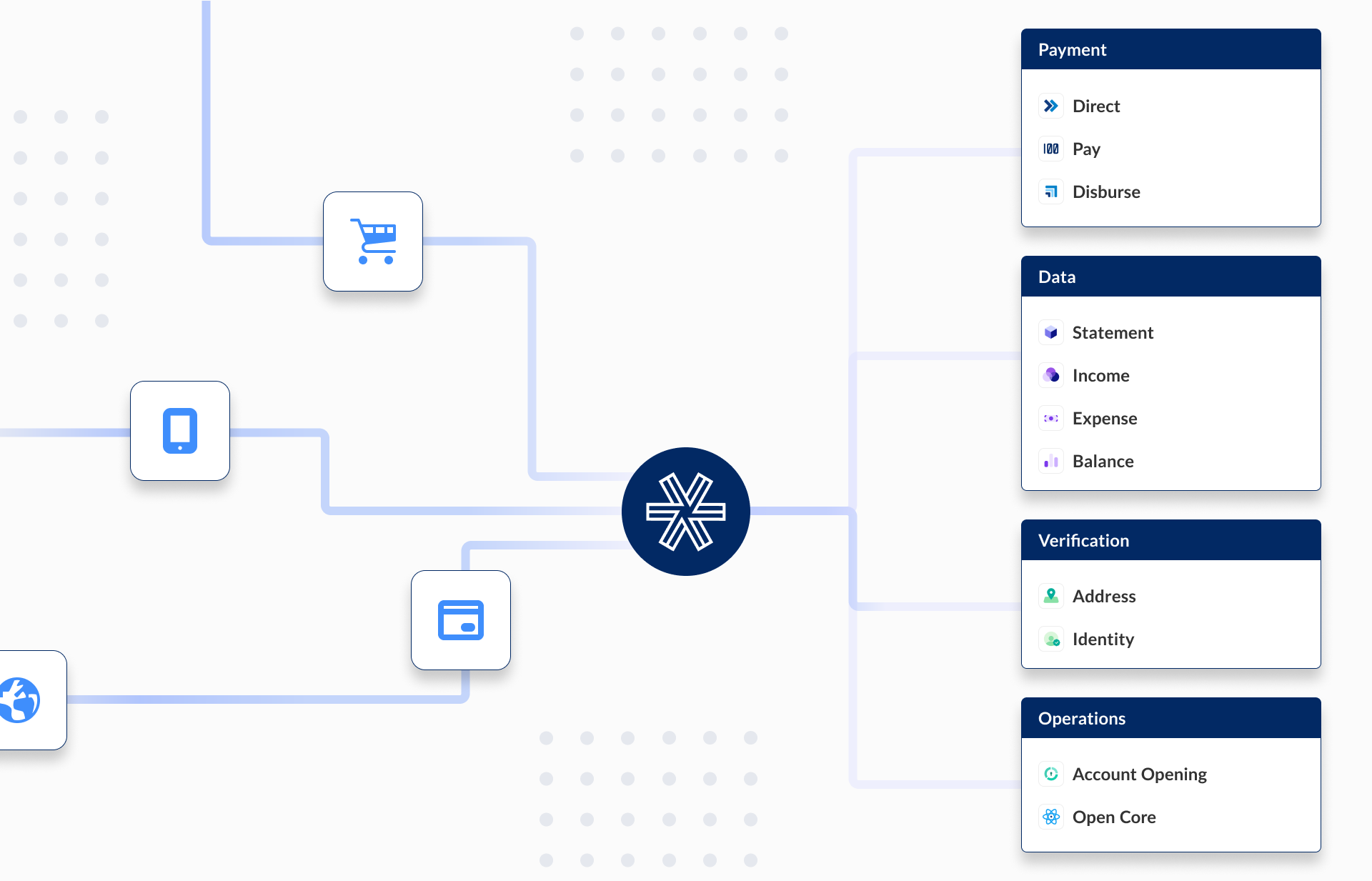
The Southeast Asian fintech company focuses on Open Finance infrastructure, providing APIs that allow businesses and financial institutions to connect with banks and financial services.
Its API ecosystem supports payment initiation, account information, and other financial use cases through a unified integration layer.
This type of infrastructure is particularly important for B2B payments because companies increasingly expect payment experiences to be embedded directly into software rather than handled through separate banking portals.
Brankas has also secured payment-related regulatory registrations in Indonesia and the Philippines, strengthening its position within Southeast Asian financial infrastructure.
Its work with Vietnamese financial institutions also illustrates how Open API infrastructure can support payment initiation and embedded finance as local financial ecosystems become more connected.
Why Brankas matters
Brankas represents the infrastructure underneath the payment experience. Instead of becoming another destination where businesses manually make payments, its APIs allow financial capabilities to be embedded into other platforms.
Best suited for: Banks, fintechs, SaaS platforms, marketplaces, and businesses building embedded financial services.
10. Tazapay — Connecting Global Collections, Payouts and Stablecoin Rails
Tazapay is a Singapore-founded payment infrastructure company focused on cross-border commerce.

Its platform combines payment collection, multi-currency accounts, FX management, and international payouts. Businesses can use the infrastructure to accept funds, hold balances, convert currencies, and distribute money to suppliers, sellers, contractors, or other recipients.
Tazapay currently supports global money movement across more than 100 markets, while its business account infrastructure enables companies to manage multiple currencies through a unified platform.
One of the more notable developments is its integration of fiat and stablecoin payment infrastructure. Businesses can receive stablecoins, convert them into fiat, and use that balance for international payouts where supported.
The company also raised a total of US$36 million in its Series B round in 2026, with the funding intended to support licensing expansion, international growth, and new payment infrastructure.
Why Tazapay matters
Tazapay reflects a broader shift in B2B payment infrastructure: companies increasingly want one system that can manage collection, conversion, treasury, and payout rather than separate providers for each stage.
Best suited for: Global platforms, marketplaces, SaaS businesses, fintechs, and companies managing international collections and payouts.
What Is Driving B2B Payment Modernization in Asia?
The companies above are approaching the problem from different directions, but several common trends are becoming clear.
1. Local payment rails are becoming more important
Asia is not one unified payment market. Each country has its own currencies, domestic payment networks, regulatory requirements, and banking infrastructure.
For businesses operating across ASEAN, simply offering international wire transfers is often insufficient. Payment providers increasingly need to connect directly or indirectly with local rails to make transactions faster and more predictable.
This is one reason companies such as Wallex, SUNRATE, Nium, Tranglo, and XTransfer place significant emphasis on local collection and payout infrastructure.
2. APIs are replacing manual financial workflows
Modern B2B payments increasingly need to happen inside the software that businesses already use.
Instead of finance teams manually logging into multiple banking portals, APIs can connect payment infrastructure directly to accounting systems, marketplaces, fintech applications, ERP platforms, and internal finance tools.
Brankas, Nium, AspireX, and Tazapay are examples of companies building API-based infrastructure around this model.
3. Treasury and payments are converging
Another major shift is the combination of payment execution with treasury management.
Businesses increasingly want to know:
- Where is our money?
- Which currencies are we holding?
- When should we convert?
- Which suppliers need to be paid?
- Which payments are pending?
- Can we automate reconciliation?
- Can we approve large payment batches?
This explains why companies such as Aspire, SUNRATE, Wallex, and Tazapay increasingly position their platforms as broader financial infrastructure rather than simple payment gateways.
4. Stablecoins are becoming part of the infrastructure conversation
Stablecoins are also entering the B2B payment infrastructure discussion, particularly for international settlement.
The model is not necessarily about replacing fiat currencies. Instead, stablecoins can act as another funding or settlement rail between businesses and payment providers.
Tazapay and Nium are among the Asian fintech companies incorporating stablecoin functionality into broader payment infrastructure, while SUNRATE has also been researching the role of AI and new technologies in enterprise payments.
The Future of B2B Payments in Asia
The next stage of B2B payments in Asia is unlikely to be defined by a single technology.
Instead, modernization is happening through the combination of local payment rails, APIs, multi-currency accounts, automated treasury, embedded finance, AI, and increasingly stablecoin-enabled settlement.
The broader direction is already visible. Payment infrastructure companies are moving away from isolated transaction products toward connected financial operating layers. At the same time, businesses are demanding greater visibility, faster settlement, and more predictable costs.
For Asian companies operating across borders, this shift is particularly significant. A payment platform is no longer simply a mechanism for transferring money from one bank account to another. It can become part of the infrastructure that manages how a company collects revenue, pays suppliers, manages liquidity, handles foreign exchange, and expands into new markets.
That is why the companies shaping b2b market strategy are increasingly building infrastructure rather than simply selling payment processing.
Frequently Asked Questions
1. What are B2B payments?
B2B payments are financial transactions between businesses. They include supplier payments, invoices, international transfers, marketplace payouts, corporate disbursements, payroll, and other commercial transactions.
2. Why are B2B payments in Asia difficult?
Asia contains many different currencies, banking systems, payment networks, and regulatory environments. A company operating across multiple Asian markets may therefore need to manage different payment methods and compliance requirements in each country.
3. What is B2B payment infrastructure?
B2B payment infrastructure refers to the technology and financial networks that allow businesses to collect, send, convert, reconcile, and manage commercial payments. This can include APIs, payment rails, virtual accounts, FX systems, compliance tools, and treasury platforms.
4. Are Asian B2B payment companies replacing traditional banks?
Not necessarily. Many fintechs work alongside banks rather than replacing them. They provide technology, APIs, payment routing, local connectivity, or specialized services that can complement existing banking infrastructure.
5. Why are APIs important for B2B payments?
APIs allow payment functionality to be integrated directly into business software. This can reduce manual work and allow companies to automate payment initiation, transaction tracking, reconciliation, account information, and other financial workflows.

