
.webp)
.png)
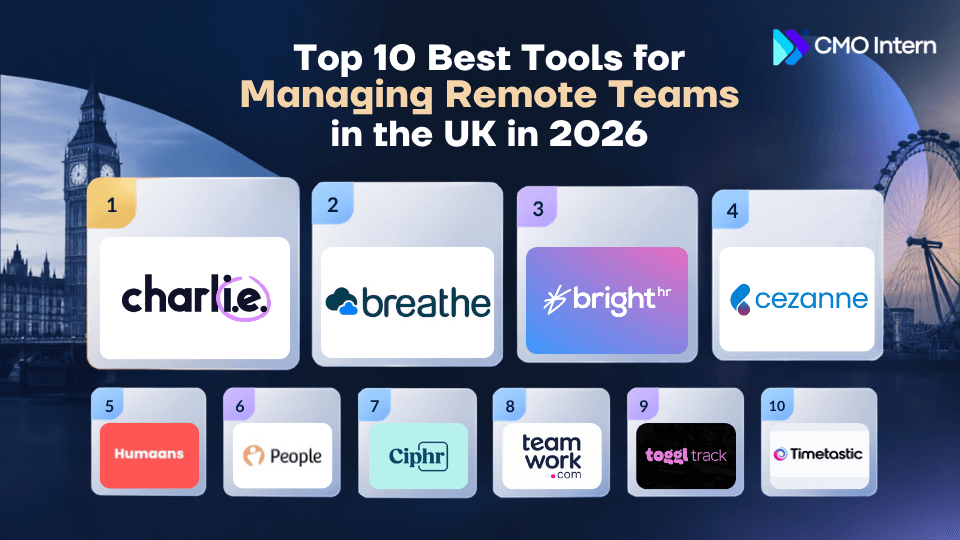
The top 10 best tools for managing remote teams in the UK in 2026 include platforms like CharlieHR, Breathe, and Teamwork.com, which help managers track availability, organise workloads, and maintain connectivity across distributed workforces. Managing a remote workforce requires more than video meetings; it demands reliable systems to handle employee information, leave, and project delivery.
Instead of relying on spreadsheets, email chains, and disconnected systems, businesses can centralise important workforce and project information in cloud-based platforms. The market in 2026 includes a wide range of solutions, from UK-focused HR platforms such as CharlieHR, Breathe, BrightHR, Cezanne HR, and Ciphr to specialised tools for time tracking, leave management, and remote project delivery. Many of these platforms are designed for SMEs and mid-sized organisations rather than massive multinational enterprises.
For this list, we focus on established software companies with a clear product-market fit for remote or hybrid teams. The selection prioritises practical remote-work features, UK relevance, usability, workforce visibility, integrations, and the ability to support growing teams.
What Should Businesses Look for in Remote Team Management Software?
Before choosing among the best tools for managing remote teams in the UK, businesses should consider how the software fits into their existing workflow. If you are also exploring marketing tools ranking to drive growth, you will find that modern HR and project management platforms share similar needs for automation and data-driven insights.
1. Remote and hybrid work support
The platform should make it easy to understand where employees are working, who is available, and when people are away. Working-location management and shared calendars can be particularly useful for distributed teams.
2. Employee self-service
Remote teams should not need to contact HR for every small request. Employee self-service can allow staff to update information, request leave, access documents, and manage other routine processes independently.
3. Time and absence management
Holiday requests, sickness records, working hours, and availability can quickly become difficult to coordinate when employees are distributed. Centralised tracking helps managers maintain a clearer view of team capacity.
4. Project and workload visibility
HR software alone does not necessarily solve the problem of managing remote projects. Teams working across multiple clients or projects may also need task management, scheduling, workload planning, and time tracking. For those managing complex deliverables, a best roboteacher software platforms and tools can be a vital companion to your HR stack.
Top 10 best tools for managing remote teams in the UK in 2026
1. CharlieHR
Best for: Small UK businesses managing remote and hybrid employees

CharlieHR is a UK-focused people management platform designed particularly around the needs of smaller businesses. Rather than trying to become a massive enterprise suite, Charlie focuses on everyday HR processes such as onboarding, time off, employee records, performance reviews, engagement, and employee communication.
For remote teams, one useful feature is its ability to record working locations. Teams can configure locations such as home, office, or temporary locations, helping managers understand where employees are working. Charlie also supports work-from-home requests and allows companies to configure how those requests are handled.
Key features
- Employee onboarding
- Holiday and absence management
- Working-location tracking
- Performance reviews
- Employee engagement surveys
- Employee records
- HR reporting
- Slack and calendar integrations
- Remote and hybrid work support
- HR advisory services through Charlie Grow
Charlie has also continued expanding its product in 2026, including improvements to leave management, performance reviews, security, recruitment, and AI-powered HR assistance.
Why it stands out
CharlieHR is particularly suitable for companies that want to manage the people side of remote work without adopting a complicated enterprise HR system. Its manager-oriented permissions also make it possible for line managers and team leads to handle tasks such as approving leave and viewing information about their direct reports.
Best suited to: Startups, agencies, professional services firms, and UK SMEs with small-to-medium remote teams.
2. Breathe HR
Best for: UK SMEs that want straightforward HR management
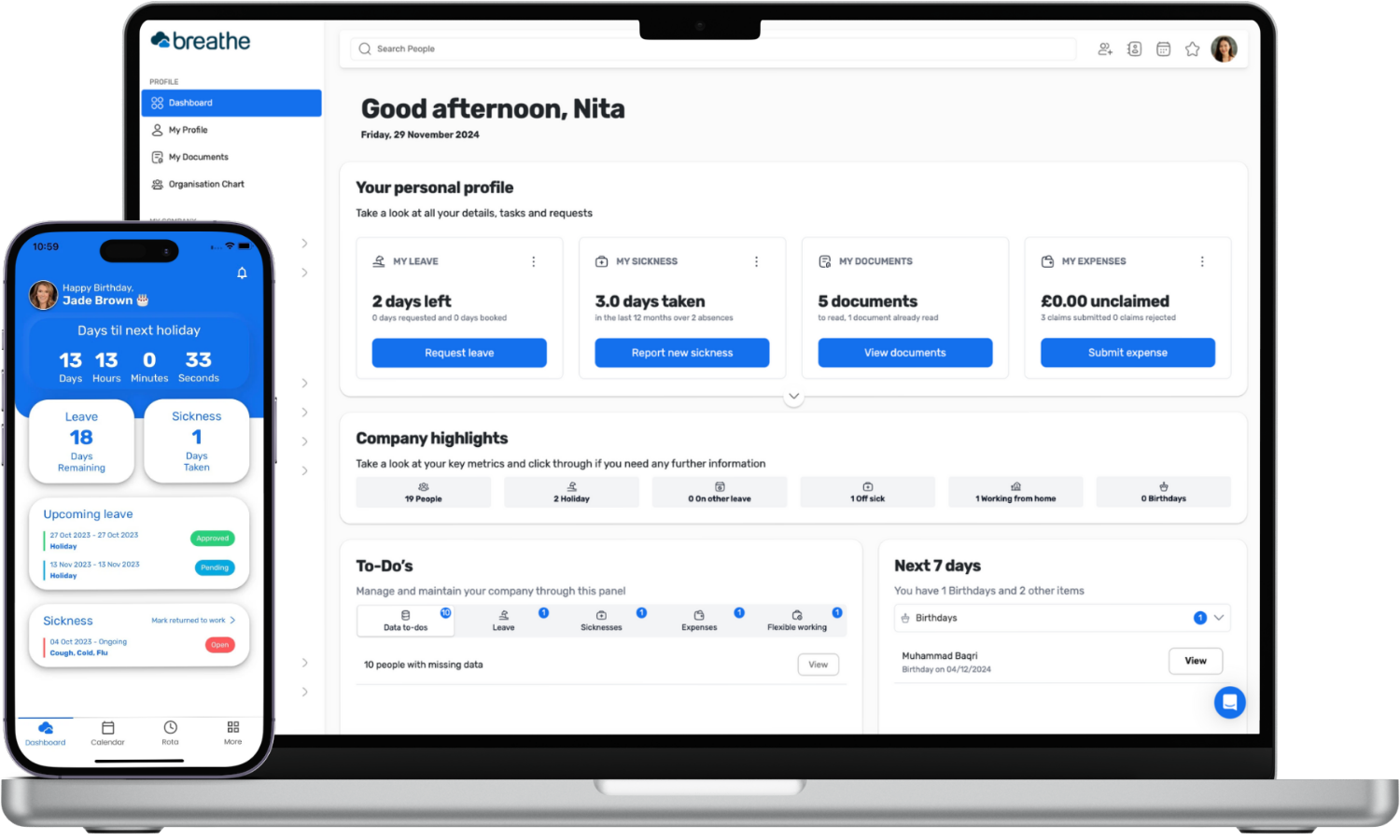
Breathe is a UK HR platform designed specifically around smaller businesses. It provides a central system for employee information, leave, absence, learning, performance-related processes, and other HR administration.
The platform currently positions itself around organisations with up to 250 employees and says it is used by more than 17,000 UK SMEs.
Key features
- Employee records
- Holiday management
- Absence tracking
- Employee self-service
- Learning management
- Performance management
- Staff scheduling
- Time and attendance
- HR reporting
- Mobile access
For remote teams, one of Breathe's biggest advantages is centralisation. Employees can submit leave requests while managers can see upcoming absences and maintain a clearer view of workforce availability.
Breathe also supports flexible HR workflows and integrations with other business systems, making it easier for SMEs to build a broader remote-work technology stack.
Why it stands out
Breathe focuses heavily on usability rather than attempting to provide every enterprise feature imaginable. That makes it relevant for UK businesses that have moved beyond spreadsheets but do not need a huge multinational HR platform.
Best suited to: UK SMEs, growing companies, agencies, professional services, and teams with relatively straightforward HR requirements.
3. BrightHR
Best for: UK businesses that need HR administration and compliance support
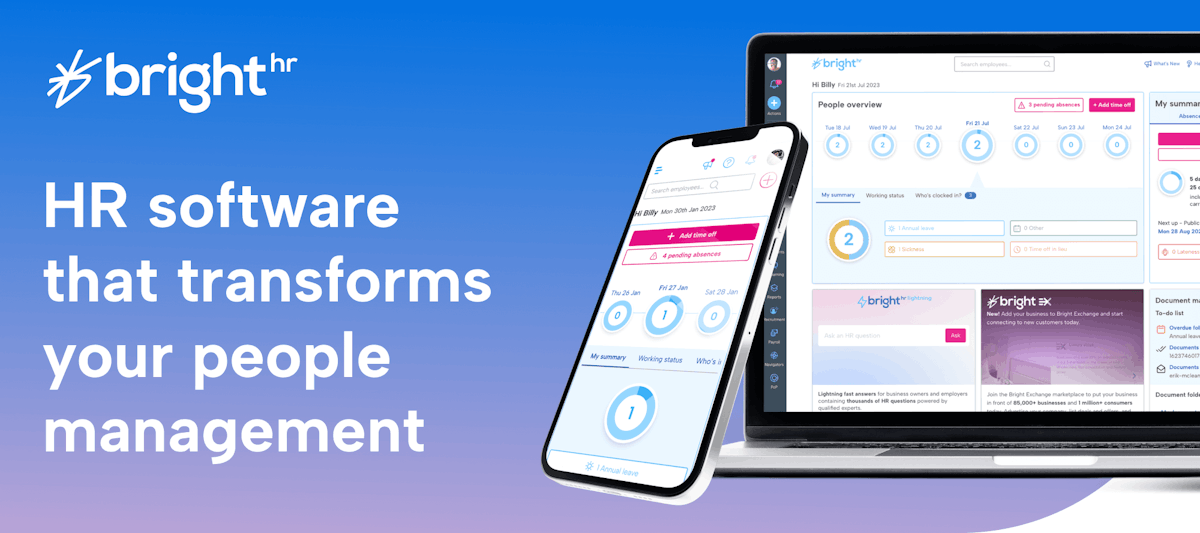
BrightHR is another UK-focused HR software provider with a strong emphasis on practical workforce administration.
Its cloud-based platform allows businesses to access HR information from desktop and mobile devices. Employees can use self-service functions, while managers can manage holidays, sickness, schedules, rotas, and other workforce information.
Key features
- Cloud-based HR management
- Employee records
- Holiday management
- Absence management
- Rotas and schedules
- Employee self-service
- HR reporting
- Mobile access
- HR documentation
- HR advice and support
BrightHR is particularly relevant to remote teams because employees and managers do not need to be physically present in an office to access HR processes.
Its HR support service is another differentiator. BrightHR provides access to HR professionals who can offer guidance relating to UK employment matters, including support through its BrightAdvice service. BrightHR
Why it stands out
Remote work can make HR administration more fragmented because employees, managers, and HR teams may rarely interact in person. BrightHR addresses this by putting everyday HR processes into a cloud-based environment.
Best suited to: UK SMEs, businesses with hybrid workforces, companies managing shifts or rotas, and organisations that want additional HR support.
4. Cezanne HR
Best for: Growing UK businesses that need a more comprehensive HR platform
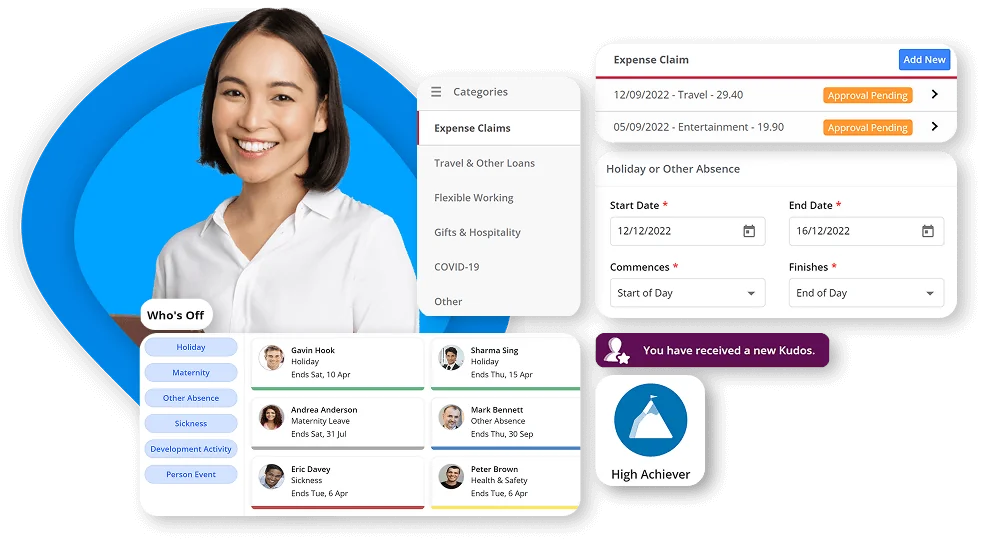
Cezanne HR is a London-based HR software provider offering a broader HR management system for UK and international organisations.
Its platform covers areas including recruitment, onboarding, employee management, absence, time tracking, performance, pulse surveys, talent management, analytics, and payroll.
Key features
- Core HR
- Employee self-service
- Recruitment and onboarding
- Absence management
- Time tracking
- Performance management
- Talent management
- Pulse surveys
- HR analytics
- Payroll
- Mobile access
- Multi-country HR management
Cezanne has also introduced AI-powered HR features during 2026. In June, the company announced Cezanne Insights, an AI-powered analytics module designed to help HR teams identify workforce trends and use people data more effectively.
Why it stands out
Cezanne is useful for remote organisations that are growing beyond basic employee administration. Instead of using separate tools for every HR process, businesses can build a more connected people-management environment.
Its platform also supports international organisations, making it relevant for UK companies that have employees in multiple countries.
Best suited to: Mid-sized businesses, growing UK organisations, international teams, and companies with more complex HR requirements.
5. Humaans
Best for: Modern distributed teams and people operations
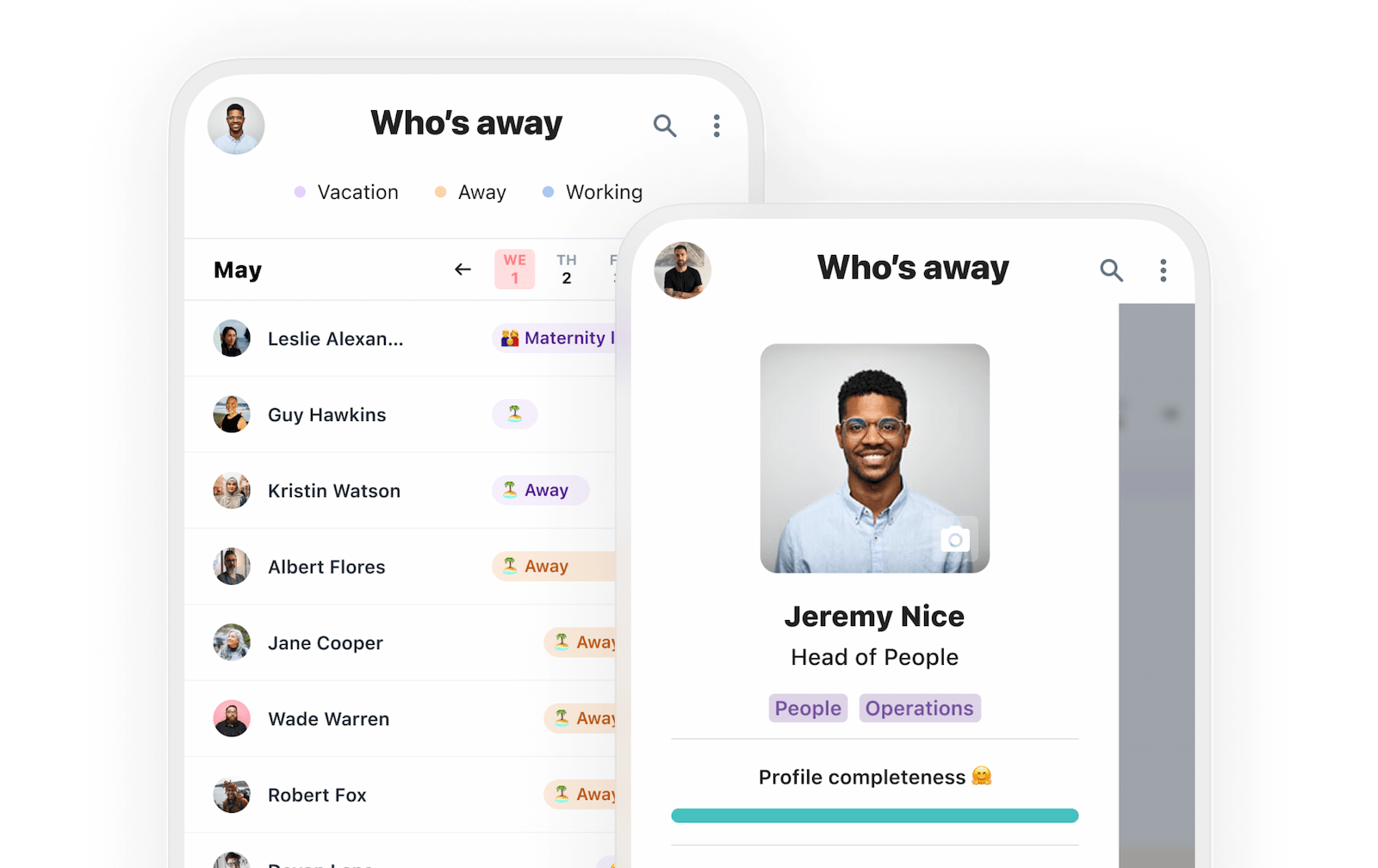
Humaans takes a more modern approach to HR information management, with an emphasis on employee data, automation, integrations, and distributed workforces.
Its HRIS includes employee records, people directories, user roles, workflows, time-off management, documents, and workforce insights. Humaans specifically positions its leave-management capabilities as being designed with remote teams in mind.
Key features
- Employee directory
- Employee records
- Automated workflows
- Time-off management
- Absence tracking
- Remote-friendly HR processes
- Document management
- Workforce analytics
- Integrations
- Role-based permissions
Humaans has also continued adding automation and AI functionality in 2026. Its April 2026 product update introduced Workflow AI and Humaans MCP, which allows the HRIS to connect with AI assistants such as Claude and ChatGPT through the Model Context Protocol.
Why it stands out
Humaans can be a strong fit for companies that already use several specialised SaaS applications and want their employee data to sit within a modern HR system rather than an isolated database.
Best suited to: Technology companies, startups, distributed teams, and organisations with a modern SaaS-heavy technology stack.
6. PeopleHR
Best for: Employee management and workforce tracking

PeopleHR provides cloud-based HR software covering employee records, time management, absence, reporting, and other workforce processes.
One particularly relevant feature for remote organisations is its time-tracking functionality. PeopleHR supports multiple ways for employees to record working time, including web and mobile applications, and the company states that its cloud platform can support both remote and field-based employees.
Key features
- Employee records
- Time tracking
- Timesheets
- Absence management
- Employee self-service
- Mobile access
- Reporting
- Manager approvals
- Workforce data
- Performance-related HR functions
Why it stands out
Remote work makes visibility over working hours and workforce availability more complicated, particularly for businesses with hourly workers, consultants, or field employees.
PeopleHR can help centralise these records while giving managers access to time and workforce information without requiring employees to be physically present.
Best suited to: SMEs, service businesses, remote employees, field teams, and companies that need more structured workforce tracking.
7. Ciphr
Best for: UK mid-market organisations with more complex HR requirements

Ciphr is a UK-built HR and payroll platform designed for organisations that need more than basic employee administration.
The platform connects HR, payroll, recruitment, learning, benefits, analytics, and employee management in one ecosystem. Ciphr currently positions its HR platform around UK organisations, with particular relevance for businesses with approximately 200–2,000 employees.
Key features
- Core HR
- Payroll
- Employee self-service
- Absence management
- Performance management
- Recruitment
- Learning management
- Benefits
- HR analytics
- AI assistant
- UK compliance functionality
Ciphr has also introduced AI functionality into its HR platform in 2026. Its AI assistant can answer workforce questions using live HR data, while newer capabilities include employee summaries, data queries, policy-related assistance, and holiday management.
Why it stands out
For larger remote teams, the challenge is often not simply knowing who is working remotely. It is maintaining consistent employee data across HR, payroll, absence, performance, recruitment, and benefits.
Ciphr's integrated approach is designed to address that problem, while its UK-built positioning makes it particularly relevant to organisations dealing with UK employment and payroll requirements.
Best suited to: UK mid-market organisations, HR departments with complex workflows, and companies managing several hundred employees or more.
8. Teamwork.com
Best for: Remote project and client-service teams
)
Not every remote team needs another HR platform. For agencies, consultancies, software companies, and professional service businesses, the bigger challenge may be coordinating actual work.
Teamwork.com is a project and work-management platform designed around project planning, task management, resources, scheduling, and client work.
Its platform supports project-level teams, allowing organisations to create groups of employees around specific projects and assign work accordingly.
Key features
- Project management
- Task management
- Resource planning
- Team management
- Workload visibility
- Time tracking
- Project reporting
- Client collaboration
- Project templates
- Workflow automation
- AI-powered work management
Teamwork.com has continued adding AI and resource-management features throughout 2026, including AI teammates, project planning improvements, resource planning, and project health insights.
Why it stands out
For a remote team, knowing where employees are working is only half the problem. Managers also need to know what employees are working on, what is overdue, who has capacity, and where projects are at risk.
That makes Teamwork.com particularly useful for project-driven organisations.
Best suited to: Remote agencies, consultancies, software teams, creative teams, and professional services companies.
9. Toggl Track
Best for: Remote time tracking and workload visibility
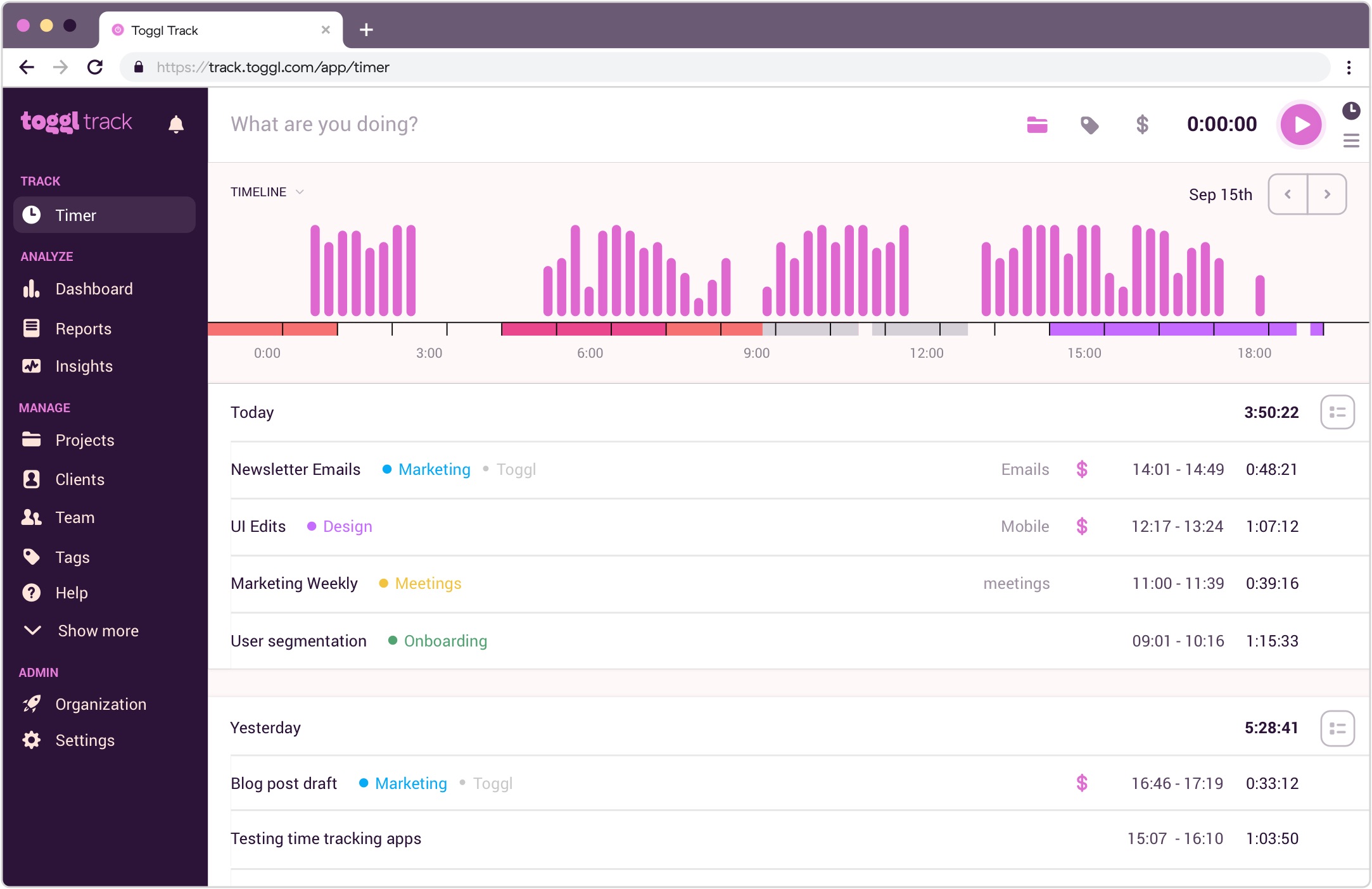
Toggl Track focuses primarily on time tracking, making it different from the HR-first platforms in this list.
For remote teams, time data can provide useful insight into project workload, capacity, billable work, and resource allocation. Toggl supports time tracking across web, desktop, mobile, and browser extensions, alongside integrations with popular project and workplace tools.
Key features
- Time tracking
- Automatic time tracking
- Project tracking
- Task tracking
- Billable hours
- Team reporting
- Capacity planning
- Productivity reporting
- Project budgets
- Integrations
- Mobile and desktop applications
Toggl has increasingly positioned its product around time intelligence, using historical time data to support capacity planning, project estimates, workload decisions, and profitability analysis.
Why it stands out
Remote managers often need visibility without relying on constant status meetings. Time data can provide another layer of information about project workload and resource allocation.
However, businesses should distinguish between legitimate time tracking for project management and overly intrusive employee surveillance. The appropriate approach depends on the organisation's working model and employee expectations.
Best suited to: Agencies, consulting firms, freelancers, distributed project teams, and businesses that bill clients based on time.
10. Timetastic
Best for: Simple holiday and absence management
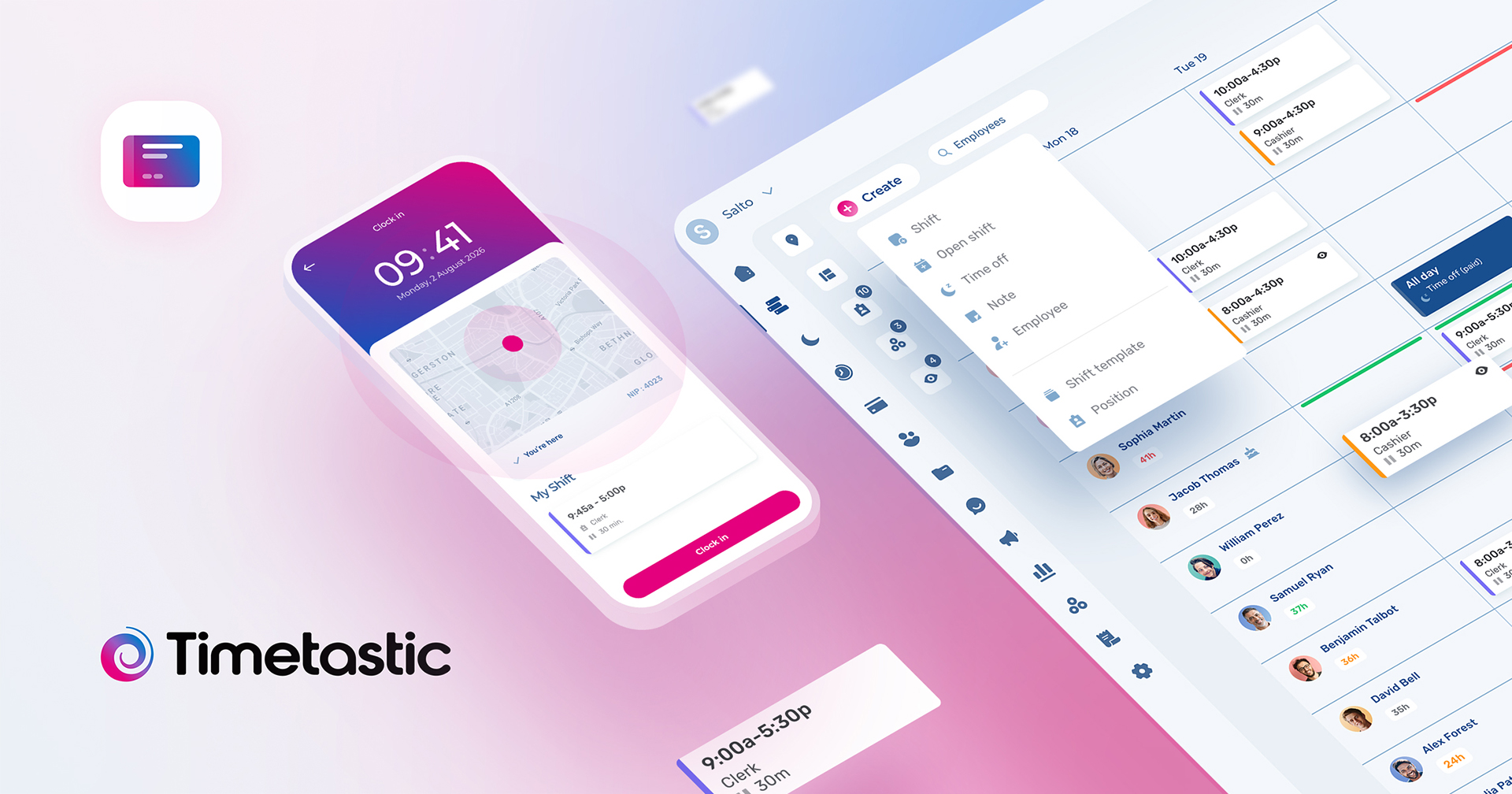
Timetastic takes a much narrower approach than platforms such as Cezanne or Ciphr. Rather than attempting to manage the entire employee lifecycle, it focuses primarily on leave and absence management.
For remote teams, that simplicity can be useful. Employees can request time off while managers can view availability through a shared calendar and identify potential clashes before approving requests.
Key features
- Holiday booking
- Leave management
- Absence tracking
- Shared team calendar
- Leave approval
- Department management
- Minimum staffing levels
- Calendar integrations
- Absence reporting
- Mobile and desktop access
Timetastic also offers a relatively straightforward pricing structure and has continued updating its plans and features in 2026.
Why it stands out
Not every company needs a complete HRIS. If the main problem is simply knowing who is available, managing annual leave, and preventing scheduling conflicts, a specialised leave-management tool may be enough.
Best suited to: Small businesses, remote teams, agencies, distributed departments, and companies looking for a focused leave-management solution.
How to Choose the Right Remote Team Management Tool in the UK
There is no single platform that fits every remote workforce. The right choice depends heavily on what your company actually needs to manage.
For small UK businesses
Smaller companies may benefit from a lightweight platform that combines essential HR functions without introducing unnecessary complexity.
CharlieHR, Breathe, and BrightHR are particularly relevant in this category.
For growing companies
Once a business reaches a larger headcount, HR processes become more complicated. Employee records, performance management, reporting, payroll, compliance, and absence management may need to work together.
Cezanne HR, PeopleHR, Humaans, and Ciphr can be considered when businesses need a broader people-management system.
For project-based remote teams
If the biggest problem is coordinating projects rather than managing HR administration, a project-management platform may be more useful.
Teamwork.com is designed specifically around project delivery, resource planning, tasks, and client work.
For teams that need time visibility
Companies working with billable projects or distributed employees may require detailed time information.
Toggl Track is particularly relevant when time tracking, capacity planning, and project profitability are important.
Why UK Remote Teams Need More Than One Tool
One common mistake is expecting a single platform to solve every remote-work challenge.
A company may use an HR system for employee information, a project-management platform for work allocation, a communication platform for collaboration, and a time-tracking tool for project reporting. If your team operates in specialized sectors, you might also need to look into crypto marketing team or other niche software to handle specific operational requirements.
For example, a growing agency could combine:
HR platform → employee records and leave
Project management → tasks and deadlines
Time tracking → workload and billable hours
Communication → daily collaboration
Analytics → management reporting
The goal should not necessarily be to reduce the number of applications to one. Instead, businesses should look for a technology stack where the most important systems work together and employees do not have to repeatedly enter the same information.
The market for tools for managing remote teams in the UK has become increasingly diverse in 2026. Businesses no longer have to rely on one large platform to handle every aspect of remote work.
The most important consideration is not simply how many features a platform offers. A good remote team management system should reduce administrative work, make information easier to access, support managers, and give employees a straightforward way to complete everyday tasks.
Ultimately, the best solution depends on the size of the organisation, the complexity of its workforce, the type of work employees perform, and whether the primary challenge is HR administration, project coordination, workforce visibility, or employee availability.
Frequently Asked Questions
1. What are the best tools for managing remote teams in the UK in 2026?
Some of the notable options include CharlieHR, Breathe, BrightHR, Cezanne HR, Humaans, PeopleHR, Ciphr, Teamwork.com, Toggl Track, and Timetastic. They serve different purposes, ranging from HR and payroll to project management, time tracking, and leave management.
2. What is the best remote team management software for a small UK business?
Small businesses generally need simple systems that do not create unnecessary administrative complexity. CharlieHR, Breathe, BrightHR, and Timetastic are examples of platforms focused on practical workforce management for smaller organisations.
3. Can HR software help manage fully remote employees?
Yes. Modern HR platforms can centralise employee records, leave, absence, working locations, documents, performance processes, and employee self-service. CharlieHR, for example, supports working-location management and work-from-home requests.
4. What is the difference between remote team management and HR software?
HR software primarily manages people-related processes such as employee records, leave, onboarding, performance, and payroll. Remote team management can be broader and include project management, workload planning, communication, time tracking, and resource allocation.
5. Do remote teams need time-tracking software?
Not necessarily. Time tracking is particularly useful for companies that bill clients by the hour, manage project budgets, need capacity data, or want better visibility into resource allocation. It may be less relevant for organisations that evaluate employees primarily through outcomes and deliverables.

