
.webp)
.png)
Market gap and deployment readiness
Selecting the best roboteachers software platforms and tools requires a clear understanding of the gap between administrative automation and genuine pedagogical AI. While most systems excel at grading multiple-choice exams or tracking attendance, they often fail to provide real-time, adaptive instructional feedback.
A true roboteacher must function as a cognitive partner. It must be capable of identifying student misconceptions in real-time and adjusting the complexity of the material accordingly.
Defining the scope of automated instruction
To evaluate these platforms effectively, stakeholders must distinguish between administrative automation and pedagogical AI. Administrative automation focuses on efficiency: reducing the time spent on scheduling, data entry, and basic reporting. These tools, such as automated email responders or LMS-integrated gradebooks, are essential for operational health but do not interact with the student’s learning process.
Pedagogical AI, by contrast, operates within the zone of proximal development. It requires natural language processing (NLP) to interpret student questions, sentiment analysis to gauge frustration, and knowledge-tracing algorithms to map a student's mastery of specific concepts.

When selecting software, organizations often mistake high-end administrative dashboards for intelligent tutoring systems. The former provides a bird's-eye view of class performance, while the latter engages in the micro-interactions that constitute actual teaching.
Deployment readiness depends on whether the platform can integrate these two functions without creating data silos. If an AI tutor cannot pull data from the student's existing learning history, it lacks the context required for personalized instruction.
The most effective deployments currently utilize API-first architectures. These allow pedagogical AI to pull from a student's historical performance data while simultaneously updating administrative records, ensuring that the human instructor remains informed without being overwhelmed by manual data reconciliation.
Technical benchmarks for best roboteacher software platforms and tools
Selecting the right automated instructional software requires evaluating technical architecture beyond simple user interfaces. The most effective platforms rely on robust API frameworks, low-latency processing for real-time feedback, and scalable cloud infrastructure that prevents downtime during peak assessment periods.
Prioritize tools that offer documented API endpoints and support for LTI (Learning Tools Interoperability) standards, as these are critical for long-term technical sustainability.
Integration capabilities with existing LMS
Seamless interoperability is the primary hurdle for institutional adoption. The best roboteacher software platforms and tools must function as an extension of your current ecosystem rather than a siloed application. Look for native LTI 1.3 support, which allows for secure, standardized connections with Moodle, Canvas, and Blackboard.
This integration should enable automated grade pass-back, single sign-on (SSO) via SAML or OIDC, and roster synchronization. If a platform requires manual CSV uploads for enrollment, it lacks the necessary automation to be considered a top-tier solution for enterprise-level deployment.
Data privacy and compliance standards
Automated teaching tools process sensitive student performance data, making security the most critical non-negotiable benchmark. A platform must provide transparent documentation regarding its adherence to FERPA (Family Educational Rights and Privacy Act) in the United States and GDPR (General Data Protection Regulation) for European operations. For K-12 applications, COPPA (Children's Online Privacy Protection Act) compliance is mandatory, specifically regarding the collection of personal information from minors.
When managing these complex digital infrastructures, many organizations look toward security and privacy concerns with roboteacher data to ensure auditability and transparency in their data handling processes. When evaluating vendors, request a SOC 2 Type II report to verify their internal controls over security, availability, and processing integrity.
Avoid platforms that utilize student data for model training without explicit, granular opt-in consent from both the institution and the guardians. Reliable providers will offer data processing agreements (DPAs) that clearly define the vendor as a data processor and the institution as the data controller, ensuring you retain full ownership and control over the educational records generated by the software.
Pedagogical alignment and learning outcomes
Selecting the best roboteacher software platforms and tools requires a rigorous assessment of how well the underlying algorithms align with established instructional design principles. A platform that excels in data processing but fails to map content to specific learning objectives will inevitably produce fragmented student outcomes.
Effective tools must demonstrate clear traceability between a student's interaction with the AI and the mastery of a predefined curriculum standard, such as Common Core or Bloom’s Taxonomy.

Adaptive feedback loops for real-time student intervention
The core value of a roboteacher lies in its ability to provide immediate, context-aware feedback that mimics a human tutor. To evaluate this, look for platforms that utilize Bayesian Knowledge Tracing (BKT) or Item Response Theory (IRT) to model student proficiency in real-time.
These mechanisms allow the software to adjust the difficulty of subsequent tasks based on the probability of a student knowing a specific concept, rather than simply tracking correct or incorrect answers. When testing these tools, focus on three specific metrics for feedback efficacy:
- Latency of intervention: The system should provide corrective guidance within seconds of an error, preventing the reinforcement of misconceptions.
- Scaffolding depth: Instead of providing the final answer, the software should offer hints that guide the student toward the solution, effectively lowering the cognitive load while maintaining the challenge.
- Persistence tracking: The tool should log how many attempts a student makes before requesting help, allowing educators to identify patterns of frustration versus productive struggle.
Avoid platforms that rely on static, pre-programmed responses. The best roboteacher software platforms and tools utilize Large Language Models (LLMs) or specialized pedagogical agents that can parse natural language inputs to understand the reasoning behind a student's mistake.
By analyzing the logic of an error, the system can offer personalized remediation that addresses the specific gap in the student's mental model, ensuring that the learning outcome is achieved through genuine comprehension rather than rote memorization. For those exploring the broader landscape of roboteachers vs human teachers comparison, similar principles of adaptive engagement are becoming increasingly common.
Operational risk and maintenance overhead
Deploying automated instructional systems introduces significant technical debt and operational complexity. Unlike static learning management systems, the best roboteacher software platforms and tools require continuous data pipeline monitoring to ensure that AI models do not drift or provide outdated curriculum information.
IT departments must account for API latency, server-side compute costs, and the rigorous security protocols required to protect student PII (Personally Identifiable Information) during real-time interaction logs.

Maintenance overhead is often underestimated during the procurement phase. You must allocate resources for regular model fine-tuning, prompt engineering updates, and troubleshooting integration failures between the roboteacher and existing gradebook software.
Failure to maintain these systems leads to 'hallucination drift,' where the AI begins to deviate from the approved pedagogical framework, potentially exposing the institution to liability regarding inaccurate academic content.
Faculty training and adoption hurdles
The transition to AI-assisted instruction is as much a cultural challenge as it is a technical one. Faculty often view automated tools as a threat to their professional autonomy or as an additional administrative burden. To mitigate resistance, institutions must shift the narrative from 'automation' to 'augmentation.'
This involves demonstrating how the software handles repetitive tasks—such as basic syntax correction or scheduling—allowing instructors to focus on high-level mentorship and complex student interventions. Many modern marketing tools ranking today follow this same philosophy of augmenting human capability rather than replacing it. Successful adoption requires a structured onboarding program that goes beyond basic interface training.
Staff should participate in 'AI-in-the-loop' workshops where they actively audit the software’s responses against their own teaching standards. By involving educators in the initial configuration of the roboteacher’s persona and tone, you foster a sense of ownership.
Furthermore, establish clear governance policies that define exactly when an instructor must override the software. When faculty members understand that they remain the final authority on student evaluation, the perceived risk of displacement decreases, leading to higher engagement with the platform’s analytical features.
Financial viability and scalability
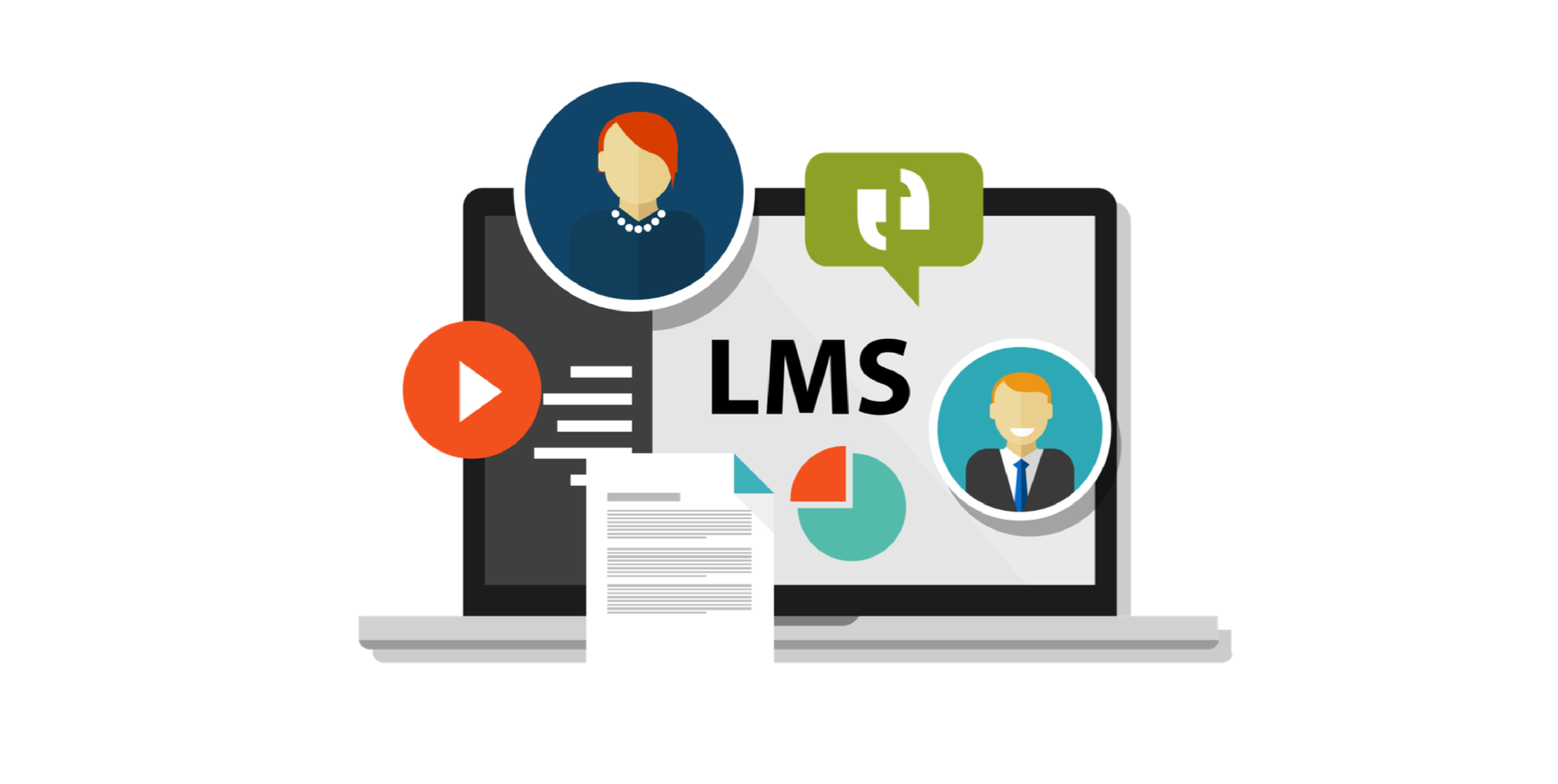
Selecting the best roboteacher software platforms and tools requires a rigorous cost-benefit analysis that extends beyond initial licensing fees. Organizations must account for hidden expenditures, including API consumption costs, server-side compute resources, and the technical overhead required for maintaining integration pipelines between the AI engine and existing Learning Management Systems (LMS).
Scaling from pilot to enterprise
The transition from a controlled pilot program to enterprise-wide deployment often reveals diminishing returns if the cost structure is not carefully managed. A common inflection point occurs when the cumulative cost of per-user licensing and token-based usage fees surpasses the hourly wage of human instructors for the same volume of student interactions.
To determine this threshold, calculate the 'Total Cost of Ownership' (TCO) per student per semester, factoring in the following variables:
- Infrastructure Overhead: High-frequency AI models often require significant cloud compute credits. Evaluate whether the platform charges a flat enterprise fee or scales linearly with usage, as linear scaling can quickly become prohibitive at scale.
- Maintenance and Fine-tuning: Human-led instruction costs are relatively static, whereas AI-led instruction requires ongoing investment in prompt engineering, model fine-tuning, and data labeling to prevent 'model drift' where the AI's accuracy degrades over time.
- Integration Complexity: The labor cost of IT staff required to maintain API connections between the roboteacher software and your internal databases must be added to the software license cost.
When evaluating the best roboteacher software platforms and tools, prioritize vendors that offer 'tiered' pricing models rather than pure consumption-based models. This provides cost predictability as your user base grows.
If the software requires a dedicated team of prompt engineers or data scientists to remain effective, the hidden labor cost often negates the savings gained from replacing human-led instruction. Conduct a quarterly audit comparing the cost-per-student-interaction of your AI tools against the cost of human-led tutoring sessions to ensure your investment remains financially sound as you scale. For those interested in the broader market, reviewing benefits of roboteachers in modern education can provide valuable benchmarks for ROI.
Frequently Asked Questions
What is the primary difference between a chatbot and a roboteacher platform?
A standard chatbot typically relies on basic pattern matching or generic LLM responses, whereas a roboteacher platform integrates pedagogical scaffolding, curriculum alignment, and student performance tracking to facilitate structured learning outcomes. For those interested in how these systems are categorized, exploring challenges of implementing roboteachers in schools is a great next step.
Verification methods for student data privacy compliance
You must request the platform's SOC 2 Type II report and verify their specific adherence to FERPA or GDPR standards regarding data encryption at rest and in transit, ensuring that student PII is never used to train public foundation models.

