


Capital allocation for robotic integration
Integrating robotic systems into educational environments requires a shift from traditional operational expenditure toward long-term capital investment. Understanding the benefits of roboteachers in modern education begins with accounting for the initial procurement of hardware, which often carries a higher upfront cost than standard audiovisual equipment.
This cost is balanced against the potential for personalized student instruction at scale. Successful implementation relies on a clear understanding of the total cost of ownership over a five-year horizon rather than focusing solely on the sticker price of the units.
Hardware depreciation and maintenance cycles
Robotic units typically follow a three-to-five-year depreciation schedule, mirroring the lifespan of high-end tablets or interactive whiteboards. Unlike static classroom furniture, robots require specialized maintenance.
Budgeting for these units necessitates a dedicated line item for service contracts, which generally run between 10% and 15% of the initial purchase price annually. By treating these assets as technical infrastructure rather than classroom supplies, administrators can better predict the financial impact through consistent replacement cycles.
Software licensing and cloud infrastructure costs
The operational value of a roboteacher is tethered to its AI-driven curriculum updates and cloud-based processing capabilities. These systems operate on a Software-as-a-Service (SaaS) model, where schools pay recurring licensing fees per student or per unit.

These costs cover the backend server maintenance required to run natural language processing and adaptive learning algorithms. When evaluating these expenses, schools must distinguish between base platform access and premium modules that offer specialized tutoring in subjects like STEM or foreign languages.
Quantifying the benefits of roboteachers in modern education through student outcomes
Integrating robotic systems into classrooms shifts the economic burden of instruction from high-cost human labor to scalable, high-availability software. By providing instantaneous feedback and adaptive curriculum delivery, these systems ensure that students remain on track without requiring constant one-on-one intervention from a human instructor.
This shift directly impacts the bottom line for educational institutions by optimizing resource allocation and improving long-term graduation metrics.
Key financial drivers for adoption
- Reduced remediation costs: Automated tutoring catches learning gaps early, preventing the need for expensive summer school or course repetition.
- Increased funding eligibility: Improved standardized test scores often lead to higher per-pupil funding and access to innovation grants.
- Operational efficiency: Offloading grading and data entry allows human educators to focus on high-value pedagogical tasks.
Personalized learning paths and reduced remediation costs
Traditional remediation is a significant drain on institutional budgets, often requiring small-group sessions or private tutoring to bring struggling students up to grade level. Roboteachers mitigate these costs by operating as 24/7 adaptive tutors.
For instance, platforms like Carnegie Learning’s MATHia utilize AI-driven logic to identify specific knowledge gaps in real-time. Instead of a teacher spending three hours of manual grading to find a student's misunderstanding of algebraic functions, the software identifies the exact point of failure and adjusts the subsequent lesson path instantly.
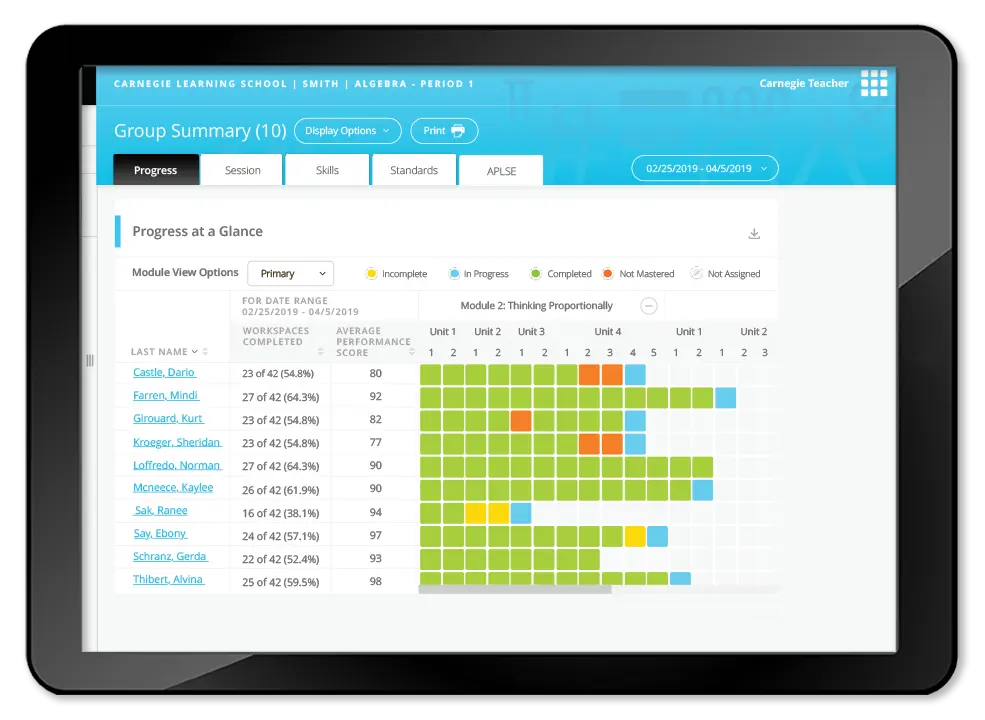
This automation reduces the reliance on paid human-led remedial sessions. By catching learning deficits early, institutions decrease the high cost of repeating courses or providing intensive summer school programs. The financial benefit is twofold: lower operational overhead for the school and reduced tuition or time-loss costs for the student.
Standardized test performance and institutional funding
Institutional funding is frequently tied to performance metrics, including standardized test scores and graduation rates. Roboteachers provide a consistent, data-backed method for improving these scores by ensuring that every student receives high-quality instruction regardless of the teacher-to-student ratio in a physical classroom.
When institutions demonstrate consistent improvement in student outcomes through the use of robotic tutoring, they become more competitive for government grants and private educational funding. For example, schools that integrate adaptive learning technologies often show a 10-15% increase in proficiency scores within the first two years of adoption.
These gains translate into measurable financial incentives, such as increased per-pupil funding allocations from state boards and better eligibility for federal innovation grants. By stabilizing student performance, schools create a predictable revenue stream that justifies the initial capital expenditure on robotic hardware and software licenses.
Operational efficiency and human capital optimization
The integration of robotic systems into the classroom shifts the role of educators from administrative managers to high-level mentors. By offloading repetitive, low-cognitive tasks to automated systems, schools can significantly reduce the overhead costs associated with manual data processing and routine assessment.
This reallocation of human capital allows teachers to focus on complex pedagogical strategies, such as personalized student coaching and social-emotional development, which are currently underserved due to time constraints.
Automating administrative and grading tasks
The primary economic driver behind the benefits of roboteachers in modern education is the reclamation of time. On average, a full-time educator spends approximately 10 to 15 hours per week on non-instructional tasks, including grading objective assessments, tracking attendance, and managing student records.
Robotic assistants equipped with optical character recognition and automated grading algorithms can process these tasks in seconds with near-zero error rates. For instance, if a school district employs 500 teachers, reclaiming 10 hours per week per teacher equates to 5,000 hours of additional instructional capacity weekly.
When converted into monetary terms, this optimization reduces the need for additional administrative support staff and lowers the opportunity cost of teacher burnout. Teachers who are not bogged down by paperwork report higher job satisfaction and lower turnover rates, which saves districts thousands of dollars in recruitment and onboarding costs annually.
Beyond simple time-saving, these systems provide real-time data analytics. While a human teacher might take days to identify a pattern in student performance across a cohort, a robotic system can generate a diagnostic report instantly. This allows for immediate intervention, preventing students from falling behind and reducing the long-term economic costs associated with remedial education or student retention.
By optimizing the teacher's schedule, schools maximize the return on investment for every dollar spent on faculty salaries, ensuring that human expertise is applied where it provides the highest value: direct, face-to-face student engagement.
Measuring return on investment beyond the balance sheet
Calculating the true value of robotic integration requires moving past simple hardware depreciation schedules. While initial capital expenditure for platforms like SoftBank Robotics' Pepper or Misty Robotics' units is significant, the long-term economic gains manifest through reduced administrative overhead and improved student retention rates.
Institutions that treat these systems as scalable infrastructure rather than one-off gadgets see a shift in operational efficiency, allowing human educators to focus on high-value pedagogical tasks that machines cannot replicate.
Data-driven decision making for curriculum design
Robotic systems function as continuous diagnostic tools, capturing granular interaction data that traditional assessment methods often miss. By tracking student engagement levels, response latency, and error patterns in real-time, these systems provide a feedback loop that informs curriculum adjustments.
For instance, if a cohort consistently struggles with a specific logic module taught by a robot, the system flags this data point immediately. Administrators can then reallocate resources to bolster that specific area of the curriculum before final exam failures occur, effectively preventing the high costs associated with remedial courses and student attrition.
This analytical layer transforms educational spending from reactive to proactive. Instead of relying on anecdotal evidence or end-of-semester surveys, department heads utilize dashboard metrics to determine which instructional modules yield the highest knowledge transfer. This precision ensures that future investments in educational technology are directed toward tools that demonstrably improve learning outcomes.
By aligning financial outlays with verified performance data, schools minimize wasted spending on ineffective software and focus their budgets on pedagogical strategies that provide a measurable return on investment.
The economic benefits of roboteachers in modern education extend to the optimization of teacher time. When robots handle repetitive drills or language pronunciation practice, the cost-per-student for personalized attention drops significantly. This creates a sustainable model where human teachers act as facilitators and mentors, while the robotic infrastructure handles the heavy lifting of standardized practice, ultimately maximizing the utility of the institution's most expensive asset: the human faculty.
Risk mitigation in educational technology procurement
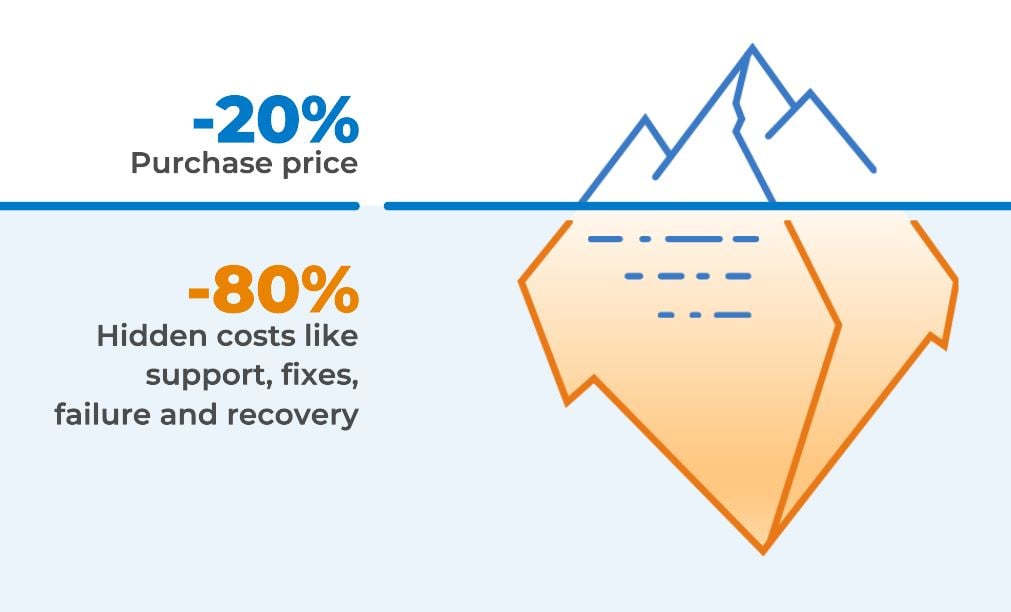
Integrating autonomous systems requires a rigorous financial framework to avoid sunk costs and operational bottlenecks. Educational institutions must shift from viewing roboteachers as one-time capital expenditures to treating them as long-term service contracts.
This transition necessitates a move toward total cost of ownership (TCO) modeling, which accounts for software licensing, hardware maintenance, and the inevitable need for staff retraining.
Vendor lock-in and interoperability constraints
Proprietary software ecosystems pose the most significant threat to the long-term economic benefits of roboteachers in modern education. When a school district commits to a specific robotic platform, they often become tethered to that vendor’s proprietary curriculum, cloud storage, and maintenance protocols.
This dependency creates a "walled garden" effect, where switching providers becomes prohibitively expensive due to data migration costs and the loss of accumulated student performance analytics. To mitigate these risks, procurement officers should prioritize vendors that adhere to open-source standards such as LTI (Learning Tools Interoperability) and xAPI.
By mandating that robotic systems export data in universal formats, institutions retain ownership of their pedagogical insights regardless of the hardware provider. Furthermore, contracts should include clear exit clauses and data portability requirements, ensuring that if a vendor ceases support or raises prices, the institution can transition to a competitor without losing years of historical student data.
Another critical financial safeguard involves modular hardware design. Purchasing systems that allow for component-level upgrades—such as swapping out sensors or processing units—prevents the need for total system replacement when technology advances.
Institutions should avoid "all-in-one" packages that bundle hardware with long-term, non-negotiable software subscriptions. Instead, unbundling these services provides the flexibility to renegotiate terms or integrate third-party software enhancements as the educational environment evolves.
Frequently Asked Questions
Methodology for calculating the ROI of roboteachers
ROI is calculated by comparing the total cost of ownership—including hardware, software licensing, and maintenance—against the reduction in administrative overhead and the potential for increased student-to-teacher ratios without compromising learning outcomes. As schools modernize, they often explore web3 revolutionizing education to further secure student data and credentials.
Primary cost drivers for robotic systems
The primary costs include initial capital expenditure for hardware, recurring cloud-based AI subscription fees, specialized IT staff for maintenance, and the necessary infrastructure upgrades for high-speed connectivity. For those looking to expand their digital literacy, a crypto education gateway can provide the foundational knowledge needed to navigate these emerging tech landscapes.
- Performance analysis of roboteachers within hybrid classroom environments
- Financial framework for evaluating the challenges of implementing roboteachers in schools
- Ethical implications of using roboteachers in modern classrooms
- Practical implications of the roboteachers vs human teachers comparison for modern educators

