
.webp)
.png)
Core architecture of a modern chatbot
A functional retail chatbot relies on three primary components: a natural language processing (NLP) engine, a backend integration layer, and a state management system. The NLP engine acts as the interface for intent recognition, parsing user input into structured data.
The integration layer connects this data to your inventory management system (IMS) or customer relationship management (CRM) platform via RESTful APIs, allowing the bot to fetch real-time stock levels or order statuses. Finally, the state management system tracks the conversation flow, ensuring the bot retains context across multiple turns.
Rule-based systems versus generative AI
Choosing between rule-based systems and generative AI models dictates the operational ceiling of your deployment. Rule-based systems operate on explicit decision trees, where every possible input is mapped to a predefined response. This approach offers 100% predictability and zero risk of hallucinations, making it ideal for high-stakes tasks like refund processing or strict policy enforcement.
These systems struggle with linguistic variability; if a customer phrases a query outside the programmed logic, the bot fails immediately. Generative AI, powered by large language models (LLMs) like GPT-4 or Claude, offers superior flexibility by interpreting intent through semantic understanding rather than keyword matching.

These models handle nuanced requests—such as "I need a pair of running shoes for flat feet that arrive by Friday"—by synthesizing information from your product catalog and shipping logic. The trade-off is a loss of deterministic control. Without rigorous prompt engineering and "guardrails" (such as NeMo Guardrails or LangKit), generative systems may inadvertently promise discounts that do not exist or provide incorrect technical specifications.
Successful retail deployments often utilize a hybrid architecture: a generative layer for conversational flow, anchored by a deterministic rule-based layer for transactional data retrieval.
Deployment workflow for a retail chatbot
Deploying a retail chatbot requires a phased integration strategy that connects customer-facing interfaces with backend inventory and order management systems. The process begins with mapping user intent flows against existing API endpoints.
Retailers must ensure that the bot can authenticate users via OAuth or SSO before pulling sensitive order history or loyalty point data. Successful deployments rely on a middleware layer that translates natural language queries into structured database requests, ensuring the bot does not hallucinate stock levels or pricing information.
Data training and knowledge base curation
The accuracy of a retail chatbot depends on the quality of its underlying knowledge base. Instead of dumping raw PDFs into a vector database, teams should structure internal documentation into granular, intent-based chunks. Use a Q&A format for standard policies like return windows, shipping costs, and store hours, as this structure maps directly to common user queries.
To optimize model retrieval, follow these specific curation steps:
- Categorize by intent: Tag documents by specific domains such as 'Order Tracking', 'Product Availability', or 'Technical Support' to limit the search scope during inference.
- Maintain a single source of truth: Use a headless CMS or a centralized knowledge management tool like Notion or Confluence that syncs via API. This prevents the bot from serving outdated promotional pricing or discontinued product information.

- Implement metadata filtering: Attach metadata to knowledge base entries, such as region, store location, or membership tier. This allows the model to filter out irrelevant information, such as showing US-based shipping policies to a customer browsing from the UK.
- Regular audit cycles: Review conversation logs weekly to identify 'low confidence' responses. If the bot fails to answer a specific question, update the knowledge base entry immediately rather than relying on manual agent intervention.
By decoupling the knowledge base from the conversational interface, developers can update product details or policy changes in real-time without retraining the entire language model. This modular approach minimizes latency and ensures that the information provided to customers remains consistent across web, mobile, and social commerce channels.
Performance metrics and success indicators
Evaluating the efficacy of a retail chatbot requires moving beyond vanity metrics like total conversation volume. Success is defined by how effectively the system reduces operational load while maintaining customer satisfaction.
Key performance indicators must track the transition from initial inquiry to final resolution, ensuring the automated flow does not inadvertently drive users toward more expensive support channels.
Measuring resolution rates versus deflection rates
Distinguishing between resolution rates and deflection rates is critical for understanding actual system value. A deflection rate measures how often a user abandons their inquiry after interacting with the bot, which can be a misleading success metric if the user simply gave up due to frustration.
Conversely, a resolution rate tracks instances where the bot successfully provided the specific data or action required, such as tracking a package or initiating a return. To calculate these metrics accurately, implement event-based tracking in your analytics platform, such as Google Analytics 4 or Mixpanel.
Define a 'resolved' event as a user clicking a 'Yes, this helped' button or successfully completing a transaction within the chat interface. If a user closes the window immediately after a bot response without clicking a positive feedback trigger, categorize this as a 'deflection' rather than a resolution.
Monitor the following data points to maintain a healthy balance:
- Average Handle Time (AHT): Compare bot AHT against human agent AHT for identical query types. If the bot takes longer to resolve a simple order status check, the conversational design is likely inefficient.

- Escalation Rate: Track the percentage of sessions that require a human hand-off. A high escalation rate often indicates that the bot's knowledge base is insufficient or that the natural language processing (NLP) model is failing to map user intent correctly.
- Sentiment Analysis Score: Utilize tools like Amazon Comprehend or Google Cloud Natural Language API to score user inputs. A sudden spike in negative sentiment before an escalation suggests the bot is failing to handle complex emotional contexts, necessitating a review of the fallback protocols.
Focusing on these metrics allows technical teams to iterate on the chatbot architecture based on actual user behavior rather than theoretical performance expectations.
Common failure points in chatbot logic
Retail systems often collapse when the underlying logic fails to account for the non-linear nature of human speech. Most failures stem from rigid decision trees that cannot backtrack or recover when a user deviates from a pre-defined path.
When a chatbot encounters a term outside its training set or a syntactical structure it wasn't programmed to parse, it typically defaults to a generic error message, which immediately degrades the customer experience.
Handling ambiguity and complex user intent
Multi-step queries often lead to conversational loops because the system fails to maintain state across different intent triggers. For instance, if a customer asks, "Where is my order, and can I change the delivery address?" the system may successfully identify the order status but lose the context for the address modification request.
If the bot is not built with a robust context-management layer, it will treat the second half of the query as a new, unrelated intent, often prompting the user to restart the entire process. These loops occur because of three primary technical limitations:
- Slot-filling failures: The system identifies the intent but fails to extract the necessary parameters (e.g., order ID or new zip code) from the initial input, forcing the bot to ask repetitive questions.
- Context window limitations: Older or lightweight NLP models often truncate the conversation history, causing the bot to "forget" what was discussed just two turns prior.
- Lack of disambiguation prompts: Instead of asking clarifying questions, the system makes a probabilistic guess. If the guess is wrong, the user is forced into a dead-end path that requires a manual reset of the session.
To mitigate these issues, developers must implement a state-machine architecture that allows the bot to hold multiple variables simultaneously. By prioritizing slot-filling before executing an API call, the system can ensure all required data is present, reducing the frequency of conversational deadlocks and improving the overall resolution rate for complex retail inquiries.
Human-in-the-loop escalation protocols
Automated systems often reach a point where algorithmic logic fails to resolve complex customer grievances. A robust chatbot deployment requires a clear escalation path to human agents to prevent churn and maintain brand trust.
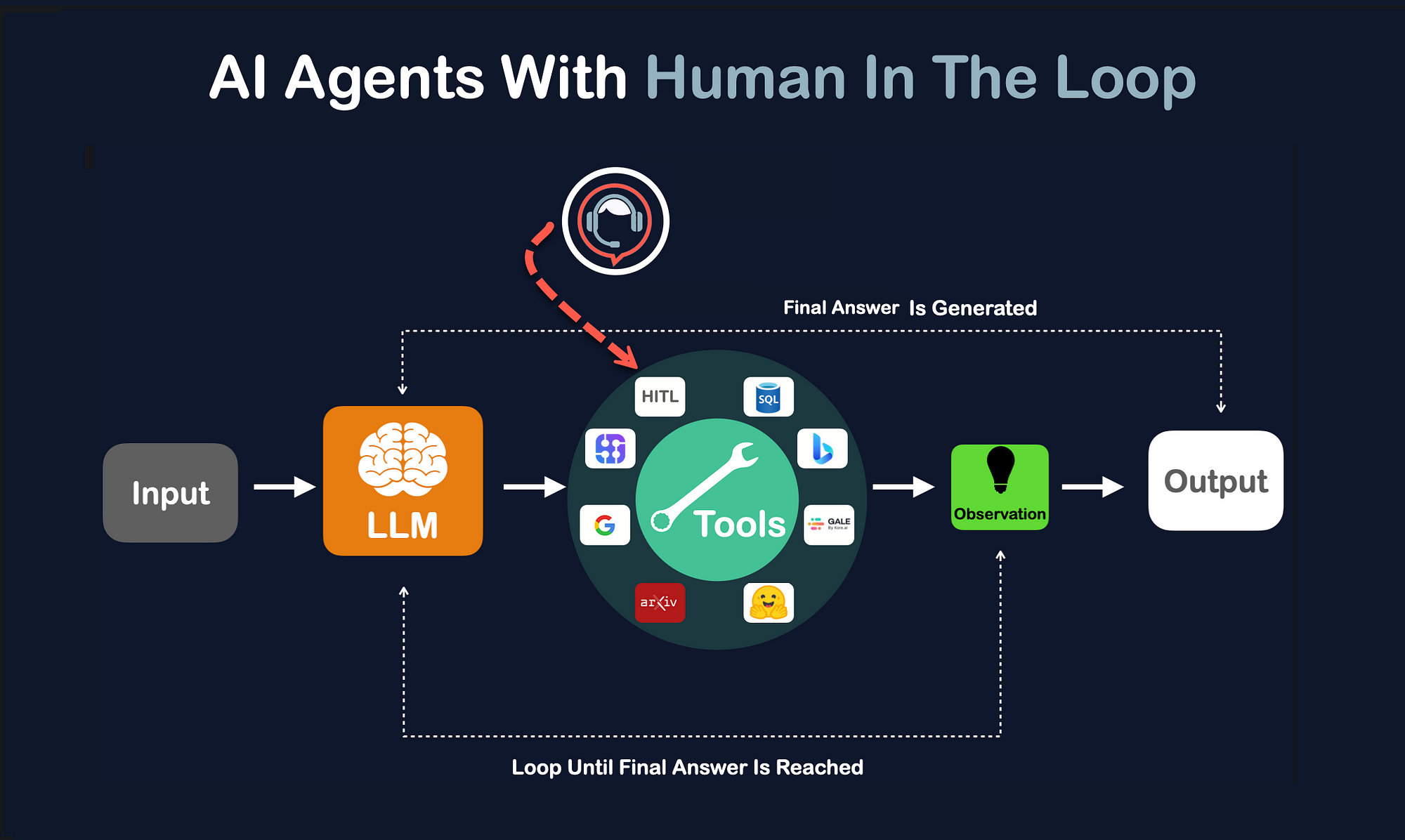
Without a structured handoff, users trapped in a loop of repetitive automated responses are significantly more likely to abandon their purchase or leave negative feedback.
Designing seamless transition triggers
Effective handoff mechanisms rely on predefined triggers that monitor the quality of the interaction in real-time. Rather than waiting for a user to explicitly request help, systems should proactively monitor for specific failure states.
Sentiment analysis tools, such as those integrated via Google Cloud Natural Language API or AWS Comprehend, can detect escalating frustration based on lexicon and syntax. When a user's sentiment score drops below a set threshold—typically -0.5 on a -1.0 to 1.0 scale—the system should immediately initiate a transition to a live agent.
Intent-based handoff points are equally critical. You should map specific intents that carry high financial or emotional stakes directly to human queues. For example, requests involving "refund status," "unauthorized charge," or "damaged item" should bypass standard conversational flows.
By tagging these intents as high-priority, the system routes the user to a specialized representative who has access to the full conversation history. This context transfer is vital; forcing a customer to repeat their issue to a human agent after spending ten minutes with a bot is a primary driver of service dissatisfaction.
To implement these triggers, configure your orchestration layer to monitor for the following signals:
- Repeated negative intent: If a user triggers the "I don't understand" fallback response three times within a single session.
- Sentiment volatility: A sudden shift from neutral to aggressive language patterns.
- High-value abandonment: Users attempting to modify high-ticket orders or requesting manual overrides on payment gateways.
- Agent availability: The system must check for live agent capacity before triggering an escalation to avoid promising a connection that cannot be fulfilled, which only exacerbates user frustration.
By treating the chatbot as a triage tool rather than a total replacement for support, retail teams can maintain operational efficiency while ensuring that complex issues receive the necessary human oversight.
Privacy and security considerations
Deploying a retail chatbot requires rigorous protection of customer PII (Personally Identifiable Information) to maintain trust and meet legal mandates like GDPR, CCPA, or PCI-DSS. Security vulnerabilities often arise when conversational logs are stored in plain text or when third-party NLP APIs process sensitive data without adequate encryption in transit and at rest.
Data masking and compliance standards
To mitigate risk, developers must implement automated scrubbing protocols that intercept user input before it reaches the model backend. Effective data masking involves using regex-based filters or Named Entity Recognition (NER) models to identify and redact patterns such as credit card numbers, social security numbers, and home addresses.
For example, a string containing a 16-digit card number should be transformed into a tokenized format like XXXX-XXXX-XXXX-1234 before the chatbot engine processes the intent. Beyond masking, compliance requires strict adherence to data residency and retention policies.
Retailers should utilize:
- TLS 1.3 Encryption: Ensuring all data sent between the client interface and the server is encrypted using the latest transport layer security standards.
- Zero-Retention Logging: Configuring the chatbot architecture to store only anonymized metadata for analytics, rather than full conversation transcripts that contain user-specific details.
- Role-Based Access Control (RBAC): Limiting internal access to administrative logs so that only authorized personnel can view interaction history, and even then, only after PII has been scrubbed.
When integrating third-party AI providers, retailers must sign a Data Processing Agreement (DPA) that explicitly forbids the vendor from using customer interaction data to train their base models. This prevents proprietary customer information from leaking into public datasets. Regularly performing penetration testing on the chatbot’s API endpoints remains the most reliable way to identify potential injection vulnerabilities, where malicious actors might attempt to extract backend database information through crafted user prompts.
Cost-benefit analysis of chatbot maintenance
Deploying a retail chatbot requires shifting focus from initial development to long-term operational sustainability. Maintenance costs often exceed the original build budget within the first 18 months, primarily due to the need for iterative model refinement and infrastructure scaling.
Retailers must balance the reduction in customer support labor costs against the technical overhead of managing conversational AI.
Calculating the total cost of ownership
Total cost of ownership (TCO) for a chatbot extends far beyond the initial software license or development fee. To accurately forecast your budget, you must account for three primary recurring expenses:

- API usage and cloud infrastructure: Most enterprise-grade LLMs or NLP services charge per token or per request. High-traffic retail seasons, such as Black Friday, can cause these costs to spike unpredictably. Monitor your throughput daily to avoid budget overruns.
- Training and fine-tuning time: A chatbot is not a static asset. Your team must dedicate hours to reviewing failed conversation logs, labeling data, and updating the knowledge base with new product information or seasonal promotions. Expect to allocate at least 10-15 hours per week for a dedicated content manager to ensure the bot remains accurate.
- Continuous monitoring and technical support: Automated systems require proactive oversight. This includes managing integration latency between your CRM and the chatbot, updating API endpoints when your e-commerce platform pushes updates, and troubleshooting edge-case user queries that the model fails to resolve.
The primary benefit realization comes from deflection rates. If your system successfully resolves 40% of routine inquiries—such as order status tracking or return policy questions—the ROI is calculated by multiplying that deflection percentage by your average cost per human support ticket.
If your human support costs are high, the investment in chatbot maintenance usually pays for itself within the first year. However, if the system requires constant manual intervention to fix hallucinations or incorrect product recommendations, the operational cost will quickly erode these gains. Prioritize automated testing pipelines to catch regression errors early, which significantly reduces the labor hours required for ongoing maintenance.
Future trends in conversational interfaces
The next generation of retail AI is shifting from static, rule-based responses to dynamic, context-aware interactions. Organizations are moving away from simple FAQ-style automation toward systems that leverage Large Language Models (LLMs) integrated directly with backend inventory and CRM databases.
This transition allows for real-time personalization, where the system remembers past purchase history and preferences to offer tailored product recommendations rather than generic suggestions.
The evolution toward autonomous agentic behavior
Retailers are increasingly deploying agentic workflows where the chatbot acts as an autonomous representative rather than a passive information provider. Unlike traditional bots that merely relay tracking numbers, an agentic system can proactively resolve complex issues.
For example, if a shipment is delayed, the agent can autonomously calculate the impact on the customer's loyalty points, issue a partial refund, and reschedule the delivery without human intervention. This shift requires a robust API-first architecture.
Developers must ensure that the chatbot has granular, secure access to transactional systems. The primary constraint here is not the conversational capability of the model, but the reliability of the underlying tool-use framework.
When a chatbot is granted permission to execute tasks like processing returns or modifying order details, the system must implement strict guardrails to prevent unauthorized actions. This is typically achieved through function calling, where the model outputs structured JSON that triggers specific, pre-validated backend functions.
Furthermore, the integration of multimodal inputs—allowing customers to upload photos of damaged goods or scan barcodes through the chat interface—is becoming a standard expectation. These systems now use computer vision models to verify product conditions instantly, significantly shortening the resolution cycle for retail support teams.
As these autonomous agents become more reliable, the focus for retail engineering teams will shift from managing conversational flows to maintaining the integrity and security of the integrated service ecosystem.
Frequently Asked Questions
Primary technical constraints when deploying a retail chatbot
The primary constraints include latency in API calls to inventory management systems, the complexity of natural language processing (NLP) for regional dialects, and the difficulty of maintaining state consistency across fragmented legacy databases.
Impact of integration hurdles on chatbot performance
Integration hurdles often lead to 'context switching' failures, where the bot loses track of user intent when fetching data from external CRM or ERP systems, resulting in higher abandonment rates and increased human agent hand-off requirements.

