
.webp)
.png)
The top AI automation platforms Australian businesses should know in 2026 include tools like Workato, n8n, and Make, which enable companies to connect disparate software, execute complex workflows, and process data with minimal human intervention.
AI automation is moving beyond simple chatbots and content generation. In 2026, businesses are increasingly looking at AI automation platforms that can connect business applications, execute multi-step workflows, process documents, manage repetitive tasks, and even operate best AI agents for business use cases with limited human intervention.
This shift is particularly relevant for companies dealing with growing operational costs, fragmented software systems, skills shortages, and increasing expectations around productivity. According to industry reports, businesses are already using AI heavily for areas such as content generation, data analytics, and cybersecurity, while more advanced applications such as agentic AI and supply-chain optimisation are still developing.
Rather than focusing on the biggest technology companies in the world, this list looks at specialised AI automation platforms that are relevant to modern business workflows. The selection includes platforms with different strengths, from AI-agent development and workflow orchestration to no-code automation and enterprise integration.
What Are AI Automation Platforms?
AI automation platforms are software solutions that combine artificial intelligence with workflow automation, integrations, data processing, and business rules.
Traditional automation generally follows predefined instructions:
If X happens, perform Y.
AI-powered automation can work with less structured information and make decisions within predefined boundaries:
Understand the information, determine what needs to happen, perform the appropriate actions, and escalate the task when human input is required.
For businesses, the ability to connect these workflows to existing systems such as CRMs, accounting software, ERP platforms, communication tools, and internal databases is often just as important as the AI capability itself.
Top AI automation platforms Australian businesses should know in 2026
1. Relevance AI
Relevance AI is one of the more distinctive names businesses should watch because it focuses heavily on AI agents rather than traditional workflow automation alone.
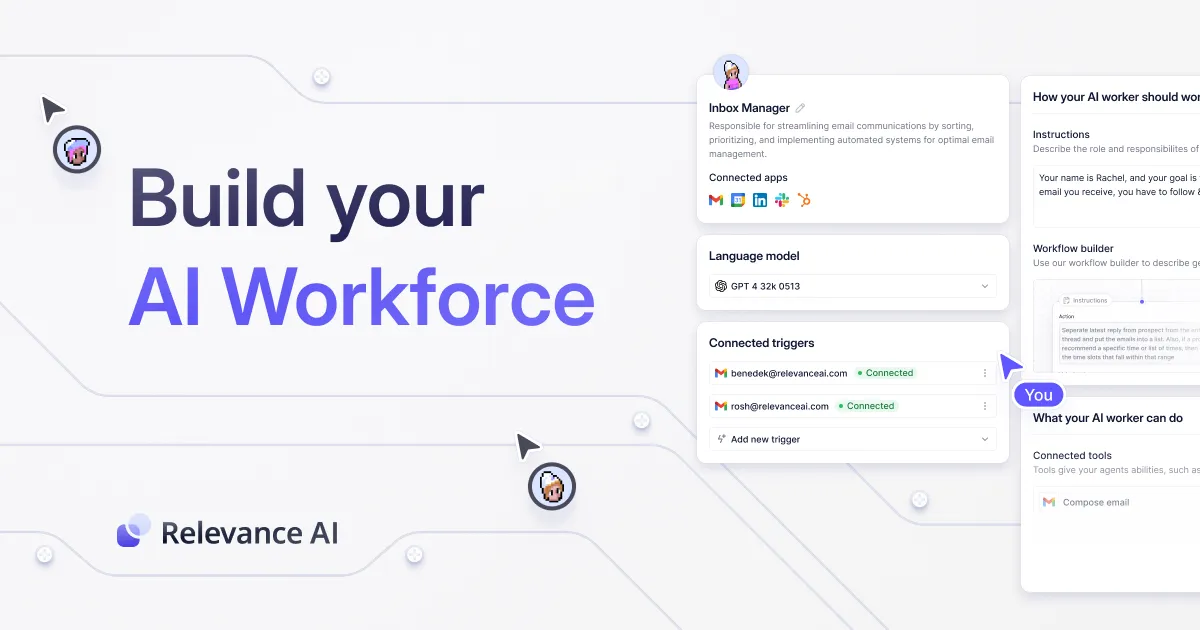
The platform allows businesses to create specialised AI agents designed around particular business tasks. These agents can be connected to business data, tools, and workflows so they can perform repetitive knowledge-work tasks.
Typical applications include:
- Lead qualification
- Sales research
- Customer support
- Market research
- Content operations
- Data enrichment
- CRM workflows
- Internal business processes
One of Relevance AI's key concepts is building teams of specialised agents rather than relying on a single general-purpose assistant. Its current platform also emphasises agent orchestration, evaluation, governance, and monitoring.
Why businesses may consider it
Relevance AI is particularly relevant for companies that want to experiment with agentic workflows without building an entire AI infrastructure internally.
It can be interesting for marketing agencies, SaaS businesses, professional services firms, sales teams, and companies looking to automate repetitive research-heavy work.
Best suited for: Businesses moving from AI assistants toward more autonomous workflows.
2. Workato
Workato sits at the intersection of integration, workflow automation, and AI orchestration.
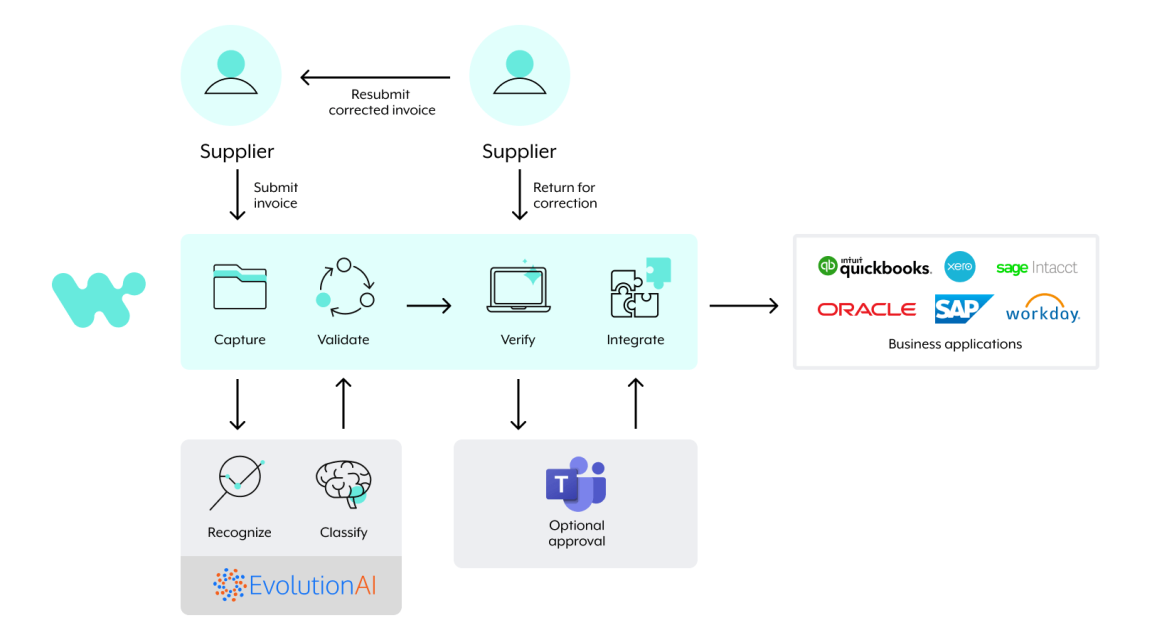
Instead of treating AI automation as an isolated tool, Workato allows businesses to connect applications and automate processes across departments such as finance, HR, sales, IT, and customer operations.
Its AI capabilities now include AI agents, intelligent document processing, AI-powered workflow functions, and enterprise MCP capabilities.
Examples of potential workflows include:
- Automating invoice processing
- Connecting ERP and CRM systems
- Automating employee onboarding
- Creating internal IT support agents
- Updating CRM records
- Processing business documents
- Generating operational summaries
Workato also has a substantial library of integrations, making it more appropriate for organisations with complex technology environments than for businesses looking for a simple two-step automation.
Why businesses may consider it
Data handling and integration can be important considerations for organisations, particularly in regulated or enterprise environments.
Best suited for: Mid-sized and enterprise organisations with complex systems and integration requirements.
3. Agento
Agento is an AI workflow automation platform built in Melbourne, Australia, designed to help businesses automate operational processes using AI agents. Rather than focusing only on simple task automation, the platform is designed to let businesses describe a process in plain language and have AI agents execute that workflow across existing business tools.

The platform places particular emphasis on governance, human oversight, and auditability, which can be important for businesses automating processes involving financial information, HR, compliance, or other sensitive operations.
Potential use cases include:
- Finance and accounting workflows
- Document processing
- HR processes
- Compliance workflows
- Data entry and reconciliation
- Business process automation
- Approval-based workflows
- Cross-platform task execution
One notable feature is its approach to human-in-the-loop automation. Businesses can allow AI agents to handle routine steps while requiring employees to approve sensitive actions before they are completed. Agento also provides audit records of agent activity, giving teams greater visibility into what an automated workflow has done.
Why Australian businesses may consider it
For Australian businesses exploring AI automation, Agento is particularly relevant because it is built in Melbourne and designed around governed business automation. Its focus on approval controls, audit trails, and enterprise-oriented workflows may appeal to organisations that need more oversight than a simple no-code automation tool provides.
The platform is currently positioned around use cases including construction, financial services, HR, and compliance, making it more relevant to operational business processes than general-purpose AI assistants.
Best suited for: Australian businesses looking for AI-powered workflow automation with human oversight, governance, and auditable execution.
4. Make
Make is a visual automation platform designed around connecting applications and creating multi-step workflows.
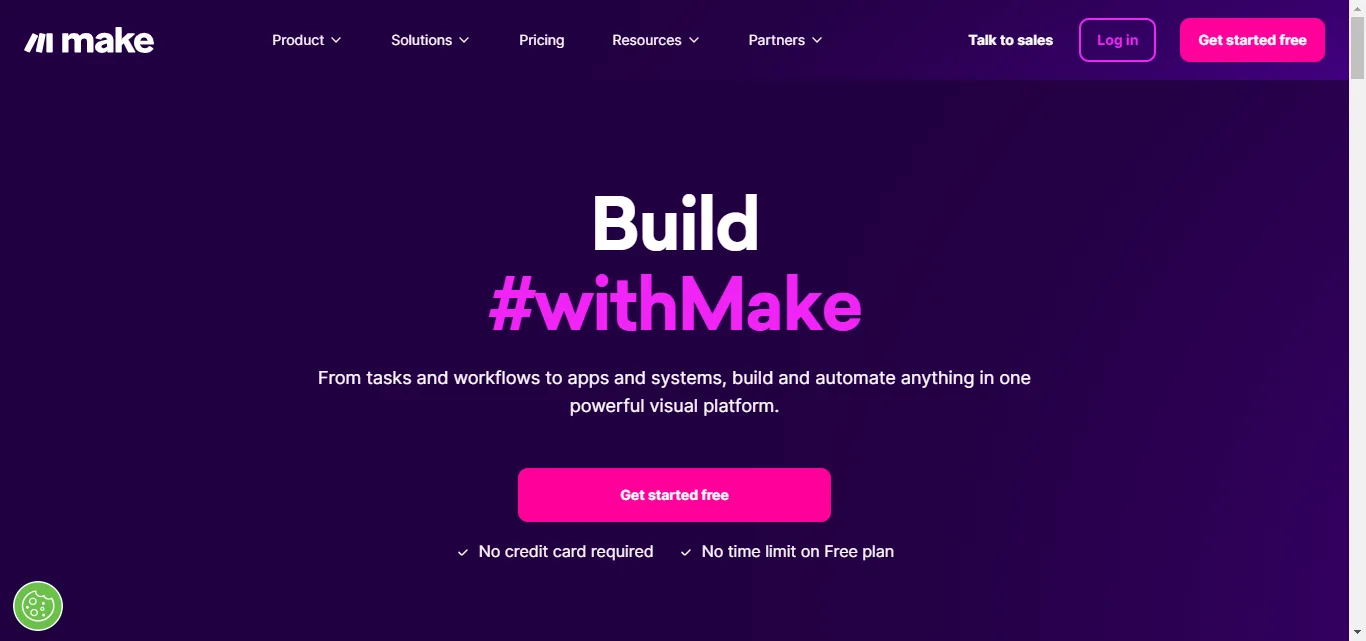
Its visual approach makes it relatively accessible to operations, marketing, sales, and other business teams that want to automate processes without building everything from scratch.
Common workflows include:
- Lead management
- Marketing automation
- Customer onboarding
- Data synchronisation
- Notifications
- Reporting
- CRM updates
- E-commerce operations
What makes Make interesting in the AI automation category is the ability to incorporate AI into broader business workflows rather than using AI as a standalone why chatbots fail in business.
Why businesses may consider it
For SMEs, the ability to start with relatively straightforward automation and gradually introduce AI into existing workflows can be useful.
A company might begin by automating data transfers between applications and later introduce AI-powered classification, summarisation, extraction, or decision steps.
Best suited for: SMEs, marketing teams, operations teams, and companies beginning their automation journey.
5. Gumloop
Gumloop focuses on using AI to automate workflows involving information, research, data, and repetitive knowledge work.
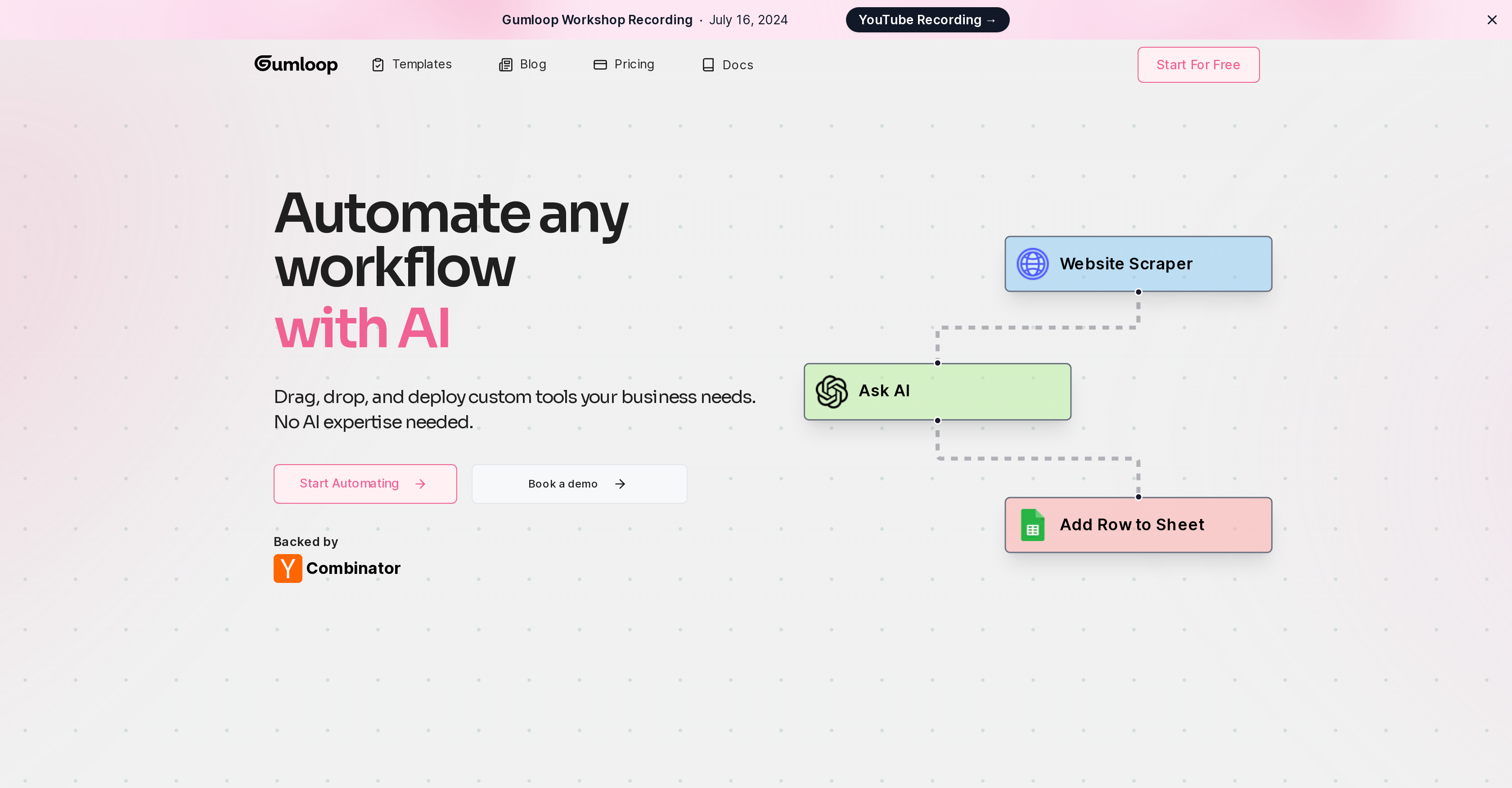
This makes it particularly relevant to teams whose work involves moving information between websites, documents, spreadsheets, databases, and business applications.
Potential use cases include:
- Market research
- Competitor monitoring
- Lead research
- Data enrichment
- Content workflows
- Research summaries
- Document processing
- Internal reporting
Instead of simply asking an AI chatbot to perform a task manually, businesses can design repeatable processes that allow AI to handle multiple steps.
Why businesses may consider it
Companies with relatively small teams often need employees to perform several different functions simultaneously. Automating repetitive research and information-processing tasks can help reduce the amount of manual work involved.
Gumloop can therefore be particularly relevant to startups, agencies, sales teams, and knowledge-intensive businesses.
Best suited for: Teams that spend significant amounts of time researching, collecting, cleaning, and processing information.
6. Lindy
Lindy takes a more assistant-oriented approach to AI automation.
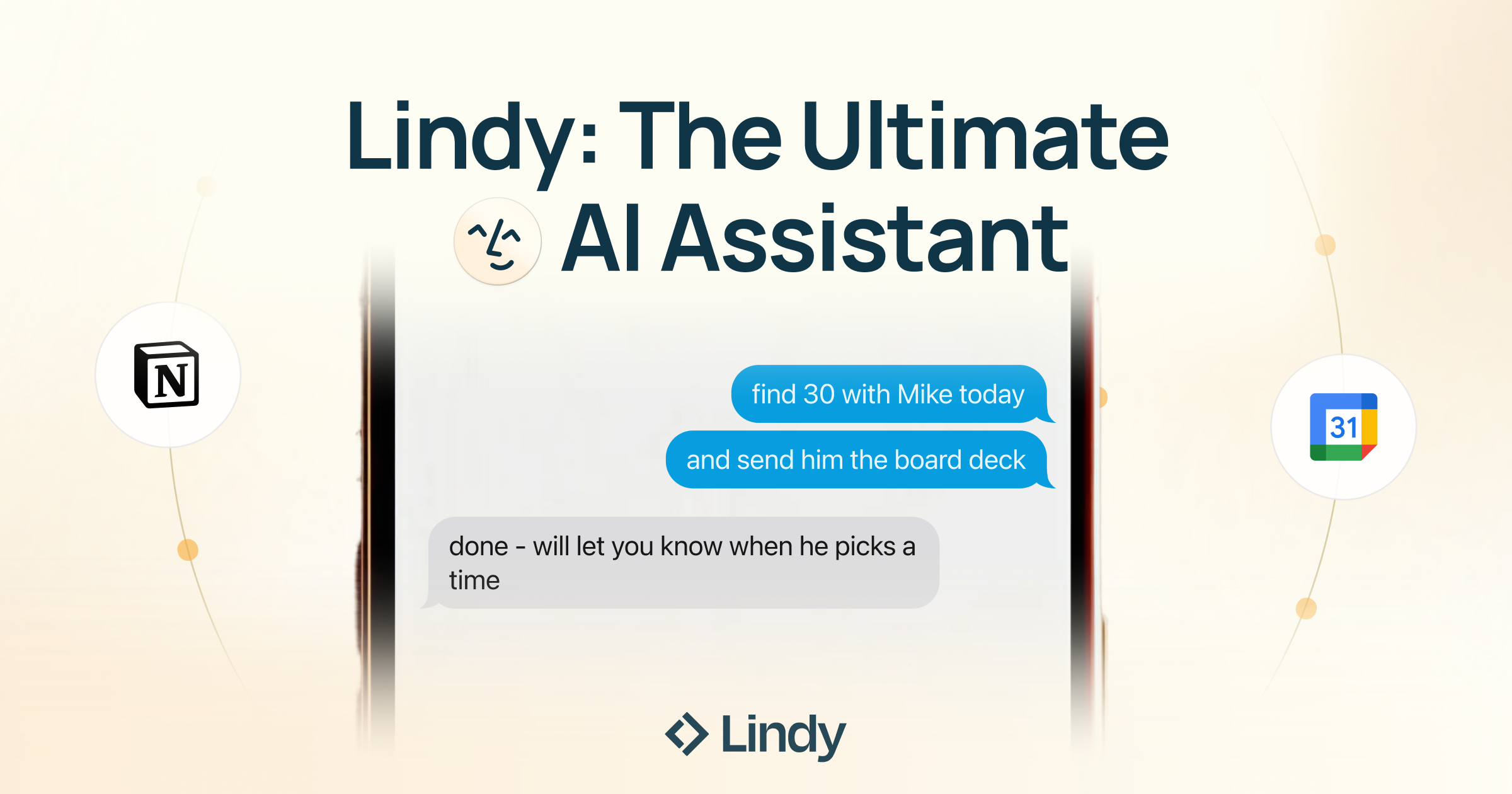
The platform allows users to create AI assistants that can perform specific tasks and interact with business applications. Instead of using AI purely for answering questions, businesses can configure assistants around recurring workflows.
Potential examples include:
- Scheduling
- Customer service
- Sales follow-ups
- Email management
- Lead qualification
- Meeting preparation
- Administrative tasks
This approach can make AI automation more accessible to teams that do not have dedicated developers.
Why businesses may consider it
For smaller businesses, the challenge is often not identifying potential AI use cases but actually implementing them without a large technology team.
AI assistant platforms can provide a relatively approachable starting point for automating repetitive administrative and communication-heavy work.
Best suited for: Small businesses, founders, sales teams, customer-facing teams, and individual professionals.
7. Relay.app
One challenge with AI automation is deciding how much autonomy an AI system should have.

Relay.app takes a different approach by supporting human-in-the-loop workflows. Instead of forcing businesses to choose between completely manual work and completely autonomous AI, workflows can include human approval steps.
For example:
- AI receives an incoming enquiry.
- AI analyses and categorises it.
- AI prepares a response.
- An employee reviews the response.
- The workflow sends the approved response.
- The system updates the relevant records.
This model can be useful when accuracy and human oversight matter.
Why businesses may consider it
Businesses operating in areas where customer communication, financial information, or sensitive decisions require additional review may prefer workflows that keep people involved at critical points.
This can also provide a practical transition between conventional automation and more autonomous AI agents.
Best suited for: Businesses that want AI efficiency while retaining human approval and oversight.
8. Bardeen
Bardeen focuses heavily on automating tasks performed across websites, browser applications, and business tools.

This makes it useful for teams whose workflows involve repeatedly collecting information from websites and transferring it into other systems.
Potential use cases include:
- Prospect research
- Lead generation
- Data collection
- CRM enrichment
- Sales research
- Market research
- Content workflows
- Repetitive browser tasks
For example, a sales team could automate parts of the process of researching prospects, collecting relevant information, and transferring that information into its CRM.
Why businesses may consider it
Many SMEs still rely on manual browser-based workflows for research, sales, administration, and operations.
Automation platforms that work around these repetitive tasks can therefore address practical problems without requiring a complete overhaul of existing software systems.
Best suited for: Sales, marketing, recruitment, research, and operations teams.
9. Stack AI
Stack AI focuses on helping organisations build AI-powered applications and workflows around their internal data.
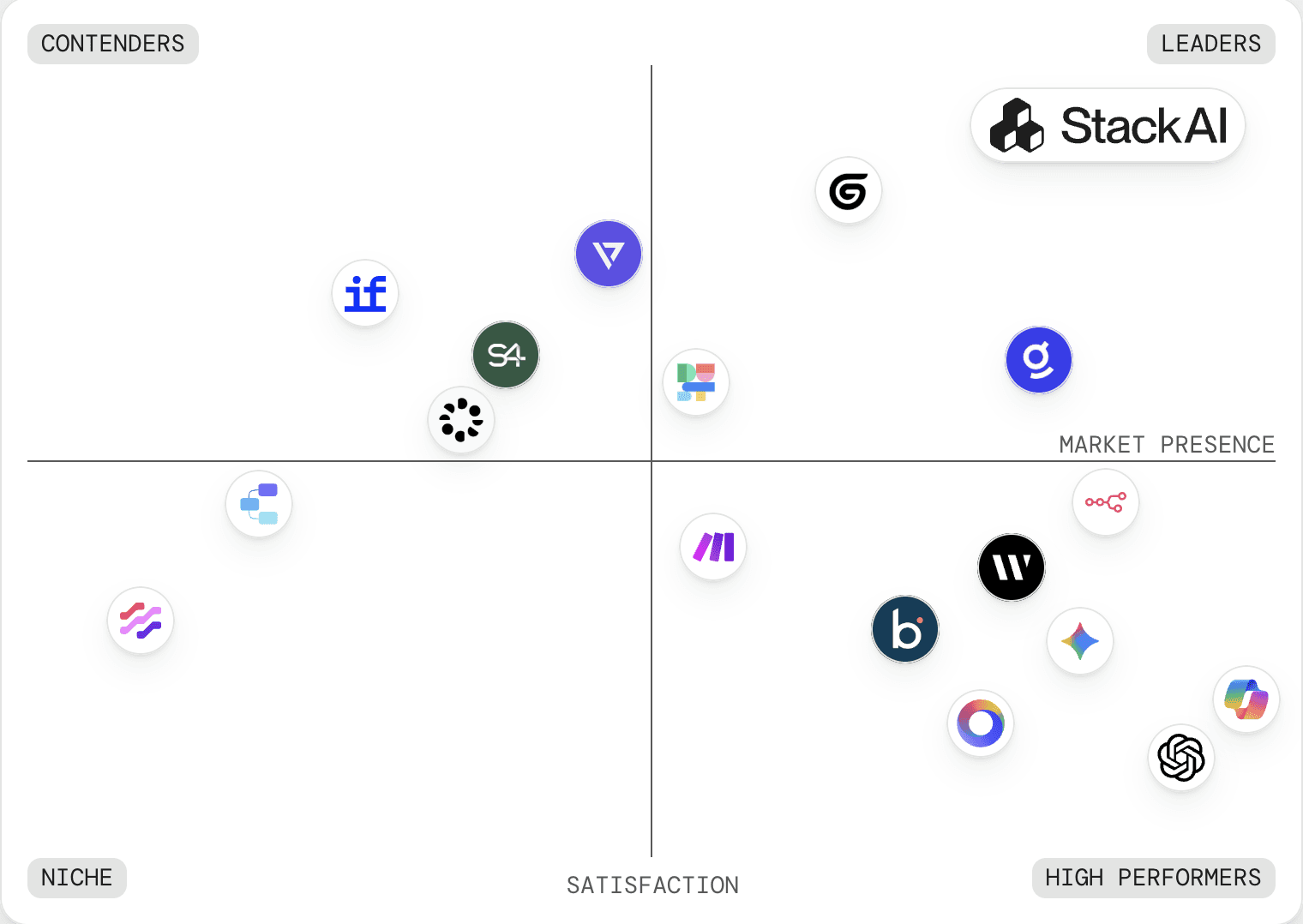
Rather than concentrating only on simple task automation, the platform is oriented toward building more structured AI systems that can work with enterprise information.
Potential applications include:
- Internal knowledge assistants
- Document processing
- Customer support systems
- Research workflows
- Data extraction
- AI-powered decision support
- Enterprise search
This makes it particularly relevant for businesses that want to move beyond consumer-facing AI tools and create AI applications around their own organisational knowledge.
Why businesses may consider it
Companies with large collections of internal documents, policies, knowledge bases, or operational information can potentially use AI workflows to make that information easier to access and process.
This is especially relevant for professional services, financial services, healthcare-related organisations, and larger internal operations teams where knowledge management is a major part of daily work.
Best suited for: Organisations building internal AI applications and knowledge workflows.
10. SmythOS
SmythOS focuses on building and orchestrating AI agents that can interact with business systems and perform multi-step tasks.
The platform is particularly relevant to organisations exploring multi-agent automation, where different AI agents can be assigned different responsibilities within a broader workflow.
For example, one agent could gather information, another could analyse it, and another could prepare an output for human review.
Potential business applications include:
- Research automation
- Customer support
- Business intelligence
- Sales operations
- Data processing
- Internal assistants
- Multi-step business workflows
Why businesses may consider it
As businesses move from simple AI assistants toward agent-based systems, orchestration becomes increasingly important.
Platforms such as SmythOS can be considered by organisations that want to experiment with more sophisticated AI-agent architectures without building every component independently.
Best suited for: Businesses exploring multi-agent systems and complex AI workflows.
How to Choose an AI Automation Platform
There is no single platform that fits every business. The right choice depends heavily on the company's existing technology stack, technical capabilities, workflow complexity, and governance requirements.
Here are several factors worth considering before implementation.
1. Integration With Existing Software
An AI automation platform should work with the systems your business already uses.
Consider whether the platform can connect with:
- CRM systems
- Accounting software
- ERP platforms
- HR systems
- Communication tools
- Databases
- Cloud storage
- Marketing platforms
- Internal APIs
The objective should not simply be to add another AI tool. Ideally, automation should connect the systems that employees already depend on.
2. AI Agent Capabilities
Not every automation platform has the same level of AI functionality.
Some focus mainly on conventional workflow automation, while others support:
- Multi-agent workflows
- AI-powered decision steps
- Document intelligence
- Natural-language workflow creation
- AI-powered data extraction
- Agent orchestration
Businesses should identify whether they need basic AI assistance or genuinely autonomous task execution.
3. Data Security and Governance
Data governance deserves particular attention when introducing AI automation.
Businesses should examine:
- Where business data is processed
- Where information is stored
- How third-party AI models are used
- Access controls
- Audit capabilities
- Data retention policies
- Human approval mechanisms
- Privacy and regulatory requirements
For organisations handling sensitive customer, financial, employee, or operational information, these questions should be considered before deployment rather than after an automation has already been implemented.
AI Automation Trends Businesses Should Watch in 2026
From chatbots to AI agents
Businesses are moving from AI systems that simply answer questions toward agents capable of completing tasks.
From isolated automation to orchestration
Instead of automating one individual task, companies are increasingly connecting several systems into end-to-end DevOps workflows.
More human-in-the-loop systems
Rather than allowing AI to make every decision independently, businesses can design workflows where AI handles repetitive work while employees approve important actions.
Greater focus on data sovereignty
Organisations are paying closer attention to where data is processed and stored. This is particularly relevant for organisations with regulatory, privacy, or contractual requirements.
Frequently Asked Questions
1. What are AI automation platforms?
AI automation platforms combine artificial intelligence with workflow automation, integrations, data processing, and business rules. They allow businesses to automate repetitive tasks while using AI for activities that require understanding, classification, generation, or decision-making.
2. What are the best AI automation platforms for businesses?
Different roboteacher software platforms address different requirements. Relevance AI focuses heavily on AI agents, Workato on enterprise orchestration, n8n on flexible workflow automation, Make on visual automation, and platforms such as Lindy and Gumloop on more accessible AI-powered workflows.
3. Are AI automation platforms suitable for SMEs?
Yes. Many AI automation platforms are designed to work with small and mid-sized teams. SMEs can use them for customer support, lead management, research, administration, document processing, marketing, and other repetitive processes.
4. Do businesses need developers to use AI automation platforms?
Not always. Some platforms provide visual or no-code interfaces designed for business users. More technical platforms can offer greater flexibility but may require developers or technical staff for advanced implementations.
5. What can businesses automate with AI?
Common opportunities include customer enquiries, lead qualification, document processing, data entry, CRM updates, research, reporting, email workflows, employee onboarding, customer support, and internal knowledge management.

