
.webp)
.png)
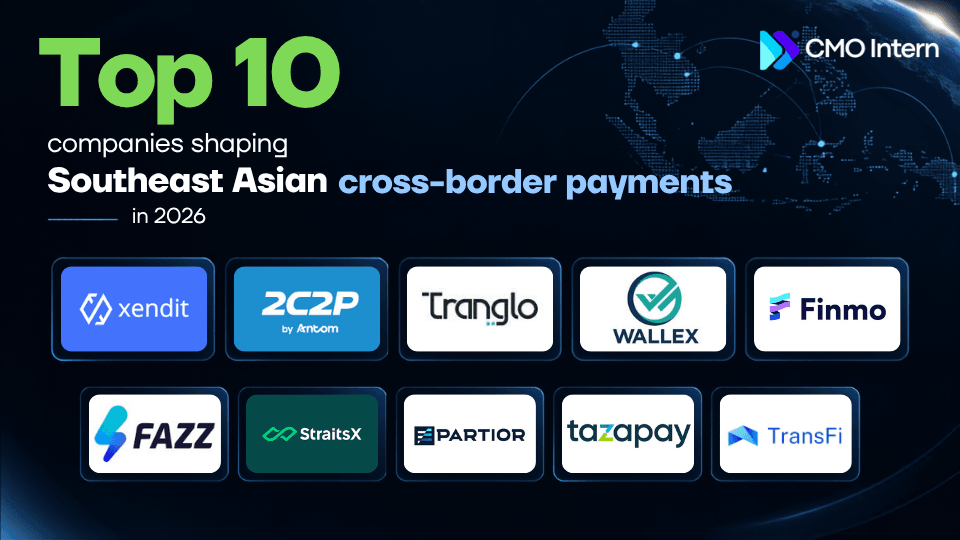
The Top 10 companies shaping Southeast Asian cross-border payments in 2026 are transforming how businesses and consumers move money across the region by connecting fragmented local payment rails into unified, real-time networks. These firms are replacing slow, traditional correspondent banking with API-driven infrastructure, digital wallets, and stablecoin settlement systems to make international transfers as seamless as domestic payments.
Unlike traditional international transfers that may rely on correspondent banks, newer payment companies are connecting businesses directly to local bank rails, real-time payment systems, digital wallets, FX networks, and, increasingly, stablecoin settlement infrastructure.
The opportunity is particularly significant in Southeast Asia because each market has its own payment systems, currencies, regulations, and consumer preferences. Companies operating across Indonesia, Singapore, Malaysia, Thailand, Vietnam, and the Philippines therefore need more than a conventional international bank transfer.
This has created room for a new generation of fintech and payment infrastructure companies. From B2B payment platforms and regional payment hubs to blockchain-based settlement networks, these companies are helping reshape the regional landscape.
Note: This list focuses on established or emerging regional players with meaningful payment infrastructure, rather than global giants such as Visa, Mastercard, Microsoft, or other household-name technology companies. The order is based on relevance to the topic and the breadth or distinctiveness of their cross-border infrastructure.
Why Southeast Asian Cross-Border Payments Are Changing
Southeast Asia has one of the most fragmented yet rapidly digitizing payment environments in the world. Countries have developed their own instant-payment and QR systems, including Singapore's PayNow, Thailand's PromptPay, Malaysia's DuitNow, Indonesia's BI-FAST and QRIS, and the Philippines' InstaPay and QR Ph.
These domestic systems are increasingly being connected across borders. The Bank for International Settlements says ASEAN had 29 payment linkages by the end of 2025, while initiatives such as Project Nexus are designed to move the region toward standardized multilateral connectivity between domestic instant-payment systems.
This creates opportunities for fintech companies that can sit between local payment infrastructure and international businesses. Many of these firms are also exploring cross-border regulatory sandboxes explained to better reach their target audiences in a competitive landscape.
The most important developments include:
- Real-time payment connectivity
- Local-currency settlement
- Multi-currency accounts
- API-based payment infrastructure
- Automated FX and treasury management
- Digital wallet interoperability
- Stablecoin-based settlement
- Cross-border B2B payments
- Regional payout infrastructure
Against this backdrop, the following list highlights the Top 10 companies shaping Southeast Asian cross-border payments in 2026.
Top 10 companies shaping Southeast Asian cross-border payments in 2026
1. Xendit — Connecting Local Payment Rails Across Southeast Asia
Indonesia-based Xendit has grown from a payment gateway into a broader financial infrastructure company serving multiple Southeast Asian markets.

Its cross-border offering is particularly relevant because it focuses on connecting businesses to local payment and payout infrastructure rather than forcing every transaction through a traditional international payment route.
Xendit says its cross-border product allows businesses to send and collect money across Southeast Asia through a single integration. Its current coverage includes Indonesia, the Philippines, Malaysia, Thailand, Vietnam, and Singapore, with local bank, e-wallet, and over-the-counter payout options depending on the market.
What makes Xendit notable
The company's approach is based on a relatively simple proposition: one integration, multiple local markets.
For a company expanding from Indonesia into Vietnam or from Singapore into the Philippines, building individual integrations with every local payment system can quickly become expensive and difficult to maintain. Some firms even seek out blockchain development companies to handle the complex task of regional brand positioning.
Xendit provides an abstraction layer over these markets, allowing businesses to manage:
- Cross-border payouts
- Local collections
- Foreign exchange
- Bank transfers
- E-wallet payouts
- Payment APIs
- Multi-market payment operations
Its regional expansion also gives Xendit a strong understanding of the operational differences between Southeast Asian markets.
Why it matters for cross-border payments
The future of regional payments is unlikely to depend on one universal payment method. Instead, businesses need infrastructure that can connect multiple domestic systems.
Xendit's model is built around exactly this problem: connecting businesses to local payment rails without requiring them to rebuild their payment stack for every country.
2. 2C2P — Payment Infrastructure for Regional Commerce
Founded in Thailand, 2C2P has become one of Southeast Asia's established payment infrastructure providers. Today, the company is headquartered in Singapore and operates across six Southeast Asian markets.

Rather than focusing exclusively on money transfers, 2C2P provides a broader payment infrastructure layer for businesses that need to accept and make payments across different markets.
Its network connects international and local payment providers, financial institutions, card schemes, digital wallets, and alternative payment methods through a single integration.
What 2C2P provides
Its infrastructure covers areas such as:
- Online payment acceptance
- Local payment methods
- Digital wallets
- Card payments
- Payment links
- Payouts
- Regional payment connectivity
- Alternative payment methods
2C2P says its network includes more than 600,000 alternative payment points and supports more than 45 currencies globally.
Why it matters for cross-border payments
For merchants expanding across Southeast Asia, accepting payment is only part of the challenge. They also need to understand how customers in each market actually pay.
A customer in Thailand may prefer PromptPay, while another market may rely more heavily on bank transfers, wallets, QR payments, or over-the-counter channels.
2C2P's regional infrastructure is designed around this fragmentation. Instead of treating Southeast Asia as one homogeneous payment market, it provides access to multiple local ecosystems through one platform.
This makes 2C2P an important example of how regional payment flows are increasingly becoming an infrastructure and connectivity problem rather than simply a money-transfer problem.
3. Tranglo — A Cross-Border Payment Hub Built Around Remittances
Malaysia-based Tranglo has been operating in cross-border payments since the late 2000s.
The company initially focused on international mobile top-ups before expanding into cross-border payments in 2011. Its business now covers foreign remittances, business payments, and international payout infrastructure.
Tranglo's infrastructure connects payment providers and financial institutions to payout networks in multiple markets. The company says its network covers more than 100 countries and includes thousands of banks and wallets.
Tranglo Connect
One of the company's core infrastructure products is Tranglo Connect, which provides API access to cross-border payment and payout services.
This model is particularly useful for:
- Remittance companies
- Financial institutions
- Fintech platforms
- Businesses making international payments
- Mobile payment providers
Instead of building direct connections with individual banks and payment providers in every destination market, companies can use Tranglo as an intermediary infrastructure layer.
Why it matters
Remittances remain a major component of international money movement in Southeast Asia, where millions of workers live and work across national borders.
Tranglo's long history in the sector gives it a different position from newer fintech platforms. Its focus is less about consumer-facing financial apps and more about the infrastructure required to move money between financial institutions, businesses, and recipients.
That makes it a significant part of the underlying ecosystem supporting regional financial connectivity.
4. Wallex — Multi-Currency Payments for Businesses
Wallex focuses heavily on the business side of international payments and foreign exchange.
%20(1).png)
The platform provides businesses with multi-currency payment capabilities, FX services, local payment channels, and cross-border transfer infrastructure.
Wallex currently advertises payments in 47 currencies, with same-day settlement available across more than 20 major global and Asian currencies. It also supports bulk payments and payment workflows designed for businesses managing multiple international beneficiaries.
Where Wallex fits
Traditional banks can make international payments, but businesses operating across several Asian countries may face:
- High FX spreads
- Multiple banking relationships
- Slow settlement
- Manual payment processes
- Limited visibility into international transfers
- Complicated approval workflows
Wallex attempts to consolidate these functions into one platform.
Its infrastructure supports payments involving currencies such as SGD, IDR, MYR, THB, VND, PHP, USD, EUR, and GBP, among others.
A business-first approach
Wallex is particularly relevant for companies with recurring international obligations.
For example, a Singapore-based company may need to pay suppliers in Indonesia, contractors in Vietnam, and partners in Thailand while receiving revenue in USD.
Rather than managing every payment independently through conventional banking channels, the company can centralize FX and payment operations through a multi-currency platform.
This business treasury angle is becoming increasingly important as regional commerce moves beyond simple remittances toward complex business operations.
5. Finmo — Cross-Border Payments Meets Treasury Infrastructure
Singapore-founded Finmo approaches cross-border payments from a treasury and financial-operations perspective.
Its platform allows businesses to send and receive international payments, manage multiple currencies, conduct FX transactions, and make mass payouts through a single infrastructure layer.
Finmo says its network supports cross-border payments in more than 80 currencies and reaches more than 200 countries, combining local payment rails with SWIFT connectivity.
What makes Finmo different
The key distinction is the combination of payments and treasury management.
For businesses operating across multiple countries, sending money is only one part of the problem. Finance teams also need to know:
- How much money is available in each currency
- When funds will settle
- What FX rate is being applied
- How much each payment costs
- Which payment rail was used
- How international transactions affect cash flow
Finmo's platform is designed to bring these activities into a single workflow.
The company also recently expanded its Singapore presence, announcing in September 2026 that its TreasuryOS platform had surpassed US$1 billion in monthly transaction volume.
Why it matters
As Southeast Asian businesses become increasingly regional, treasury infrastructure becomes just as important as payment acceptance.
Finmo represents the shift toward platforms that combine cross-border payments, FX, liquidity and financial operations rather than treating each function separately.
6. Fazz — Building a Regional Payment Infrastructure Layer
Fazz is a Southeast Asian financial infrastructure group that evolved from businesses focused on financial access and payment infrastructure in Indonesia and Singapore.
Today, the company positions itself around payment infrastructure that allows businesses to move and manage money across markets, currencies, and payment rails.
Fazz's infrastructure model
The company's current payment infrastructure emphasizes three layers:
Multiple markets
Fazz says its infrastructure spans more than 10 countries.
Multiple currencies
Businesses can access different fiat and digital payment rails.
Multiple payment rails
The platform connects different payment networks through an infrastructure layer rather than requiring businesses to integrate with every rail independently.
This is especially relevant for fintechs, marketplaces, SaaS companies, digital businesses, and other platforms that need to move money across multiple jurisdictions.
The Southeast Asian angle
Fazz's roots are strongly connected to Southeast Asia. Its history includes Payfazz in Indonesia and Xfers in Singapore before the businesses came together under Fazz.
That regional background is important because payment infrastructure in Southeast Asia is highly localized.
Rather than assuming one payment model works everywhere, companies such as Fazz are building infrastructure that can connect different markets and payment ecosystems.
7. StraitsX — Stablecoins as Cross-Border Settlement Infrastructure
Singapore-based StraitsX represents another direction in the development of regional payment systems: using regulated stablecoin infrastructure as a settlement layer.
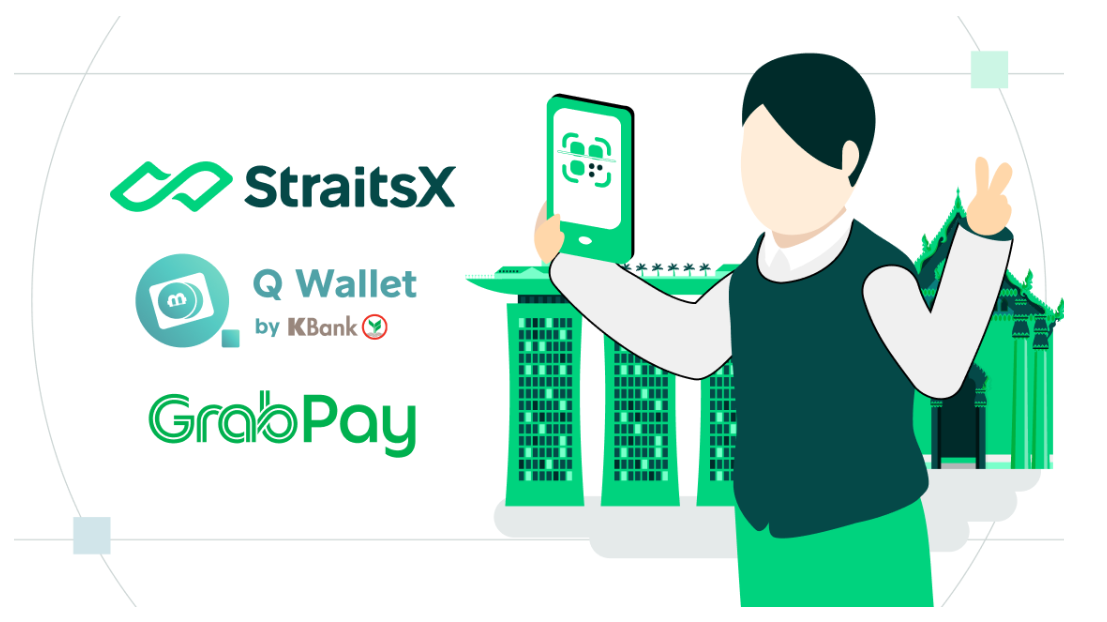
The company operates XSGD and XUSD stablecoins and has been developing infrastructure that connects blockchain-based settlement with conventional payment systems.
One example is its work with KASIKORNBANK and Grab on Thailand-Singapore payments. The system uses blockchain-based settlement infrastructure and XSGD to support real-time transactions between payment ecosystems.
Moving stablecoins behind the scenes
The interesting part of StraitsX's model is that the consumer does not necessarily need to interact directly with a blockchain. Many firms in this space are also looking into motion graphics companies to navigate the regulatory and technical hurdles of these new settlement layers.
StraitsX has also expanded its Dedicated Virtual Account infrastructure to support IDR payouts into more than 100 Indonesian banks through BI-FAST and RTGS connections. The company says this infrastructure can support cross-border remittances, payroll, treasury operations, and stablecoin off-ramping.
Why this matters
Cross-border payment infrastructure has traditionally separated payment messaging, FX conversion, and settlement.
Stablecoin infrastructure attempts to bring some of these processes closer together.
For Southeast Asia, where payment systems are fragmented across currencies and jurisdictions, this could become an important complementary infrastructure layer alongside conventional banking and instant-payment networks.
8. Partior — Real-Time Settlement for Institutional Payments
Partior takes a more infrastructure-heavy approach to cross-border payments.
The Singapore-based company emerged from Project Ubin, a multi-year initiative involving the Monetary Authority of Singapore and financial institutions exploring blockchain and distributed-ledger technology for financial settlement.
Partior was incorporated in 2021 with founding shareholders including DBS, J.P. Morgan, Standard Chartered, and Temasek. Its network subsequently moved into commercial operation for USD, EUR, and SGD flows.
What Partior is building
Rather than acting primarily as a consumer payment application, Partior focuses on institutional financial infrastructure.
Its platform is designed around:
- 24/7 multi-currency clearing
- Real-time settlement
- Atomic settlement
- Payment-versus-payment FX settlement
- Liquidity management
- Pre-validation
- Reduced reconciliation requirements
Partior describes its system as a unified ledger designed to provide real-time finality for institutional transactions.
Why it matters
Traditional cross-border transactions can involve multiple intermediaries and sequential settlement processes.
Partior's approach is to redesign the settlement layer itself.
That makes the company particularly relevant to the institutional side of regional finance, where banks and large financial institutions require certainty around liquidity, settlement finality, and FX.
9. Tazapay — B2B Cross-Border Payments and Local Collections
Singapore-based Tazapay was founded to address the friction businesses face when collecting and paying money internationally.

Its infrastructure combines cross-border payments with local payment methods, payment links, checkout, escrow, and payout capabilities.
Tazapay says its network provides access to local collection methods in more than 85 markets and card coverage across more than 170 markets through a single API. It also holds a Major Payment Institution licence from Singapore's Monetary Authority of Singapore covering cross-border money transfer and related payment services.
B2B payments as the focus
Tazapay is particularly relevant for:
- Marketplaces
- SaaS companies
- Payment service providers
- Exporters
- Digital businesses
- International merchants
The company is designed to help businesses collect money locally and manage international settlement without establishing a financial infrastructure relationship in every market.
An important 2026 development
Tazapay's position changed significantly in September 2026.
Circle announced a definitive agreement to acquire Tazapay, with the transaction expected to close in 2027 subject to regulatory approvals and other closing conditions. Circle said Tazapay had more than 60 banking and fintech partners and local payout coverage in more than 100 markets as of July 2026.
The acquisition is therefore an important development to mention when discussing Tazapay today: it remains a Singapore-headquartered cross-border payment infrastructure company, but its future integration into Circle's broader payments ecosystem is now part of the company's trajectory.
10. TransFi — Connecting Local Payments With Stablecoin Infrastructure
TransFi is another emerging player taking a more modern approach to international money movement.
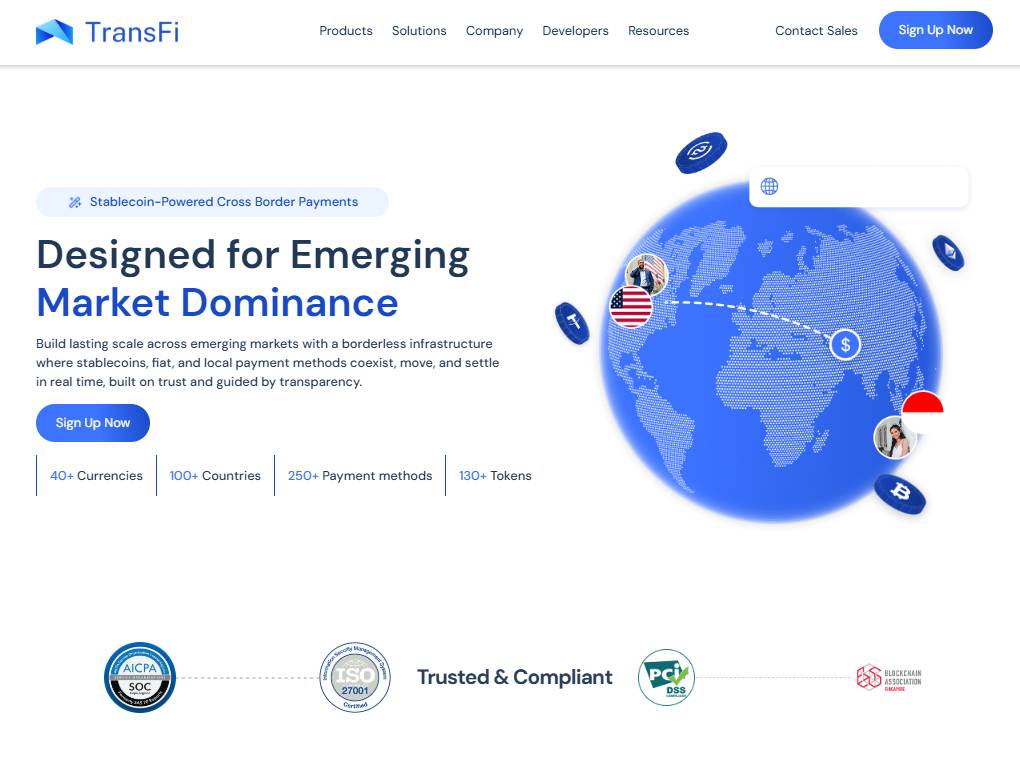
The company combines local payment methods, FX, cross-border collections and payouts with stablecoin infrastructure.
TransFi currently advertises coverage across more than 100 countries, more than 40 currencies and more than 250 payment methods. Its Southeast Asian coverage includes Vietnam, Malaysia, the Philippines, Thailand, and Indonesia.
Local payment methods as the entry point
One of TransFi's notable characteristics is its focus on localized payment infrastructure.
For example, businesses can use local payment systems to move funds into markets such as Vietnam, Thailand, Malaysia, and the Philippines, while TransFi manages the international settlement layer.
Its current corridor infrastructure includes local bank transfers, e-wallets and stablecoin-based settlement, depending on the market and use case.
Why it matters
For businesses entering emerging markets, the biggest problem is often not the international transfer itself. It is the final connection into the local financial system.
A global company may have USD or EUR, but its supplier or customer may need VND, THB, PHP, or MYR through a local bank or wallet.
TransFi's approach is to connect these two sides through one infrastructure layer.
That makes it a relevant example of how regional payment systems are increasingly combining local payment access with global settlement technology.
Key Trends Shaping Cross-Border Payments in Southeast Asia
1. Instant Payment Networks Are Becoming Regional
Southeast Asian countries are increasingly connecting their domestic payment systems.
Project Nexus is designed to standardize how domestic instant-payment systems connect to one another. In 2025, central banks from India, Indonesia, Malaysia, the Philippines, Singapore, and Thailand incorporated Nexus Global Payments to move the initiative toward live implementation.
This could reduce the need to build separate bilateral connections for every new country.
2. Local Currency Settlement Is Becoming More Important
Businesses do not necessarily want international payments to pass through USD every time.
Direct or more efficient local-currency settlement can reduce unnecessary conversions and make payment costs easier to understand.
This is particularly relevant for companies trading regularly across ASEAN markets.
3. APIs Are Replacing Manual Payment Operations
Modern payment infrastructure increasingly works through APIs.
Instead of a finance team manually creating international transfers, businesses can integrate payment infrastructure directly into:
- ERP systems
- Marketplaces
- Payroll platforms
- E-commerce systems
- SaaS platforms
- Treasury software
This allows payments to become part of an automated business workflow.
4. Stablecoins Are Moving Toward Infrastructure
Stablecoins are no longer limited to crypto-native applications.
Companies such as StraitsX and Partior are exploring or implementing blockchain-based settlement infrastructure for more traditional financial flows. StraitsX's Thailand-Singapore work demonstrates how stablecoin settlement can operate behind familiar consumer payment interfaces.
The key development is therefore not necessarily consumers paying directly with cryptocurrency.
Instead, stablecoins can potentially operate behind the scenes as settlement infrastructure.
5. Treasury and Payments Are Converging
Cross-border payments are increasingly connected to treasury management.
Businesses want to know not only whether a payment arrived, but also:
- Which currency was used
- How much FX cost
- Where funds are held
- When settlement occurred
- How much liquidity is available
- Which payment rail processed the transaction
This explains the growing overlap between payment platforms and treasury platforms such as Finmo and Wallex.
The Future of Southeast Asian Cross-Border Payments
The next generation of regional payment systems will probably not be defined by one technology alone.
Instead, several layers are developing simultaneously.
Domestic instant-payment systems are becoming more interconnected. Fintech companies are creating API layers between businesses and local payment networks. Treasury platforms are bringing FX and international payments into unified workflows. At the institutional level, blockchain-based settlement networks are experimenting with 24/7 clearing and atomic settlement.
Meanwhile, stablecoin infrastructure is creating another potential settlement layer between traditional finance and blockchain networks.
This means the payment experience may eventually become much simpler even though the underlying infrastructure becomes more sophisticated.
A customer could scan a QR code in another country without thinking about which payment network is being used. A business could pay a supplier in another ASEAN market through one API without opening a local bank account. A finance team could manage multiple currencies from a single treasury interface.
The complexity would move into the infrastructure layer.
That is ultimately where many of the companies in this list are competing: not simply to move money, but to make cross-border money movement feel increasingly like a local transaction.
Frequently Asked Questions
1. What are Southeast Asian cross-border payments?
Southeast Asian cross-border payments are financial transactions in which money moves between individuals, businesses, banks, wallets, or payment platforms across different countries in Southeast Asia.
They can include remittances, supplier payments, payroll, e-commerce transactions, marketplace payouts, and international business transfers.
2. Why are cross-border payments in Southeast Asia complicated?
Each country has its own currency, financial regulations, banking infrastructure, payment systems, and preferred payment methods.
A business operating across several countries therefore needs to manage multiple payment rails and compliance requirements.
3. Which companies are building Southeast Asian cross-border payment infrastructure?
Companies active in different parts of the ecosystem include Xendit, 2C2P, Tranglo, Wallex, Finmo, Fazz, StraitsX, Partior, Tazapay, and TransFi.
They do not all provide the same service. Some focus on merchant payments, while others specialize in B2B payments, treasury, remittances, institutional settlement, or stablecoin infrastructure.
4. Are Southeast Asian cross-border payments becoming faster?
Yes. Domestic instant-payment systems are increasingly being connected across borders. The BIS notes that connecting domestic instant-payment systems can enable cross-border payments to reach recipients within seconds, while Project Nexus is designed to provide a standardized approach to multilateral connectivity.
However, actual settlement speed still varies depending on the country, currency, payment method, compliance checks, and provider.
5. Will stablecoins replace traditional cross-border payments?
It is too early to say.
Stablecoins are increasingly being tested and used as settlement infrastructure, including in Southeast Asia. However, conventional bank transfers, instant-payment systems, cards, and local wallets remain important parts of the payment ecosystem.
The more likely near-term development is the coexistence of traditional payment rails and blockchain-based settlement infrastructure.

