


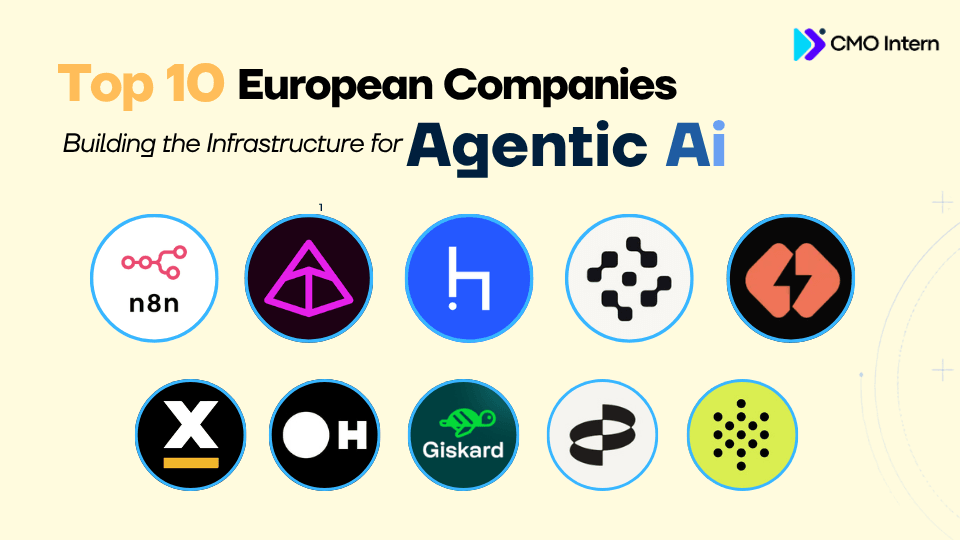
The following list highlights the top 10 European companies building the infrastructure for Agentic AI, providing the essential orchestration, deployment, and governance layers enterprises need to move beyond simple text generation. As organizations shift toward autonomous systems that reason through tasks and execute multi-step workflows, these specialized providers are delivering the critical frameworks required to operate reliably in real-world environments.
That creates a new infrastructure challenge. Companies need more than an LLM: they need systems for orchestration, deployment, observability, evaluation, security, governance, and tool connectivity.
Rather than competing directly with the world's largest foundation-model providers, these companies are building the layers that allow web3 infrastructure building to operate reliably in real-world environments.
This list focuses on specialized European companies with meaningful technology, enterprise traction, or developer adoption, while deliberately leaving out hyperscalers and mega-cap technology companies.
Why Agentic AI Infrastructure Matters
An AI agent is only as useful as the infrastructure around it.
A basic LLM application may need little more than an API connection and a prompt. An autonomous agent operating inside an enterprise environment is considerably more complicated.
It may need to:
- Decide which tool to use
- Access internal company data
- Call multiple APIs
- Maintain state and context
- Execute several steps in sequence
- Recover from failures
This creates an infrastructure layer between the underlying AI model and the business application.
The European market is particularly interesting because companies also have to consider data residency, GDPR, regulatory requirements, enterprise security, and sovereignty. Several marketing outsourcing companies are positioning their platforms around exactly these requirements.
Top 10 European companies building the infrastructure for Agentic AI
1. n8n — AI Workflow Orchestration
Berlin-based n8n has evolved from a workflow automation platform into one of Europe's most visible players in AI orchestration.
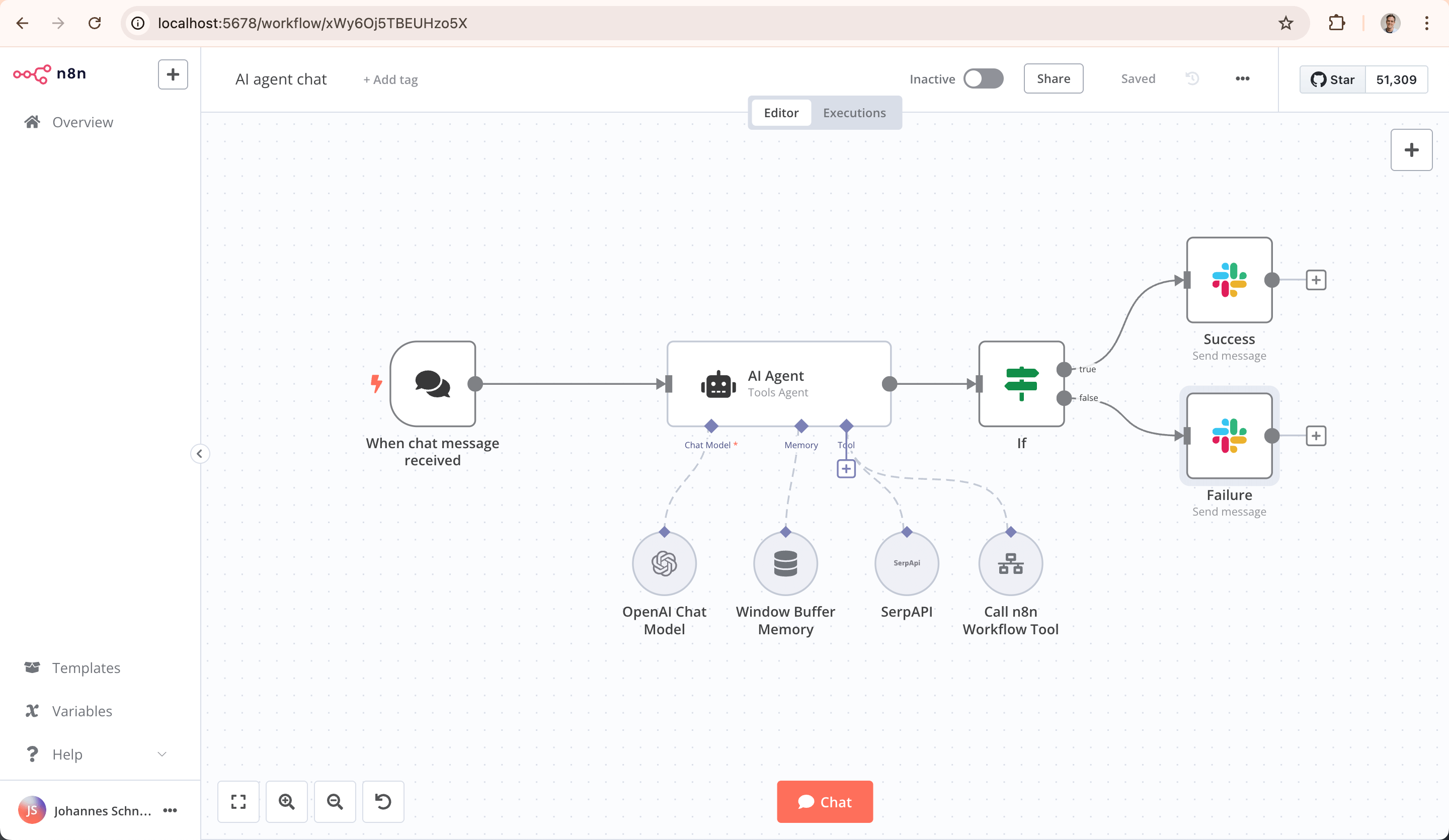
Founded in Berlin in 2019, n8n provides a visual workflow environment where teams can connect APIs, databases, business applications, AI models, and automation logic. The platform increasingly targets blockchain development companies and agentic workflows rather than traditional deterministic automation alone.
The infrastructure problem n8n addresses is straightforward: agents rarely operate in isolation.
An enterprise agent may need to retrieve information from a CRM, call an external API, process a document, send an email, update a database, and then trigger another workflow. n8n provides the orchestration layer connecting these systems.
Its 2026 product direction also emphasizes reliability around AI workflows, including failure handling, observability, human oversight, workflow security, and agent reliability.
Key infrastructure layer: AI orchestration and workflow automation
Headquarters: Berlin, Germany
Best known for: Connecting motion graphics companies with business systems and workflows
2. Pydantic — Type-Safe Agent Development
Pydantic has become an important part of the Python ecosystem, and its newer Pydantic AI and Logfire products extend that foundation into agent development and observability.
Pydantic AI is a type-safe Python framework for building production AI agents. It supports tool calling, structured outputs, multiple model providers, and integrations with observability infrastructure.
This matters because production agents need more structure than a simple prompt-response loop.
Pydantic's approach is to bring software-engineering principles such as type safety, validation, structured outputs, and testing into AI application development.
Its ecosystem also includes Logfire, an observability platform designed to trace AI workloads, monitor token usage, understand latency, and inspect agent executions. The company is currently hiring specifically around agent infrastructure, AI sandboxes, evaluations, and continuous learning, showing how its product stack is expanding around production AI systems.
Key infrastructure layer: Agent development, validation, and observability
European roots: United Kingdom
Best known for: Type-safe Python infrastructure for AI applications
3. haystack — Agent Orchestration and Knowledge Infrastructure
Berlin-based deepset is the company behind Haystack, an open-source framework for building production AI applications.
While Haystack initially became widely associated with retrieval-augmented generation, its role has expanded toward agent orchestration. Haystack provides components for retrieval, reasoning, memory, tool use, and multi-step agent workflows.
Its architecture is particularly relevant to enterprises that want control over the individual components of their AI stack rather than locking everything into one model provider.
The company describes Haystack as an operational layer for building, running, and governing production AI agents on the models and infrastructure selected by the enterprise. Its enterprise platform is designed around production deployment, security, and the ability to change models, vector databases, or infrastructure without rebuilding the entire application.
Key infrastructure layer: Agent orchestration, RAG, knowledge pipelines
Headquarters: Berlin, Germany
Best known for: Open-source Haystack framework
4. Orq.ai — AI Gateway and Agent Governance
Founded in the Netherlands and based in Amsterdam, Orq.ai is taking a different approach to the agentic infrastructure problem.
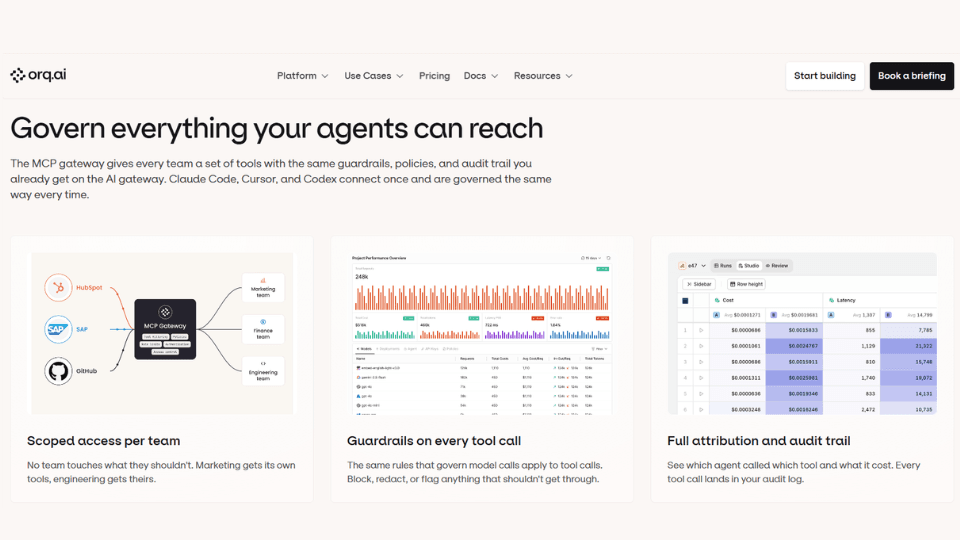
Its platform acts as an AI gateway and control plane through which organizations can route model requests, manage AI applications, monitor costs, apply policies, and govern agent interactions. Orq.ai says it supports more than 500 models across more than 30 providers.
Its newer MCP Gateway is particularly relevant to agentic AI. Model Context Protocol allows agents to connect to external tools, but that connectivity also creates security and governance challenges.
Orq.ai's MCP Gateway provides access controls, policies, and audit trails around the tools agents can access.
The company also places significant emphasis on European data residency and sovereign deployment, including EU-hosted and air-gapped deployment options.
Key infrastructure layer: AI gateway, governance, model routing, MCP
Headquarters: Amsterdam, Netherlands
Best known for: Controlling how enterprise AI agents interact with models and tools
5. Connic — Agent Runtime Infrastructure
Connic is one of the newer European companies focusing directly on the runtime infrastructure required to run AI agents in production.
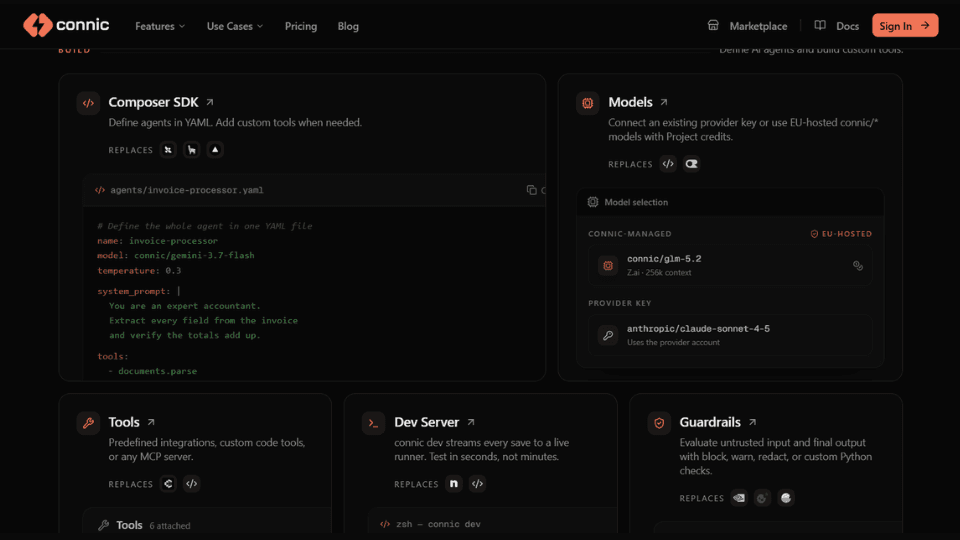
Founded in Munich in 2025, Connic describes itself as a system for building, deploying, and running AI agents. Its platform combines several infrastructure components that engineering teams might otherwise have to assemble themselves: runtime, connectors, ingestion, storage, tracing, testing, evaluation, and deployment pipelines.
That makes its positioning particularly relevant to the agent infrastructure category.
Instead of treating an AI agent as simply an application feature, Connic treats it more like software that needs to be versioned, tested, deployed, observed, and rolled back.
The platform is deployed in the European Union, with the company emphasizing EU compliance and sovereignty as part of its infrastructure design.
Key infrastructure layer: Agent runtime and deployment
Headquarters: Munich, Germany
Best known for: Production infrastructure for deploying and operating agents
6. FlowX.AI — Enterprise Agent Infrastructure
Romanian company FlowX.AI is approaching agentic AI from the perspective of mission-critical enterprise systems.
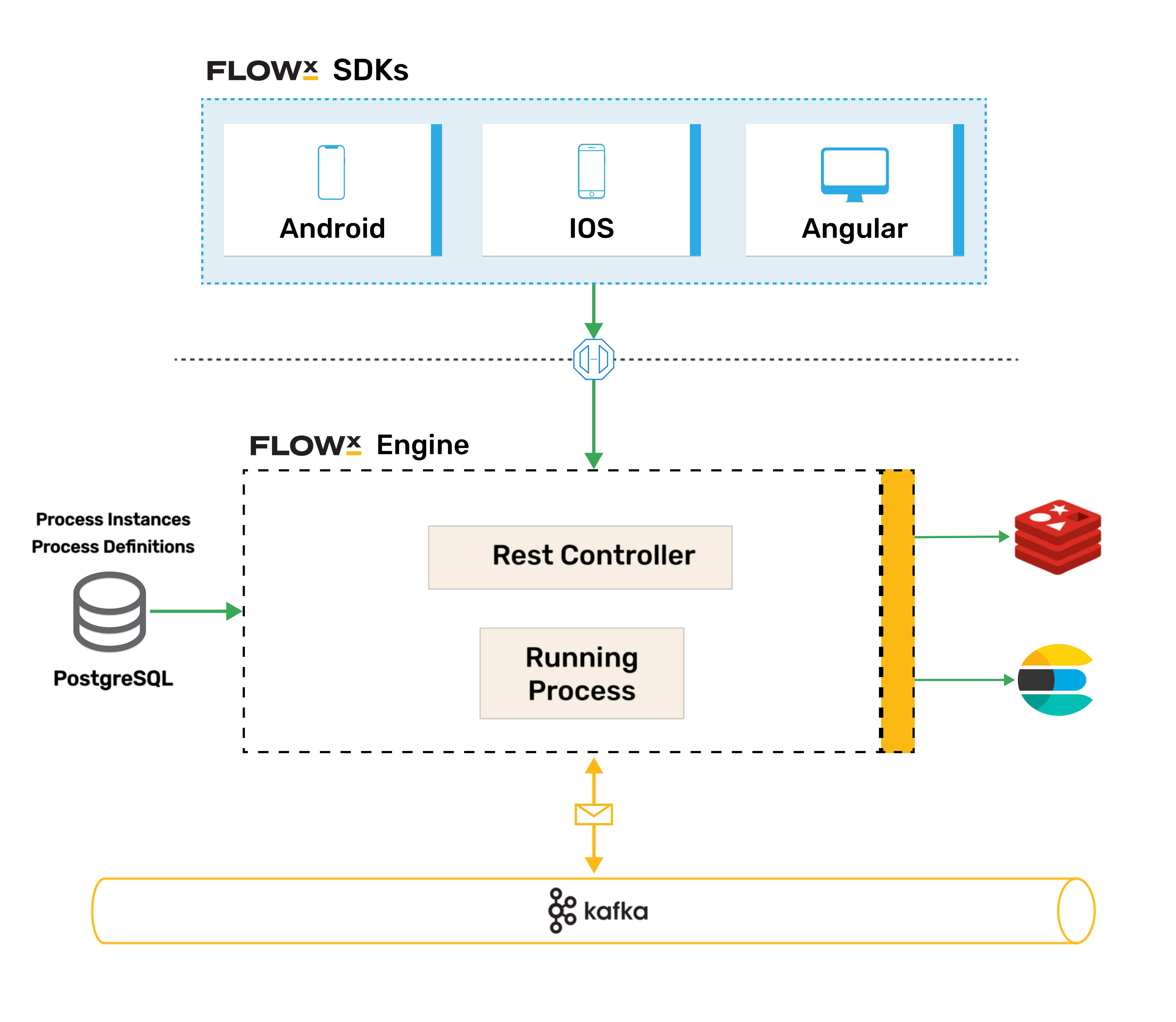
The company has developed an AI multi-agent platform and an AI Agent Builder designed for complex enterprise workflows. In 2026, FlowX launched FlowX 6, positioning the platform around production AI agents across industries including banking, insurance, and logistics.
One of FlowX's distinctive characteristics is its focus on connecting AI agents with existing enterprise infrastructure rather than requiring organizations to replace their legacy systems.
Its platform includes an Agent Builder, an observability layer, governance capabilities, permissions, audit trails, and production-ready agent catalogs.
For example, its banking and insurance stacks use multiple specialized agents to handle processes such as KYC, document validation, underwriting, claims, and risk assessment.
Key infrastructure layer: Enterprise agent orchestration and governance
Headquarters: Bucharest, Romania
Best known for: Deploying multi-agent systems across regulated industries
7. H Company — Computer-Use Agent Infrastructure
Paris-based H Company is working on one of the most important infrastructure layers for autonomous agents: computer use.
Instead of requiring every enterprise application to expose an API, computer-use agents can interact with software interfaces by seeing screens, clicking buttons, typing information, and navigating websites.
H Company was founded in Paris and develops agentic systems designed to operate across web and enterprise interfaces.
Its enterprise platform is designed to orchestrate workflows across legacy systems, desktop applications, and environments without APIs. The company also offers managed computer-use agents through an API, allowing developers to execute tasks without building their own computer-use runtime.
This is significant because a large part of enterprise software infrastructure was never designed for autonomous AI agents.
Key infrastructure layer: Computer-use agents and UI automation
Headquarters: Paris, France
Best known for: Agents that interact directly with software interfaces
8. Giskard — Agent Evaluation and Security
Paris-based Giskard focuses on another critical part of the agentic stack: making agents testable and safer before and after deployment.
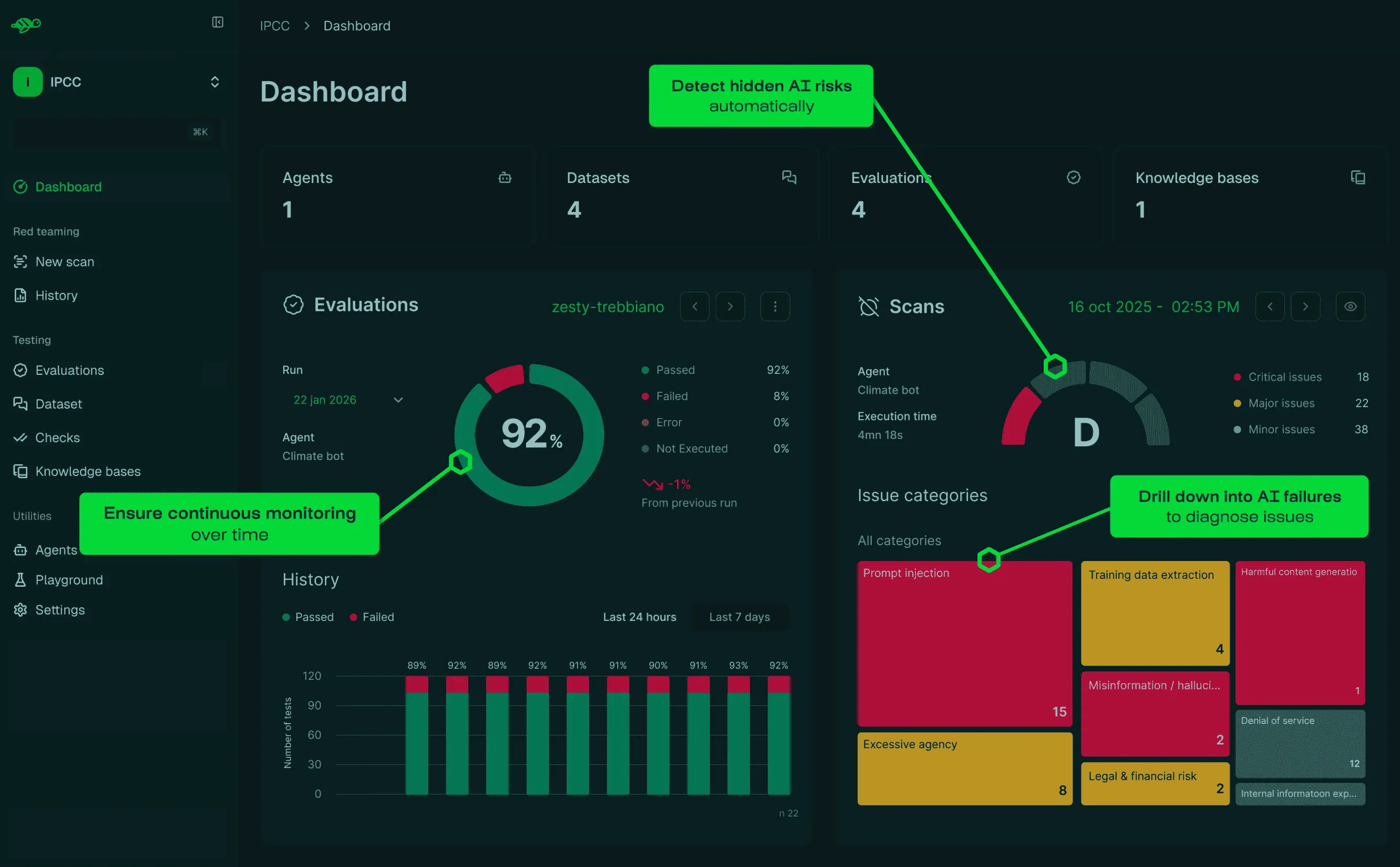
Giskard provides an AI agent testing and evaluation platform that can assess agent behavior, security vulnerabilities, hallucinations, compliance, and regression risks. Its platform includes both an enterprise Hub and an open-source Python library.
Its newer tooling is explicitly designed for the agentic era. Teams can test multi-step workflows, evaluate agent traces, compare different versions, and run evaluations as part of development and production processes.
That makes evaluation infrastructure increasingly important as agents become more autonomous.
A seo cybersecurity companies producing an incorrect sentence is one problem. An agent incorrectly calling an API, modifying a database, or following a malicious instruction can create a much larger operational risk.
Key infrastructure layer: Agent evaluation, red teaming, and AI security
Headquarters: Paris, France
Best known for: Testing and securing AI agents
9. Parloa — Agent Management for Enterprise CX
Berlin-based Parloa focuses on a specific but increasingly important agentic infrastructure category: enterprise customer-service agents.

Its AI Agent Management Platform is designed to build, test, deploy, and manage AI agents across voice, messaging, chat, and other customer interaction channels.
What makes Parloa relevant to infrastructure is the lifecycle approach. The platform is not simply a conversational AI model; it provides tools for agent design, testing, deployment, monitoring, analytics, and continuous optimization.
The company also supports multi-agent systems and integrations with telephony, CRM, and backend infrastructure. Its 2026 product releases have added centralized audit logs and additional controls around data sovereignty and agent management.
Parloa is larger than many of the specialized infrastructure startups on this list, but it still fits the brief because its focus remains a specialized agent platform rather than a general-purpose hyperscaler.
Key infrastructure layer: Enterprise agent management and orchestration
Headquarters: Berlin, Germany
Best known for: Voice-first and multichannel enterprise AI agents
10. PolyAI — Agentic Dialog Infrastructure
Another UK-founded company worth watching is PolyAI, a Cambridge spinout headquartered in London.

PolyAI builds enterprise voice and dialog agents capable of handling complex customer conversations. Its current Agentic Dialog Platform combines AI agents with enterprise controls for deployment and management.
The infrastructure challenge here is different from general-purpose agent runtimes. Voice agents must operate under real-time constraints while connecting to enterprise systems and maintaining context throughout conversations.
PolyAI has built its technology around this problem and has expanded into an agentic platform supporting complex conversations across languages and markets. In 2026, the company reported more than 200 enterprise customers across more than 25 countries.
Its position makes it an interesting example of how agent infrastructure can develop around a specific interaction layer—in this case, voice.
Key infrastructure layer: Voice agents and agentic dialog
Headquarters: London, United Kingdom
Best known for: Enterprise conversational and voice agents
What Layers Make Up Agentic AI Infrastructure?
The emerging agentic AI stack can be divided into several infrastructure layers.
1. Agent development
Frameworks such as Pydantic AI and Haystack provide developers with structured ways to create agents, define tools, manage outputs, and construct agent workflows.
2. Orchestration
Platforms such as n8n and FlowX.AI focus on coordinating agents, workflows, APIs, enterprise applications, and human intervention.
3. Runtime and deployment
Companies such as Connic are targeting the infrastructure required to actually run agents reliably in production.
4. Tool connectivity
AI agents need access to external systems. API integrations and emerging protocols such as MCP are therefore becoming part of the infrastructure layer.
5. Observability and evaluation
Teams need to understand what an agent did, why it did it, how much it cost, and where it failed. Evaluation platforms such as Giskard address this layer.
The European Agentic AI Infrastructure Landscape
Europe's opportunity in agentic AI is not necessarily limited to building another foundation model.
A different opportunity is emerging underneath the model layer.
As organizations deploy more autonomous systems, they need infrastructure that makes those systems observable, controllable, secure, interoperable, and reliable.
That creates room for specialized companies across the continent.
Germany has companies such as n8n, deepset, Connic, and Parloa working across orchestration, deployment, and enterprise agents. France has companies such as H Company and Giskard working on computer-use and AI security. The UK contributes developer infrastructure and agentic dialog through Pydantic and PolyAI, while Romania's FlowX.AI is targeting complex enterprise workflows. The Netherlands' Orq.ai is building infrastructure around AI gateways, governance, and model routing.
The result is a fragmented but increasingly sophisticated European ecosystem.
Rather than one company controlling the entire agentic stack, different providers are building the layers that could eventually allow autonomous AI systems to operate as a new type of enterprise software.
Frequently Asked Questions
1. What is agentic AI infrastructure?
Agentic AI infrastructure refers to the technologies that allow AI agents to be built, connected, deployed, monitored, evaluated, governed, and operated in production. It can include agent frameworks, orchestration platforms, runtimes, tool connectivity, observability, security, and evaluation systems.
2. What is the difference between an AI agent and an AI agent platform?
An AI agent performs a task or series of tasks autonomously. An AI agent platform provides the infrastructure around those agents, such as deployment, orchestration, integrations, monitoring, evaluation, permissions, and governance.
3. Why is Europe important for agentic AI infrastructure?
European organizations face specific requirements around data protection, regulatory compliance, security, and data residency. This has created demand for infrastructure designed around enterprise and European deployment requirements.
4. Which infrastructure layers are emerging around AI agents?
The major layers include agent development frameworks, orchestration, runtime infrastructure, memory and retrieval, tool connectivity, observability, evaluation, security, governance, and computer-use infrastructure.
5. Are these companies competing with large AI model providers?
Not necessarily. Many of them sit above or around the model layer. They can integrate with multiple model providers rather than building a foundation model themselves. Their value comes from helping organizations turn models into reliable production systems.

