
.webp)
.png)
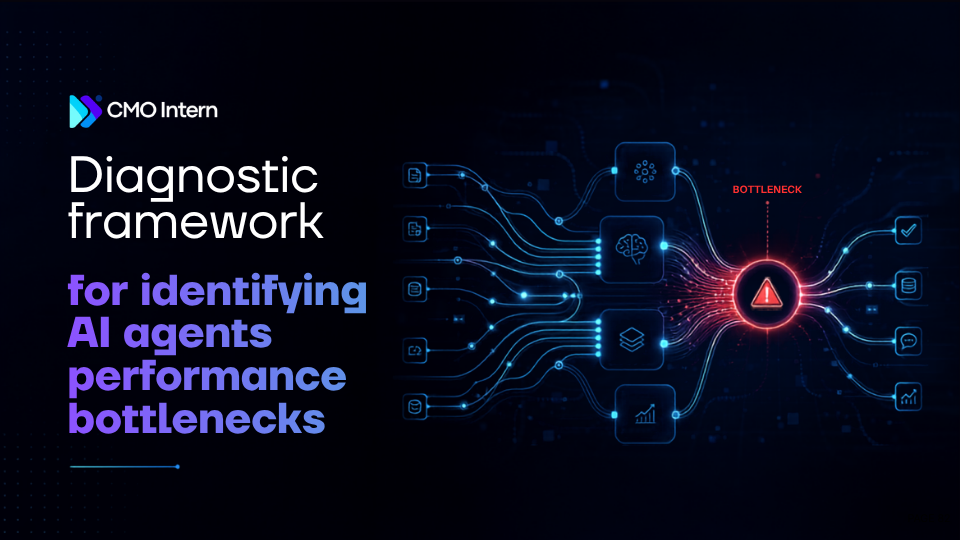
Symptoms of AI agents execution instability
AI agents often exhibit execution instability when their reasoning chains fail to converge on a solution or when they exceed allocated resource limits. You can identify these performance bottlenecks by monitoring latency spikes, unexpected task termination, and erratic output patterns that deviate from the defined system prompt or tool-use protocols.
Recursive loop detection in repetitive task cycles
Recursive loops occur when an agent repeatedly calls the same tool or generates identical reasoning steps without making progress toward the final objective. To detect this, implement a state-tracking mechanism that logs the sequence of tool calls and input parameters.
If an agent calls a function with the same arguments more than three times within a single execution thread, it is likely caught in a loop. You can mitigate this by setting a hard limit on the number of consecutive identical tool calls or by injecting a 'reflection' step where the agent must justify why a repeated action is necessary for the current state.
Context window degradation and long-term objective loss
Context window degradation manifests as an agent losing sight of its primary goal as the conversation history or task log grows. This typically happens when the model prioritizes recent, irrelevant information over the initial system instructions. You will notice this when the agent begins to hallucinate constraints or ignores specific formatting requirements established at the start of the session.
To diagnose this, compare the agent's output against the original system prompt at various intervals. If the agent fails to reference core constraints after 10,000 tokens of interaction, your architecture likely requires a summarization layer or a vector-based memory retrieval system to reinforce the primary objective.
Monitoring the 'token-to-goal' ratio—where the agent consumes significantly more tokens than the complexity of the task warrants—is a reliable indicator that the context window is no longer effectively serving the agent's reasoning process.
Root causes of AI agents logic breakdown
Performance degradation in autonomous systems usually stems from a misalignment between the agent’s reasoning loop and the operational environment. When an agent fails to complete a task, the issue rarely lies in the underlying LLM's intelligence but rather in the structural integrity of the execution pipeline.
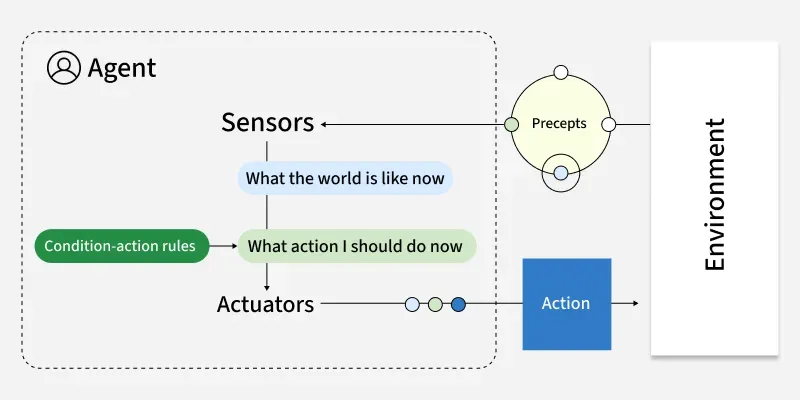
Identifying these bottlenecks requires isolating the transition points where the model moves from planning to action.
Tool-use ambiguity in poorly defined API schemas
AI agents rely on function calling to interact with external databases or software. If an API schema lacks descriptive parameters or strict type definitions, the agent will frequently hallucinate arguments or misinterpret the required input format.
For instance, if a tool definition for a CRM lookup accepts a generic 'query' string instead of specific 'user_id' or 'email' fields, the agent often defaults to guessing, leading to high error rates in data retrieval. To mitigate this, developers must implement strict JSON schema validation and provide explicit docstrings for every tool. As the ecosystem matures, many developers are looking toward top AI agent crypto coins to understand how decentralized protocols might eventually secure these autonomous tool-use interactions.
If the agent receives a 400 Bad Request error from an API, it often lacks the self-correction logic to retry with a modified payload unless the error handling is explicitly defined in the agent's system prompt. Ensuring that tool descriptions explicitly state the limitations and expected data types reduces the cognitive load on the model, allowing it to focus on task execution rather than parameter guessing.
Prompt injection and instruction drift in agentic reasoning
Instruction drift occurs when the agent’s core directives are overridden by data ingested from external sources, such as user-provided text or third-party web content. This is particularly prevalent in agents designed for customer support or automated research.
When an agent encounters malicious or conflicting instructions embedded in a document it is processing, the model may prioritize the 'in-context' instruction over its original system-level constraints. This breakdown often manifests as the agent ignoring safety guardrails or deviating from the intended workflow to follow instructions found in a retrieved document.
To diagnose this, monitor the agent’s 'thought' trace during multi-step tasks. If the model begins referencing instructions that were not part of the initial system prompt, it indicates a failure in input sanitization. Implementing a strict separation between the system instructions and the retrieved context—often through XML tagging or separate memory buffers—is the most effective way to maintain procedural consistency.
Evaluating AI agents infrastructure requirements
Infrastructure constraints often dictate the ceiling for AI agents performance. When deploying autonomous systems, you must move beyond simple token-per-second metrics and analyze the underlying compute architecture, memory allocation, and network overhead that support multi-agent orchestration.
Latency trade-offs in multi-step chains
Balancing response speed with reasoning depth requires a deliberate choice between model complexity and execution time. When an agent performs a multi-step chain—such as searching a database, summarizing findings, and drafting a response—each step adds cumulative latency.
Using a high-parameter model like GPT-4o for every step in a chain often results in unacceptable wait times for end-users. To optimize, implement a tiered model routing strategy. Use smaller, faster models (e.g., GPT-4o-mini or Haiku) for routine data extraction or classification tasks, reserving larger, more capable models only for complex decision-making or final synthesis.
This approach reduces total latency by 40-60% while maintaining high output quality. Monitor the time-to-first-token (TTFT) specifically for the initial reasoning step, as this is where users perceive the most significant drag in agent performance.
State management limitations
Persistent memory is critical for complex workflows because stateless agents struggle to maintain context across long-running tasks. Without a robust state management layer, agents frequently experience "context drift," where they lose track of previous instructions or user preferences as the conversation history exceeds the model's window.
Effective state management involves offloading conversation history and intermediate task results to a vector database like Pinecone or Weaviate. By utilizing a RAG (Retrieval-Augmented Generation) pattern for memory, you allow the agent to query its own past actions rather than relying solely on the active prompt window.
This prevents the degradation of logic that occurs when an agent is forced to summarize or truncate its own history to fit within token limits. When evaluating your infrastructure, ensure your database read/write speeds can keep pace with the agent's reasoning cycles; a slow retrieval layer will negate the performance gains achieved by optimizing your model selection.
Security and governance risks in AI agents
Deploying AI agents introduces unique attack vectors that traditional software security models often overlook. Because agents operate autonomously by chaining multiple tool calls, a single vulnerability in a prompt or an API integration can lead to cascading failures or unauthorized data exfiltration.
Governance must shift from static access control to dynamic, intent-based monitoring to ensure agent behavior remains within defined operational guardrails.
Unauthorized tool execution risks with database write-access
Granting an agent write-access to production databases is a high-risk operation. If an agent is prompted to "clean up inactive records," a hallucination or an injection attack could lead to the deletion of critical business data. To mitigate this, implement a strict principle of least privilege at the API layer rather than the agent layer.
Use scoped database credentials that restrict the agent to specific tables or views. Furthermore, enforce a human-in-the-loop (HITL) requirement for any destructive commands. For example, configure your orchestration framework to intercept any SQL 'DELETE' or 'DROP' operation and route it to a Slack or Microsoft Teams channel for manual approval before execution.
Audit trail implementation for decision tracking
Debugging an agent’s performance bottleneck is impossible without a granular audit trail. You must log not just the final output, but the entire chain of thought, the specific tool parameters used, and the raw API responses received.
Standard application logs are insufficient; use observability platforms like LangSmith, Arize Phoenix, or Helicone to capture the trace of every agent interaction. Each log entry should include a unique correlation ID that links the user request to the specific reasoning steps and tool calls.
This transparency is essential for compliance audits, as it allows you to demonstrate exactly why an agent made a specific decision, whether it was a correct calculation or a performance-degrading loop. Regularly review these logs to identify patterns where agents repeatedly fail or trigger excessive API calls, which are often early indicators of both security misconfigurations and efficiency bottlenecks.
Corrective strategies for AI agents optimization
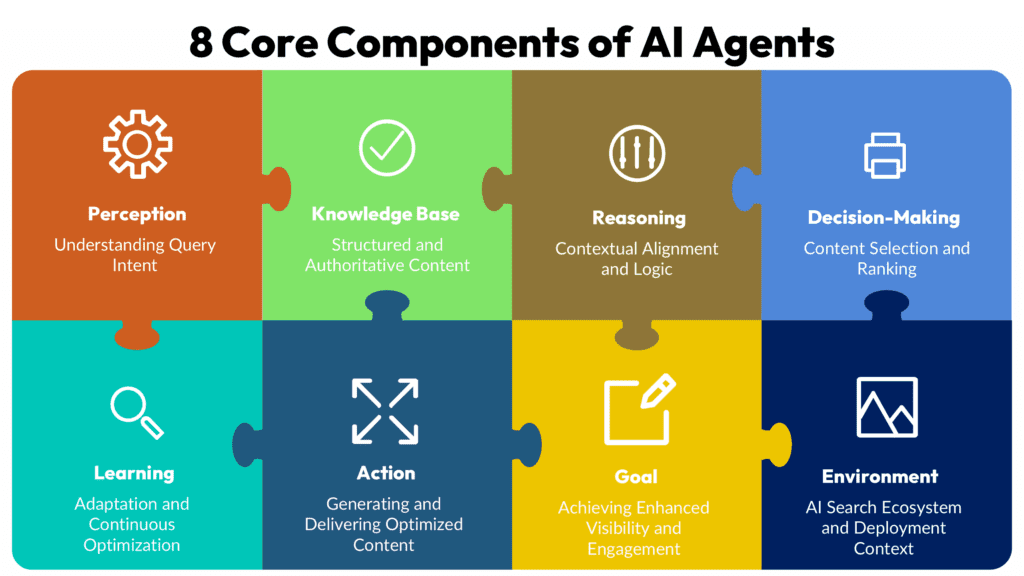
Once you identify a performance bottleneck, the remediation path depends on whether the failure stems from reasoning errors, latency in tool execution, or context window saturation. Optimization requires a systematic approach to adjusting the agent's decision-making loop rather than simply increasing model parameters.
Human-in-the-loop intervention points
Automated workflows often fail when an agent encounters ambiguous data or high-stakes decision scenarios. You should implement approval gates at specific junctures where the cost of a false positive is high.
For instance, in an automated customer support agent, trigger a human review gate whenever the sentiment analysis score drops below 0.3 or when the agent proposes a refund exceeding a predefined threshold. Place these gates immediately before the agent executes an external API call that modifies a database or triggers a financial transaction.
By forcing a human to verify the agent's reasoning chain at these critical nodes, you maintain operational safety while allowing the agent to handle routine, low-risk queries autonomously.
Iterative prompt engineering for agents
Reducing hallucination rates requires shifting from generic instructions to structured, constraint-based system prompts. Start by implementing a "Chain of Thought" requirement in your system instructions, forcing the agent to output its reasoning process before delivering a final answer. This visibility allows you to pinpoint exactly where the logic diverges from reality.
If the agent consistently misinterprets technical documentation, replace broad instructions with a RAG (Retrieval-Augmented Generation) architecture that forces the model to cite specific document IDs for every claim. Use few-shot prompting to provide the agent with three to five examples of correct versus incorrect output formats.
Regularly audit the agent's logs to identify recurring patterns of hallucination, then update the system prompt to explicitly forbid those specific behaviors. This iterative cycle—testing, logging, and constraining—is the most effective way to stabilize performance in production environments.
Frequently Asked Questions
Common causes of AI agent latency
Latency in AI agents is typically caused by excessive chain-of-thought steps, inefficient tool-calling sequences, or high-latency API calls to external services that the agent must wait for before proceeding. As we see marketing agents transforming modern workflows, understanding these latency drivers becomes critical for enterprise adoption.
Distinguishing model reasoning errors from tool execution failures
You can isolate these by reviewing the agent's trace logs. If the model provides a correct tool call but the tool returns an error, it is an integration issue. If the model provides an incorrect tool call or fails to call a tool when necessary, it is a reasoning or prompt-engineering issue. For those building complex systems, reviewing agents comprehensive autonomous capabilities can help clarify where your specific implementation might be failing.

