
.webp)
.png)
Core architecture of autonomous AI agents: How AI agents work and are built
AI agents function by wrapping a Large Language Model (LLM) in a loop of perception, reasoning, and action. Unlike standard chatbots that respond to a single prompt, an agent uses a central controller—the LLM—to decompose complex goals into sequential sub-tasks.
It observes its environment, evaluates its current state against the desired outcome, and executes specific functions to bridge the gap.
The orchestration layer and memory systems
To maintain coherence over long-running tasks, agents utilize a dual-memory architecture. Short-term memory is managed via the context window of the LLM, which holds the immediate conversation history and current task state.
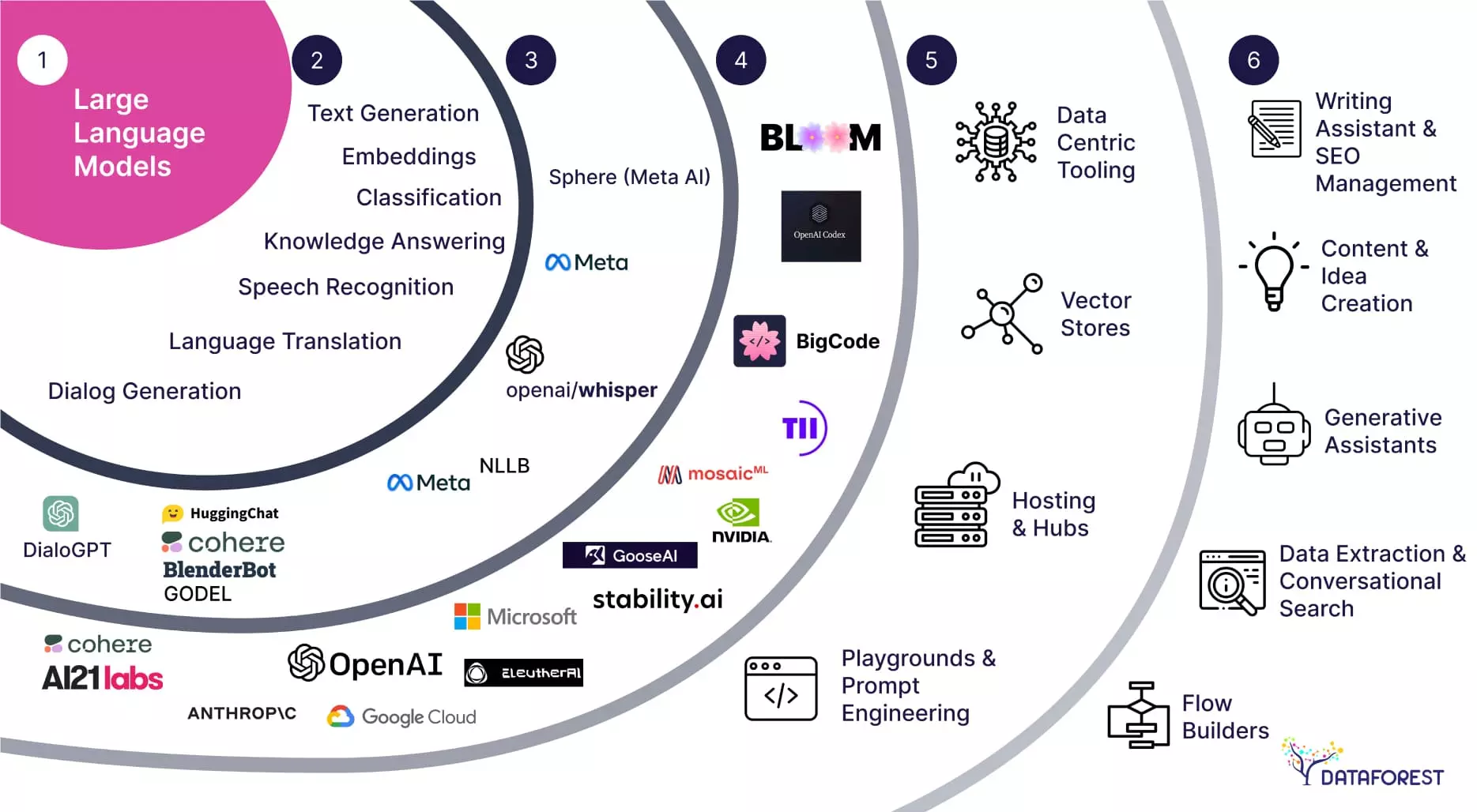
Long-term memory is typically implemented using vector databases such as Pinecone, Milvus, or Weaviate. These databases store embeddings—numerical representations of data—that allow the agent to perform semantic searches.
When an agent encounters a new query, it translates that query into an embedding and retrieves relevant historical data or documentation from the vector store. This process, known as Retrieval-Augmented Generation (RAG), prevents the agent from hallucinating by grounding its reasoning in specific, retrieved facts rather than relying solely on its pre-trained weights.
Tool-use and API integration mechanisms
The transition from a passive model to an active agent occurs through function calling. Developers define a schema of available tools—such as web scrapers, SQL query executors, or email APIs—and provide these definitions to the LLM.
When the agent determines a task requires external data, it outputs a structured JSON object containing the function name and the necessary arguments. The orchestration layer intercepts this JSON, executes the actual code in a sandboxed environment, and feeds the output back into the LLM's context.
This feedback loop allows the model to verify if the tool output successfully resolved the sub-task. If the tool fails or returns an error, the agent can self-correct by re-prompting itself or attempting an alternative function call, effectively automating multi-step workflows without human intervention.
Development lifecycle for production-grade agents
Building production-ready AI agents requires moving beyond simple prompt chaining into a structured lifecycle involving planning, execution, and verification. The process begins with defining a clear scope—specifically, the agent's tools, its knowledge base, and the constraints of its operational environment.
Developers must treat agentic workflows as software engineering projects, emphasizing modularity and observability over rapid prototyping.
Selecting the right framework — Comparing LangChain, CrewAI, and AutoGen for specific use cases
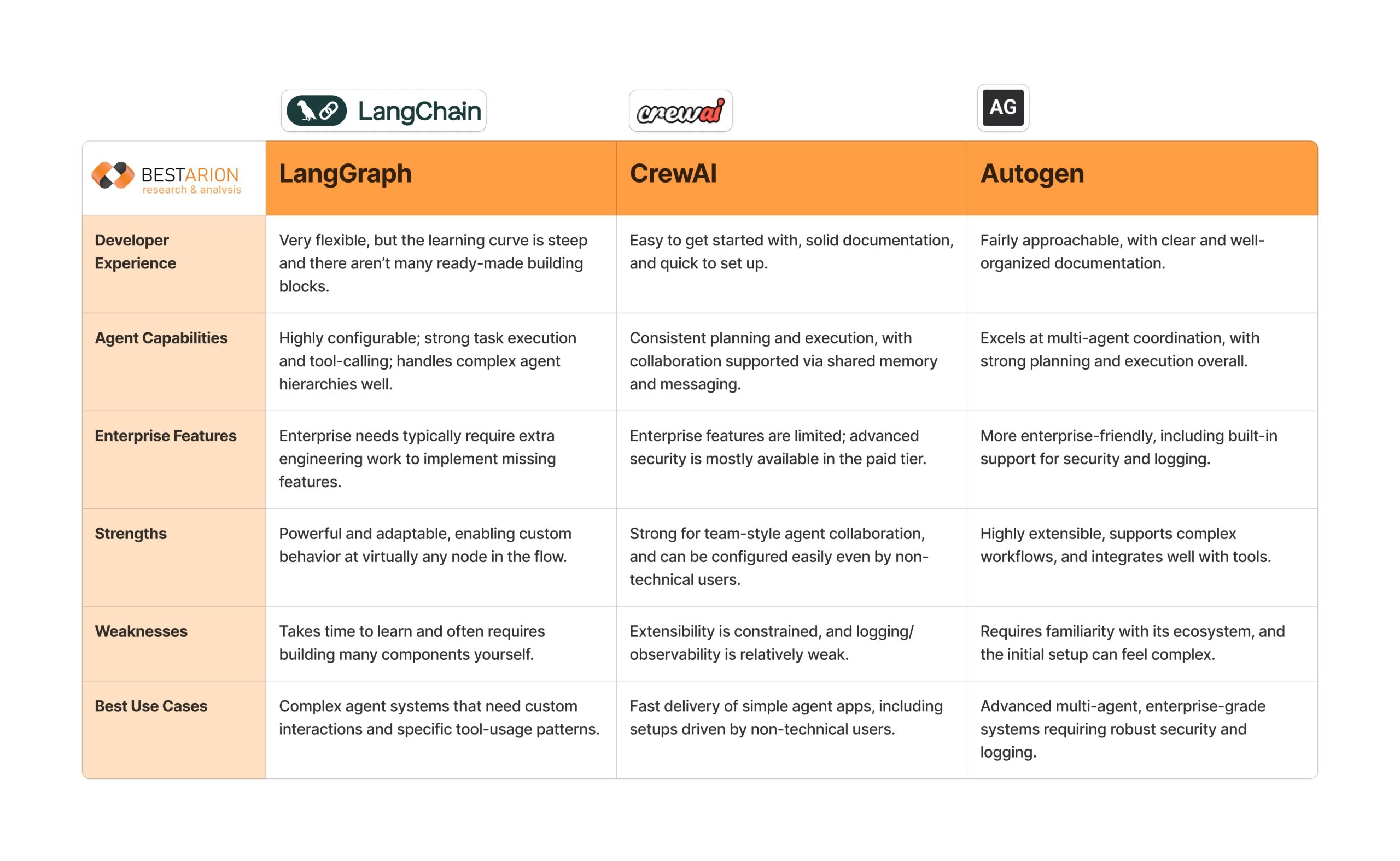
Choosing the correct framework depends on the complexity of the task and the required level of agent autonomy. LangChain remains the industry standard for building custom, highly controlled chains and RAG (Retrieval-Augmented Generation) pipelines. It is best suited for developers who need granular control over the execution flow and state management.
CrewAI excels in multi-agent orchestration. It provides a structured way to assign specific roles to agents, allowing them to collaborate on complex tasks by passing outputs between specialized units. This framework is ideal for business processes like research-to-report workflows where distinct stages of work are required.
AutoGen, developed by Microsoft, focuses on conversational patterns between agents. It is particularly powerful for complex coding tasks or scenarios where agents need to engage in iterative peer review. While highly flexible, it requires more robust error handling compared to the more rigid structure of CrewAI.
Testing for agentic reliability — Mitigating hallucinations and loop errors in autonomous workflows
Reliability is the primary barrier to deploying agents in enterprise environments. To prevent infinite loops, developers must implement hard stop conditions and maximum iteration counts within the agent's configuration.
If an agent fails to reach a goal after a set number of steps, the system should trigger a human-in-the-loop (HITL) intervention rather than continuing to consume tokens. Mitigating hallucinations requires a multi-layered verification strategy.
First, enforce tool-use constraints by providing agents with structured APIs rather than allowing them to generate raw code for every task. Second, implement a "critic" agent—a secondary, smaller model tasked solely with reviewing the primary agent's output against a set of ground-truth constraints before the final response is delivered.
Finally, use automated evaluation frameworks like RAGAS to measure the faithfulness and relevance of the agent's retrieved information against your internal knowledge base.
Identifying high-value business opportunities
Successful AI agent deployment begins by isolating workflows where human cognitive load is high but the decision-making logic is repeatable. The most effective candidates for agentic automation are processes that rely on structured data inputs, follow defined compliance or operational rules, and require output in a specific, machine-readable format.
Automating multi-step knowledge tasks
Processes that require both reasoning and data retrieval are prime targets for AI agents because they bridge the gap between static databases and dynamic execution. Unlike simple chatbots, these agents function by chaining together distinct cognitive steps: interpreting a request, querying internal systems like a CRM or ERP, synthesizing the retrieved data, and performing an an action.
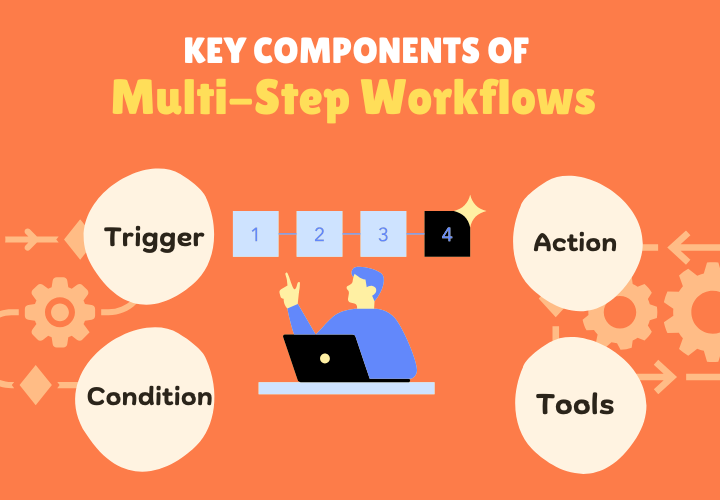
For example, consider a procurement reconciliation workflow. A human employee typically spends hours cross-referencing invoices against purchase orders and delivery receipts. An AI agent built for this task follows a specific architecture:
- Data Ingestion: The agent monitors an email inbox or a cloud storage folder for incoming PDF documents.
- Extraction Logic: Using a tool like LangChain or LlamaIndex, the agent extracts key entities—such as invoice numbers, line items, and totals—using specialized OCR or document parsing models.
- Reasoning Layer: The agent queries the ERP system to verify if the purchase order exists and if the delivery status is marked as 'received.'
- Decision Execution: If the data matches, the agent updates the status in the accounting software. If a discrepancy is found, it flags the item for human review rather than attempting a blind correction.
By focusing on these multi-step sequences, businesses avoid the trap of 'automation for the sake of automation.' The value lies in the agent's ability to maintain context across disparate software tools.
When identifying these opportunities, look for tasks that involve high-frequency 'context switching'—where a worker must open three or more applications to complete a single ticket or transaction. These are the specific areas where AI agents provide the highest return on investment by reducing latency and minimizing manual data entry errors.
Risk mitigation and operational constraints
Deploying autonomous systems requires a shift from traditional software testing to probabilistic quality assurance. Because AI agents operate based on non-deterministic outputs, you must implement rigorous monitoring layers that validate agent reasoning before execution.
This involves setting strict output schemas using libraries like Pydantic or Instructor to ensure the agent returns structured data that your downstream systems can process without crashing.
Cost management in token-heavy workflows
Runaway API costs often stem from inefficient prompt chaining and excessive context window usage. To optimize, cache frequent queries using tools like GPTCache or Redis to avoid redundant LLM calls.
When designing workflows, utilize smaller, faster models like GPT-4o-mini or Haiku for routing and classification tasks, reserving high-parameter models only for complex reasoning steps.
Implement token budget caps at the agent level; if a chain exceeds a predefined token threshold, the system should trigger a fallback mechanism or request human intervention rather than continuing to consume credits.
Security and human-in-the-loop requirements
Autonomous agents acting on behalf of a business represent a significant security surface. Never grant agents direct access to production databases or sensitive APIs without an intermediary authorization layer.
Use the "Human-in-the-loop" (HITL) pattern for any action that modifies state, such as sending emails, executing code, or processing financial transactions. By requiring a manual approval step via a Slack notification or a custom dashboard, you maintain control while allowing the agent to handle the heavy lifting of data synthesis.
Additionally, implement strict prompt injection defenses by sanitizing all user-provided inputs before they reach the agent's context window, preventing unauthorized instruction overrides that could compromise your operational integrity.
Frequently Asked Questions
Distinctions between static chatbots and autonomous AI agents
A chatbot is typically limited to conversational responses based on pre-defined logic or LLM prompts. An AI agent possesses the ability to reason, access external tools (like APIs or databases), and execute multi-step workflows to achieve a specific goal without constant human intervention.
Essential components for understanding how AI agents work and are built
Building an AI agent requires four primary components: a Large Language Model (LLM) for reasoning, a memory module for context retention, a planning mechanism for task decomposition, and tool-use capabilities to interact with external software environments.

