
.webp)
.png)
The myth of autonomous software engineering
The best AI agents for blockchain coding and development function as sophisticated co-pilots rather than autonomous replacements for human software architects. While marketing materials often suggest a "set it and forget it" experience, these tools require constant human oversight to validate logic, agents comprehensive autonomous, and architectural integrity.
Context window constraints and hallucination risks
AI models operate within finite context windows, which limits their ability to "see" an entire mobile app development codebase at once. When an agent lacks visibility into the full dependency graph or legacy constraints, it frequently produces code that compiles but fails to integrate with existing business logic. This leads to hallucinations where the model confidently suggests deprecated libraries or non-existent API endpoints, forcing developers to spend more time debugging the AI than writing original code.
Performance benchmarks for the best AI agents for coding and development
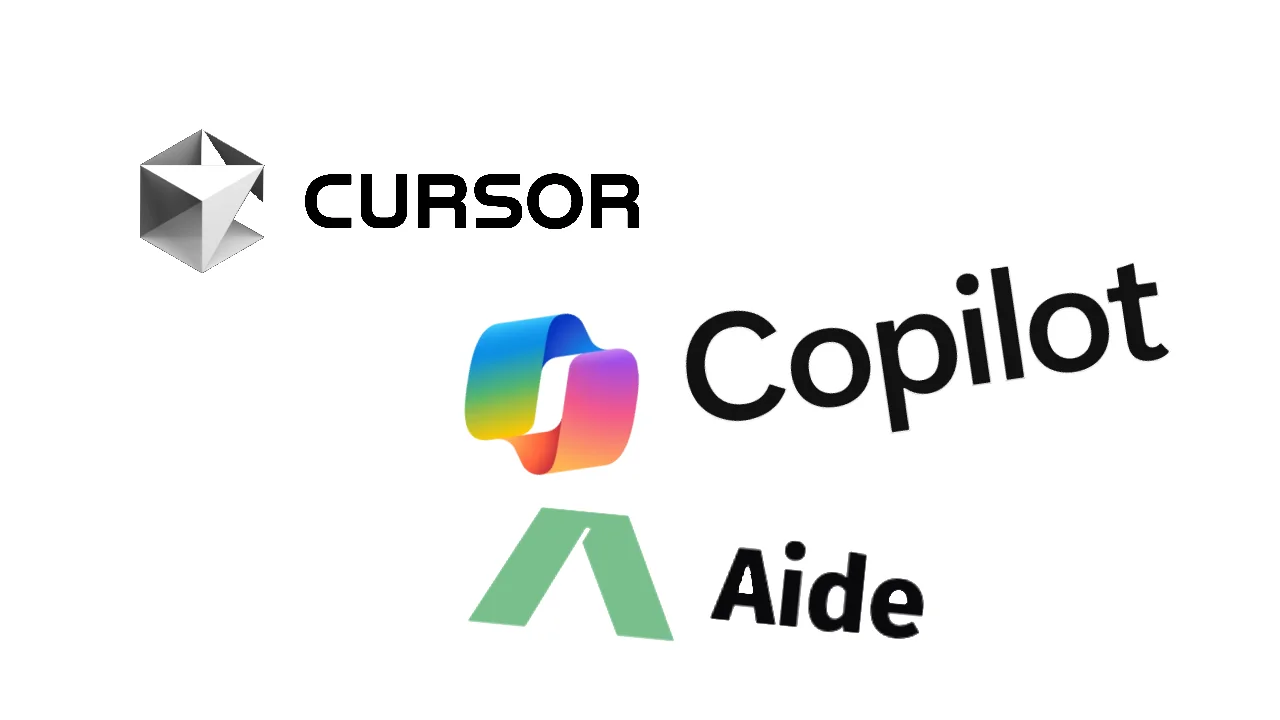
Evaluating the efficacy of these tools requires distinguishing between simple autocomplete and true agentic workflows. Tools like Cursor offer deep IDE integration that understands file relationships, whereas GitHub Copilot Workspace focuses on task-based planning. Devin represents a shift toward multi-step task execution, capable of navigating terminal environments and running tests, yet it still requires a human to define the scope and verify the output.
Evaluating agentic workflows versus simple autocomplete
Simple autocomplete tools predict the next few tokens based on local file context. In contrast, agentic workflows utilize a loop of planning, execution, and verification. While agents can handle boilerplate generation effectively, they often struggle with complex refactoring tasks that require deep knowledge of non-functional requirements like latency or memory management.
Practical limitations in multi-file refactoring
A common failure point for current agents is large-scale refactoring that spans multiple directories. When an agent modifies a shared utility function, it often fails to update all downstream consumers, leading to runtime errors. Developers should use tools like Aider or Cursor's "Composer" feature to explicitly define the scope of changes, ensuring the agent has access to the relevant files before initiating a refactor.
The role of iterative feedback loops
High-performing teams treat AI agents as junior developers who require a tight feedback loop. By integrating agents into CI/CD pipelines, developers can trigger automated test suites immediately after an agent proposes a code change. If the agent fails a unit test, the system should be configured to feed the error logs back into the agent's context, allowing it to attempt a self-correction before a human developer intervenes.
Benchmarking against real-world tasks
To measure if an agent is truly effective, teams should track "Time to First Working Commit" on specific tickets. For instance, using an agent to write a standard CRUD endpoint is a low-bar test. A more rigorous benchmark involves asking the agent to implement a feature that requires modifying an existing database schema and updating the corresponding frontend state management, tasks often handled by web development agencies. If the agent requires more than three manual interventions to reach a passing test state, the overhead of managing the agent may exceed the time saved by its code generation.
Security and intellectual property trade-offs
Cloud-based AI agents require sending snippets or entire files to external servers for processing, which presents a significant risk for proprietary codebases. Organizations must evaluate whether their internal cryptocurrency development security policies permit the transmission of sensitive logic to third-party providers. Even with zero-retention policies, the risk of data leakage or model training on private code remains a primary concern for regulated industries.
Local versus cloud-hosted model deployment
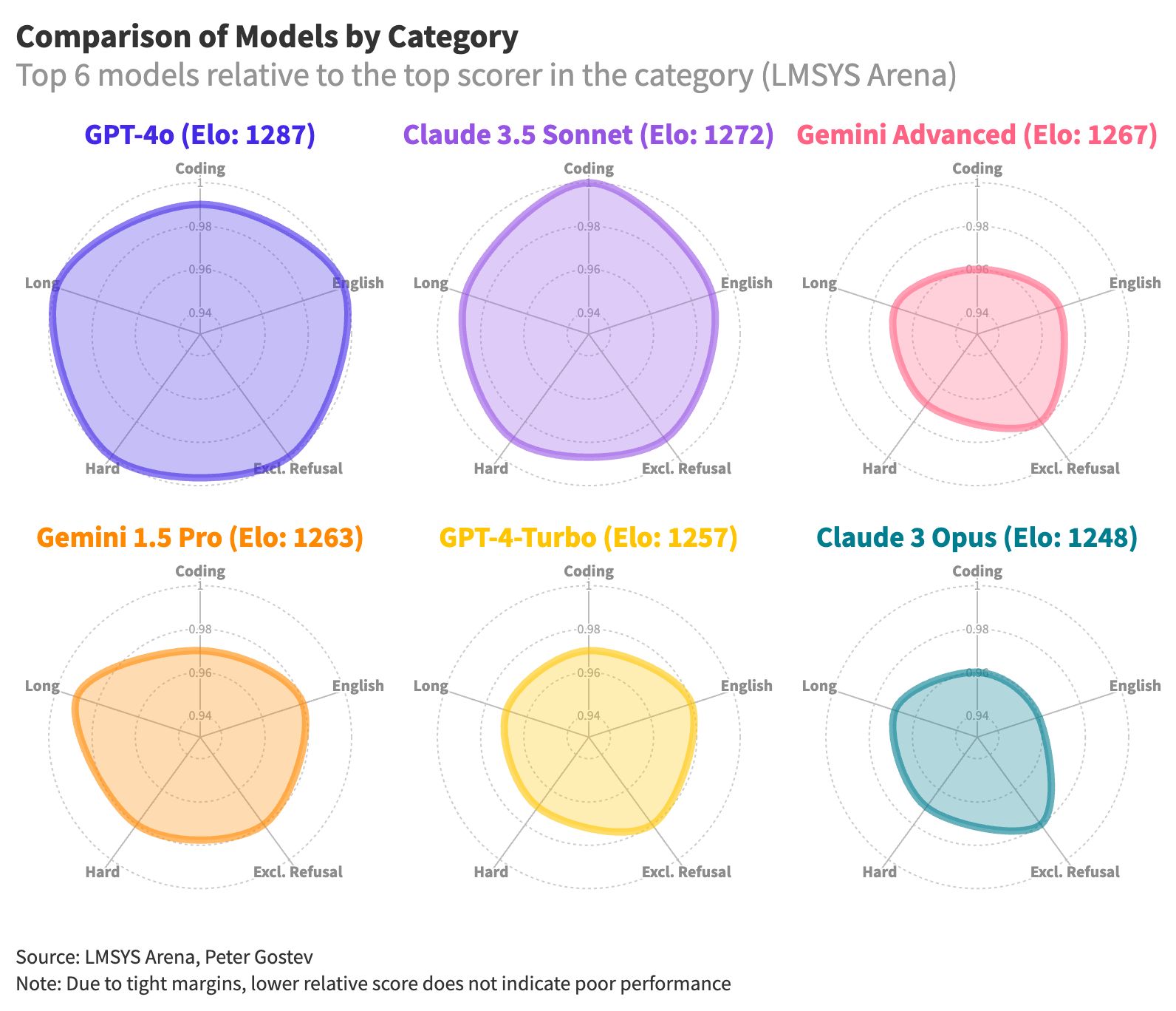
Local LLMs, such as those run via Ollama or LM Studio, provide total privacy by keeping code within the local infrastructure. However, these models often lack the reasoning capabilities of massive cloud-hosted counterparts like Claude 3.5 Sonnet or GPT-4o. Developers must choose between the high-performance reasoning of cloud models and the data sovereignty of local deployment.
Integration requirements for effective agent adoption
Effective agent adoption depends on a clean, modular technical environment. AI agents perform significantly better when codebases are well-structured and dependencies are clearly defined. A chaotic codebase with circular dependencies or poor documentation will cause even the most advanced marketing agents transforming to struggle with basic refactoring tasks.
Standardizing documentation for agent success
Agents rely on context to make informed decisions. Maintaining up-to-date README files, clear API documentation, and strict type definitions allows the agent to "understand" the intent behind the code. Without this metadata, agents often default to generic, suboptimal implementations that require manual correction.
Hidden costs beyond the subscription fee
The true cost of implementing AI agents lies in the human time investment required for prompt engineering, context management, and iterative debugging. Developers must act as project managers for their agents, breaking down complex features into small, manageable tasks that the model can successfully process. This overhead can negate the productivity gains if the team is not disciplined in their workflow management.
Frequently Asked Questions
Definition of AI agents
AI agents are software programs that use large language models to perform tasks, make decisions, and interact with development environments to achieve specific goals.
Operational mechanics of AI agents
They work by breaking down user prompts into a series of steps, executing those steps through code or terminal commands, and iterating based on feedback from test results or compiler errors.
Cost structures for AI agent usage
Most professional-grade AI agents operate on a subscription model or usage-based pricing, though some open-source models can be run locally for free if you have the hardware.
Revenue generation potential of AI agents
They can increase individual developer productivity, potentially leading to faster project delivery and higher output, but they do not generate income autonomously. Some developers are even exploring agent crypto coins to incentivize decentralized compute resources.
Distinction between AI agents and agentic AI
Yes, the terms are often used interchangeably to describe systems capable of autonomous reasoning and multi-step task execution.
Impact of AI agents on software engineering roles
They are currently designed to augment human developers by automating repetitive tasks, shifting the role of the developer toward architecture, review, and web3 system integration.

