
.webp)
.png)
Autonomous execution versus scripted automation: what are AI agents explained
AI agents represent a shift from static software scripts to systems capable of goal-oriented behavior. While a script follows a rigid, linear path defined by a developer, an AI agent evaluates its environment, selects tools, and iterates on its approach to achieve a specific objective.
The core distinction lies in the agent's ability to handle ambiguity without requiring explicit instructions for every intermediate step.
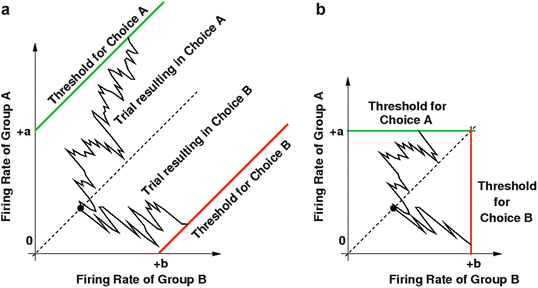
The threshold of decision-making
Conditional logic, such as an 'if-this-then-that' workflow, is often mistaken for agentic behavior. However, scripted automation relies on a pre-defined map. If the software encounters a scenario outside its programmed logic, it fails.
In contrast, an AI agent utilizes a reasoning loop—often powered by Large Language Models—to decompose a high-level goal into actionable sub-tasks.
When you ask an agent to 'research a competitor and draft a summary,' it does not simply trigger a pre-written sequence. Instead, it performs the following internal operations:
agents comprehensive autonomous- Goal decomposition: It identifies that it must first search for the company, navigate to specific URLs, extract text, and synthesize the findings.
- Tool selection: It decides whether to use a web search API, a browser automation tool, or a local file parser based on the data it encounters.
- Error recovery: If a website blocks a request or returns a 404 error, the agent attempts an alternative URL or adjusts its search query rather than returning a hard error code to the user.
This capacity for self-correction is what defines the agentic experience. While scripts are deterministic, agents are probabilistic. They operate within a defined 'system prompt' or set of constraints, but the specific path taken to reach the outcome remains fluid.
Understanding what are AI agents explained through this lens requires acknowledging that their utility is bounded by the quality of their reasoning loop and the reliability of the tools they are granted access to.
Memory management and context windows
AI agents operate within strict memory constraints dictated by the underlying Large Language Model (LLM). Unlike human cognition, which integrates long-term experiences seamlessly, an agent's "memory" is essentially a sliding window of tokens.
When an agent processes a task, it must fit the prompt, system instructions, and relevant history into a fixed context window. Once this limit is reached, the model experiences "context overflow," forcing it to truncate older data or lose coherence in complex, multi-step workflows.
Limitations of vector database retrieval
To bypass these constraints, developers implement Retrieval-Augmented Generation (RAG) using vector databases like Pinecone, Milvus, or Weaviate. This architecture transforms documents into numerical embeddings, allowing the agent to query relevant snippets based on semantic similarity rather than keyword matching.
However, this process introduces significant operational friction:
- Semantic noise: Vector searches often retrieve top-k results that are mathematically similar but contextually irrelevant, leading the agent to hallucinate based on "noisy" data.
- Latency overhead: Every retrieval step adds a round-trip delay. For agents requiring real-time decision-making, the time spent querying a database can exceed the acceptable threshold for automated tasks.
- Loss of narrative structure: Vectorization breaks documents into chunks. If an agent needs to understand the relationship between a paragraph at the beginning of a document and one at the end, the retrieval process often fails to maintain that structural link, resulting in fragmented reasoning.
Effective memory management requires a hybrid approach. Agents must balance short-term "working memory"—the active conversation history—with long-term "episodic memory" stored in vector databases.
Developers often mitigate retrieval failures by implementing re-ranking algorithms, such as Cohere Rerank, which filter the initial vector search results to ensure the agent receives only the most pertinent information. Without these secondary layers, an agent remains trapped in a cycle of limited context and inaccurate data synthesis, rendering it ineffective for long-horizon planning.
Tool use and API integration risks
When investigating what are AI agents explained through operational constraints, the most significant hurdle is the bridge between reasoning and execution. Agents function by translating natural language goals into structured function calls, typically via JSON schemas provided to a Large Language Model (LLM).
This process introduces a critical failure point: the model may hallucinate parameters or misinterpret the intent of an API endpoint, leading to unintended side effects like deleting records or triggering incorrect financial transactions.
marketing agents transforming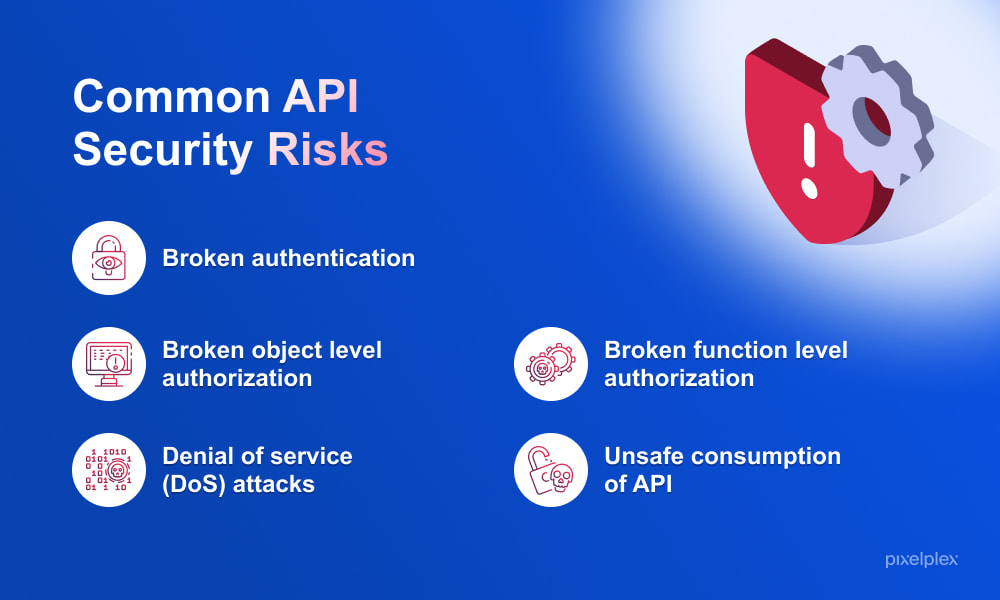
Developers must implement strict middleware layers to validate agent outputs before execution. Relying solely on the model's internal logic to handle external tools is insufficient.
Using frameworks like LangChain or AutoGPT requires a "human-in-the-loop" verification step for any write-access operations to ensure the agent remains within its intended operational boundaries. As the industry evolves, we are seeing emerging patterns in how businesses handle customer engagement and data analysis.
Security implications of autonomous access
Granting an AI agent autonomous access to internal systems creates a paradox where increased capability directly correlates with increased vulnerability. If an agent is provided with an API key for a CRM or a cloud infrastructure provider, that key effectively becomes the agent's identity.
If the agent is compromised through prompt injection—where a malicious user manipulates the agent's system prompt to ignore safety protocols—the attacker gains the full permissions of that API key.
To mitigate these risks, adopt the principle of least privilege. Instead of broad administrative access, create scoped API tokens that limit the agent to specific, read-only, or narrow-write functions.
For instance, an agent tasked with updating customer records should never have the permission to delete databases or modify user account settings. Furthermore, logging every function call with full request-response payloads is mandatory for auditing. Without these granular controls, an agent becomes a vector for unauthorized data exfiltration rather than an efficiency tool.
Operational constraints also dictate that agents should be sandboxed. Running agents in isolated containers prevents them from accessing local file systems or sensitive environment variables that are not explicitly required for their tasks. By treating the agent as an untrusted user rather than a privileged system component, organizations can leverage automation while containing the potential blast radius of a logic error or malicious exploit.
Reliability and the non-deterministic nature of reasoning
AI agents rely on Large Language Models (LLMs) to perform reasoning, which introduces inherent non-determinism. Unlike traditional software that follows rigid procedural logic, an agent might arrive at different outputs for the same input depending on temperature settings, model updates, or subtle variations in prompt context.
This variability creates significant challenges for enterprise workflows where consistency is a requirement for operational stability.
Managing error propagation in multi-step tasks
In multi-step agentic workflows, a single hallucination or logical error early in the chain often compounds, leading to catastrophic failure by the final step. To mitigate this, developers must move away from open-ended loops and implement strict guardrails at each transition point.
- Stateful validation: Use structured output formats like JSON schemas to force the agent to adhere to a specific data contract. If the output fails schema validation, the agent should be programmed to retry the specific step rather than passing corrupted data to the next module.
- Human-in-the-loop (HITL) checkpoints: For high-stakes operations, such as financial transactions or data deletion, insert mandatory human verification steps. The agent should pause its execution and wait for an external signal before proceeding to the next phase of the task.
- Self-correction loops: Implement a secondary, smaller model or a deterministic script to act as a critic. After the agent generates a plan or a code snippet, the critic evaluates the output against a set of predefined constraints. If the critic identifies a violation, it sends the task back to the agent with specific feedback on what to correct.
- Tool-use constraints: Limit the agent's access to external APIs by using a whitelist of functions. By restricting the agent to a narrow set of tools with clearly defined input parameters, you reduce the surface area for unexpected behavior and prevent the agent from attempting to execute unauthorized commands.
Building reliable systems requires treating AI agents as probabilistic components within a deterministic framework. By wrapping agentic reasoning in rigorous validation layers, teams can isolate errors and prevent them from cascading through the entire production pipeline.
agent crypto coinsHuman-in-the-loop requirements
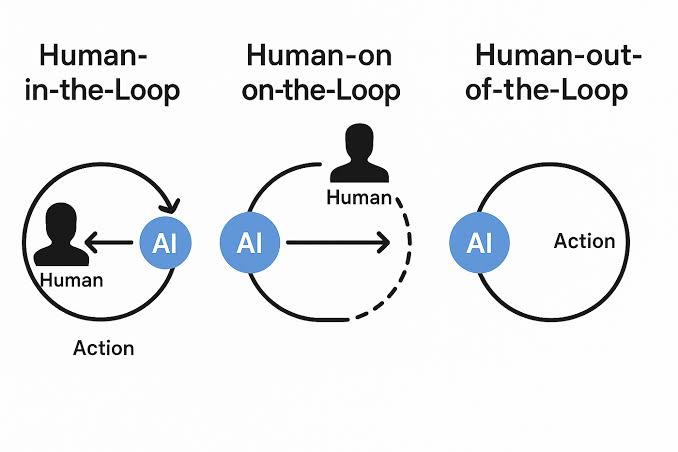
While autonomous systems promise efficiency, they lack the contextual judgment required for high-stakes decision-making. Integrating human-in-the-loop (HITL) protocols ensures that AI agents operate within defined safety boundaries, preventing catastrophic errors in sensitive environments.
This oversight is not merely a backup measure; it is a fundamental component of enterprise-grade AI architecture. For those interested in the financial side of this tech, tracking venture capital investment trends provides insight into market sentiment regarding these autonomous tools.
Defining intervention points for high-stakes workflows
To implement effective oversight, you must map your operational workflow to identify specific triggers where an AI agent's confidence score drops below a pre-set threshold. In financial services, for instance, any transaction exceeding a specific monetary value or involving a new counterparty must trigger a mandatory human review.
Relying on automated logic alone for these tasks introduces unacceptable liability risks. Effective intervention points generally fall into three categories:
- Threshold-based triggers: When an agent’s internal confidence score falls below 0.85, the system should automatically pause and queue the task for manual approval.
- Compliance-gated actions: Any action involving PII (Personally Identifiable Information) or regulatory reporting must require a secondary human sign-off to ensure data privacy compliance.
- Anomaly detection: If an agent encounters a data pattern that deviates significantly from historical training sets, it must cease execution and alert a human operator to verify the input validity.
When considering what are AI agents explained through operational constraints, it becomes clear that the most successful deployments treat the AI as an assistant rather than a replacement.
web3 community explainedBy establishing these hard-coded intervention points, organizations can leverage the speed of machine processing while maintaining the accountability of human oversight. This hybrid approach mitigates the risk of hallucination-driven errors and ensures that the agent remains aligned with organizational policy, regardless of the complexity of the task at hand. Understanding the evolving regulatory landscape offers valuable perspectives on governance models that will ultimately shape how these agents are managed in production environments.
Frequently Asked Questions
Degrees of autonomy in AI agent systems
No. AI agents operate within a predefined scope, using a loop of observation, thought, and action. They require human-defined guardrails and specific tool integrations to function, meaning their 'autonomy' is limited to the boundaries set by their developers.
Core distinctions between chatbots and AI agents
A chatbot is designed for conversational output, whereas an AI agent is designed for task execution. Agents use reasoning loops to interact with external APIs, databases, or software tools to complete a multi-step objective.

