
.webp)
.png)
Defining the functional scope of AI agents
AI agents are autonomous software entities designed to execute multi-step workflows by interacting with external tools, APIs, and databases without constant human intervention. Unlike standard chatbots that merely generate text, an agent functions as a bridge between your intent and the execution layer of your tech stack. It evaluates a goal, breaks it into logical sub-tasks, and selects the appropriate software to complete each step.
Core capabilities versus marketing hype
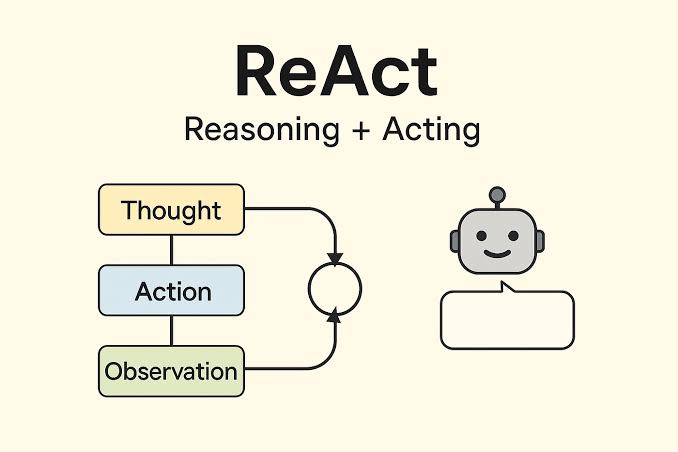
Distinguishing between genuine utility and promotional noise is critical for any how to create an AI agent step-by-step guide. Many vendors label simple prompt-response bots as agents, but a true agent requires a reasoning loop—often referred to as a ReAct (Reasoning and Acting) framework. This allows the system to observe the output of one action and adjust its strategy before proceeding to the next.
Agents excel in tasks that involve structured data manipulation and cross-platform synchronization. For example, an agent can be configured to monitor a specific email inbox for invoices, extract key financial data using a tool like OCR (Optical Character Recognition), and push that data directly into an accounting platform such as QuickBooks or Xero. This eliminates manual data entry while maintaining a consistent audit trail.
However, agents currently struggle with high-ambiguity tasks or processes requiring deep institutional context that hasn't been digitized. If a task requires nuanced human judgment—such as resolving a complex interpersonal conflict or interpreting vague strategic directives—the agent will likely fail or hallucinate a solution.
Focus your early deployments on deterministic, rule-based workflows where the input and output expectations are clearly defined. By limiting the scope to data extraction, file organization, or automated reporting, you minimize the risk of errors while gaining immediate operational efficiency.
Identifying high-impact use cases for early adoption
Successful how AI agents work and are built relies on selecting processes that are repetitive, data-rich, and prone to human error when performed manually. Instead of attempting to automate complex, creative decision-making, focus on high-volume administrative tasks where the cost of a minor error is low and the time savings are immediate. Ideal starting points include lead qualification, automated email categorization, or data entry across disconnected software platforms.
Evaluating task suitability for autonomous execution
Before assigning a task to an agent, audit your current workflow using this checklist. If a process fails any of these criteria, it is likely too volatile for current autonomous tools:
- Defined inputs and outputs: Can you clearly map the source of the data (e.g., a CRM field) and the required end state (e.g., a calendar invite)?
- Low ambiguity: Does the process follow a rigid set of rules? If the task requires subjective judgment or nuanced social intelligence, it is not yet ready for agentic automation.
- System accessibility: Do the tools involved have accessible APIs or reliable browser-based interfaces that an agent can interact with consistently?
- Error tolerance: Is there a human-in-the-loop mechanism for verifying the agent's output before it reaches a client or final database?
For example, automating the extraction of invoice data from email attachments is a high-impact use case because the input format is predictable and the output is a standard CSV or database entry. Conversely, using AI marketing agents to draft personalized sales outreach based on a prospect's entire social media history often results in hallucinations or tone-deaf messaging.
Start by automating the "plumbing" of your business—the data movement and formatting tasks—before moving toward more complex, interaction-heavy workflows. By focusing on these stable, high-volume processes, you establish a baseline of reliability that justifies further investment in more sophisticated agentic systems.
Technical prerequisites for AI agents for beginners guide
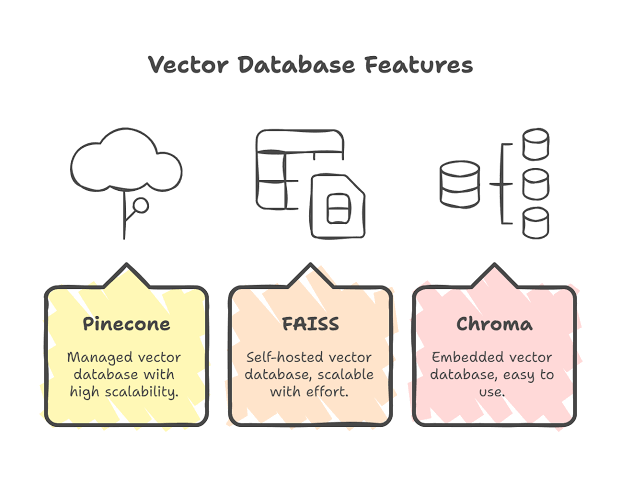
Before deploying your first autonomous agent, you must establish a stable technical foundation. At a minimum, you need an active API key from a Large Language Model provider like OpenAI (GPT-4o) or Anthropic (Claude 3.5 Sonnet). These providers act as the 'brain' of your agent, processing logic and natural language requests. You will also require a vector database, such as Pinecone or ChromaDB, if your agent needs to retrieve specific company documents or private data sets to remain relevant.
Selecting the right development environment
The choice between low-code platforms and custom frameworks depends entirely on your team's engineering capacity and the complexity of the desired workflows. For those prioritizing speed and visual debugging, low-code platforms are the standard starting point.
- Flowise and LangFlow: These drag-and-drop interfaces allow you to build complex agent chains without writing raw code. They are excellent for prototyping because they visualize the connection between memory, prompt templates, and tools. Use these if you need to deploy a customer support bot or a data extraction tool within hours rather than days.
- Custom Python Frameworks (LangChain or CrewAI): If your project requires deep integration with proprietary internal software or complex multi-agent orchestration, custom Python code is necessary. LangChain provides the modularity to swap out different LLMs or memory buffers, while CrewAI excels at managing 'teams' of agents that collaborate on tasks.
The trade-off is clear: low-code platforms offer faster iteration but can become difficult to maintain as your logic grows increasingly branched. Conversely, Python-based frameworks provide total control over the agent's reasoning loop and error handling, but they require a higher level of proficiency in asynchronous programming and API management.
If you are just starting, begin by building a simple task-specific agent in Flowise to understand how 'tools' (such as web search or calculator functions) influence the agent's output. Once you observe how the agent handles failures in its reasoning chain, you will be better prepared to transition to a custom Python environment for production-grade deployments.
Risk management and oversight protocols
Deploying autonomous systems requires a structured approach to prevent operational drift and data leakage. For those following this best AI agent framework for development, the priority is to establish guardrails before scaling. Start by defining strict API access limits, ensuring each agent operates within a 'sandbox' environment that restricts its ability to modify core system files or delete database entries without secondary authentication.
Implementing human-in-the-loop verification
Human-in-the-loop (HITL) protocols act as a circuit breaker for automated workflows. By inserting a manual review step, you prevent the agent from executing high-stakes actions based on hallucinations or misinterpreted instructions. Configure your automation platform—such as Zapier, Make, or custom LangChain scripts—to trigger a notification via Slack or email whenever the agent encounters an edge case or attempts a transaction exceeding a specific monetary threshold.
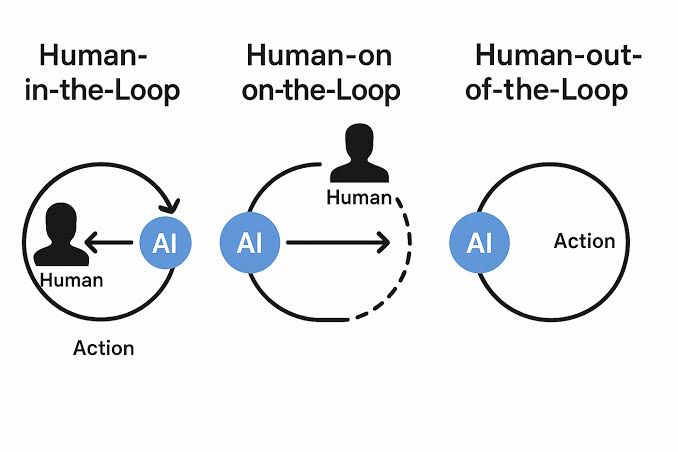
To set effective approval triggers, categorize your agent's tasks into three tiers:
- Low-risk: Routine data entry or internal scheduling. These can run fully autonomously.
- Medium-risk: Drafting external communications or social media content. These require a 'pre-publish' review queue.
- High-risk: Financial transactions, API configuration changes, or customer-facing policy adjustments. These mandate a hard-stop approval where the agent pauses execution until a human clicks 'Approve' in the dashboard.
Regular auditing is equally vital. Maintain a log of agent decisions and compare them against your intended business outcomes. If an agent consistently miscategorizes support tickets or struggles with specific prompt logic, use these logs to refine the system instructions.
Treat the agent like a junior employee: provide clear documentation, define the scope of authority, and verify the output quality until the system demonstrates consistent reliability. Never grant an agent broad permissions that you would not provide to an intern on their first day.
Prioritizing your implementation roadmap
Successful deployment of how AI agents communicate and learn requires shifting focus from simple automation to high-impact process optimization. Start by identifying workflows with high volumes of repetitive, structured data—such as customer support ticketing or invoice processing—where the cost of human error is high. Avoid starting with complex, multi-step workflows that require deep integration with legacy systems until your team has gained experience with simpler, single-task agents.
Measuring ROI beyond time savings
While time savings are the most cited benefit, they are often a superficial metric. To truly justify the investment, you must quantify the impact of error reduction and process consistency on your bottom line. When an AI agent handles data entry, it eliminates the variance inherent in manual fatigue.
Track the reduction in 'rework' cycles—the time spent correcting errors made by human staff—as a primary KPI. If your human team previously spent 15% of their time fixing data discrepancies, that 15% recovery is a direct increase in operational capacity without increasing headcount.
Process consistency also creates predictable outputs, which simplifies downstream reporting and analytics. Measure the 'standard deviation' of your process outcomes before and after agent deployment. A decrease in variance indicates a more stable, scalable operation. For example, if an AI agent standardizes the categorization of support tickets, your analytics team can generate more accurate trend reports, leading to better-informed product decisions.
Focus your tracking on these three pillars:
- Error Rate Reduction: Calculate the percentage decrease in manual correction requests per batch of processed data.
- Process Latency: Measure the time from data arrival to final output, focusing on the elimination of queue bottlenecks.
- Compliance Reliability: Track the number of automated audit trails generated versus manual logs, which reduces the risk of regulatory fines or internal audit failures.
By shifting your focus to these tangible business outcomes, you move beyond the novelty of AI and build a resilient, data-driven infrastructure that provides measurable value to your organization.
Frequently Asked Questions
Distinction between static chatbots and autonomous AI agents
A chatbot is designed for conversational interaction and information retrieval. An AI agent is designed for task completion; it can use tools, make decisions based on logic, and execute multi-step workflows without constant human intervention.
Business processes suited for initial AI agent deployment
Focus on high-volume, low-variability tasks such as data entry, email triage, lead qualification, or automated report generation. These processes have clear rules and defined inputs, making them ideal for testing agent reliability.

