
.webp)
.png)
Defining Your AI Agent's Mission and Scope: Best AI agent framework for development
Before selecting the best AI agents for coding and development, you must categorize your agent by its operational autonomy and interaction model. An agent designed for autonomous data retrieval requires a fundamentally different architecture than one built for interactive customer support or complex code generation.
Start by mapping your requirements against three primary archetypes: reactive agents, plan-and-execute agents, and multi-agent systems.
Reactive agents operate on a simple stimulus-response loop. These are ideal for low-latency tasks where the agent executes a single tool call based on immediate user input. If your project involves simple API orchestration or basic file manipulation, frameworks like LangChain with basic chains are sufficient. These systems prioritize speed and predictability over complex reasoning.
Plan-and-execute agents, by contrast, decompose high-level goals into sequential sub-tasks. These agents maintain state, manage memory buffers, and iterate on their own outputs. For these, you need frameworks that support robust ReAct (Reasoning and Acting) patterns.
CrewAI or AutoGen are better suited here because they provide built-in mechanisms for task delegation and iterative feedback loops. You should choose this path if your agent must handle multi-step workflows, such as researching a topic, drafting a report, and formatting it into a PDF.
Multi-agent systems represent the most complex scope. These involve specialized AI agents—such as a 'coder,' a 'reviewer,' and a 'manager'—communicating to achieve a collective objective.
If your development goal involves cross-functional workflows, you must prioritize frameworks that offer native support for agent-to-agent messaging protocols and shared memory spaces. Selecting a framework that lacks native multi-agent orchestration will force you to build custom message brokers, significantly increasing your technical debt.
Assess your scope by asking three specific questions: Does the agent need long-term memory across sessions? Must it interface with non-deterministic external tools? Does it require human-in-the-loop approval at specific milestones? Answering these questions early prevents the common mistake of over-engineering a simple task with a framework designed for complex, autonomous orchestration.
Essential Criteria for Evaluating AI Agent Frameworks
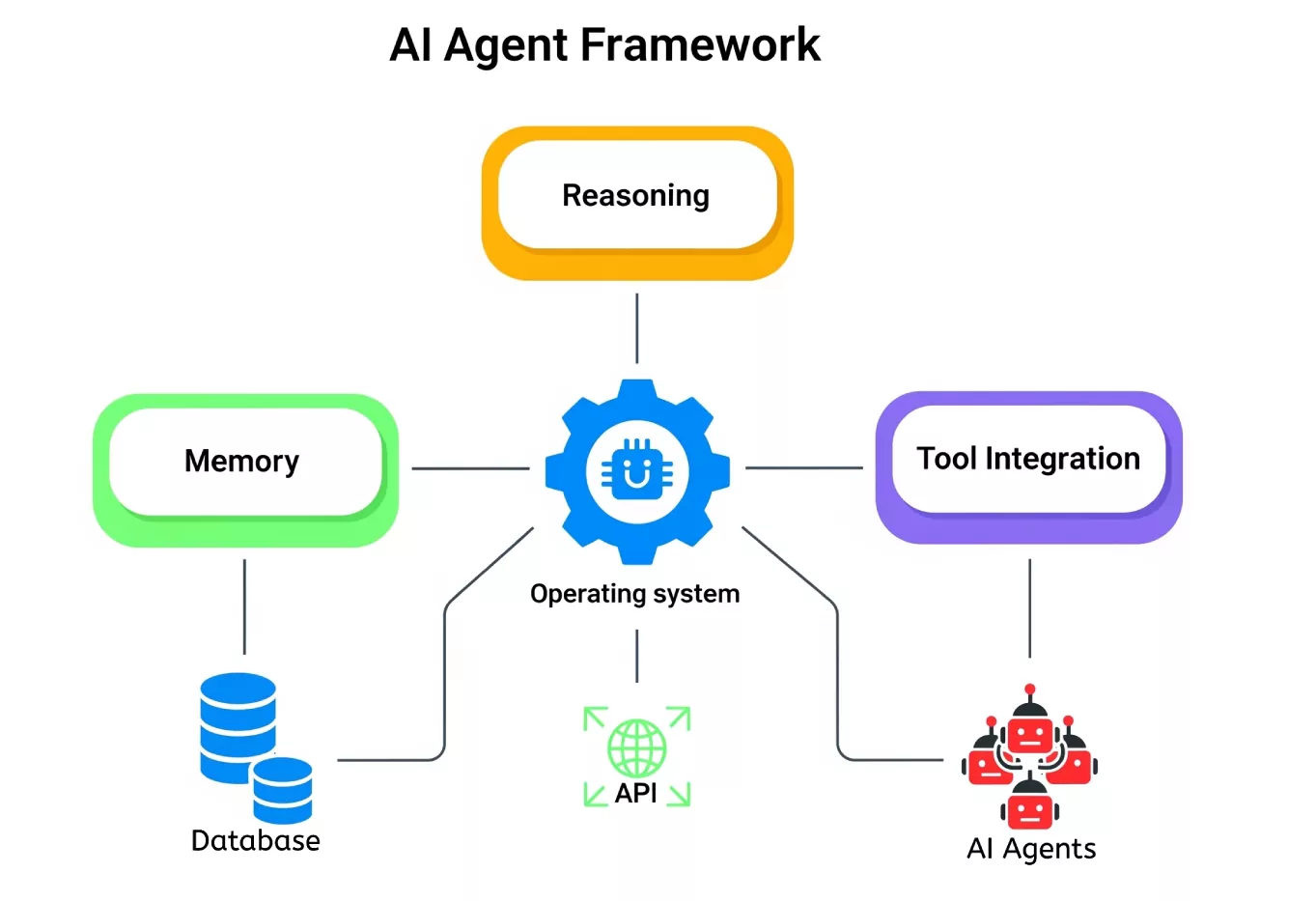
Selecting the best AI agent framework for development requires a rigorous assessment of how the architecture handles complex, multi-step reasoning tasks. You must prioritize frameworks that offer modularity, allowing you to swap out LLM providers or memory backends without refactoring your entire codebase.
Performance, Scalability, and Cost Efficiency
The primary performance bottleneck in agentic workflows is latency introduced by chained LLM calls. A high-performing framework must support asynchronous execution and parallel tool invocation to minimize wait times.
When evaluating scalability, look for built-in support for distributed state management; frameworks like LangGraph excel here by allowing agents to persist state across complex, multi-turn interactions without overloading a single instance.
Cost efficiency is dictated by token management. Effective frameworks provide granular control over context windows, enabling you to prune irrelevant history or summarize long-running conversations before sending them to the model. Avoid frameworks that force full-history injection, as this leads to exponential cost growth as agent sessions lengthen.
Integration Capabilities and Ecosystem Support
An agent is only as useful as the tools it can access. The best frameworks provide pre-built connectors for common enterprise databases, vector stores (like Pinecone or Milvus), and API gateways.
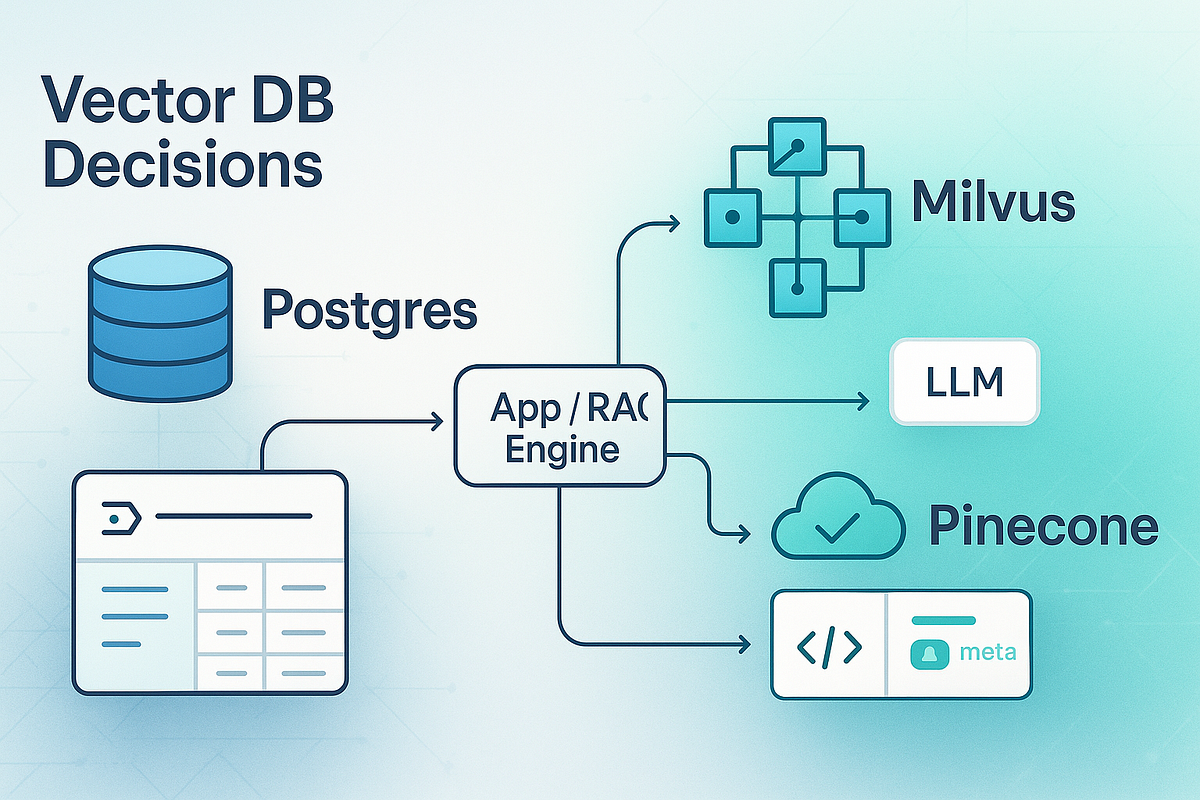
Check if the framework supports standard protocols like OpenAPI or JSON Schema for tool definitions, which ensures the agent can reliably interpret the output of your existing internal services.
Look for active ecosystem support, specifically regarding observability. Tools like LangSmith or Arize Phoenix provide necessary visibility into what are AI agents explained through practical tracing. If a framework lacks hooks for these tracing tools, debugging non-deterministic agent behavior becomes nearly impossible in production environments.
Developer Experience and Community Resources
Developer experience (DX) hinges on the quality of the abstraction layer. A framework should provide a clear, type-safe interface for defining agent roles, tools, and memory structures.
If you find yourself writing boilerplate code just to manage simple message passing, the framework is likely too low-level for rapid iteration. Community health is a leading indicator of long-term viability. Prioritize projects with frequent commits, a responsive GitHub issues tracker, and a robust library of community-contributed templates.
Avoid frameworks that rely solely on proprietary, closed-source documentation, as these often lack the deep-dive tutorials and edge-case examples necessary for solving complex deployment challenges.
Comparative Overview of Leading AI Agent Frameworks for Development
Choosing the right architecture depends on whether your project prioritizes complex reasoning chains, heavy data retrieval, or multi-agent autonomy. The current landscape is dominated by three distinct approaches, each solving specific bottlenecks in agentic workflows.
LangChain: Orchestration and Composability
LangChain functions primarily as a modular orchestration layer. Its architecture relies on "chains" that connect LLMs to external tools, memory, and prompts. This framework excels in flexibility; developers can swap out components—such as switching from OpenAI to Anthropic or replacing a vector store—without rewriting the core logic.
The LangGraph extension further enhances this by allowing for cyclic, stateful agent behaviors, which is critical for tasks requiring iterative refinement rather than simple linear execution.
LlamaIndex: Data Augmentation and Retrieval
While LangChain focuses on the flow of logic, LlamaIndex focuses on the flow of data. It is the industry standard for Retrieval-Augmented Generation (RAG) pipelines.
LlamaIndex provides sophisticated indexing structures—such as tree, keyword, and vector indices—that optimize how an agent queries private datasets. If your agent's primary value proposition is its ability to reason over proprietary documents or complex knowledge bases, LlamaIndex offers superior data ingestion and retrieval performance compared to general-purpose frameworks.
AutoGen: Multi-Agent Collaboration
Microsoft’s AutoGen shifts the paradigm from a single-agent loop to a multi-agent ecosystem. It allows developers to define "conversable" agents with specific roles, such as a coder, a reviewer, and a product manager.
These agents communicate autonomously to solve complex tasks, reducing the need for manual prompt engineering. This framework is particularly effective for software development workflows where code must be written, tested, and debugged in a continuous loop by specialized agents.
Emerging Frameworks and Niche Applications
Beyond the primary three, specialized frameworks are gaining traction. CrewAI builds upon LangChain to provide a more structured, role-based management system for multi-agent teams. Meanwhile, Haystack offers a production-ready alternative for enterprise search and RAG, emphasizing modularity and ease of deployment.
For developers focused on specific domains like finance or legal tech, these niche frameworks often provide pre-built components that significantly reduce time-to-market compared to building from scratch.
A Phased Approach to Implementing Your First AI Agent
Selecting the best AI agent framework for development requires a structured lifecycle. Moving from a theoretical architecture to a production-ready system demands rigorous validation at every stage to ensure reliability and cost-efficiency.
Proof-of-Concept Development and Iteration
Start by isolating a single, high-value task that requires minimal external tool integration. Use a framework like LangGraph or CrewAI to define a clear state machine or role-based workflow.
Focus on building a "happy path"—the sequence of steps where the agent succeeds without encountering edge cases. Limit the agent's context window during this phase to reduce latency and token costs.
Rapid prototyping here means using a mock LLM response layer to test your orchestration logic before committing to expensive API calls with models like GPT-4o or Claude 3.5 Sonnet.Testing, Evaluation, and Refinement Strategies
Performance assessment for agents differs significantly from standard software testing. Implement an evaluation harness using tools like RAGAS or LangSmith to measure retrieval accuracy and reasoning consistency.
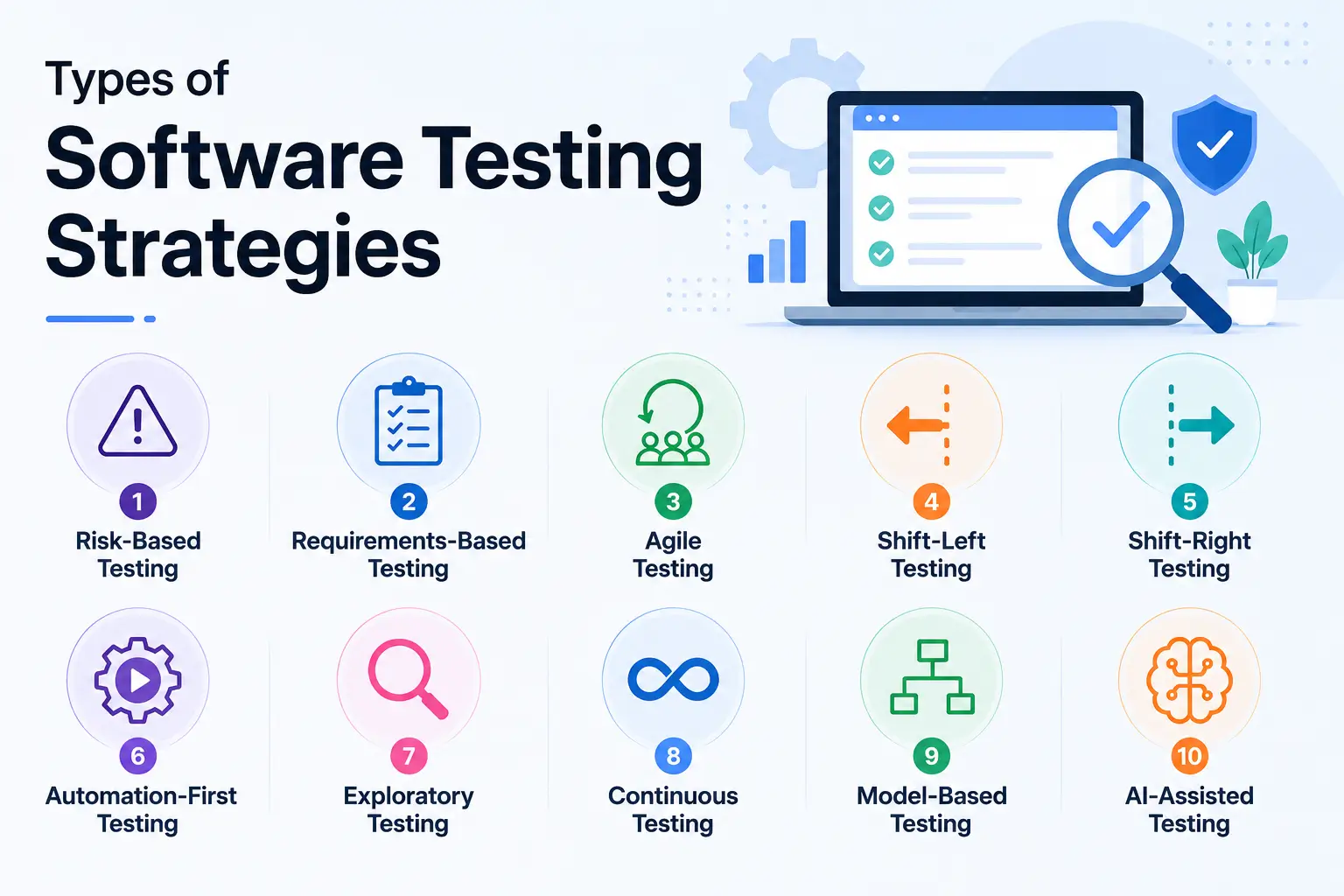
Create a "golden dataset" of 20-50 input-output pairs that represent the specific domain queries your agent will handle. Run these through your agent after every significant code change to identify regressions in logic or tool-calling accuracy.
If the agent fails to select the correct tool, adjust your system prompts or provide few-shot examples within the framework's configuration to guide the model's decision-making process.
Deployment Considerations and Monitoring
Moving to production requires moving beyond local execution. Containerize your agent application using Docker to ensure environment consistency across development and staging.
When deploying, prioritize observability by logging every step of the agent's thought process, including tool inputs and outputs. Use platforms like Arize Phoenix or LangSmith to monitor for "hallucination drift" and token usage spikes.
Set up automated alerts for high error rates in tool execution, as these often indicate that the underlying API schema has changed or the model is struggling with unexpected input formats. Always maintain a human-in-the-loop override for high-stakes actions, such as database writes or external API transactions, to prevent irreversible errors.
Avoiding Common Pitfalls in AI Agent Framework Selection
Choosing the wrong architecture often stems from prioritizing hype over technical requirements. Many teams commit to heavy, opinionated frameworks before validating their specific use case, leading to significant technical debt when the project requires custom memory management or specialized tool integration.
The Trap of Over-Abstraction
Frameworks like LangChain offer massive libraries of pre-built integrations, but this abstraction layer can obscure the underlying logic of your agent. When debugging complex multi-step reasoning chains, you may find that the framework's internal state management conflicts with your custom business logic.
If your application requires high-frequency, low-latency execution, the overhead of these abstraction layers often becomes a performance bottleneck. Opt for modular frameworks that allow you to bypass high-level abstractions when you need to access raw model outputs or custom prompt templates.Ignoring State Persistence and Memory Management
A frequent error is failing to plan for long-term state persistence. Many developers rely on simple, in-memory buffers during the prototype phase, only to realize that their agent lacks the capability to scale across distributed sessions.
The best AI agent framework for development must provide a clear path for integrating external vector databases like Pinecone or Weaviate without forcing you into a proprietary ecosystem. Evaluate how the framework handles session state; if it lacks native support for asynchronous state storage, you will likely face significant scaling issues as your agent's history grows.Underestimating Tool-Use Complexity
Not all frameworks handle tool execution with the same level of reliability. Some rely heavily on rigid JSON schema definitions that break when the underlying LLM drifts or returns unexpected formatting.
Before committing, test the framework's error handling for tool calls. A robust framework should offer built-in retry mechanisms, validation layers, and clear logging for failed tool executions. If you find yourself writing custom wrappers for every API call, the framework is not providing the value it promises. Prioritize tools that offer native, type-safe interfaces for function calling, as this reduces the surface area for runtime errors in production environments.
Future-Proofing Your AI Agent Development Strategy
Selecting a framework today requires balancing immediate velocity with long-term architectural flexibility. Because the ecosystem shifts rapidly, avoid hard-coding your logic into proprietary platform-specific abstractions.
Instead, prioritize frameworks that support modular, model-agnostic backends, such as LangChain or CrewAI, which allow you to swap underlying LLMs—like moving from GPT-4o to Claude 3.5 Sonnet or a local Llama 3 instance—without rewriting your core orchestration logic.
Prioritizing Interoperability and Observability
The most resilient AI agent architectures treat observability as a first-class citizen. As your agentic workflows scale, debugging non-deterministic behavior becomes the primary bottleneck.
Integrate tools like LangSmith or Arize Phoenix early in your development lifecycle to track trace-level data. This ensures that when an agent fails to execute a tool or hallucinates a parameter, you have a granular audit trail to diagnose the failure point.
Managing Technical Debt in Agentic Workflows
To maintain a sustainable codebase, adopt a strict separation between agent orchestration and business logic. Use the following technical patterns to prevent your project from becoming unmaintainable:
- Interface-Driven Tooling: Define your tools using standardized schemas like Pydantic. This allows you to swap or upgrade tools without breaking the agent's internal state management.
- State Persistence Layers: Avoid relying on in-memory state for production agents. Utilize persistent backends like Redis or PostgreSQL to handle long-running conversations and multi-step task queues.
- Automated Evaluation Pipelines: Implement unit tests for agent prompts. Use frameworks like RAGAS or DeepEval to quantitatively measure response accuracy against a golden dataset before deploying updates to production.
Ultimately, the best AI agent framework for development is one that enables you to iterate on prompt engineering and tool integration while maintaining strict control over data privacy and system latency. By focusing on modularity and rigorous evaluation, you ensure that your infrastructure remains adaptable as new models and capabilities emerge, preventing the need for a full architectural rewrite six months down the line.
Frequently Asked Questions
Which framework is best for multi-agent orchestration?
For complex multi-agent systems requiring state management and cyclic graphs, LangGraph is currently the industry standard. It allows for fine-grained control over agent transitions and human-in-the-loop interventions.
Selection criteria for CrewAI versus AutoGen
CrewAI is generally preferred for role-based, process-oriented workflows where agents have distinct, static responsibilities. AutoGen excels in conversational, dynamic environments where agents need to negotiate and iterate on tasks autonomously.

