
.webp)
.png)
Symptoms of fragmented interaction in how AI agents communicate and learn
Modern AI agents communicate and learn by exchanging structured data packets and updating internal state representations based on feedback loops. When these processes break down, agents exhibit erratic behavior, such as repetitive task loops or the inability to reconcile conflicting instructions from different modules.
Protocol mismatch in multi-agent environments
Agents often fail to interpret shared context because they rely on disparate schema definitions. If an orchestrator agent sends a task in a JSON format that a worker agent expects as a YAML string, the resulting parsing error halts the workflow. This mismatch frequently occurs when developers integrate agents from different frameworks, such as AutoGPT and LangChain, without a unified communication bridge.
Latency spikes during inter-agent negotiation
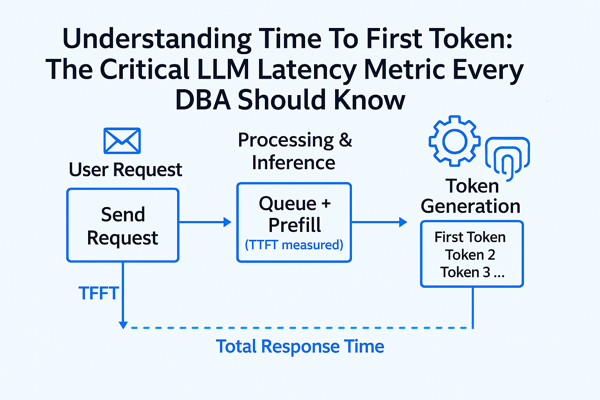
Communication overhead often outweighs the benefits of distributed processing when agents engage in excessive 'handshaking' or redundant verification steps. You can diagnose this by monitoring the time-to-first-token (TTFT) across agent nodes. If the negotiation phase consumes more than 30% of the total execution time, the system is likely suffering from inefficient message routing or bloated context window transfers.
The hidden cost of context window bloat
As agents exchange long conversation histories to maintain state, the context window fills with redundant tokens. This increases latency and forces the model to prioritize irrelevant historical data over current task requirements. Implementing a sliding window buffer or a summarization agent that compresses past interactions into concise state summaries can mitigate this performance degradation.
Mechanisms behind ineffective agent learning loops
Agents fail to update their internal logic effectively when the feedback loop is compromised by noise or data degradation. This prevents the system from refining its decision-making capabilities over time. For those interested in the broader landscape, understanding agents comprehensive autonomous systems is a great starting point.
Catastrophic forgetting in iterative model updates
Agents lose previously acquired skills when fine-tuned on narrow, task-specific datasets without retaining a buffer of general knowledge. This phenomenon, known as catastrophic forgetting, manifests when an agent becomes highly proficient at a new task but suddenly loses the ability to perform basic operations it mastered earlier.
Feedback loop contamination
Contamination occurs when an agent learns from its own erroneous outputs rather than verified ground-truth data. If an agent generates a faulty code snippet and then uses that same snippet to train its next iteration, the error propagates and amplifies, leading to a rapid decline in performance quality.
The role of vector database drift
When agents use Retrieval-Augmented Generation (RAG) to learn, they rely on vector databases for context. If the underlying documents are updated but the embeddings are not re-indexed, the agent retrieves stale information. This creates a 'knowledge drift' where the agent provides outdated answers based on obsolete data, effectively poisoning its own learning process.
Diagnostic steps for communication drift
To isolate failures, you must determine whether the bottleneck lies in the messaging format or the reasoning engine. A systematic audit of the data flow is necessary to restore stability.
Tracing message serialization errors
Use logging tools like LangSmith or Arize Phoenix to inspect the raw JSON payloads exchanged between agents. By capturing the exact schema of the message at the point of failure, you can identify whether the issue is a missing field, an incorrect data type, or a malformed structure that the receiving agent cannot parse.
Validating semantic consistency across agents
Shared terminology must remain constant across different agent personas to prevent logic drift. If one agent defines 'priority' as a numerical value (1-10) and another interprets it as a categorical string ('high', 'medium', 'low'), the system will produce inconsistent outcomes. Standardizing these definitions in a shared configuration file is essential for alignment.
Corrective strategies for agent alignment
Restoring efficient information flow requires moving away from ambiguous natural language exchanges toward rigid, verifiable structures. If you are looking to build your own, learning how to create an AI agent step-by-step can help you avoid these common pitfalls.
Implementing standardized communication protocols
Transitioning from natural language to structured schemas like Pydantic models or JSON-RPC ensures that agents communicate with high fidelity. By enforcing strict type checking on all incoming messages, you prevent the propagation of malformed data and reduce the likelihood of reasoning errors.
Establishing human-in-the-loop verification
Force a manual review of agent learning updates when the system reaches a threshold of uncertainty. This human-in-the-loop approach acts as a circuit breaker, preventing model degradation by ensuring that only high-quality, validated data is used to update the agent's internal logic or memory stores.
Automated regression testing for agent logic
Create a suite of 'golden test cases'—a set of inputs with known, correct outputs—that agents must pass before any update to their system prompt or fine-tuned weights is deployed. This prevents the introduction of regressions where an agent might solve a new problem but fail on previously mastered tasks.
Frequently Asked Questions
Definition of AI agents
AI agents are autonomous software programs designed to perform specific tasks, make decisions, and interact with their environment or other agents to achieve defined goals.
Operational mechanics of AI agents
They work by combining a Large Language Model (LLM) as a reasoning engine with tools, memory, and planning capabilities to process information and execute actions. For developers, finding the best AI agents for coding and development can significantly accelerate this integration process.
Availability of free AI agent tools
Many frameworks are open-source and free, but running them often requires paid API access to models like GPT-4 or Claude, as well as computational resources.
Revenue generation potential of AI agents
Yes, they can generate value by automating complex workflows, managing data analysis, or providing personalized customer service, which reduces operational costs. We are currently seeing marketing agents transforming how businesses approach customer acquisition.
Distinction between AI agents and agentic AI
The terms are often used interchangeably, though 'agentic AI' usually refers to the broader capability of a system to act autonomously rather than just responding to prompts.
Impact of AI agents on workforce roles
AI agents are likely to automate repetitive tasks, shifting human roles toward higher-level oversight, strategy, and complex problem-solving rather than total replacement.

