
.webp)
.png)
Core architecture of BingX security features explained
BingX maintains a multi-layered defense strategy designed to isolate user assets from external threats and internal system failures. The platform utilizes a combination of institutional-grade cold storage, real-time risk monitoring, and granular access controls to mitigate the risks inherent in centralized cryptocurrency exchanges. For those researching the platform's reliability, a comprehensive BingX review provides deeper insights into these operational standards.
By enforcing strict separation between operational liquidity and long-term asset custody, the exchange minimizes the potential impact of a single point of failure.
Multi-factor authentication and access control
Unauthorized entry is primarily mitigated through mandatory multi-factor authentication (MFA) protocols. BingX requires users to link Google Authenticator or similar TOTP (Time-based One-Time Password) apps, ensuring that a simple password compromise is insufficient for account takeover.
Beyond standard login requirements, the platform implements device and IP address whitelisting. When a user attempts to access their account from an unrecognized device or location, the system triggers an automated verification request, requiring email or SMS confirmation before granting session access. This granular control prevents attackers from utilizing stolen session cookies or credentials without secondary physical device verification.
Cold storage and asset custody standards
The platform segregates the vast majority of user funds into cold storage environments, which remain offline and disconnected from the public internet. This physical and digital air-gapping ensures that even in the event of a sophisticated server-side breach, the primary pool of user assets remains inaccessible to external hackers.
BingX employs multi-signature (multi-sig) technology for these cold wallets, meaning that moving funds requires authorization from multiple independent keys held by different security officers. This setup removes the risk of a single insider or compromised private key draining the exchange's reserves. Operational liquidity, used for daily trade execution and withdrawals, is kept in separate hot wallets with strictly limited balances, further containing the potential blast radius of any individual security incident.
Prioritizing account hardening steps
Securing a cryptocurrency exchange account requires moving beyond basic password protection. BingX provides a layered defense architecture that shifts the burden of security from the platform to the user, provided these tools are activated correctly. Without these configurations, an account remains vulnerable to credential stuffing and social engineering attacks.
Mandatory configuration for high-volume accounts
For traders managing significant capital, relying on SMS verification is insufficient due to the risk of SIM-swapping attacks. The primary defense for high-volume accounts is the mandatory activation of Google Authenticator (TOTP).
Once enabled, BingX requires a rotating six-digit code for every login attempt and, crucially, every withdrawal request. To further restrict risk, users should configure the 'Withdrawal Address Whitelist' feature. By enabling this, the platform will only permit transfers to pre-approved wallet addresses. Even if an unauthorized party gains access to your credentials, they cannot move funds to an external, unverified address without first disabling this whitelist, which triggers a mandatory 24-hour security lock on withdrawals.
Anti-phishing code implementation
Phishing remains the most common vector for account compromise. BingX mitigates this through an anti-phishing code, a unique string of characters that the user defines within their security settings. Once set, this code is included in every official email sent by the exchange.
If you receive an email from 'BingX' that lacks your specific anti-phishing code, you can immediately identify it as a fraudulent attempt to harvest your login credentials. Users should verify this code exists in every communication before clicking links or entering sensitive data. This simple verification step serves as a definitive filter against sophisticated spoofing campaigns that mimic the platform's branding and interface.
Operational limitations and user responsibility
While BingX implements robust technical defenses, no exchange can eliminate risk entirely. Security is a shared responsibility model where the platform protects the infrastructure, but the user remains the final gatekeeper of their individual account credentials and private keys.
The boundary between platform and personal security
Distinguishing between exchange-side vulnerabilities and user-side negligence is critical for asset protection. BingX manages the server-side security, such as cold storage protocols, DDoS mitigation, and real-time monitoring of suspicious withdrawal patterns. However, these features cannot prevent unauthorized access if a user inadvertently compromises their own login credentials.
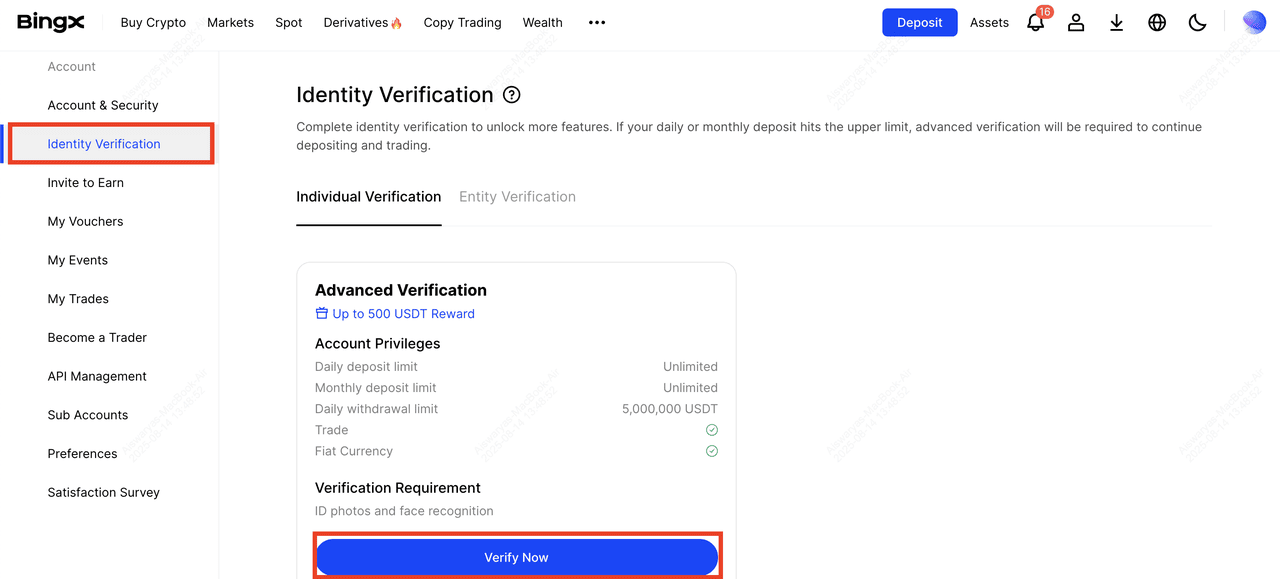
Common user-side risks include:
- Phishing attacks: Users often fall victim to fake websites that mimic the BingX interface to steal login credentials and 2FA codes. Always verify the URL and use bookmarks.
- Credential reuse: Using the same email and password combination across multiple platforms increases the likelihood of an account takeover if another site suffers a data breach.
- Device compromise: Malware, keyloggers, or browser extensions on a personal computer can intercept session cookies or private keys, bypassing even the most sophisticated exchange-side security protocols.
To mitigate these risks, users should treat their account as a high-value asset. Enable Google Authenticator or a hardware security key (like a YubiKey) rather than relying solely on SMS-based 2FA, which is susceptible to SIM-swapping attacks. Furthermore, check the "Login History" feature within the security settings regularly to identify any unrecognized IP addresses or device signatures.
BingX security features explained in technical documentation often highlight that the platform cannot reverse transactions once they are broadcast to the blockchain. Because cryptocurrency transactions are irreversible by design, the responsibility for verifying withdrawal addresses and maintaining the integrity of one's own device rests entirely with the user. Treat the platform's security tools as a secondary line of defense, not a replacement for basic digital hygiene.
Comparative risk profile of BingX security features
BingX operates a hybrid security architecture that balances the accessibility of a centralized exchange with the rigorous protection standards required for institutional-grade asset management. Unlike platforms that rely solely on perimeter defense, BingX integrates multi-layered encryption and cold storage protocols that isolate user funds from the active trading environment.
This structural approach minimizes the impact of potential front-end vulnerabilities by ensuring that the vast majority of digital assets remain offline and inaccessible to unauthorized network requests.
Benchmarking against centralized exchange protocols
When evaluating how BingX security features explained in industry reports align with global standards, the platform demonstrates a commitment to transparency through its Merkle Tree Proof-of-Reserves. This mechanism allows users to independently verify that their assets are backed 1:1, a standard that has become the benchmark for centralized exchanges following the market volatility of 2022.
By utilizing third-party custody solutions and multi-signature wallet management, BingX aligns its operational safety with the SOC2 compliance framework, which is the gold standard for data security and privacy in financial services.
Compared to competitors, BingX distinguishes itself through its specific implementation of dynamic risk control systems. While many exchanges utilize static firewall rules, BingX employs real-time monitoring that flags anomalous withdrawal patterns or unauthorized IP logins before a transaction is finalized.
This proactive stance is complemented by mandatory 2FA (Two-Factor Authentication) and anti-phishing codes, which serve as the final line of defense against social engineering attacks. By integrating these features into a unified dashboard, the platform reduces the friction of security management for the average trader while maintaining a robust barrier against external threats. These protocols ensure that even if a single point of failure occurs, the overall integrity of the user's account remains intact through automated circuit breakers and withdrawal velocity limits.
Frequently Asked Questions
Primary BingX security features overview
BingX employs a multi-layered security architecture including 2FA (Google Authenticator), anti-phishing codes, fund password requirements, and cold storage for the majority of user assets. These features work in tandem to prevent unauthorized access and mitigate withdrawal risks. For those interested in automated strategies, reading a BingX trading platform review can help clarify how these security measures apply to automated portfolio management.
Mechanisms for protecting user funds against unauthorized withdrawals
The platform enforces a mandatory fund password for all transactions and withdrawals. Additionally, users can set up How to deposit crypto on BingX and withdrawal address whitelisting, which restricts asset transfers to pre-approved wallet addresses only, significantly reducing the impact of a potential account compromise.

