
.webp)
.png)
The fundamental trade-off between rigid structure and agile flexibility
Choosing a SaaS product roadmap template for agile teams requires balancing the need for long-term predictability against the necessity of rapid iteration. A rigid template provides stakeholders with a clear timeline, but often stifles the team's ability to pivot based on real-time user feedback or technical debt.
Conversely, a purely flexible, task-based approach keeps the development cycle lean but risks losing sight of the overarching product vision.
When to prioritize a high-level strategic roadmap
A strategic roadmap is essential when your primary goal is alignment across cross-functional departments like sales, marketing, and executive leadership. Use this approach during the following scenarios:
- Quarterly Planning: When you need to communicate high-level themes, such as "Improving Onboarding Retention" or "Scaling API Infrastructure," rather than specific feature sets.
- Investor Reporting: When stakeholders require a multi-month outlook to validate product-market fit and resource allocation.
- Market Entry: When launching a new product category where the sequence of major milestones dictates your competitive advantage.
In these cases, opt for a template that utilizes "Now, Next, Later" buckets instead of fixed calendar dates. This maintains strategic direction without committing to specific delivery deadlines that often break during agile execution.
When to prioritize a granular agile backlog
A granular, task-based board becomes the superior choice when your team is in a high-velocity execution phase where daily output directly correlates to customer satisfaction. Shift your focus to a backlog-centric template if:
- High Technical Uncertainty: Your team is navigating complex architectural changes where sprint-by-sprint discovery is required.
- Rapid Feedback Loops: You are testing new features with beta users and need to pivot based on usage data every two weeks.
- Resource Constraints: Your team is small, and the overhead of maintaining a high-level roadmap distracts from actual coding and testing.
In these instances, a tool like a Kanban board or a Jira-style sprint backlog is more effective than a traditional roadmap. It ensures that the team remains focused on the immediate next increment of value rather than being anchored to a static document that may become obsolete within a month.
Evaluating the SaaS product roadmap template for agile teams against your workflow
Selecting a roadmap format requires balancing high-level strategic visibility with the granular reality of sprint cycles. A template that works for a product manager presenting to a board of directors often fails to provide the necessary context for engineers during daily stand-ups.
The most effective approach involves mapping your chosen SaaS product management frameworks to the specific maturity level of your product organization.
Standardized templates for cross-functional alignment
The Now-Next-Later framework is the industry standard for teams needing to move away from rigid, date-driven Gantt charts. By categorizing initiatives into three time horizons rather than specific deadlines, you reduce the pressure to commit to inaccurate delivery dates. This structure forces stakeholders to prioritize outcomes over output.
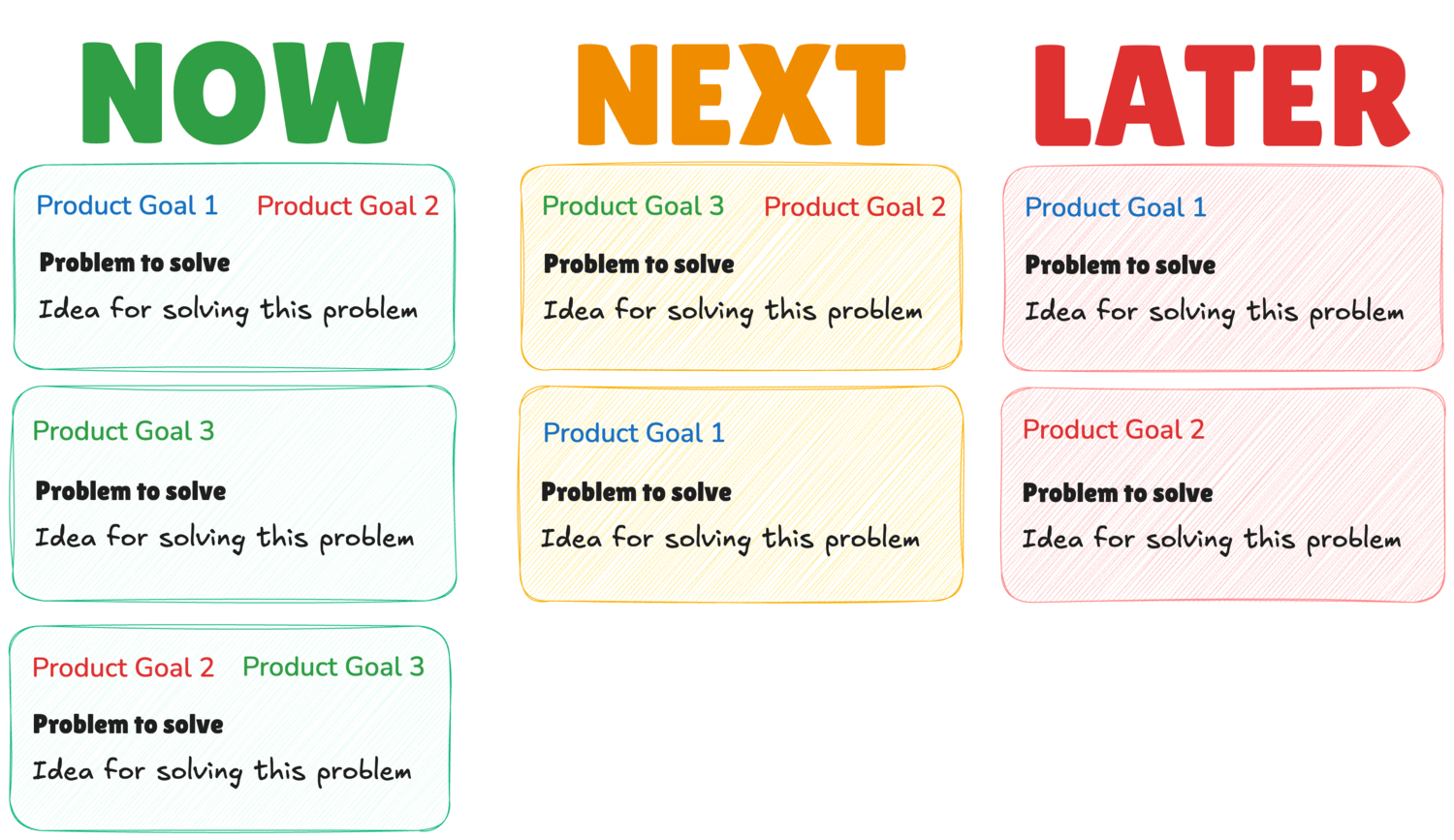
For instance, putting a feature in the 'Next' column signals to sales and marketing that it is prioritized but not yet under active development, preventing premature customer promises. Using a standardized template ensures that every department speaks the same language, which is essential when coordinating cross-functional launches across engineering, design, and product teams.
Custom agile boards for execution-heavy teams
High-velocity teams frequently find that static roadmap templates become obsolete the moment a sprint begins. These teams often abandon traditional document-based templates in favor of native integrations within tools like Jira or Linear.
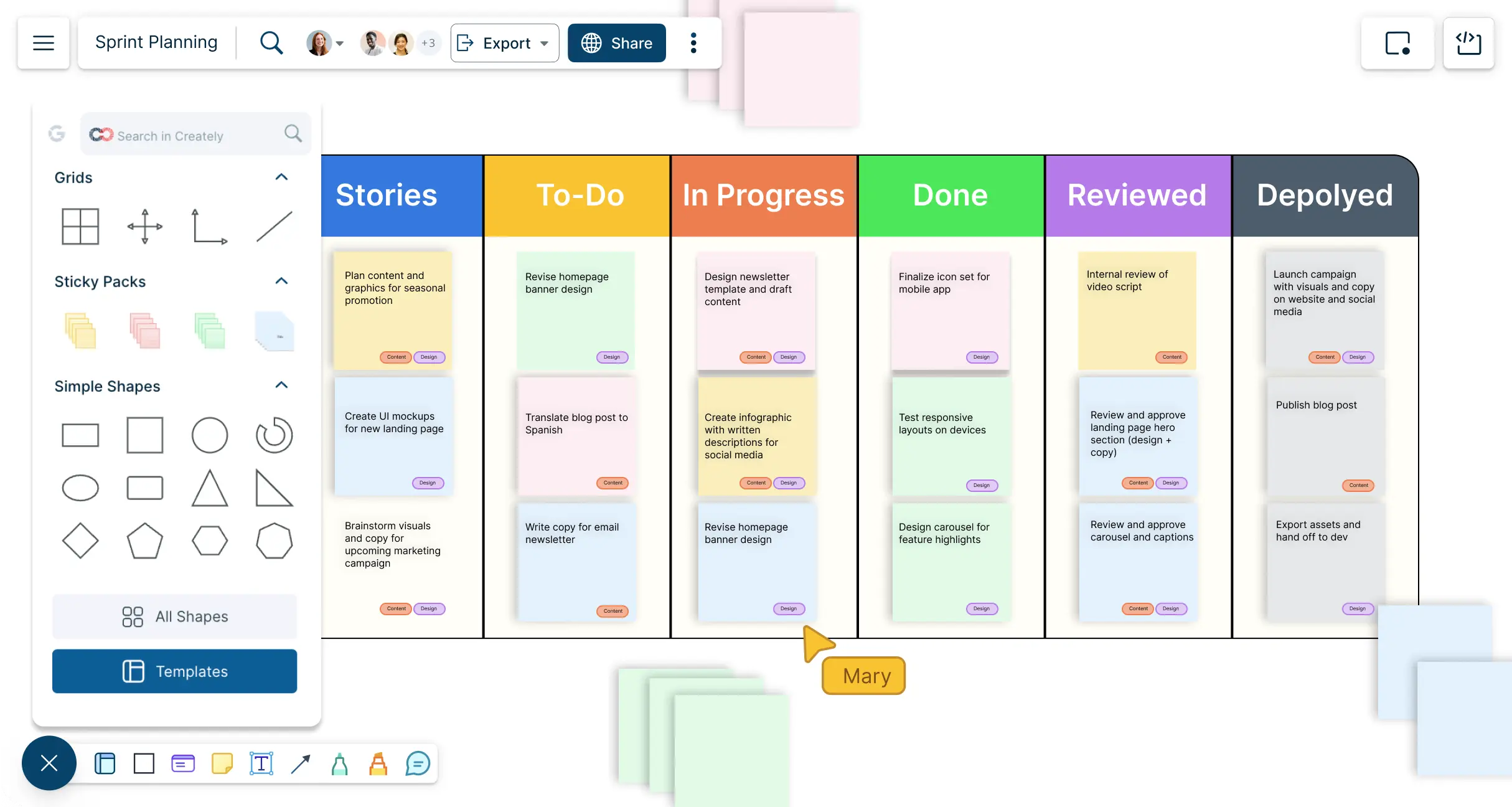
By linking roadmap epics directly to active sprint tickets, you eliminate the double-entry work required to keep a separate spreadsheet or slide deck updated. This integration provides real-time visibility into progress, allowing product managers to see exactly how a delay in a backend task impacts the broader roadmap timeline.
While this approach requires more initial configuration, it creates a single source of truth that reflects the actual state of development. Teams that prioritize execution speed over long-term forecasting benefit most from this automated, board-centric visibility, as it keeps the roadmap tethered to the reality of the engineering backlog.
Data-driven decision criteria for roadmap selection
Selecting a SaaS product roadmap template for agile teams requires balancing high-level strategy with granular execution. Instead of choosing based on aesthetic appeal, evaluate templates against your team's velocity metrics and current operational bottlenecks. A template that forces manual updates every sprint will inevitably become stale, rendering it useless for stakeholders.
Assessing team autonomy levels
The degree of top-down guidance required dictates the complexity of your roadmap structure. If your team operates with high autonomy, a template focused on outcome-based milestones—rather than specific feature deadlines—is superior. This approach allows engineers to solve problems in the most efficient way without being constrained by rigid, pre-defined implementation steps.
Conversely, if your team is in a scaling phase or lacks clear domain expertise, a template with structured, task-oriented columns is necessary to maintain momentum. Use a template that includes a 'discovery' phase column; this forces teams to validate assumptions before committing to a build, preventing the common pitfall of shipping features that do not move core KPIs.
Integrating roadmap tools with existing developer stacks
Technical overhead is the primary reason roadmap initiatives fail. A template that exists in a silo, such as a static spreadsheet, creates a 'double-entry' burden for developers. Every hour spent manually updating a roadmap to match the current state of a GitHub issue is an hour lost on actual development.
Prioritize templates that support bi-directional synchronization with your issue tracker. For teams using GitHub or GitLab, look for templates that map directly to epics or milestones. When a developer closes a pull request linked to a specific issue, the roadmap should automatically reflect progress.
If you are using Jira, ensure the template supports native 'Advanced Roadmaps' integration, which pulls live sprint data. Avoid templates that require third-party middleware like Zapier for basic status updates, as these connections are fragile and frequently break during API updates. The goal is to ensure the roadmap reflects reality without requiring a dedicated project manager to act as a human bridge between the code repository and the strategy document.
Common pitfalls in template implementation
Many teams fail when adopting a SaaS product roadmap template for agile teams because they confuse visual output with strategic alignment. A common mistake is selecting a template that emphasizes granular task tracking over high-level outcomes. When a roadmap becomes a glorified Gantt chart, the team loses the ability to pivot based on user feedback or market shifts. Instead of focusing on specific features, prioritize templates that group work by themes, objectives, or customer problems.

When refining your approach to RICE vs ICE scoring for SaaS prioritization, ensure your chosen framework supports these high-level objectives.
The danger of roadmap stagnation
Roadmaps often die because they are treated as static project plans rather than living communication tools. When a roadmap is locked into a fixed timeline, stakeholders expect rigid delivery dates, which contradicts the core principles of agile development.
To avoid this trap, implement a rolling wave planning approach. This method keeps the immediate quarter detailed while leaving future quarters as high-level goals that remain open to refinement.
Another frequent error is the 'set it and forget it' mentality. If your roadmap is not reviewed during every sprint planning session or monthly leadership sync, it ceases to be a source of truth. Use these specific tactics to maintain momentum:
- Automated Syncing: Use tools like Jira or Linear to pull live progress data directly into your roadmap view. This ensures that the roadmap reflects reality without manual updates.
- The 'Why' Filter: Every item on the roadmap must link to a specific business metric or user pain point. If you cannot articulate why a feature exists, remove it from the roadmap to prevent scope creep.
- Public vs. Private Views: Maintain two versions of your template. Use a simplified, outcome-based view for external stakeholders and a more detailed, dependency-focused view for internal engineering teams.
Finally, avoid the trap of over-customization. Teams often spend weeks tweaking columns and colors in tools like Notion or Productboard, losing sight of the actual strategy. Start with a standard, proven framework—such as the Now-Next-Later model—and only add complexity if your specific product lifecycle requires it. A roadmap should facilitate decision-making, not become a full-time administrative burden.
Frequently Asked Questions
When should agile teams use a static roadmap template?
Static templates, such as those built in Excel or static PDF slides, are best suited for long-term quarterly planning where high-level alignment with external stakeholders is the primary goal and frequent changes to the scope are discouraged. For those looking to refine their broader how to implement Jobs to be Done in SaaS, these static documents can serve as a baseline for communication.
What is the main advantage of a dynamic roadmap tool over a template?
Dynamic tools integrate directly with issue trackers like Jira or Linear, allowing the roadmap to update automatically as developers close tasks. This eliminates manual status updates and ensures the roadmap reflects the current reality of the sprint. If you are struggling with execution, you might also consider consulting with saas marketing agencies to ensure your product roadmap aligns with your growth objectives.

