
.webp)
.png)
To stay informed on the rapidly evolving landscape of artificial intelligence, software development, cybersecurity, and fintech, following reliable technology blogs is essential. This article presents the Top 10 technology blogs and publications to follow in 2026, offering insights for professionals, developers, marketers, founders, students, and technology enthusiasts. These selected sources help readers discover emerging trends, understand complex technologies, and identify opportunities before they become mainstream. Our list combines established technology publications, first-party blogs, and specialized platforms covering AI, software development, Web3, blockchain, and technology marketing.
Why Following Technology Blogs Still Matters in 2026
With AI tools becoming increasingly capable of summarizing information and answering questions, it may seem unnecessary to follow technology publications directly.
However, technology blogs continue to provide something that a simple AI-generated answer cannot always replace: continuous context.
Technology changes through a constant stream of product launches, research developments, funding announcements, security incidents, policy changes, and industry discussions. Following publications over time allows readers to see how those developments connect rather than viewing each event in isolation.
1. Stay Updated on Emerging Technology
Technology publications help readers identify new developments before they become widely adopted.
Artificial intelligence is a good example. Instead of only learning about AI after a new product becomes mainstream, readers who consistently follow technology publications can track research, product releases, infrastructure developments, AI adoption, and changing industry strategies.
This is particularly useful for professionals whose work is affected by technological changes.
2. Understand the Business Impact of Technology
Technology is no longer limited to engineering departments.
AI, cloud computing, automation, cybersecurity, fintech, and digital platforms influence marketing, finance, operations, human resources, customer service, and business strategy.
Publications such as TechCrunch, WIRED, and MIT Technology Review can help readers understand not only what technology does, but also how it affects businesses and society.
3. Learn From Real-World Technology Applications
First-party technology blogs can provide valuable insight into how companies actually build and operate technology.
For developers, engineering-focused publications can explain software architecture, AI-assisted development, security practices, and developer productivity. For business professionals, technology publications can reveal how companies apply new tools to solve practical problems.
Top 10 technology blogs and publications to follow in 2026
1. GitHub Blog
Best for: Developers, software engineers, AI coding, and open source
The GitHub Blog is one of the strongest technology blogs for anyone involved in software development.
As one of the most important platforms in the software development ecosystem, GitHub has direct insight into how developers build, collaborate, manage code, and adopt new development technologies.

Its content covers software engineering, GitHub Copilot, AI-assisted development, cybersecurity, open source, developer productivity, and new platform capabilities.
AI has become one of the blog's major themes. Recent content explores agentic workflows, Copilot, AI-powered development, security, and engineering practices.
This is particularly valuable because AI is changing how software developers approach coding. Instead of simply replacing individual coding tasks, AI tools are increasingly being incorporated into development workflows, code review, debugging, documentation, and project management.
GitHub's engineering team also shares how it operates its platform at massive scale. These articles provide readers with practical insight into the challenges of building and maintaining large technology systems.
Why follow GitHub Blog?
Strong developer-first content
Practical software engineering insights
Extensive AI and Copilot coverage
Open-source and security updates
Real-world engineering experience
If you are a developer or interested in how software development is changing, GitHub should be one of the first technology blogs on your reading list.
2. OpenAI News
Best for: Artificial intelligence, AI research, products, and emerging technology
The OpenAI News is an important first-party source for understanding the development of modern artificial intelligence.
OpenAI organizes its news into areas including Research, Product, Safety, Engineering, Security, AI Adoption, Applied AI, and Global Affairs.

This broad structure makes the publication useful for readers with different levels of technical knowledge.
Developers can follow research and engineering developments, while business professionals can explore AI adoption and applied AI. Readers interested in responsible AI can also follow safety and security research.
One advantage of a first-party source is that readers can access information directly from the organization developing the technology.
At the same time, first-party content should ideally be combined with independent reporting and analysis. Company blogs are excellent for understanding how an organization describes its own products and research, while independent publications can provide additional context and comparison.
Why follow OpenAI News?
First-party AI research
Product announcements
AI engineering insights
Safety and security research
AI adoption stories
For professionals working with artificial intelligence, following OpenAI alongside independent publications can provide a more complete view of the rapidly changing AI landscape.
3. WIRED
Best for: Technology, science, cybersecurity, business, and digital culture
WIRED is one of the most recognizable technology publications in the world.
Unlike highly specialized engineering blogs, WIRED takes a broad view of technology. Its coverage spans artificial intelligence, cybersecurity, science, business, climate, consumer technology, and digital culture.

One of its biggest strengths is connecting technical developments with their wider impact on society.
For example, readers may encounter coverage of AI agents, cybersecurity, robotics, data centers, and emerging technologies while also learning about the social, economic, and cultural implications of those developments.
This makes WIRED particularly useful for professionals who need technology awareness without necessarily requiring deep engineering knowledge.
Marketers, business leaders, founders, and students can use the publication to understand how emerging technology is being discussed beyond technical communities.
Why follow WIRED?
High-quality technology journalism
Strong long-form reporting
Technology and society analysis
Science and future-tech coverage
Accessible explanations of complex topics
4. CNET
Best for: Consumer technology, product reviews, AI, and technology guides
CNET is a long-standing technology publication focused heavily on products and consumer technology.
Its content covers smartphones, computers, software, AI, smart home devices, streaming services, and other technologies people use every day.

Instead of focusing exclusively on technical developments, the publication helps readers understand how technologies and products affect everyday decisions.
This makes it particularly useful for consumers researching products, comparing devices, learning about new software, or understanding how an emerging technology can be used in daily life.
CNET can also complement more technical publications. While a developer may turn to GitHub for engineering information, CNET can help explain how a technology eventually reaches consumers.
Why follow CNET?
Product reviews and comparisons
Consumer technology guides
Practical technology advice
AI and software coverage
Easy-to-understand explanations
CNET is particularly suitable for readers who want technology information that can be applied to everyday purchasing and technology decisions.
5. CMOIntern
Best for: Technology marketing, Web3, blockchain, and digital growth
CMOIntern takes a more specialized approach than mainstream technology publications.
Its content focuses on the intersection of marketing and emerging technology, with topics including Web3, blockchain, digital marketing, SEO, community building, AI, and career development.
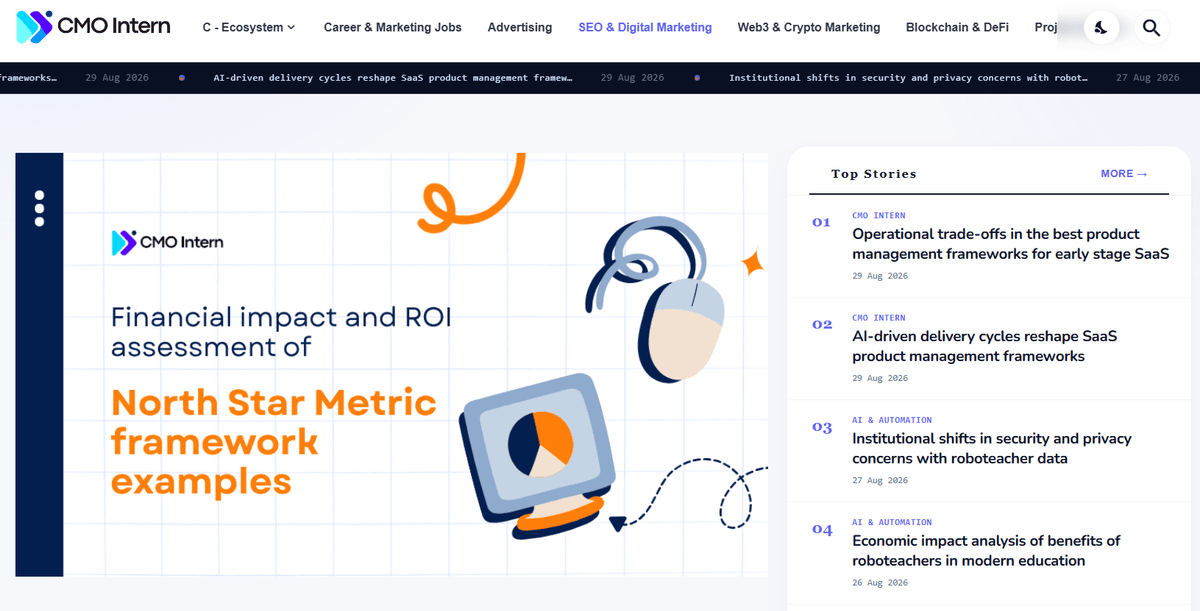
This makes CMOIntern particularly relevant for marketers working with technology companies or emerging industries.
Instead of focusing primarily on breaking technology news, CMOIntern provides practical content around marketing strategies, Web3 growth, community development, and technology-related career skills.
The platform is especially useful for readers who want to understand how emerging technologies change marketing itself.
As AI changes content creation and search, blockchain creates new communities and business models, and Web3 introduces new approaches to digital ownership, marketers increasingly need to understand both technology and marketing.
Why follow CMOIntern?
Web3 marketing insights
Blockchain-related content
Community growth topics
Emerging technology coverage
For marketers who want to understand how marketing is changing alongside Web3, AI, and blockchain, CMOIntern offers a more specialized perspective.
6. Coinstori
Best for: Blockchain, Web3, DeFi, and digital assets
Coinstori is a specialized technology publication focused on blockchain and Web3.
Its content explores areas such as digital assets, decentralized finance, tokenization, blockchain infrastructure, and emerging Web3 businesses.

The advantage of a specialized publication like Coinstori is that readers can focus on one rapidly evolving technology ecosystem rather than filtering blockchain stories from a much broader technology news feed.
This can be particularly valuable for professionals working directly in crypto, blockchain, fintech, or Web3.
Readers can also use specialized sources to develop a deeper understanding of industry terminology and recurring themes. Instead of encountering blockchain as an occasional technology story, they can follow developments across infrastructure, finance, applications, and business.
Why follow Coinstori?
- Blockchain industry coverage
- Web3 developments
- DeFi insights
- Digital asset topics
- Tokenization and infrastructure
- Emerging blockchain businesses
For professionals working in crypto, blockchain, Web3, and digital assets, Coinstori can be a useful source for following industry developments and emerging trends.
7. TechCrunch
Best for: Startups, venture capital, AI, and technology business
TechCrunch is one of the most influential technology publications for understanding the startup ecosystem.
Its coverage includes startups, venture capital, artificial intelligence, fintech, enterprise technology, hardware, and major technology companies.

Technology does not develop in isolation. Startups need capital, companies acquire competitors, founders launch new products, and investors make decisions based on emerging market opportunities.
TechCrunch provides readers with insight into these developments through coverage of funding rounds, acquisitions, product launches, and emerging companies.
For founders, this can provide visibility into competitors and potential market opportunities. For investors, it can provide signals about emerging technology sectors. For marketers, it can help identify companies and trends that may become important in the future.
Why follow TechCrunch?
- Startup ecosystem coverage
- Venture capital and funding news
- AI startup developments
- Technology business analysis
- Acquisition and investment news
- Emerging company discovery
TechCrunch is particularly valuable for readers who want to understand where technology meets business and investment.
8. The Verge
Best for: Consumer technology, AI, gadgets, and digital culture
The Verge combines technology journalism with product coverage, business reporting, and digital culture.
Its content covers artificial intelligence, smartphones, computers, social platforms, gaming, apps, consumer electronics, and major technology companies.

The publication is particularly useful for understanding how new technologies enter the mainstream.
Technology often moves from research and development into consumer products. The Verge helps readers follow that transition and understand how people actually interact with new products and platforms.
Its coverage also extends beyond hardware. AI, social media, online platforms, and digital culture are increasingly interconnected, making this broader perspective useful for readers who want to understand technology as part of everyday life.
Why follow The Verge?
- Consumer technology coverage
- AI developments
- Product launches
- Digital culture
- Social platform coverage
- Technology business news
For readers interested in the relationship between technology, products, and culture, The Verge provides a useful complement to more technical sources.
9. MIT Technology Review
Best for: Emerging technology, AI, science, and technology strategy
MIT Technology Review provides a more research-oriented perspective on technology.
Published by MIT, it focuses on emerging technologies and their potential economic, scientific, and social impact.
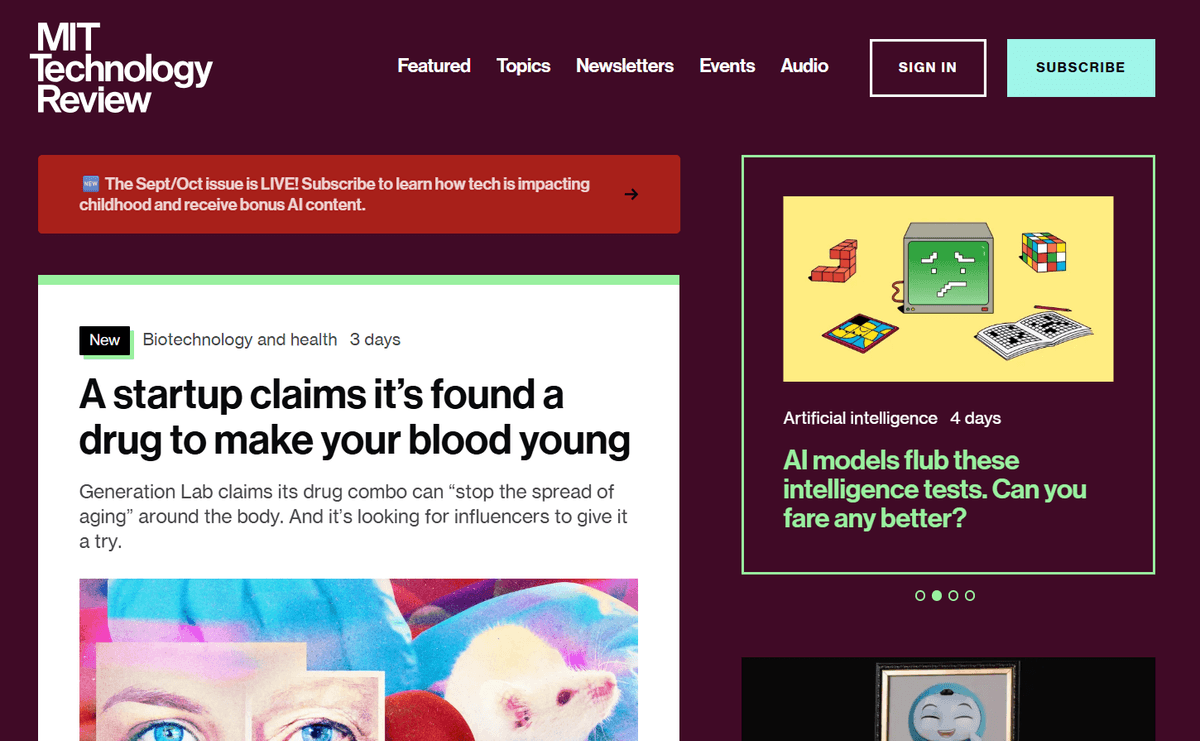
Its coverage of artificial intelligence is particularly useful for readers who want more context than a typical technology news article.
The publication also covers biotechnology, climate technology, computing, cybersecurity, and other fields that could influence the future of technology and business.
This makes MIT Technology Review especially useful for readers who want to think beyond current product announcements and understand where technology may be heading.
For business leaders and technology professionals, this type of analysis can help connect emerging research with potential commercial and societal implications.
Why follow MIT Technology Review?
- Emerging technology analysis
- AI research and trends
- Science and computing
- Cybersecurity
- Climate technology
- Technology strategy
- Long-term technology perspectives
If you want to understand not only today's technology but also the technologies that could shape tomorrow's economy, MIT Technology Review is an important source to include.
10. Fintech24h
Best for: Fintech, blockchain, AI, and Web3 business
Fintech24h focuses on the intersection of financial technology, blockchain, artificial intelligence, and digital growth. When a firm like technologies secures million in capital, this platform provides the necessary business context.
Its content is particularly relevant to businesses and professionals working in fintech and Web3.
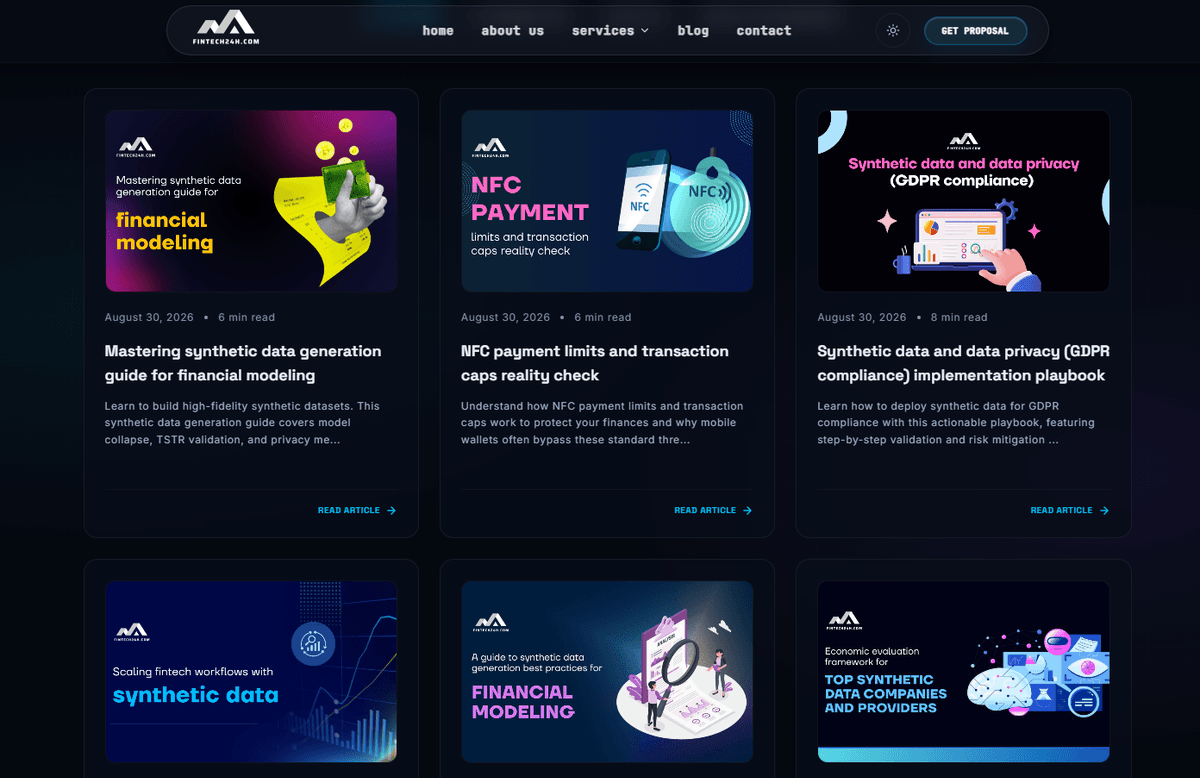
Topics include blockchain technology, digital assets, AI marketing, fintech infrastructure, community growth, and business development.
This positioning gives Fintech24h a different perspective from general technology publications. Rather than covering technology only as a news subject, the platform also examines how emerging technologies connect with business growth and market opportunities.
For fintech and blockchain professionals, this can be particularly useful because technology adoption often depends on more than technical development. Companies also need strong positioning, customer education, partnerships, marketing, and business development.
Why follow Fintech24h?
- Fintech industry insights
- Blockchain and digital assets
- AI and emerging technology
- Web3 business
- Marketing and growth
- Business development
- Technology industry analysis
For readers working at the intersection of finance, technology, and digital growth, Fintech24h provides a specialized perspective that complements broader technology publications.
Technology Blogs by what you want to learn
The best technology blog for you depends largely on your objective.
| Your Goal | Recommended Sources |
|---|---|
| Software development | GitHub Blog |
| AI research and products | OpenAI News, MIT Technology Review |
| AI and technology trends | WIRED, MIT Technology Review |
| Consumer technology | CNET, The Verge |
| Startup and venture capital | TechCrunch |
| Blockchain and Web3 | Coinstori, Fintech24h |
| Technology marketing | CMOIntern, Fintech24h |
| Digital assets and fintech | Fintech24h, Coinstori |
| Technology and society | WIRED, The Verge |
| Emerging technology | MIT Technology Review, WIRED |
Why First-Party and Independent Sources Should Be Combined
One of the most effective ways to stay informed is to combine first-party sources with independent publications.
First-party blogs such as GitHub and OpenAI can provide direct information from the organizations developing technologies.
However, independent publications such as WIRED, TechCrunch, The Verge, and MIT Technology Review can provide comparison, analysis, interviews, criticism, and broader context.
These two types of sources serve different purposes.
For example, a company announcement may explain what a new AI feature does. An independent technology publication may explore how competitors respond, what users think, and what the development means for the broader industry.
Using both perspectives helps readers avoid relying on a single narrative.
Frequently Asked Questions
1. What are the best technology blogs to follow in 2026?
Some of the best technology blogs and publications to follow in 2026 include GitHub, OpenAI, WIRED, CNET, CMOIntern, Coinstori, TechCrunch, The Verge, MIT Technology Review, and Fintech24h. Each offers a different perspective on AI, software, startups, consumer technology, Web3, blockchain, and fintech. For those seeking a tech comprehensive technology overview, these sources are essential.
2. What is the best technology blog for developers?
GitHub Blog is one of the best choices for developers because it focuses on software development, AI coding, open source, security, and developer productivity. OpenAI's engineering content is also useful for developers interested in AI.
3. What are the best blogs for AI news and insights?
OpenAI is a strong first-party source for AI research, products, engineering, and safety. MIT Technology Review and WIRED are useful for independent analysis and broader coverage of AI's impact on business and society.
4. What are the best Web3 and blockchain blogs?
Coinstori, CMOIntern, and Fintech24h are useful sources for Web3 and blockchain content. Coinstori focuses more heavily on blockchain and digital assets, while CMOIntern and Fintech24h provide additional perspectives on marketing, growth, and business.
5. Is CMOIntern a good technology blog to follow?
CMOIntern is particularly useful for professionals interested in the intersection of technology and marketing. Its focus on Web3, blockchain, AI, digital marketing, SEO, and community growth makes it a specialized resource for emerging technology professionals.
6. What is the best technology blog for startups?
TechCrunch is one of the strongest choices for startup news because it covers venture capital, funding, acquisitions, emerging companies, AI startups, and technology business trends.

