



The myth of universal blockchain security audit certification requirements
There is no global regulatory body or internationally recognized standard that dictates specific blockchain security audit certification requirements for smart contract developers. While many firms market their own internal training or proprietary badges, these are private industry initiatives rather than legally mandated benchmarks for project security.
Absence of centralized oversight
Unlike traditional finance where auditors must often hold CPA or CISA designations to practice, the blockchain space operates on a model of decentralized reputation. No government agency currently enforces a universal certification for security auditors. Consequently, the industry relies on a self-regulatory framework where firms establish credibility through public code reviews, white papers, and community trust rather than state-sanctioned credentials.
Distinguishing between professional credentials and project security
Possessing a professional certificate does not inherently guarantee that a smart contract is immune to exploits. Security in decentralized systems is a function of logic, edge-case analysis, and economic modeling, which often transcend the scope of standardized academic testing.
Auditor experience versus formal certification
Hands-on vulnerability research remains the primary indicator of an auditor's competence. A developer with a proven track record of identifying complex reentrancy bugs or flash loan vulnerabilities on mainnet protocols is generally more valuable than one holding a generic security certification. Practical experience involves understanding specific EVM opcodes, gas optimization trade-offs, and the nuances of cross-chain interoperability that formal certificates rarely cover.
Technical verification of audit quality
Since official certifications do not exist, project owners must rely on verifiable metrics to assess the depth of an audit. High-quality audits are defined by their transparency and the rigor of their testing methodology rather than the brand name of the auditing firm. If you are looking to hire professional blockchain development companies, focus on these transparent metrics.
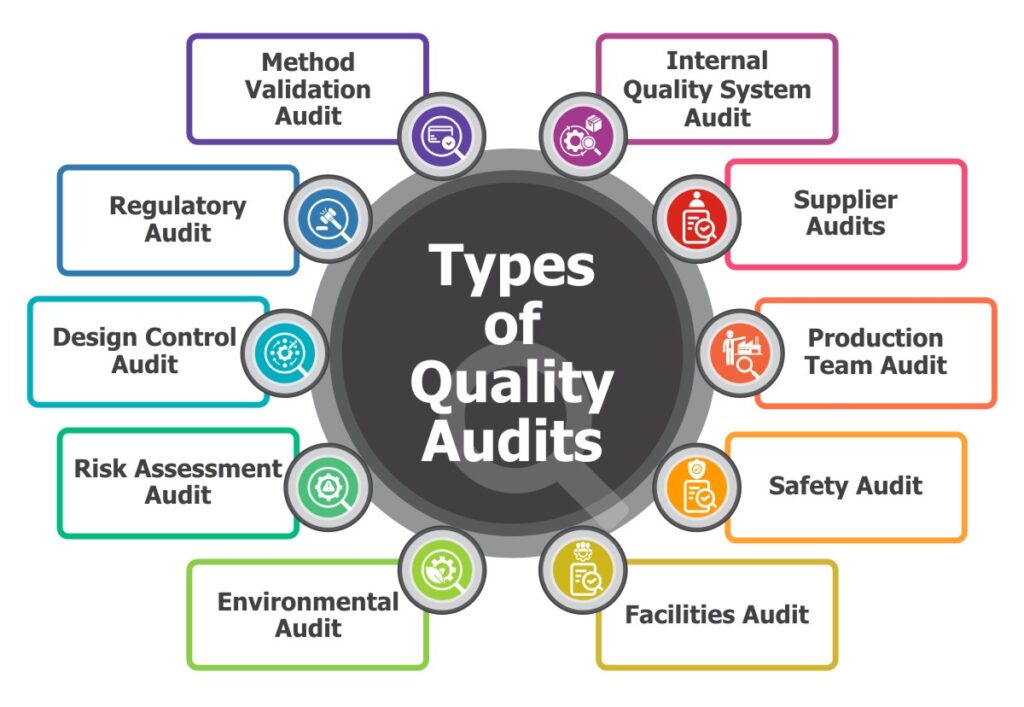
Methodology transparency as a proxy for certification
To evaluate an audit report, look for explicit documentation of the following:
- Test coverage: Percentage of code paths exercised by unit and integration tests.
- Formal verification: Mathematical proofs applied to critical contract logic to ensure state invariants hold true.
- Manual review depth: A detailed breakdown of how auditors manually inspected the business logic for economic vulnerabilities.
The role of tooling in audit rigor
Beyond manual review, top-tier firms utilize automated analysis tools to catch low-hanging fruit. Tools like Slither for static analysis, Echidna for property-based testing, and Foundry for fuzzing are industry standards. An audit report should explicitly state which tools were used and provide the output logs or summaries, allowing the project team to verify that the automated checks were actually performed.
The role of reputation in lieu of formal requirements
The market currently functions on a reputation-based system where a firm's historical performance is the most reliable metric. Public bug bounty history, such as data found on platforms like Immunefi, provides a real-world look at how a firm’s past audits have held up against actual malicious actors.
Evaluating firm history through past exploits
Investigating whether a firm’s previously audited projects have suffered from post-deployment exploits is essential. A firm that has consistently audited protocols that remain unhacked over long periods demonstrates a higher level of competence than one with a high volume of audits but frequent security incidents.
Strategic limitations of current audit standards
Even the most rigorous audit processes have inherent limitations that prevent them from being a catch-all solution for security. Institutional-grade security requires a multi-layered approach that goes beyond a single point-in-time audit, often involving transforming industries with blockchain to identify systemic risks.
Failure points of audit certifications in asset protection
Audits often fail when they focus strictly on code-level vulnerabilities while ignoring economic logic or governance risks. For example, a contract may be technically secure from a buffer overflow but remain vulnerable to a governance attack or a price oracle manipulation. Relying solely on an audit certificate can create a false sense of security that blinds teams to these higher-level architectural risks.
The necessity of continuous monitoring
Because code is immutable once deployed, an audit only captures the state of the contract at a specific block height. Post-deployment, teams should implement real-time monitoring solutions like Forta or OpenZeppelin Defender. These tools track on-chain transactions for suspicious patterns, providing a safety net that an audit report cannot offer once the contract is live.
Evaluating the depth of audit reports
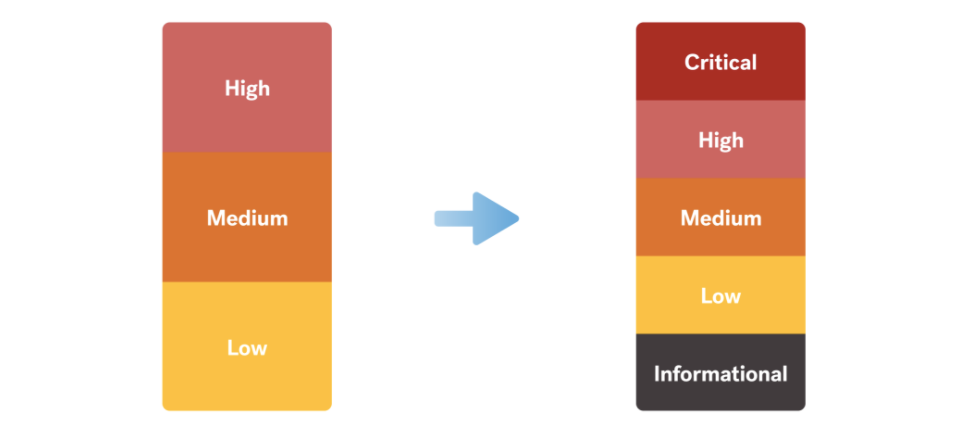
When reviewing potential audit partners, request a sample report from a project with similar complexity to your own. A high-quality report should not just list vulnerabilities but also provide a clear severity rating (Critical, High, Medium, Low, Informational) and a detailed remediation plan. If a firm provides a report that lacks a clear distinction between a minor gas optimization and a critical logic flaw, it indicates a lack of maturity in their assessment process.
The importance of re-audit documentation
A critical component of any audit engagement is the re-audit phase. Ensure the firm provides a final report that explicitly confirms which vulnerabilities were patched and which were acknowledged as accepted risks. This documentation is vital for transparency with your community and investors, as it proves that the development team took the audit findings seriously and acted upon them before deployment.
Frequently Asked Questions
Typical duration of a blockchain security audit
A typical audit takes between two to six weeks, depending on the complexity of the codebase, the number of smart contracts, and the depth of the requested review.
Distinction between security audits and bug bounties
An audit is a proactive, point-in-time review of code by experts, while a bug bounty is an ongoing, crowdsourced program that rewards independent researchers for finding vulnerabilities in live code.
Necessity of audits for all smart contracts
While not legally required, any smart contract handling user funds or sensitive data should undergo an audit to mitigate the risk of financial loss and reputational damage.
Handling vulnerabilities discovered during an audit
The auditor reports the issue to the development team, who then patches the code. The auditor subsequently performs a re-audit to verify that the fix is effective and does not introduce new bugs.
Legal status of blockchain audit reports
No, blockchain audits are not legally binding. They are technical assessments provided under service agreements that typically include liability limitations, meaning they do not guarantee the absolute security of the protocol.

