
.webp)
.png)
Understanding the impact of phishing 3.0 on businesses is critical for security leaders as attackers shift from mass-market spam to highly targeted, AI-driven social engineering. This evolution renders traditional perimeter defenses obsolete, necessitating a rigorous technical audit of modern email security stacks to prevent catastrophic data breaches and financial loss.
Core architectural requirements for modern email security
Modern email security demands a shift from perimeter-based filtering to internal, API-driven visibility. Traditional secure email gateways (SEGs) rely on MX record redirection, which creates a blind spot for internal-to-internal communication and post-delivery threats that bypass the gateway entirely. As companies expand their digital footprint, integrating social media for business communication channels into their security monitoring is becoming just as vital as securing email.
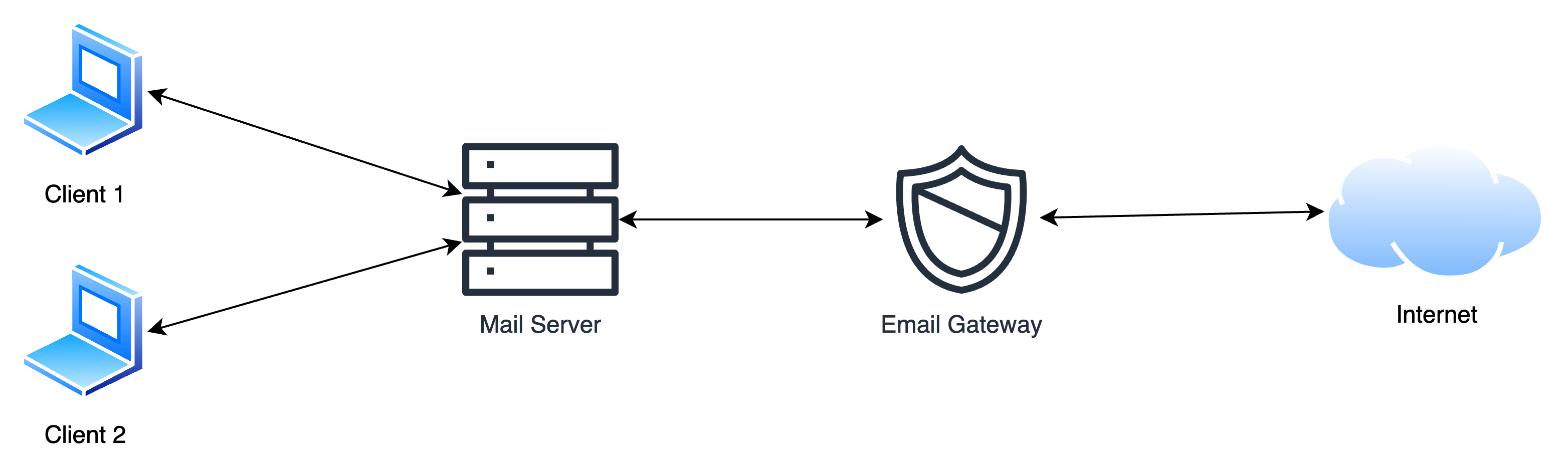
API-based detection versus legacy gateway filtering
Phishing 3.0 requires deep integration with cloud email environments like Microsoft 365 or Google Workspace via APIs. Unlike legacy gateways that inspect traffic before it reaches the inbox, API-based solutions continuously monitor the mailbox environment. This allows the system to retract malicious emails that were delivered as benign but later identified as part of a weaponized campaign.
- Legacy Gateways: Rely on MX redirection; blind to internal-to-internal traffic; static reputation-based.
- Phishing 3.0 Solutions: API-native; full visibility into internal mail; behavioral and AI-driven analysis.
- Remediation: Legacy requires manual intervention; Phishing 3.0 supports automated, zero-touch retraction.
Evaluating behavioral analysis engines
Effective detection in the era of AI-driven social engineering relies on behavioral baselining rather than static reputation lists. A robust engine must analyze communication patterns, such as typical sender-recipient relationships, linguistic style, and metadata anomalies, to identify impersonation attempts that lack traditional malicious payloads like suspicious URLs or attachments. Organizations looking to optimize their operations should also explore the best AI agents for business use cases to automate these complex security workflows.
Benchmarking natural language processing accuracy
To measure the effectiveness of an NLP engine, organizations should conduct a 30-day pilot focusing on the false positive rate (FPR) in internal business communication. A high-performing system should maintain an FPR below 0.05% for legitimate business correspondence. Metrics should track the engine's ability to distinguish between urgent business requests and synthetic, AI-generated phishing attempts.
Analyzing linguistic drift in AI attacks
Advanced attackers now use Large Language Models (LLMs) to mimic the specific tone and vocabulary of internal executives. During your audit, verify if the security tool performs 'stylometric analysis'—a technique that compares the writing style of an incoming email against a historical baseline of the purported sender. If the syntax, punctuation, or common phrasing deviates from the established baseline, the system should flag the message for manual review or quarantine, even if the sender's email address appears legitimate.
Integration capabilities with identity and access management
The impact of phishing 3.0 on businesses is mitigated when security signals trigger automated identity remediation. Linking email security platforms with IAM solutions like Okta or Azure AD allows for immediate account suspension or forced password resets when a user interacts with a confirmed phishing attempt.
Automated incident response workflows
Zero-touch remediation requires predefined playbooks that execute based on high-confidence alerts. Criteria for these workflows include the automated revocation of OAuth tokens, session termination, and the immediate quarantine of all emails sent from a compromised account to prevent lateral movement within the organization.
Assessing the impact of phishing 3.0 on businesses through vendor transparency
Vendor vetting must move beyond marketing claims to verify the provenance of threat intelligence. A transparent vendor provides clear documentation on how they aggregate signals from global mail flows, dark web monitoring, and sandboxed detonation environments. For those exploring new revenue streams, understanding the move earn business model is essential, just as understanding threat intelligence is for security.
Verification of threat intelligence provenance
Audit the vendor's data sources by requesting a breakdown of their threat feed composition. Ensure the intelligence is relevant to your specific industry sector, as generic feeds often fail to capture the highly targeted business email compromise (BEC) tactics prevalent in specialized fields like finance or legal services. Organizations should also consider regulatory compliance for phishing prevention to ensure their security posture aligns with industry standards.

Scalability and latency considerations
Real-time scanning must not introduce perceptible delays in mail delivery, as latency directly impacts user productivity. High-volume environments require architectures that process messages asynchronously or via high-throughput API hooks that do not block the SMTP delivery path. When scaling, it is also vital to understand why chatbots fail in business to avoid similar pitfalls in your automated security deployments.
Measuring impact on mail delivery performance
Establish a latency threshold of under 500 milliseconds for message processing. During vendor evaluation, test delivery times for large batches of internal emails to ensure the security layer does not create a bottleneck during peak communication hours.
Strategic checklist for security audits
When assessing your organization's resilience, ensure your technical audit covers these specific operational areas:
- Internal Traffic Visibility: Does the solution scan emails sent between internal employees?
- AI/NLP Baseline: How long does the system take to learn your organization's unique communication style?
- API Rate Limits: Does the vendor have documented throughput limits that could impact mail flow?
- Remediation Speed: What is the average time from alert to automated mailbox retraction?
- IAM Integration: Can the platform trigger a forced password reset in your specific IAM provider?
Frequently Asked Questions
Definition of phishing 3.0
Phishing 3.0 refers to advanced, AI-driven email attacks that bypass traditional secure email gateways by using internal-to-internal communication and sophisticated social engineering that lacks traditional malicious payloads.
Timeline of phishing 3.0 emergence
The term gained prominence around 2022-2023 as organizations migrated heavily to cloud-native email environments, exposing the limitations of legacy perimeter-based security.
Prevalence of modern phishing attacks
Phishing remains the primary vector for cyberattacks, accounting for over 90% of successful data breaches according to major industry threat reports.
Risk profile of phishing threats
Yes, phishing is highly dangerous as it serves as the entry point for ransomware, credential theft, and financial fraud, often resulting in significant monetary and reputational loss.
Frequency of phishing email campaigns
Billions of phishing emails are sent daily, with modern campaigns increasingly utilizing generative AI to create highly personalized and convincing messages.
Common characteristics of phishing emails
The most common types include fake invoice notifications, urgent account verification requests, and CEO impersonation (Business Email Compromise) aimed at wire transfer fraud.

