


Verification of legal alignment and jurisdictional scope
An EU-US regulatory cooperation agreements summary must begin by mapping the specific legal mandates that authorize cross-border oversight. Unlike binding international treaties, these agreements often function as memoranda of understanding or administrative arrangements that rely on the existing domestic authorities of the European Commission and agencies like the U.S. Food and Drug Administration (FDA) or the Securities and Exchange Commission (SEC).
The primary objective is to verify whether the agreement creates a binding obligation or merely a framework for voluntary information exchange. This distinction dictates the level of legal recourse available when regulatory friction occurs.
Jurisdictional scope is defined by the specific sectors covered, such as pharmaceutical good manufacturing practices (GMP), financial services, or data privacy under the EU-US Data Privacy Framework. Practitioners must evaluate the geographic and institutional boundaries of these agreements to determine if they apply to all member states or if specific national regulators retain veto power over cross-border regulatory harmonization.
Identifying sector-specific regulatory equivalence
Distinguishing between broad framework agreements and narrow technical equivalence protocols is essential for operational compliance. Broad frameworks, such as the EU-US Trade and Technology Council (TTC) initiatives, provide high-level political alignment but rarely offer immediate relief from duplicative testing or certification requirements.
In contrast, technical equivalence protocols—such as the 2017 agreement on pharmaceutical inspections—allow regulators to rely on each other’s inspection reports, effectively eliminating the need for redundant site audits.
To assess these protocols, firms should analyze the following criteria:
- Mutual Recognition Agreements (MRAs): Determine if the agreement allows for the automatic acceptance of conformity assessments performed in the other jurisdiction.
- Equivalence Thresholds: Identify the specific standards (e.g., ISO, ASTM, or internal agency guidelines) that both parties have agreed to treat as functionally identical.
- Dispute Resolution Mechanisms: Clarify whether the agreement includes a formal committee structure to resolve technical disagreements, or if it relies on ad-hoc diplomatic intervention.
By categorizing an agreement as either a strategic framework or a technical equivalence protocol, stakeholders can accurately forecast the reduction in administrative burden and identify which regulatory hurdles remain unaffected by the cooperation.
Assessment of data exchange and privacy compliance
Effective regulatory alignment hinges on the technical and legal mechanisms governing cross-border data flows. When analyzing an EU-US regulatory cooperation agreements summary, the primary risk involves the divergence between the EU’s General Data Protection Regulation (GDPR) and the fragmented US sectoral privacy landscape.
Organizations must evaluate whether the agreement provides a clear legal basis for data transfers or if it merely functions as a high-level memorandum of understanding lacking enforceable privacy protections. As firms navigate these complex requirements, they should also prioritize regulatory sandbox impact on consumer protection to ensure that data exchange channels remain secure against external threats.
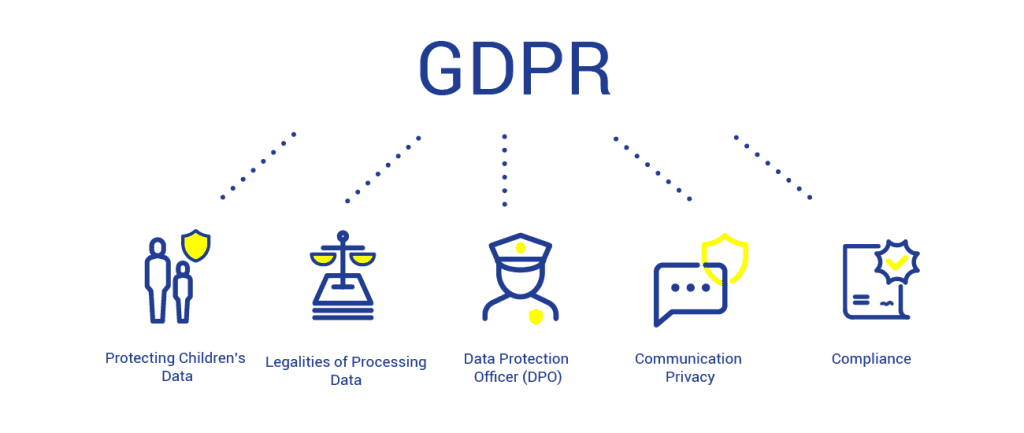
Mapping data protection safeguards
A rigorous audit of any cooperation agreement requires verifying explicit references to the EU-US Data Privacy Framework (DPF). Since the invalidation of previous frameworks like Privacy Shield, the DPF serves as the current bedrock for commercial data transfers. Your assessment should confirm if the agreement mandates:
- Binding arbitration: Provisions for redress mechanisms that allow EU citizens to challenge data handling by US intelligence agencies.
- Necessity and proportionality: Explicit language limiting US surveillance activities to what is strictly necessary to protect national security, aligning with European Court of Justice standards.
- Independent oversight: The establishment of a Data Protection Review Court (DPRC) or similar independent body to handle complaints.
Beyond the DPF, examine if the agreement addresses the transfer of metadata and non-personal data. Many regulatory frameworks focus heavily on PII (Personally Identifiable Information) while leaving technical metadata exposed.
If the agreement lacks a specific annex detailing technical safeguards—such as end-to-end encryption requirements or data localization mandates—it creates a compliance vacuum. For firms operating in highly regulated sectors like finance or healthcare, the absence of these specific safeguards often necessitates the implementation of additional Standard Contractual Clauses (SCCs) or Transfer Impact Assessments (TIAs) to mitigate legal exposure.
Always verify if the agreement includes a regulatory sandbox exit strategies clause or a mandatory review period, as these ensure that privacy protections remain current against evolving judicial rulings in the Court of Justice of the European Union.
Evaluating the EU-US regulatory cooperation agreements summary for operational impact
Operationalizing transatlantic regulatory alignment requires moving beyond high-level diplomatic rhetoric to identify specific technical requirements. Companies must map their internal compliance workflows against the specific sectors covered by the EU-US regulatory cooperation agreements summary.
This involves identifying where mutual recognition of conformity assessment procedures applies, particularly in sectors like pharmaceuticals, medical devices, and automotive safety standards. Organizations looking to foster growth in these areas should also explore regulatory sandbox for insurtech to test new compliance solutions in a controlled environment.
Distinguishing between political intent and binding obligations
A critical failure point for many compliance teams is treating non-binding memoranda of understanding (MoUs) as enforceable legal mandates. While these documents signal political alignment, they often lack the legal mechanisms required to override domestic regulatory requirements. Binding obligations, by contrast, are typically found in formal treaties or specific sectoral agreements that mandate the acceptance of foreign test results or certification processes.
For instance, under the 1998 EU-US Mutual Recognition Agreement (MRA), specific conformity assessment bodies are authorized to certify products for both markets. This is a binding operational framework. Conversely, many newer cooperation dialogues function as information-sharing forums. These forums reduce the risk of future regulatory divergence but do not provide an immediate legal basis for bypassing existing import inspections or labeling requirements.
When auditing your supply chain, verify whether a specific agreement provides a 'deemed to comply' status or merely a 'notification of intent' to harmonize future rules. To assess impact, categorize your regulatory touchpoints into three tiers:
- Binding Mutual Recognition: Direct acceptance of testing or certification, reducing redundant compliance costs.
- Regulatory Dialogues: Platforms for early warning on upcoming legislative changes, useful for long-term strategic planning.
- Non-binding Cooperation: Informal exchanges that provide insight into policy direction but offer no immediate relief from current enforcement actions.
By isolating these categories, your legal and operations teams can avoid allocating resources to 'cooperation' initiatives that do not actually lower the barrier to market entry. Focus your efforts on the binding sectors where the EU and US have codified equivalence, as these offer the only genuine reduction in administrative overhead.
Frequently Asked Questions
Are all EU-US regulatory cooperation agreements legally binding? No, many function as non-binding memoranda of understanding that facilitate dialogue rather than creating enforceable legal obligations. Always check if the agreement contains specific provisions for mutual recognition or if it is limited to information exchange.
How do I determine if my sector benefits from an MRA? Review the official list of sectors covered by the 1998 EU-US Mutual Recognition Agreement, which includes specific areas like telecommunications equipment, medical devices, and pharmaceutical GMP. If your product category is not explicitly listed, the agreement likely does not provide automatic conformity assessment acceptance.
What is the role of the EU-US Data Privacy Framework in these agreements? The DPF provides the legal mechanism for commercial data transfers between the EU and US, addressing concerns raised by the invalidation of previous frameworks. It is essential for ensuring that data flows remain compliant with GDPR requirements during regulatory cooperation activities.

