
.webp)
.png)
Limitations of AI in infrastructure management: Can devops engineer be replaced by ai
AI cannot fully replace a DevOps engineer because it lacks the holistic system understanding required to manage complex, non-deterministic production environments. While large language models excel at generating boilerplate code, they fail to grasp the nuanced dependencies between legacy monolithic systems and modern microservices, often proposing architectural changes that violate organizational compliance or operational constraints.
Contextual awareness and system architecture
AI models are trained on static datasets, meaning they lack real-time visibility into the idiosyncratic 'tribal knowledge' of a specific company's infrastructure. For instance, an AI might suggest an automated scaling policy for a Kubernetes cluster that ignores the specific latency requirements of a legacy database connection, leading to cascading failures. Human engineers provide the necessary context to weigh trade-offs between cost, performance, and reliability that AI agents currently cannot synthesize.
The requirement for human accountability
Infrastructure changes often carry significant legal and financial risks, particularly in regulated industries like finance or healthcare. When an automated pipeline pushes a configuration change that causes a global outage, an AI cannot be held accountable for the resulting downtime or data loss. Human oversight is mandatory to sign off on high-impact changes, ensuring that automated actions align with the business's risk appetite and regulatory obligations.
How AI tools are changing the devops engineer role
The role is shifting from manual configuration to managing AI-driven automation pipelines, where the engineer acts as an architect and auditor rather than a script writer. This transition focuses on high-level orchestration rather than tactical execution.
Automated incident response and root cause analysis
Tools like PagerDuty Runbook Automation and Datadog Bits AI are transforming how teams handle outages. Instead of manually parsing logs, engineers now use these tools to surface potential root causes in seconds. The engineer's value lies in validating the AI's findings and deciding whether the suggested remediation is safe to execute in a live environment.
Infrastructure as Code generation and optimization
Engineers are increasingly using GitHub Copilot and Terraform-specific assistants to generate boilerplate code, such as standard VPC setups or IAM policies. By offloading the repetitive syntax work to AI, engineers can dedicate more time to security hardening and optimizing the underlying architecture for scalability, rather than debugging indentation errors in HCL files.
Critical skills for the AI-augmented devops engineer
To remain relevant, engineers must pivot toward skills that AI cannot replicate, specifically those involving high-level strategy and governance.
System design and architectural oversight
AI can suggest a module, but it cannot design a resilient, multi-region architecture that survives a cloud provider outage. Engineers must master system design, focusing on failure domains, disaster recovery planning, and cost-efficiency at scale. This strategic oversight ensures that the infrastructure supports business goals rather than just technical requirements.
Security and compliance governance
As AI generates more infrastructure code, the risk of 'hallucinated' security misconfigurations increases. Engineers must act as the final gatekeeper, performing rigorous security audits on AI-generated policies. Understanding how to implement Zero Trust architecture and automated compliance checks is essential for maintaining a secure posture in an AI-integrated workflow.
Operational trade-offs of full automation
Over-reliance on AI agents in production environments introduces the risk of 'automation bias,' where engineers blindly trust AI suggestions without verification. This can lead to silent failures where an AI optimizes for a single metric, such as CPU usage, while inadvertently degrading user experience or increasing long-term technical debt. A balanced approach requires maintaining human-in-the-loop workflows for all critical infrastructure changes to ensure operational stability.
The hidden cost of AI-driven technical debt
Relying on AI to generate complex CI/CD pipelines often results in 'black box' automation. When an AI writes a custom script to handle deployment logic, future engineers may struggle to debug or modify that code if they do not understand the underlying logic. Maintaining documentation and enforcing strict code review standards for all AI-generated output is a critical responsibility that prevents long-term maintenance nightmares.
Managing the AI-Infrastructure lifecycle
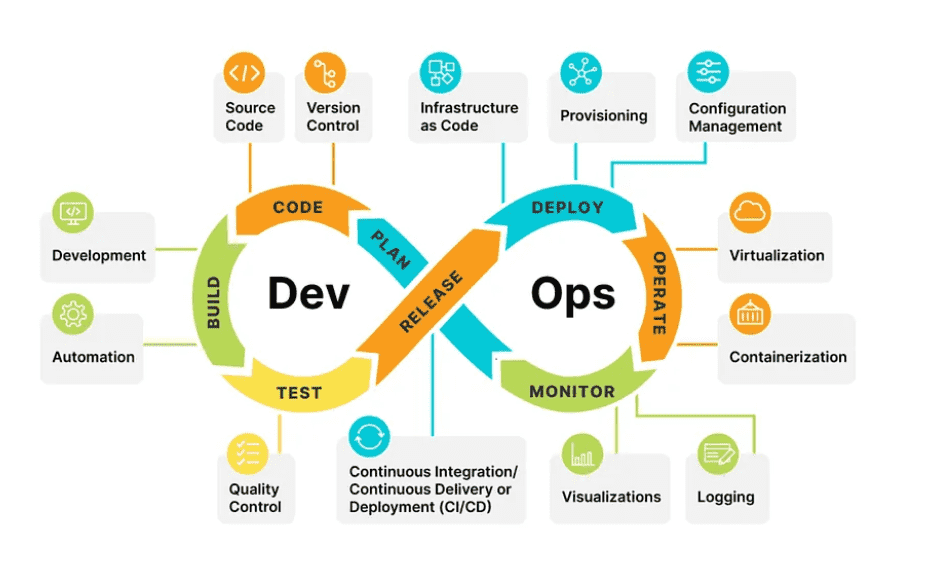
Beyond initial deployment, engineers must manage the lifecycle of AI-generated infrastructure. This includes versioning AI-suggested configurations, monitoring for 'drift' where the environment deviates from the intended state, and periodically auditing the AI's logic against evolving business requirements. Treating AI output as 'untrusted code' that requires the same rigorous testing as human-written scripts is the hallmark of a mature DevOps practice.
Frequently Asked Questions
Python requirements for DevOps engineers
Yes, Python is essential for writing automation scripts, interacting with cloud APIs, and building custom tooling to bridge gaps between different infrastructure components.
Learning curve for software developers transitioning to DevOps
DevOps has a steep learning curve for developers because it requires shifting focus from application logic to infrastructure, networking, security, and distributed system reliability.
Distinctions between DevOps and SRE roles
DevOps is a cultural philosophy focused on breaking silos between development and operations, while Site Reliability Engineering (SRE) is a specific implementation of that philosophy using software engineering principles to solve operational problems.
Job security for DevOps professionals in the age of automation
DevOps jobs are safe, but the nature of the work is changing. AI automates repetitive tasks, meaning engineers must focus more on system architecture, security, and strategic decision-making.
Recommended DevOps certifications for 2026
The Certified Kubernetes Administrator (CKA), AWS Certified DevOps Engineer – Professional, and HashiCorp Certified: Terraform Associate remain the industry benchmarks.
Core operational principles of DevOps
DevOps works by integrating development and operations teams through shared tools, automated CI/CD pipelines, and a culture of continuous improvement to deliver software faster and more reliably.

