
.webp)
.png)
Data controller and processor role definitions: Decentralized identity and GDPR compliance
In the context of decentralized identity and GDPR compliance, the primary challenge lies in identifying who determines the purposes and means of processing personal data. Under Article 4 of the GDPR, a data controller is the entity that decides why and how data is processed, while a processor acts solely on behalf of the controller.
In traditional centralized systems, this distinction is clear. However, decentralized identity (DID) architectures often distribute these roles across multiple participants, including issuers, verifiers, and the users themselves who hold their own credentials. Understanding the nuances of decentralized identity vs traditional identity management is essential for mapping these legal responsibilities accurately.
Mapping node operator responsibilities
Determining if network participants qualify as joint controllers under EU law requires a granular assessment of their technical and operational influence. If a node operator maintains a ledger that records decentralized identifiers (DIDs) or verifiable credentials, they may be classified as a joint controller if they participate in the decision-making process regarding the data's lifecycle.

The European Data Protection Board (EDPB) notes that joint controllership exists when entities jointly determine the purposes and means of processing, even if they do not have equal access to the data. For instance, if a consortium of companies operates a distributed ledger to validate identity claims, each member likely qualifies as a joint controller. This status triggers specific obligations under Article 26 of the GDPR, requiring participants to establish a transparent arrangement that defines their respective responsibilities for compliance, particularly regarding the exercise of data subject rights.
If a node operator merely provides infrastructure—such as cloud storage or server hosting—without influencing the data content or the purpose of the identity verification, they are more likely to be classified as a processor. Organizations must document these roles in a Data Protection Impact Assessment (DPIA) to mitigate the risk of regulatory non-compliance during audits.
Technical mechanisms for the right to erasure
Achieving decentralized identity and GDPR compliance requires reconciling the immutability of distributed ledgers with the "Right to be Forgotten" (Article 17). Because blockchain records are permanent, storing personal data directly on-chain creates a direct conflict with GDPR mandates.
Organizations must decouple identity metadata from the core ledger to ensure that user data can be effectively deleted or anonymized upon request. For those planning their infrastructure, reviewing a Decentralized Identity Implementation Guide can provide clarity on managing these data lifecycles.
Off-chain storage patterns for ledger integrity
The most effective architecture involves storing PII (Personally Identifiable Information) in off-chain databases, such as IPFS or private cloud environments, while keeping only a cryptographic reference on the blockchain. By storing a hash of the data on the ledger, the system maintains a verifiable link to the identity without exposing the actual sensitive information.
When a user exercises their right to erasure, the controller deletes the off-chain data. The remaining hash on the blockchain becomes a "broken link" or a pointer to non-existent data, rendering the ledger entry useless for re-identification. This method preserves the auditability of the transaction history while ensuring that the underlying PII is permanently removed from accessible storage.
Cryptographic shredding implementation for data inaccessibility
When data must be stored in distributed systems where physical deletion is technically impossible, cryptographic shredding serves as a compliant alternative. This process involves encrypting sensitive data with a unique, user-specific key before it is committed to storage. The identity provider maintains a registry of these keys, strictly separated from the encrypted data blobs.
To fulfill an erasure request, the system permanently destroys the specific decryption key associated with that user. Without the key, the encrypted data becomes computationally infeasible to decrypt, effectively meeting the GDPR standard for permanent erasure.
This approach is particularly useful for decentralized identity systems that utilize peer-to-peer storage networks where the controller lacks granular control over every individual node. By focusing on key management rather than physical data destruction, organizations can guarantee that even if the encrypted data persists on the network, it remains inaccessible and useless to unauthorized parties, satisfying the legal requirements for data deletion.
Data minimization through zero-knowledge proofs
Zero-knowledge proofs (ZKPs) serve as the technical foundation for achieving decentralized identity and GDPR compliance. By utilizing cryptographic protocols like zk-SNARKs or CL-signatures, a user can prove they possess a specific attribute—such as being over the age of 18 or holding a valid professional license—without revealing the underlying raw data. This technology is also crucial for the development of secure decentralized applications.
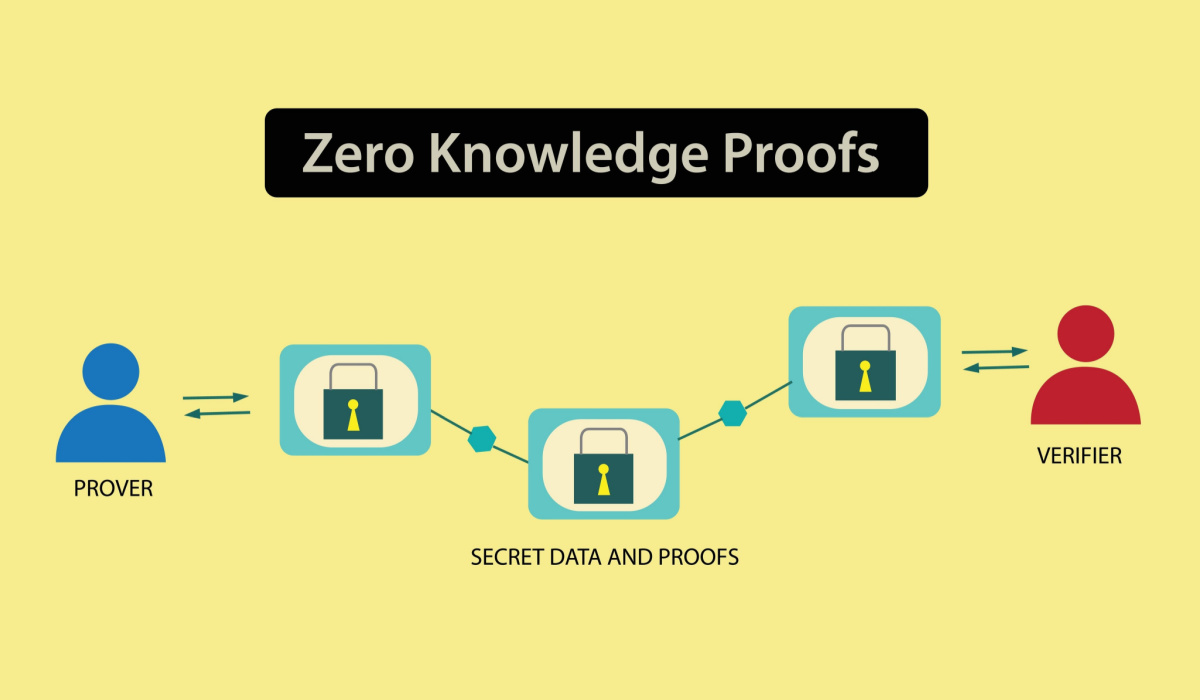
This mechanism directly addresses the GDPR principle of data minimization, which mandates that organizations process only the information strictly necessary for a specific purpose. When selecting tools for this, evaluating the best decentralized identity software development kits is a critical step for developers.
Selective disclosure workflows for relying parties
Selective disclosure allows identity holders to curate the information presented to a relying party during a verification request. Instead of sharing a full digital credential containing a date of birth, address, and legal name, the user generates a specific proof that validates only the required claim. This workflow operates through a three-step process:
- Credential Issuance: An issuer signs a verifiable credential containing multiple claims, which the holder stores in their digital wallet.
- Proof Generation: When a relying party requests verification, the wallet software constructs a ZKP. This proof mathematically confirms the validity of the credential without exposing the data fields not requested by the verifier.
- Verification: The relying party validates the cryptographic proof against the issuer’s public key. The verifier receives a binary 'true/false' result rather than the sensitive personal data itself.
This approach shifts the burden of data protection. Because the relying party never stores the raw identity attributes, the scope of their GDPR compliance obligations is significantly reduced. They are no longer 'data controllers' for the sensitive information they would have otherwise collected.
By moving from a model of 'data collection' to 'proof verification,' organizations mitigate the risk of data breaches and minimize the impact of potential regulatory audits. This architecture ensures that the user maintains sovereignty over their identity while the relying party fulfills their legal duty to limit data processing to the absolute minimum required for service delivery.
Cross-border data transfer safeguards
Managing decentralized identity and GDPR compliance requires a strict adherence to the General Data Protection Regulation's Chapter V, which governs the transfer of personal data to third countries. In a decentralized architecture, data is often distributed across nodes globally.
This creates a regulatory friction point: if a verifiable credential contains personal data, its propagation across a peer-to-peer network constitutes a data transfer that must meet adequacy requirements or implement appropriate safeguards.
Standard contractual clauses in decentralized protocols
Applying legal frameworks to peer-to-peer data exchange is inherently difficult because decentralized networks often lack a central data controller to sign Standard Contractual Clauses (SCCs). To mitigate this, organizations must shift their compliance strategy toward data minimization and off-chain storage.
By storing only cryptographic hashes or pointers on the ledger, the decentralized identifier (DID) itself does not necessarily constitute personal data under the GDPR, provided the underlying data remains in a jurisdiction compliant with the user's rights.
When implementing these protocols, developers should prioritize the following technical safeguards to satisfy cross-border requirements:
- Zero-Knowledge Proofs (ZKPs): Use ZKPs to verify attributes without exposing the underlying personal data. This prevents the transfer of raw PII across borders, as the verifier only receives a cryptographic confirmation rather than the data itself.
- Regional Node Pinning: Configure decentralized nodes to operate within specific geographic regions. By restricting the propagation of data shards to nodes located within the European Economic Area (EEA), organizations can maintain data residency compliance.
- Encrypted Off-Chain Storage: Utilize decentralized storage solutions like IPFS or private cloud buckets where data is encrypted with keys held exclusively by the data subject. Since the controller does not have access to the cleartext data, the transfer of encrypted blobs is often viewed more favorably under current regulatory interpretations.
Organizations must also conduct a Transfer Impact Assessment (TIA) for any decentralized identity implementation. This assessment evaluates whether the destination country provides a level of protection essentially equivalent to that guaranteed within the EU. If the decentralized protocol utilizes public, permissionless ledgers, the inability to "delete" data—due to the immutable nature of blockchain—must be addressed through technical "right to be forgotten" workarounds, such as key revocation or the deletion of off-chain metadata that renders the on-chain hash permanently unreadable.
Auditability and transparency requirements
Achieving decentralized identity and GDPR compliance requires a shift from centralized database auditing to verifiable, cryptographic proof of data processing. Under GDPR, organizations must demonstrate that they have obtained valid consent and that data subjects can exercise their rights, such as the right to erasure.
In a decentralized architecture, this is accomplished by separating the identity metadata from the actual personal data, ensuring that the ledger contains only non-sensitive pointers or cryptographic hashes. For enterprises looking to scale these solutions, understanding how to build a decentralized identity system for enterprise is vital for long-term compliance.
Immutable logs for consent management
Tracking user consent lifecycle without violating privacy-by-design principles necessitates the use of off-chain storage for sensitive details while recording the consent event on-chain. When a user grants permission for their data to be processed, the system should generate a signed transaction that acts as an immutable audit trail.
This log does not store the user's name or email; instead, it records a unique identifier linked to the user's decentralized identifier (DID) and the specific scope of the consent granted. To maintain compliance, implement the following technical controls:

- Cryptographic Proofs: Use Zero-Knowledge Proofs (ZKPs) to verify that a user has consented to a specific data request without revealing the identity of the user or the specific data points to the entire network.
- Time-stamped Revocation: Ensure the ledger supports a revocation registry. If a user withdraws consent, the system must broadcast a state update that invalidates previous permissions, providing an auditable record of when the withdrawal occurred.
- Data Minimization: Store only the hash of the consent agreement on the blockchain. The full legal agreement should reside in a private, encrypted data vault that the user controls, ensuring that the ledger remains compliant with the GDPR's "right to be forgotten" by allowing the user to delete the source data, rendering the on-chain hash meaningless.
By shifting the burden of proof to verifiable cryptographic signatures, organizations can satisfy regulatory auditors that consent was obtained and managed correctly. This approach avoids the pitfalls of centralized logging, where logs can be altered or deleted, while simultaneously upholding the core tenets of data sovereignty and privacy-by-design.
Frequently Asked Questions
GDPR right to erasure mechanics in decentralized identity
Under GDPR, the right to erasure (Article 17) is complex in decentralized systems. Providers must demonstrate that they can revoke access to off-chain data or render on-chain identifiers permanently inaccessible, effectively 'forgetting' the user despite the immutable nature of blockchain ledgers.
Primary risks of decentralized identity and GDPR compliance
The primary risk is the conflict between blockchain immutability and the GDPR requirement for data modification or deletion. Compliance requires a hybrid architecture where personal data is stored off-chain, leaving only cryptographic proofs on the ledger.
- Financial framework for Decentralized Identity Implementation Guide
- Economic evaluation of how to build a Decentralized Identity System for enterprise
- Financial evaluation framework for the best Decentralized Identity software development kits
- Financial evaluation of Decentralized Identity vs Traditional Identity Management

