
.webp)
.png)
Trade-offs between sandbox testing and direct market oversight
Regulatory sandboxes offer a controlled environment for firms to test innovative financial products without immediate full-scale compliance burdens, contrasting sharply with direct market oversight which prioritizes systemic stability through rigid adherence to existing laws. Choosing between these models requires balancing the desire for rapid innovation against the potential for consumer harm during the trial phase.
Quantitative indicators for measuring the success of a regulatory sandbox
Assessing the performance of a sandbox requires moving beyond anecdotal evidence to track specific, measurable outcomes. Regulators must prioritize data that reflects both the operational efficiency of the firm and the safety of the financial ecosystem.
Time-to-market acceleration metrics
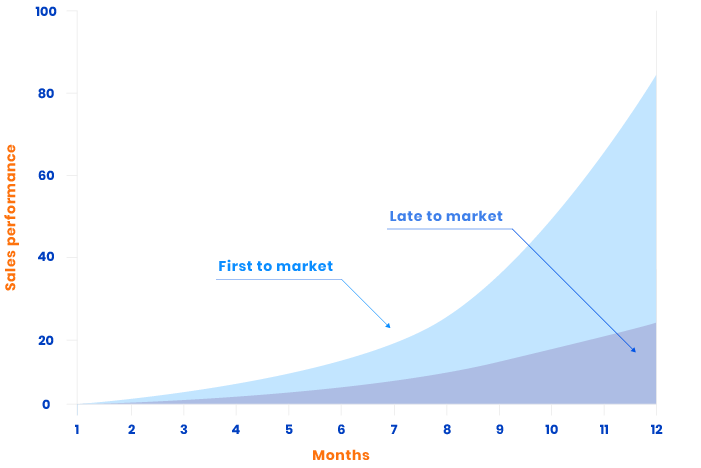
Success is often defined by the reduction in regulatory approval cycles. To calculate this, compare the average time a firm spends in the sandbox against the historical baseline for obtaining a full license. A successful program should demonstrate a statistically significant decrease in the duration of the 'go-to-market' phase without compromising the quality of the final regulatory review.
Consumer protection and risk mitigation data
Effective monitoring involves tracking incident rates, such as the number of complaints filed, the volume of erroneous transactions, and the speed of remediation. By comparing these incident rates against industry benchmarks for traditional firms, regulators can determine if the regulatory sandbox impact on consumer protection is positive or if it inadvertently exposes users to higher risks.
Operational cost-benefit analysis
Regulators should also track the cost of oversight per participant. By calculating the administrative hours spent on supervision versus the capital raised by the startup, authorities can determine if the sandbox is resource-efficient. A high-performing sandbox typically sees a decline in per-firm supervision costs as the regulator develops standardized testing protocols and automated reporting templates.
Benchmarking against international standards
To ensure global competitiveness, regulators often compare their sandbox outcomes against frameworks like the Global Financial Innovation Network (GFIN) cross-border regulatory sandboxes explained. By analyzing how many firms successfully transition from a sandbox to a full license in other jurisdictions, regulators can identify if their local requirements are overly restrictive or insufficiently rigorous compared to international peers.
Data-driven exit criteria
A critical component of measuring the success of a regulatory sandbox is the clarity of exit criteria. Regulators should track the percentage of firms that successfully graduate to full authorization versus those that pivot or cease operations. High graduation rates suggest the sandbox is effectively preparing firms for the rigors of the broader market, whereas high failure rates post-sandbox may indicate that the testing environment was not sufficiently representative of real-world regulatory pressures.
Practical implementation of feedback loops
To truly measure success, regulators must implement structured feedback loops. This involves conducting post-sandbox interviews with participants to identify specific regulatory friction points. For instance, if 70% of participants cite 'KYC (Know Your Customer) onboarding requirements' as a primary barrier to testing, the regulator can use this data to propose targeted legislative adjustments. This qualitative data serves as a leading indicator for future policy shifts.
Qualitative assessment of policy learning and regulatory agility
The value of a sandbox extends to the regulator itself. By observing how startups navigate new business models, policymakers gain insights that inform future legislation. Success here is measured by the frequency with which regulatory sandboxes and innovation frameworks lead to concrete updates in regulatory guidance or the creation of new, more inclusive licensing categories.
Decision matrix for choosing between sandbox and pilot programs
Regulators must evaluate market maturity before launching a program. A sandbox is ideal for testing novel technologies where the legal framework is ambiguous, while a pilot program is better suited for established firms testing incremental product changes within a known regulatory boundary.
| Criterion | Regulatory Sandbox | Pilot Program |
|---|---|---|
| Legal Certainty | Low (Experimental) | High (Defined) |
| Market Maturity | Emerging/Disruptive | Established/Incremental |
| Primary Goal | Policy Learning | Operational Validation |
Limitations of sandbox performance reporting
Over-reliance on quantitative metrics can lead to selection bias, where only the most successful or well-funded startups are highlighted, masking the failure rates of others. Furthermore, aggregate data may fail to capture the long-term systemic risks that only emerge once a product scales beyond the sandbox environment. Regulators should treat sandbox performance as a subset of broader market health indicators rather than a definitive measure of policy success.
Frequently Asked Questions
Definition of a regulatory sandbox in fintech
A regulatory sandbox is a controlled environment that allows startups and financial institutions to test innovative products, services, or business models under the oversight of a regulator with relaxed or modified compliance requirements.
Typical duration of a regulatory sandbox program
Most sandbox testing periods last between 6 to 24 months, depending on the complexity of the innovation and the specific requirements set by the regulatory authority.
Legal status of regulatory sandbox participation
While the sandbox provides a temporary waiver or modification of certain rules, the participants must still adhere to the specific terms and conditions set by the regulator, which are binding for the duration of the test.
Legal counsel requirements for sandbox entry
While not strictly mandatory, legal counsel is highly recommended to help navigate the application process, interpret the specific regulatory waivers provided, and ensure regulatory compliance for phishing prevention and operational constraints.
Outcomes for startups failing in a regulatory sandbox
If a startup fails, the regulator typically requires an orderly wind-down of operations to protect consumers. The data gathered during the failed test is then used by the regulator to understand the risks associated with that specific business model.

