
.webp)
.png)
Operational cost drivers in modern delivery models: devops vs sre: key differences
The core distinction between DevOps and SRE lies in their financial allocation: DevOps focuses on accelerating the software development lifecycle (SDLC), while SRE prioritizes the long-term cost of system availability. Evaluating devops vs sre: key differences requires looking at how these models consume budget—one through continuous integration infrastructure and the other through specialized engineering headcount.
DevOps investment in developer velocity
DevOps initiatives primarily drive costs through the acquisition and maintenance of CI/CD pipelines. Organizations invest heavily in tools like GitHub Actions, GitLab CI, or Jenkins to reduce the time from commit to production. The financial burden here is often front-loaded, involving:
- Tooling licensing: Subscription fees for automated testing suites, security scanning (SAST/DAST), and cloud-native deployment orchestration.
- Cross-functional training: The cost of upskilling developers to manage infrastructure-as-code (IaC) using tools like Terraform or Pulumi.
- Context switching: The hidden expense of developer time spent managing deployment configurations rather than writing feature code.
The goal is to maximize throughput. If a team spends $50,000 annually on CI/CD tooling but reduces lead time for changes by 30%, the ROI is measured in faster market entry and increased feature delivery frequency.
SRE investment in reliability engineering
SRE shifts the focus from velocity to the financial impact of downtime. This model treats reliability as a product feature, requiring a distinct set of expenditures. The primary costs include:
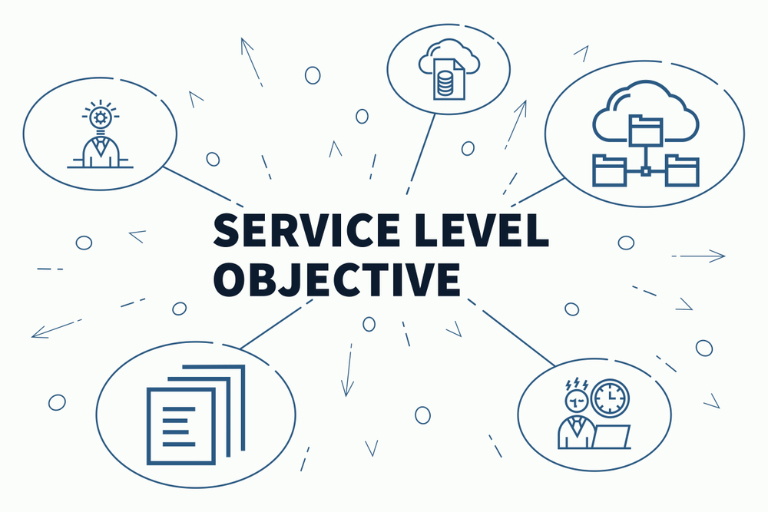
- Error budget management: The cost of implementing observability platforms like Datadog, New Relic, or Honeycomb to track Service Level Objectives (SLOs) in real-time.
- Specialized incident response: SRE roles typically command higher salaries than standard DevOps engineers due to the requirement for deep systems architecture knowledge and on-call expertise.
- Automation of toil: Investment in engineering time specifically dedicated to building self-healing systems, which reduces the long-term operational expense of manual human intervention during outages.
While DevOps spends to move faster, SRE spends to ensure that speed does not result in catastrophic financial loss from service disruptions. The financial trade-off involves accepting higher upfront engineering costs to minimize the variable costs associated with incident remediation and customer churn.
Quantifying ROI through service level objectives
Service Level Objectives (SLOs) serve as the primary financial bridge between DevOps and SRE. While DevOps focuses on the velocity of delivery, SRE uses SLOs to quantify the acceptable risk of failure.
By setting a target reliability percentage—such as 99.9%—SRE teams create a budget for error. This budget is not just a technical metric; it is a financial instrument that dictates how much time developers can spend on new features versus infrastructure stability.
Cost of downtime versus cost of feature deployment
Financial evaluation requires balancing the revenue loss from system outages against the opportunity cost of delayed product launches. DevOps teams typically prioritize feature deployment to maximize market share, assuming that rapid iteration provides a competitive advantage. However, if the cost of downtime exceeds the revenue generated by new features, the DevOps approach becomes a liability.
SRE provides a framework to calculate this trade-off using the following variables:
- Cost of Downtime (CoD): Calculated as (Revenue per minute) × (Duration of outage) + (Customer churn impact).
- Cost of Deployment (CoD-D): Calculated as (Developer salary per hour) × (Time spent on deployment) + (Cost of infrastructure overhead).
When evaluating devops vs sre: key differences, the core distinction lies in how these costs are managed. In a pure DevOps model, the pressure to ship often leads to "technical debt," where the hidden cost of future outages is ignored to meet immediate quarterly goals.
SRE mitigates this by enforcing an error budget. If the team exhausts their error budget due to frequent outages, the SRE team halts new feature deployments. This forces a shift in resources toward reliability engineering. This mechanism ensures that the organization does not sacrifice long-term customer retention for short-term feature velocity, providing a clearer view of the actual cost-to-revenue ratio of the software lifecycle.
Resource allocation and headcount efficiency
Financial planning for infrastructure teams requires balancing immediate labor costs against the long-term expense of system downtime. When evaluating devops vs sre: key differences, the primary financial lever is how each model utilizes specialized talent versus cross-functional developer time.
Scaling with DevOps automation through developer-led operations
The DevOps model focuses on shifting operational responsibilities to product engineers. By investing in CI/CD pipelines and infrastructure-as-code (IaC) tools like Terraform or Pulumi, organizations can reduce the need for a dedicated operations team.
This approach optimizes headcount by keeping the ratio of developers to operations staff high. Financially, this minimizes the payroll burden associated with hiring niche systems engineers. However, the hidden cost lies in the 'context switching' tax; when developers spend 20-30% of their sprint capacity on operational tasks, feature velocity often slows. Organizations must track the opportunity cost of lost product development time against the savings of a leaner infrastructure team.
Scaling with SRE specialized roles and stability trade-offs
Site Reliability Engineering (SRE) introduces a dedicated layer of specialized staff focused on reliability, latency, and error budgets. While SREs command higher market salaries—often 15-20% above standard DevOps engineers due to their specific focus on distributed systems and incident response—they provide a clear financial return through risk mitigation.
By defining Service Level Objectives (SLOs) and error budgets, SREs prevent over-engineering. They stop developers from chasing 'five nines' of availability when the business only requires 99.9%. This prevents wasted engineering hours on unnecessary reliability features. For high-scale platforms, the cost of an SRE team is often offset by the reduction in revenue loss during outages and the decreased need for reactive, 'all-hands-on-deck' incident responses that burn out junior staff.

Strategic decision matrix for budget owners
Choosing between DevOps and SRE requires balancing the cost of operational overhead against the financial risk of downtime. DevOps emphasizes velocity, reducing the headcount needed for specialized infrastructure roles by embedding operations tasks into the development lifecycle. SRE introduces a dedicated engineering layer that prioritizes error budgets and automated reliability, which carries a higher upfront salary burden but lowers long-term incident response costs.
Model selection criteria for early-stage startups
For startups, DevOps provides superior ROI because the primary objective is product-market fit rather than five-nines availability. Hiring a dedicated SRE team early often leads to premature optimization, where expensive engineering hours are spent building complex automation for a platform that is still pivoting.
By utilizing DevOps practices, startups can leverage cloud-native managed services—such as AWS Fargate or Google Cloud Run—to outsource infrastructure management. This approach keeps headcount lean and allows developers to maintain the stack, ensuring that every dollar of payroll is directed toward feature development and customer acquisition.
Transitioning to SRE for enterprise scale
The inflection point for adopting SRE occurs when the financial impact of a single service outage exceeds the cost of a dedicated reliability team. Enterprises should evaluate this transition when their incident response costs, including lost revenue, SLA penalties, and developer burnout, consistently outweigh the salary premiums of SREs.

SRE models introduce the concept of an error budget, which acts as a financial regulator for development velocity. When the error budget is exhausted, feature releases are halted to prioritize stability. This mechanism prevents the compounding technical debt that often plagues large-scale organizations, effectively shifting the budget from reactive firefighting to proactive system hardening. Organizations reaching this stage should prioritize hiring SREs who possess deep expertise in observability tools like Datadog or Prometheus, as the ability to quantify reliability metrics is essential for justifying the shift in resource allocation. As the industry evolves, leaders are also questioning if can devops engineer be replaced by ai, a trend that could further reshape these operational budgets.
Frequently Asked Questions
Cost structure distinctions between DevOps and SRE
DevOps typically shifts costs toward cross-functional developer salaries and tooling for continuous delivery, while SRE requires a higher concentration of specialized engineering talent focused on reliability metrics and error budgets. For those interested in the broader digital landscape, understanding key innovations metaverse can also provide context on how infrastructure demands are shifting.
ROI performance comparison for scaling teams
DevOps often yields higher ROI for early-stage teams needing rapid feature velocity. SRE provides better ROI for mature systems where downtime costs exceed the expense of maintaining dedicated reliability engineering headcount. Always remember that for any modern digital asset, a clear token utility key is essential for long-term project viability.

