
.webp)
.png)

Market saturation and the shift toward specialized infrastructure roles
The entry-level market for generalist DevOps roles is currently saturated, leading to stagnant salary growth for those focused solely on basic CI/CD pipeline maintenance. While the demand for infrastructure automation remains high, companies are no longer paying a premium for engineers who only manage Jenkins files or basic cloud provisioning.
To command a higher devops engineer salary and growth potential in 2026, professionals must transition from reactive pipeline support to proactive infrastructure product development. For those looking to understand the broader financial landscape of specialized tech roles, comparing these to web3 marketing salaries can provide interesting benchmarks on how niche expertise drives compensation.
Distinguishing between platform engineering and traditional DevOps
The salary gap between a traditional DevOps engineer and a Platform Engineer is widening, often by 15% to 25% in major tech hubs. Traditional DevOps roles frequently center on the operational maintenance of existing tools—fixing broken builds, managing permissions, and responding to deployment alerts. This work is increasingly being commoditized by managed services like GitHub Actions, AWS CodePipeline, and automated infrastructure-as-code (IaC) scanners.
Platform Engineering, by contrast, treats the internal developer platform (IDP) as a product. A Platform Engineer focuses on building self-service abstractions that allow developers to deploy their own code without needing to understand the underlying Kubernetes manifests or Terraform modules. Companies are willing to pay significantly more for this skill set because it directly impacts developer velocity and reduces the cognitive load on engineering teams.
If your daily tasks involve writing custom operators, building internal developer portals using tools like Backstage, or optimizing cloud cost governance at scale, you are operating in the high-growth segment of the market. Those still tethered to manual environment configuration or ticket-based infrastructure requests are seeing their leverage in salary negotiations diminish as organizations prioritize automated, self-service infrastructure architectures.
Regional variance in devops engineer salary and growth potential
Geography remains the most significant factor in compensation, even as global connectivity increases. In 2026, a DevOps engineer in the San Francisco Bay Area or New York City can expect a base salary ranging from $160,000 to $210,000, whereas roles in emerging tech hubs like Austin or Raleigh typically settle between $130,000 and $165,000. Outside the United States, markets like Berlin, London, and Bangalore operate on entirely different scales, often influenced by local tax structures, cost of living adjustments, and the specific density of cloud-native enterprises.
Growth potential is similarly tethered to regional demand. Engineers in regions with high concentrations of Fortune 500 headquarters often see faster salary progression because companies compete for talent to support massive legacy-to-cloud migrations. In contrast, regions dominated by early-stage startups may offer lower base salaries but provide higher equity stakes, which introduces significant volatility into your total compensation package.
Impact of remote-first hiring on localized salary bands
The shift toward remote-first hiring has not created a universal global salary floor. Instead, it has bifurcated the market into two distinct tiers. Top-tier organizations—typically those with global operations—have moved toward "location-agnostic" pay scales, often anchoring salaries to high-cost-of-living hubs regardless of where the engineer resides. This has effectively raised the floor for experienced talent, allowing senior DevOps engineers to command premium rates while living in lower-cost regions.
Conversely, for junior and mid-level roles, remote work has introduced a "race to the bottom" in specific sectors. Companies hiring for non-critical infrastructure roles are increasingly sourcing talent from regions where the local market rate is significantly lower than the global average. This creates a competitive disadvantage for junior engineers in high-cost cities who must compete against global talent pools that accept lower absolute dollar amounts.
While remote work provides flexibility, it requires engineers to be more strategic about their niche. Specializing in high-demand areas like FinOps, Kubernetes security, or multi-cloud architecture is now essential to maintaining leverage against the downward pressure on entry-level remote salaries.
Technical skill sets driving compensation premiums
Compensation for DevOps roles in 2026 is no longer tied to general infrastructure management. Instead, salary brackets are determined by a professional's ability to reduce cloud expenditure, harden security posture, and manage complex container orchestration at scale. Engineers who demonstrate proficiency in these specific, high-demand domains consistently command base salaries 20% to 35% higher than those with generalist skill sets.
Kubernetes, FinOps, and security automation as primary salary drivers
The market currently rewards engineers who can bridge the gap between operational efficiency and business profitability. To reach the top tier of the devops engineer salary and growth potential scale, you must master these three pillars:
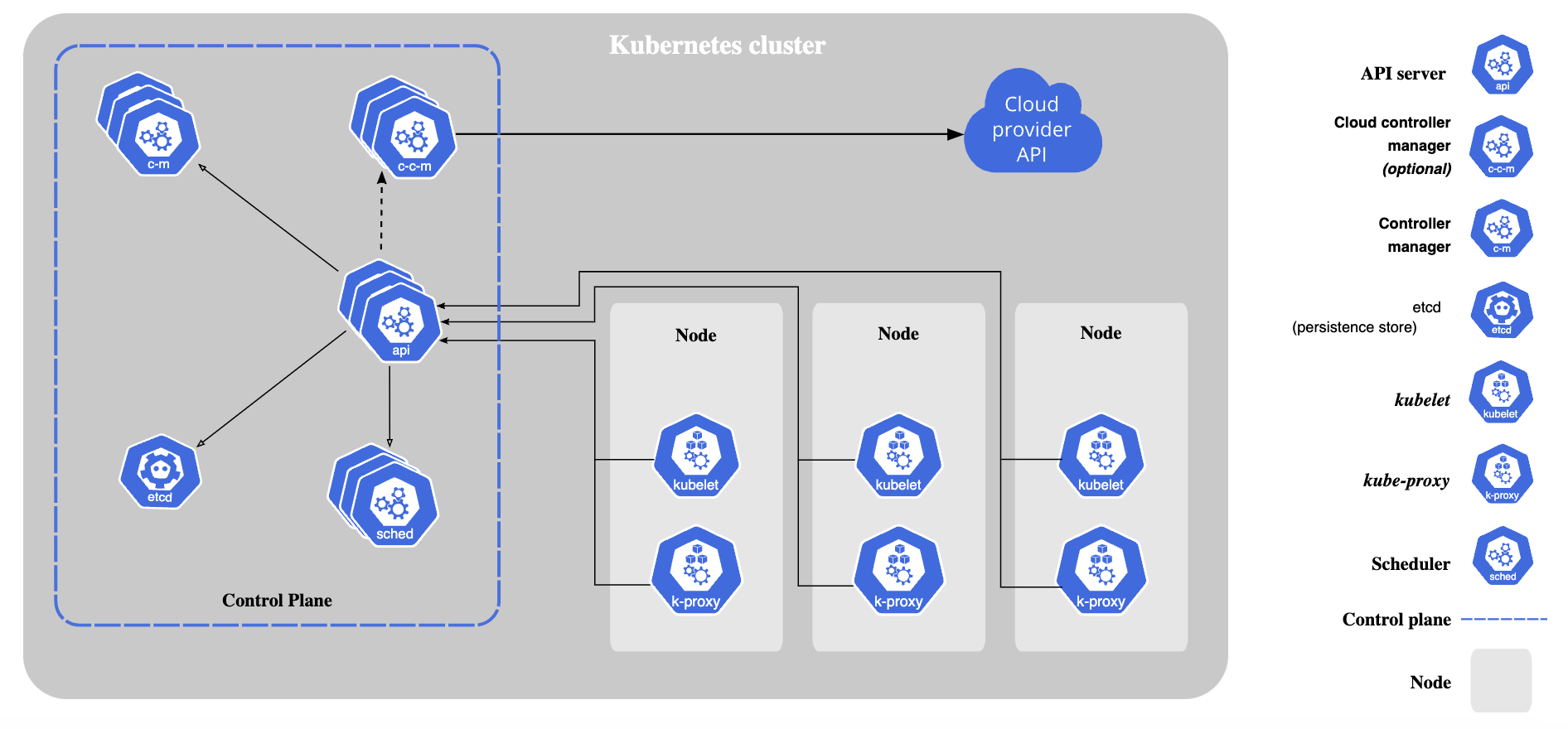
- Kubernetes Orchestration: Beyond basic deployment, companies pay for expertise in custom operator development, service mesh implementation (such as Istio or Linkerd), and multi-cluster management. Senior engineers who can optimize pod resource requests and limits to prevent cluster sprawl are highly sought after.
- FinOps Integration: Organizations are moving away from unchecked cloud spending. Engineers who utilize tools like Kubecost or CloudHealth to provide granular visibility into unit economics—and subsequently implement automated tagging and rightsizing policies—directly impact the bottom line. This makes them indispensable during budget reviews.
- Security Automation (DevSecOps): Integrating security into the CI/CD pipeline is now a baseline requirement. Proficiency in Infrastructure as Code (IaC) scanning (using tools like Checkov or Terrascan), automated vulnerability management, and policy-as-code (using Open Policy Agent) allows an engineer to shift security left, reducing the risk of costly production incidents.
Focusing on these areas transforms your profile from a support-oriented role to a strategic asset. While a standard DevOps engineer might focus on uptime, a high-earning engineer focuses on the intersection of velocity and cost-efficiency. Demonstrating measurable results in these areas—such as reducing cloud spend by a specific percentage or shortening deployment cycles through automated security gates—provides the strongest leverage during salary negotiations.
Career trajectory beyond the individual contributor ceiling
Reaching the senior level as a DevOps engineer often triggers a crossroads: continue refining technical depth or pivot toward organizational oversight. In 2026, the market rewards both paths, provided the professional demonstrates high-level impact on business outcomes rather than just infrastructure uptime.
Strategic necessity of management transitions for salary growth
The traditional assumption that management is the only way to increase compensation is outdated. Staff Engineers and Principal DevOps Architects now command salaries equivalent to, or exceeding, Engineering Managers. Staying as an individual contributor (IC) allows you to focus on complex systemic challenges, such as migrating legacy monoliths to event-driven architectures or implementing global-scale security compliance frameworks. These roles are essential for companies that cannot afford downtime, and they pay a premium for engineers who can solve problems that junior staff cannot.
Transitioning into management, such as becoming a DevOps Manager or Director of Platform Engineering, shifts your value proposition from technical execution to team productivity and strategic alignment. You will be evaluated on your ability to reduce developer cognitive load, optimize cloud spend across the organization, and mentor talent. If you enjoy building processes and navigating cross-departmental politics, this path offers a higher ceiling for total compensation, often including significant equity packages and performance-based bonuses tied to company-wide efficiency metrics.
The choice depends on your specific strengths. If you find deep satisfaction in debugging a distributed system under pressure, the Staff Engineer track provides a clear path to high earnings without the administrative burden of personnel management. If you prefer influencing the culture of engineering and shaping technical strategy at the executive level, management is the logical progression. Both paths offer robust devops engineer salary and growth potential, provided you remain tethered to the actual business value your technical decisions generate. For those interested in how these organizational strategies apply to broader tech ecosystems, exploring community led growth can offer insights into how technical teams align with user-facing goals.
Hidden risks of the current DevOps labor market
While the demand for cloud-native expertise remains high, the ceiling for compensation is shifting. Companies are moving away from hiring generalists to manage manual server provisioning, favoring instead those who can architect complex, self-healing systems. Relying solely on basic CI/CD pipeline maintenance is no longer a path to high-tier compensation, as these tasks are increasingly commoditized by managed services.
Automation's role in reducing headcount for routine infrastructure tasks
The integration of AI-driven infrastructure-as-code (IaC) generators and autonomous monitoring tools has fundamentally altered the value proposition of junior engineers. Platforms like AWS Systems Manager, GitHub Copilot for Terraform, and automated Kubernetes scaling (Karpenter) now handle tasks that previously required a dedicated human operator. Consequently, the entry-level market is shrinking for those who only possess basic scripting skills.
This shift forces a re-evaluation of devops engineer salary and growth potential. Organizations now prioritize engineers who can integrate security into the development lifecycle (DevSecOps) and manage multi-cloud financial operations (FinOps). The risk for professionals is clear: if your daily routine involves manually updating YAML files or troubleshooting routine deployment failures, your role is susceptible to automation-led consolidation.
To maintain a competitive edge, engineers must pivot toward high-level system design, cost-optimization strategies, and complex distributed systems architecture. The market is rewarding those who treat infrastructure as a software product rather than a maintenance chore, effectively raising the barrier to entry for high-paying roles while simultaneously reducing the demand for traditional, task-based DevOps support. For those looking to scale their impact, understanding building effective growth frameworks can be a differentiator when moving into senior architectural roles.
Frequently Asked Questions
Current demand trends for DevOps engineers in 2026
Demand remains steady but has shifted. Companies are moving away from generalist DevOps roles toward specialized Platform Engineering and Site Reliability Engineering (SRE) positions that focus on developer experience and AI-integrated pipelines.
Primary factors influencing devops engineer salary
The primary drivers are proficiency in cloud-native architecture (AWS/GCP/Azure), experience with Infrastructure as Code (Terraform/Pulumi), and the ability to implement security-first practices (DevSecOps) within CI/CD workflows.

