
.webp)
.png)
Core operational divergence in infrastructure management: devops vs cloud engineer: are they the same
While often conflated in job descriptions, DevOps and cloud engineering represent distinct functional domains. A cloud engineer operates as an infrastructure architect focused on the underlying platform, whereas a DevOps engineer acts as a bridge between software development and operations to optimize the delivery lifecycle.
The primary focus of a cloud engineer
Cloud engineers prioritize the stability, scalability, and financial efficiency of the cloud environment. Their daily work involves configuring Virtual Private Clouds (VPCs), managing identity and access management (IAM) policies, and selecting appropriate cloud-native services like AWS RDS, Azure SQL, or Google Cloud Spanner.
They are responsible for infrastructure-as-code (IaC) implementation using tools like Terraform or Pulumi to ensure environment consistency. A critical aspect of this role is cost optimization—monitoring cloud spend through dashboards like AWS Cost Explorer or Azure Cost Management to prevent budget overruns while maintaining high availability through load balancing and auto-scaling groups.
The primary focus of a DevOps engineer
DevOps engineers concentrate on the velocity and reliability of the software delivery pipeline. Their primary objective is to remove friction between writing code and deploying it to production. This involves building and maintaining CI/CD pipelines using tools such as Jenkins, GitHub Actions, or GitLab CI to automate testing, security scanning, and deployment processes.
Beyond automation, they focus on developer experience (DevEx) by providing self-service tools that allow developers to provision resources without manual intervention. They also emphasize observability, implementing monitoring stacks like Prometheus and Grafana or ELK (Elasticsearch, Logstash, Kibana) to ensure that when deployments occur, the system remains stable and performance metrics are transparent. While a cloud engineer builds the foundation, the DevOps engineer builds the factory that produces the software running on that foundation.

Diagnostic markers for role overlap
While both roles operate within the cloud ecosystem, their primary objectives diverge at the point of infrastructure versus process. A cloud engineer typically focuses on the stability, security, and scalability of the environment itself, whereas a DevOps engineer focuses on the velocity and reliability of the code delivery lifecycle. Understanding these operational boundaries prevents resource misalignment during team scaling.
Indicators of a cloud-focused mandate
If a role is primarily concerned with the underlying architecture and resource governance, it leans toward cloud engineering. You will notice these specific tasks in the daily workflow:
- Configuring VPC peering and transit gateways to ensure secure network communication between isolated environments.
- Managing granular IAM policy structures to enforce the principle of least privilege across cloud resources.
- Designing multi-region failover strategies and disaster recovery plans to meet strict RTO and RPO targets.
- Optimizing cloud spend through resource tagging, reserved instance management, and right-sizing underutilized compute instances.
- Provisioning foundational infrastructure using IaC tools like Terraform or AWS CloudFormation.
Indicators of a DevOps-focused mandate
A DevOps-focused role prioritizes the bridge between development and operations. The mandate here shifts toward automation, integration, and performance feedback loops. Look for these specific responsibilities:
- Maintaining and optimizing CI/CD pipelines in platforms like Jenkins, GitLab CI, or GitHub Actions to reduce build times.
- Managing container orchestration layers, specifically Kubernetes clusters, including node scaling and ingress controller configuration.
- Implementing observability stacks using tools like Prometheus, Grafana, or Datadog to track application-level latency and error rates.
- Standardizing development environments through Docker-based workflows to eliminate the "it works on my machine" phenomenon.
- Facilitating blameless post-mortems and automating incident response workflows to improve system reliability.
The confusion regarding devops vs cloud engineer: are they the same often stems from the fact that both roles utilize identical toolsets. However, the cloud engineer asks, "Is the infrastructure secure and cost-efficient?" while the DevOps engineer asks, "Is the deployment process fast and the application observable?"
Technical skill set requirements for modern infrastructure
While both roles operate within the cloud ecosystem, their daily technical responsibilities diverge based on whether the primary objective is infrastructure stability or deployment velocity. A Cloud Engineer focuses on the underlying environment, while a DevOps Engineer prioritizes the pipeline that moves code through that environment.
Tooling stacks for cloud architecture
Cloud Engineers spend the majority of their time defining the environment's blueprint. They rely heavily on Infrastructure as Code (IaC) to ensure environments are reproducible and scalable. Terraform is the industry standard for multi-cloud deployments, while AWS CloudFormation or Azure Bicep are preferred for deep integration within a single provider's ecosystem.
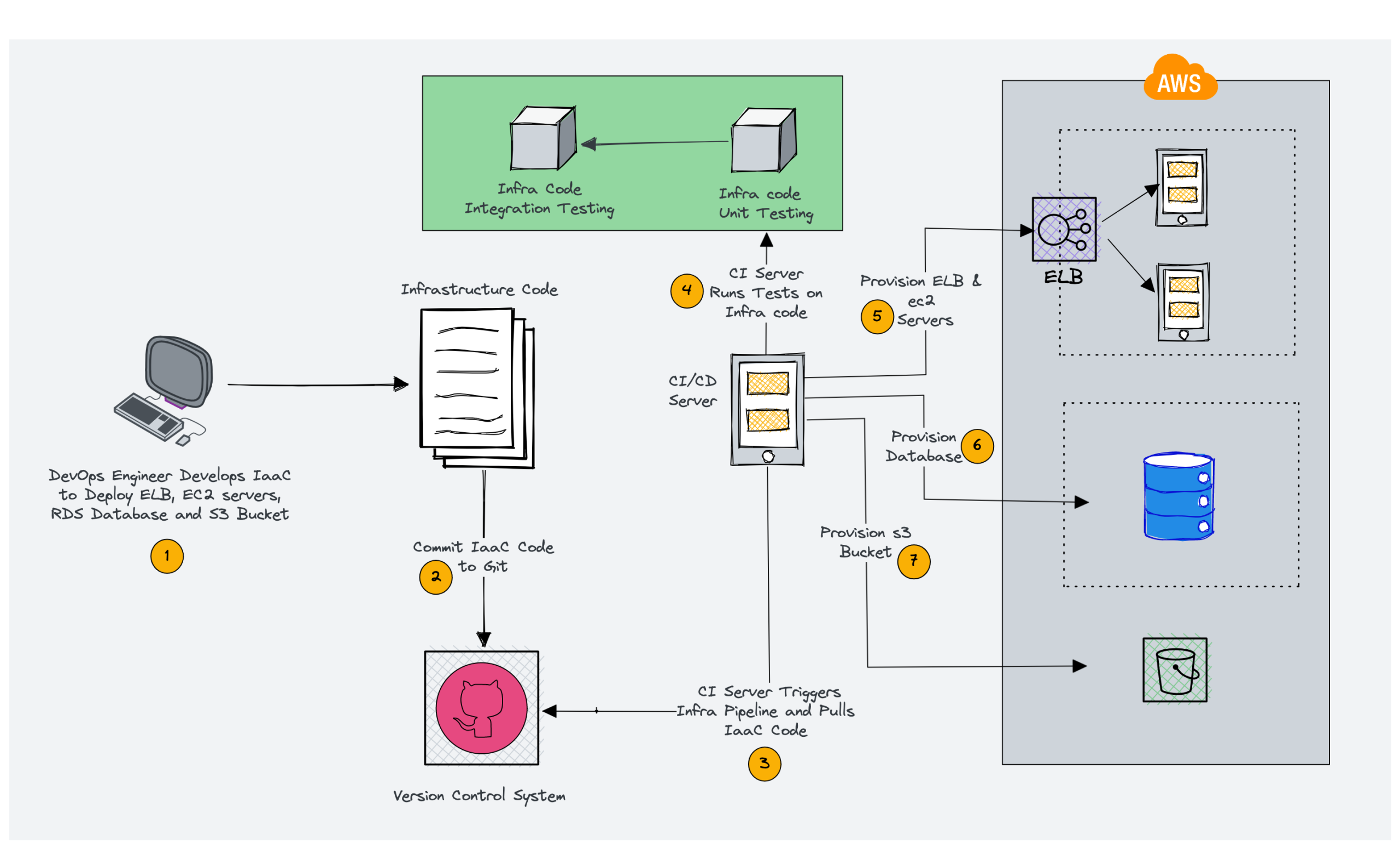
Beyond provisioning, these engineers must master cost management tools such as AWS Cost Explorer or CloudHealth by VMware. These utilities are essential for tagging resources, identifying idle instances, and enforcing budget alerts to prevent cloud sprawl, which is a critical responsibility for those managing the financial footprint of a cloud estate.
Tooling stacks for software delivery
DevOps Engineers focus on the lifecycle of the application itself. Their stack is centered around containerization and orchestration. Proficiency in Docker is mandatory for packaging applications, while Kubernetes serves as the primary engine for managing those containers at scale. To simplify complex deployments, DevOps Engineers use Helm charts to package and version-control Kubernetes manifests.
Monitoring is equally vital; they implement observability stacks using Prometheus for metrics collection and Grafana for visualization. Unlike the Cloud Engineer who monitors the health of the virtual network, the DevOps Engineer monitors the health of the application services, often writing custom scripts in Python or Go to automate CI/CD pipeline triggers, handle API integrations between tools, or perform automated testing within Jenkins or GitHub Actions.
Strategic career pathing for infrastructure professionals
Choosing between a DevOps and a cloud engineering track depends on whether you prefer building systemic automation or architecting scalable infrastructure. Cloud engineers typically focus on the 'how' of resource provisioning, managing VPCs, IAM policies, and cost optimization across providers like AWS or GCP. DevOps engineers focus on the 'flow,' bridging the gap between code commits and production deployment through CI/CD pipelines, observability, and incident response.
Evaluating organizational maturity
Company size dictates the fluidity of these roles. In early-stage startups, these titles are often conflated because a single engineer must handle everything from cloud networking to deployment automation. If you are in a small team, expect to wear both hats; your primary goal is to maintain uptime while shipping features rapidly.
As organizations scale, separation becomes necessary for security and efficiency. Larger enterprises often split these functions to enforce strict compliance and specialized oversight:
- Cloud Engineering focus: Dedicated to platform stability, cloud cost management (FinOps), and long-term infrastructure architecture. They ensure the underlying environment is secure and cost-effective.
- DevOps Engineering focus: Embedded within product teams to accelerate delivery cycles. They focus on developer experience (DevEx), pipeline performance, and automated testing integration.
If you are aiming for a senior role, assess the company's maturity level before applying. A firm with a dedicated Platform Engineering team likely needs a Cloud Engineer to handle the underlying substrate, whereas a firm struggling with slow release cycles needs a DevOps Engineer to optimize the software delivery lifecycle. Transitioning between these roles is common, but recognize that cloud engineering requires deeper knowledge of provider-specific APIs and networking, while DevOps requires a deeper understanding of software development practices and orchestration tools like Kubernetes or Terraform.
Ultimately, the most valuable professionals in this space are 'T-shaped'—possessing deep expertise in one area while maintaining a functional understanding of the other. Whether you prioritize the stability of the cloud environment or the velocity of the deployment pipeline, your career growth will depend on your ability to automate the manual tasks that currently bottleneck your specific organization.
Frequently Asked Questions
Significant overlap between DevOps and cloud engineering
Yes, both roles require proficiency in infrastructure-as-code (IaC) tools like Terraform and cloud platforms like AWS or Azure. However, the primary objective of a DevOps engineer is optimizing the software delivery lifecycle, while a cloud engineer prioritizes the design, cost-efficiency, and security of the cloud environment itself. As the industry evolves, many wonder can devops engineer be replaced by ai, though human oversight remains critical for complex systems.
Prioritization criteria for building infrastructure teams
If the primary bottleneck is deployment frequency and developer friction, prioritize a DevOps engineer. If the challenge lies in complex cloud architecture, multi-region scaling, or cloud spend management, a cloud engineer is the more critical hire. For those exploring new infrastructure solutions, some teams are also evaluating a cloud mining platform for specialized compute needs, while others look at how impossible cloud secures data integrity in distributed environments.

