


Integration capabilities with existing identity providers
Implementing best practices for preventing phishing 3.0 and how to protect against it requires seamless synchronization between your security stack and your primary Identity and Access Management (IAM) system. If a solution operates in a silo, it creates manual overhead and visibility gaps that attackers exploit.
Your vendor selection process must prioritize platforms that treat identity as the single source of truth. This ensures that user lifecycle changes—such as onboarding, role changes, or offboarding—are reflected in your phishing protection policies in real-time.
API-first architecture requirements
An API-first approach is non-negotiable for modern security orchestration. During vendor evaluation, verify that the platform supports automated provisioning via SCIM (System for Cross-domain Identity Management) or OIDC (OpenID Connect). These protocols allow your phishing prevention tools to ingest user metadata directly from providers like Okta, Microsoft Entra ID, or Ping Identity.
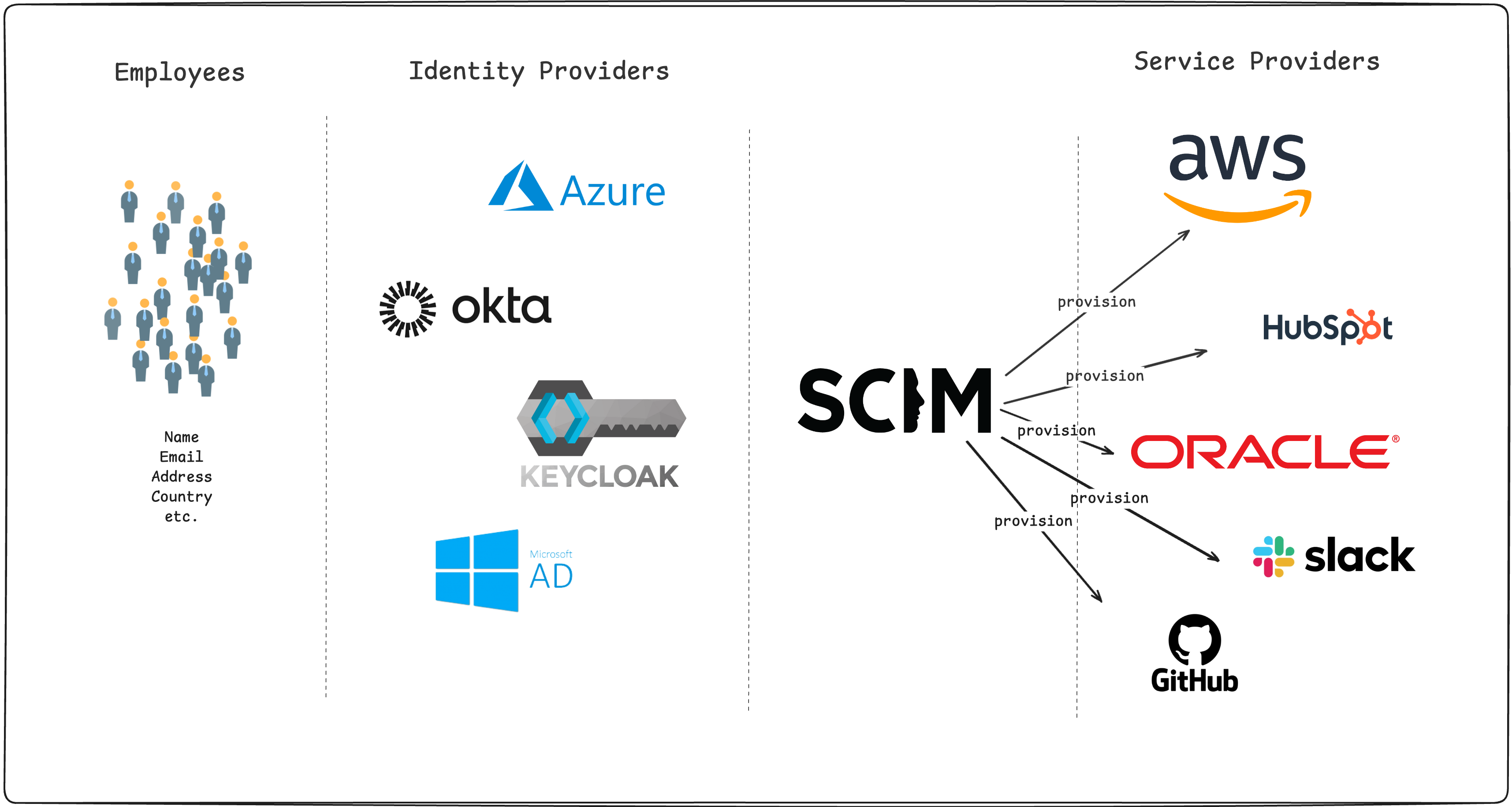
By automating the sync, you ensure that security policies are applied consistently across the organization without manual intervention. Request documentation that explicitly lists supported endpoints for group-based policy assignment and automated user de-provisioning, as these are critical for preventing unauthorized access during employee transitions.
Compatibility with hardware security keys
Phishing 3.0 tactics frequently bypass traditional multi-factor authentication (MFA) like SMS or push notifications. Confirming support for FIDO2 and WebAuthn is essential to eliminate credential-based attack vectors entirely.
A robust vendor must demonstrate native support for hardware security keys, such as YubiKey or Google Titan, within their authentication flow. This integration ensures that even if a user is targeted by a sophisticated adversary-in-the-middle (AiTM) attack, the phishing attempt fails because the hardware key requires physical presence and origin-bound verification.
During your proof-of-concept, test whether the platform enforces FIDO2 as a mandatory requirement for administrative accounts and high-privilege users. This provides a significant hurdle for attackers attempting to escalate privileges through social engineering or session hijacking.
Automated threat detection mechanisms
Modern phishing 3.0 defenses rely on automated systems that move beyond static blocklists. Effective platforms must integrate multi-layered inspection engines that analyze incoming communications at the point of delivery.
This requires a shift from signature-based detection to behavioral analysis, ensuring that zero-day threats are caught before they reach the end-user inbox.
Real-time URL analysis and sandboxing
Phishing 3.0 attackers frequently employ time-delayed redirects, where a link initially points to a benign site and switches to a malicious payload only after passing initial security scans. To counter this, your vendor must utilize dynamic sandboxing that executes the URL in a virtualized environment.
Look for tools that perform recursive crawling, meaning they follow the redirect chain multiple levels deep to identify the final destination. A robust system should also evaluate the reputation of the hosting infrastructure, such as the ASN (Autonomous System Number) and the age of the domain, to flag high-risk indicators before the user clicks.
AI-driven communication pattern profiling
Standard email gateways often fail to detect sophisticated Business Email Compromise (BEC) because the messages lack traditional malicious attachments or links. AI-driven profiling solves this by establishing a baseline of normal communication patterns for every employee.

By analyzing metadata—such as typical send times, common communication partners, and linguistic style—the system can flag anomalies that suggest account takeover or impersonation. For example, if an executive who typically communicates via short, direct sentences suddenly sends a long, urgent request for a wire transfer, the system should automatically quarantine the email.
This profiling must occur in real-time without requiring manual rule creation, as attackers adapt their tactics faster than security teams can update static filters.
Data privacy and regulatory compliance alignment
Selecting a security solution requires verifying that the vendor’s architecture supports your organization’s specific legal obligations. Phishing 3.0 technologies often rely on AI-driven email analysis, which involves processing sensitive communications. You must confirm that the vendor treats this data as confidential and adheres to strict data minimization principles.
Review the vendor’s SOC 2 Type II report and ISO 27001 certification to ensure their internal controls are audited. A reputable provider will offer a clear Data Processing Agreement (DPA) that outlines how they handle PII (Personally Identifiable Information) extracted from your email environment. Avoid vendors that use your proprietary data to train their global machine learning models without explicit, opt-in consent.

Regional data residency options
Checking if the vendor allows for localized storage to meet regulatory compliance for phishing prevention is critical for compliance. Many phishing 3.0 platforms operate via cloud-native infrastructure, but not all providers offer the flexibility to pin data to specific geographic regions.
If your operations are based in the EU, you must ensure that email metadata and content analysis remain within the EEA to satisfy GDPR requirements regarding cross-border data transfers. During the vendor assessment, request a technical document detailing the physical location of their data centers.
Verify that they support:
- Data residency pinning: The ability to store all processed logs and email snapshots in a specific region (e.g., Frankfurt for EU, Virginia for US).
- Encryption at rest and in transit: Confirm the use of AES-256 for storage and TLS 1.3 for all data moving between your mail server and the security provider.
- Right to erasure: Ensure the platform provides an automated mechanism to purge specific user data upon request, fulfilling the 'Right to be Forgotten' under various privacy frameworks.
If a vendor cannot guarantee that your data stays within your required jurisdiction, they represent a significant compliance risk that outweighs the security benefits of their phishing detection capabilities. Prioritize vendors that offer granular control over data residency as a core feature rather than an expensive add-on.
Operational overhead and maintenance requirements
Phishing 3.0 solutions—which leverage AI-driven behavioral analysis and API-based email integration—often promise set-it-and-forget-it security. However, the reality involves significant ongoing management to ensure these tools do not impede legitimate business communication.
Evaluating a vendor requires a granular look at how much human capital your security operations center (SOC) must dedicate to daily upkeep.
False positive management workflows
Determining the ease of tuning sensitivity levels to prevent business disruption is the most critical factor in your operational assessment. A platform that blocks legitimate invoices or urgent client emails creates immediate friction, forcing security teams to spend hours manually whitelisting domains or adjusting heuristics.
Look for vendors that provide a 'sandbox' mode for new detection rules, allowing your team to observe the impact of a policy change on historical traffic before it goes live. Effective solutions should offer a centralized dashboard where false positives can be resolved with a single click.
When a user reports a legitimate email as a phishing attempt, the system should automatically correlate that sender's reputation across your entire organization to prevent recurring blocks. If the vendor requires you to open a support ticket or edit complex regex strings to adjust sensitivity, the operational overhead will quickly exceed the value of the protection.
Beyond tuning, assess the vendor's update cycle for threat intelligence feeds. Phishing 3.0 relies on real-time data to identify zero-day attacks. If the solution requires manual firmware updates or frequent downtime for maintenance, your coverage gaps will widen.
Prioritize vendors that utilize cloud-native updates, ensuring that your protection mechanisms evolve at the same speed as the threat landscape without requiring manual intervention from your IT staff. Finally, consider the integration burden with your existing stack.
The best tools provide robust APIs that allow for automated incident response. If your team has to pivot between three different consoles to investigate a single alert, the operational cost is too high. Ensure the vendor supports seamless ingestion into your existing SIEM or SOAR platform to maintain a unified security posture.
Performance metrics for best practices for preventing phishing 3.0
Measuring the efficacy of your security stack requires moving beyond simple click-rate statistics. Modern impact of phishing 3.0 on businesses—which leverage AI-driven behavioral analysis and API-based email integration—must be evaluated based on how they handle automated, polymorphic threats that bypass traditional secure email gateways.
Focus your reporting on the reduction of manual intervention and the accuracy of automated quarantine protocols.
Mean time to detect and respond
Establishing benchmarks for how quickly the system identifies and neutralizes threats is the most critical KPI for modern security operations. Traditional gateways often rely on static blacklists, leading to a delay between the emergence of a new phishing campaign and the subsequent update of the filter.
In contrast, Phishing 3.0 solutions utilize machine learning models to analyze communication patterns in real-time. Your goal should be to achieve a Mean Time to Detect (MTTD) of under three minutes for novel, zero-day phishing attempts.
To track this effectively, categorize your metrics into three distinct phases:
- Identification Latency: The time elapsed from the arrival of an email to the moment the AI engine flags it as malicious.
- Remediation Velocity: The time taken for the system to automatically remove the email from all user inboxes across the organization.
- False Positive Ratio: The percentage of legitimate business communications incorrectly flagged as phishing, which should remain below 0.1% to avoid business disruption.
When auditing your vendor, demand transparency regarding their threat intelligence feed latency. A vendor that relies on third-party databases will inherently have a slower response time than one utilizing proprietary, real-time behavioral analysis.
If your current system requires manual triage for more than 5% of flagged emails, your configuration is likely failing to leverage the automated capabilities inherent in 3.0-era security architecture. Regularly stress-test these metrics by running simulated, AI-generated phishing campaigns to ensure your response times remain consistent as attackers evolve their tactics.
Frequently Asked Questions
Distinctions between phishing 3.0 and traditional email security
Phishing 3.0 focuses on post-delivery detection and automated remediation within cloud-native environments, moving away from perimeter-based gateways to API-integrated solutions that analyze internal communication patterns.
Priority technical capabilities for vendor evaluation
Prioritize vendors offering API-based integration with platforms like Microsoft 365 or Google Workspace, real-time natural language processing for intent analysis, and automated incident response workflows that do not require manual intervention.
- Financial framework for managing what is phishing 3.0 and how to protect against it
- Strategic defense priorities for spear phishing vs whaling vs BEC
- Technical audit criteria for assessing the impact of phishing 3.0 on businesses
- Strategic alignment mechanics using the OKR framework for SaaS product teams

