
.webp)
.png)
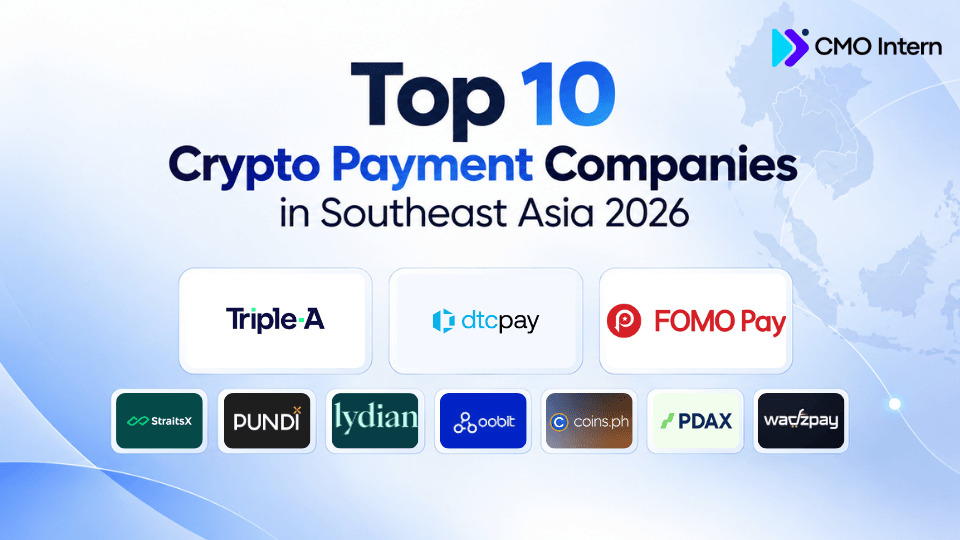
The Top 10 Crypto Payment Companies in Southeast Asia 2026 are transforming regional commerce by enabling stablecoin settlement, merchant checkout, and cross-border payment rails.
These providers allow businesses to accept digital assets while settling in local fiat, effectively bridging the gap between blockchain technology and traditional financial systems.
As companies seek faster, more efficient settlement methods, Southeast Asia has emerged as a critical hub for this infrastructure. Singapore remains a primary center, while markets like the Philippines, Indonesia, and Thailand are rapidly developing their own digital-asset ecosystems. This article explores 10 companies worth watching in 2026 and compares what each brings to the evolving crypto payments landscape.
What Are Crypto Payment Companies?
Crypto payment companies provide infrastructure that allows businesses or consumers to use digital assets as part of a payment transaction. Depending on the provider, this can include merchant checkout, QR payments, payment links, crypto-to-fiat conversion, stablecoin settlement, cross-border transfers, digital wallets, or APIs that connect existing payment systems with blockchain networks.
The category is broader than traditional “crypto payment gateways.” Some providers focus specifically on merchant acceptance, while others operate behind the scenes as payment infrastructure providers. Stablecoins are particularly important because they allow businesses to use blockchain-based settlement without taking the same level of price volatility associated with assets such as Bitcoin or Ether.
In Southeast Asia, this distinction matters. A business may not want to hold cryptocurrency on its balance sheet, but it may still want to let customers pay with USDT or USDC while receiving local currency. That creates demand for infrastructure that can connect wallets, blockchains, compliance systems, banks, and local payment rails.
How We Selected the Top Crypto Payment Companies in Southeast Asia
This list is not intended to represent an official market-share ranking. Instead, the companies were selected based on their relevance to crypto payments and digital-asset infrastructure in Southeast Asia.
The main criteria include:
- Payment functionality: merchant acceptance, checkout, QR payments, payouts, settlement, or payment APIs.
- Stablecoin and digital-asset capabilities: support for stablecoins, crypto assets, or blockchain-based settlement.
- Regional relevance: meaningful operations, partnerships, customers, or infrastructure across Southeast Asian markets.
- Business usability: suitability for merchants, enterprises, fintechs, platforms, or payment providers.
- Regulatory and compliance infrastructure: licensing, KYC/KYB, AML controls, or partnerships with regulated payment institutions.
- Market maturity: established products, partnerships, integrations, or demonstrated payment use cases.
Top 10 Crypto Payment Companies in Southeast Asia 2026
1. Triple-A
Headquarters: Singapore
Best known for: Stablecoin payments, merchant checkout, payouts, and cross-border settlement
Triple-A is one of the clearest examples of a Southeast Asian fintech built specifically around the intersection of digital assets and traditional payments. Founded in Singapore, the company focuses on enabling businesses to send, receive, and convert money through stablecoin-based payment infrastructure.
Its payment products cover several common business use cases, including e-commerce checkout, marketplace payouts, payment requests, and digital-currency payouts. Businesses can accept assets such as USDC and USDT while choosing how they ultimately want to settle their funds. Triple-A also supports Bitcoin and Ethereum for selected payment flows.
One of Triple-A's major strengths is its focus on reducing the operational complexity of crypto payments. Rather than requiring merchants to become crypto specialists, the platform can handle conversion, wallet infrastructure, compliance processes, and settlement. The company is licensed as a Major Payment Institution in Singapore, including authorization for Digital Payment Token services.
Triple-A has also expanded its cross-border capabilities. In 2026, the company integrated with Circle Payments Network to support stablecoin-to-local-currency settlement for use cases such as remittances, payroll, supplier payments, and treasury management.
Why it stands out: Triple-A combines crypto payment functionality with enterprise-oriented payment infrastructure, making it particularly relevant for businesses that want the benefits of stablecoins without managing blockchain operations themselves.
2. dtcpay
Headquarters: Singapore
Best known for: Digital payment services, stablecoin payments, merchant acceptance, and payment infrastructure

dtcpay is another Singapore-based company operating at the intersection of traditional payments and digital assets. Rather than positioning cryptocurrency as a completely separate financial system, the company focuses on connecting digital assets with everyday payment experiences.
Its positioning makes it particularly relevant to businesses looking for a combination of fiat and digital-asset payment capabilities. The broader Southeast Asian blockchain and e-commerce market also identifies dtcpay among the major companies operating in the region's crypto companies in Singapore.
The company's Singapore presence is important because the country has developed one of the region's more structured regulatory environments for digital payment tokens and payment institutions. For businesses evaluating a crypto payment provider, this regulatory context can be just as important as the underlying technology.
Why it stands out: dtcpay focuses on making digital-asset payments feel closer to conventional payment experiences, with Singapore serving as an important base for regional expansion.
3. FOMO Pay
Headquarters: Singapore
Best known for: Merchant payments, digital payment tokens, cross-border payments, and fiat-to-digital-asset connectivity
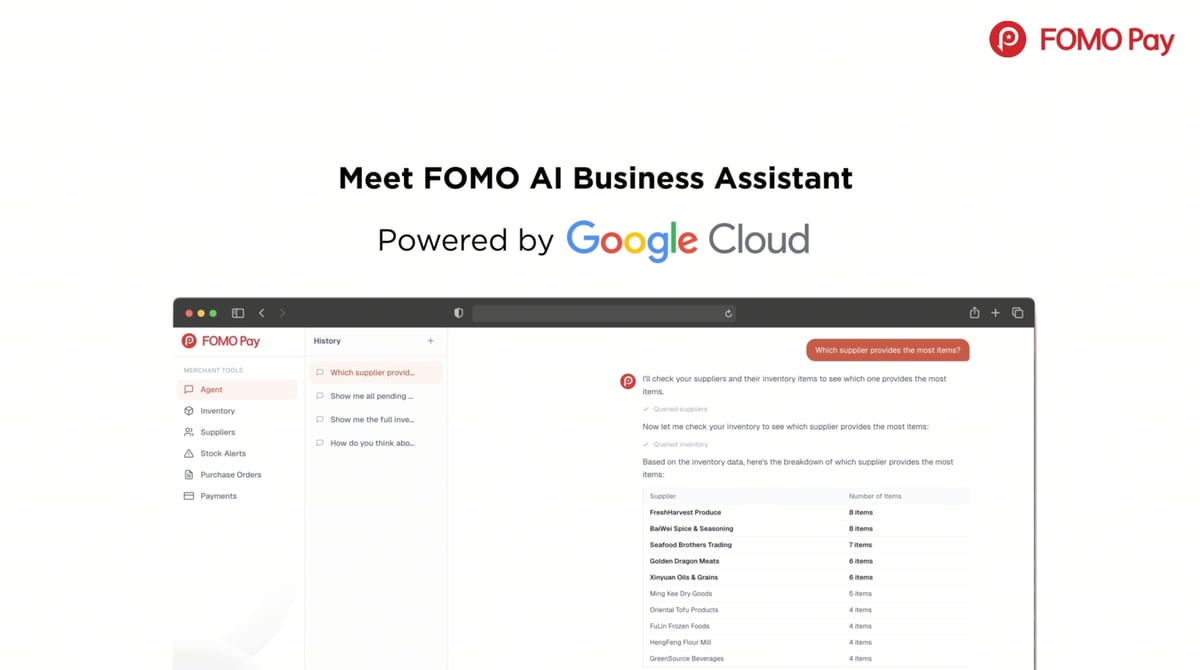
FOMO Pay has been active in Singapore's payment ecosystem since 2015 and has developed a broader payment offering than a traditional crypto gateway. Its services cover merchant acquisition, domestic and cross-border money transfers, digital payment tokens, and other digital payment methods.
For crypto-related payment use cases, FOMO Pay provides digital payment token services and supports assets including BTC, ETH, USDC, and USDT. Its platform can also combine digital-asset payments with more conventional payment methods, allowing businesses to manage multiple payment options through one provider.
This makes FOMO Pay particularly interesting for merchants that do not want to build a crypto-only checkout experience. Instead, digital assets can become another payment option within a broader payment stack.
Why it stands out: FOMO Pay's advantage is its hybrid approach. It connects Web2 payment infrastructure with Web3 and digital-asset capabilities instead of treating crypto payments as an isolated product category.
4. StraitsX
Headquarters: Singapore
Best known for: Stablecoin infrastructure, cross-border payments, settlement, and digital-asset payment rails
StraitsX is one of the most important infrastructure players in Southeast Asia's stablecoin ecosystem. Rather than focusing only on a consumer-facing payment application, the company provides payment infrastructure that businesses and financial institutions can build on.
Its platform supports fiat and stablecoin transactions, cross-border payment infrastructure, APIs, settlement, and stablecoin-backed card programs. StraitsX operates under Major Payment Institution licenses issued by the Monetary Authority of Singapore.
A particularly relevant development has been its work around stablecoin-powered tokenization of real-world assets. StraitsX has provided the infrastructure behind stablecoin scan-to-pay functionality in Singapore, allowing users to pay with USDT or USDC while participating merchants receive Singapore dollars.
This model demonstrates an important direction for crypto payments: the customer can use digital assets while the merchant does not necessarily need to touch crypto at all.
Why it stands out: StraitsX is particularly strong on the infrastructure side, connecting stablecoins with regulated payment rails, merchant settlement, and financial institutions.
5. Pundi X
Headquarters: Singapore
Best known for: Crypto merchant payments, XPOS, payment APIs, and blockchain-enabled retail infrastructure

Pundi X has been one of the more recognizable names in blockchain-based merchant payment infrastructure originating from Southeast Asia. Its XPOS ecosystem was designed to help physical merchants accept digital assets through dedicated payment infrastructure.
The company's current payment offering has expanded beyond physical terminals. Pundi X Pay includes QR-based payments, payment links, and APIs that allow businesses to integrate crypto payments directly into websites and applications. Its payment infrastructure supports assets such as USDC, USDT, BTC, and ETH across supported networks.
This gives Pundi X a slightly different position from companies focused primarily on stablecoin settlement. Its strength lies in connecting blockchain payments with the merchant-facing layer.
The XPOS ecosystem has also been used for real-world events and retail environments, demonstrating how blockchain-based payment infrastructure can move beyond purely online transactions.
Why it stands out: Pundi X has one of the more tangible merchant-payment propositions in the region, combining physical acceptance infrastructure with newer API and QR-based solutions.
6. Lydian
Headquarters: Singapore
Best known for: Digital-asset acceptance, merchant checkout, stablecoin payments, and fiat settlement

Lydian represents a newer generation of crypto payment infrastructure companies focused on making digital assets usable at existing merchants.
Its platform allows businesses to accept stablecoins and cryptocurrencies through online and in-store checkout, APIs, SDKs, and QR-based payment flows. The key proposition is that merchants can receive fiat settlement instead of taking on direct crypto exposure.
Lydian's relevance in Southeast Asia became particularly clear in 2026 through its partnership with Maya in the Philippines. Businesses using Maya Business are being enabled to accept digital-asset payments while receiving settlement in Philippine pesos. The planned payment experience includes QR codes, payment links, and online checkout.
This approach addresses three major barriers to merchant adoption: volatility, custody, and operational complexity.
Why it stands out: Lydian focuses heavily on the “invisible infrastructure” behind crypto payments, allowing merchants to offer digital-asset payment options without fundamentally changing how they manage their businesses.
7. Oobit
Headquarters: Singapore / global operations
Best known for: Crypto spending, stablecoin payments, crypto-to-bank transfers, and local payment integration
Oobit takes a consumer and payment-network-oriented approach to crypto spending. Instead of requiring every merchant to directly integrate cryptocurrency, Oobit connects digital assets to existing payment networks and local payment infrastructure.
Its platform allows users to spend crypto online and in physical stores, while also supporting local payment methods and crypto-to-bank transfers. The company has expanded its regional payment integrations during 2026, including support for QR-based payment ecosystems in Vietnam and the Philippines.
For Southeast Asia, this approach is particularly interesting because local QR payment networks are already deeply embedded in consumer behavior. Oobit's strategy is therefore less about convincing merchants to build a completely new crypto checkout and more about connecting crypto users to payment systems they already understand.
Why it stands out: Oobit demonstrates how crypto payments can be layered onto existing payment networks instead of forcing merchants and consumers to adopt an entirely new checkout infrastructure.
8. Coins.ph
Headquarters: Philippines
Best known for: Crypto wallet, business payments, QR payments, digital-asset infrastructure, and local settlement

Coins.ph is one of the most established digital-asset platforms in the Philippines and has expanded its business offering beyond consumer crypto trading.
Its business platform allows companies to collect payments, make payouts, access crypto and FX services, and integrate payment functionality through APIs. Businesses can accept payments through QR Ph and WebPay while also accessing crypto-related infrastructure.
The company also provides API-based payment collection, payment requests, and Scan & Pay capabilities for businesses in the Philippines.
This makes Coins.ph particularly relevant to companies looking for a combination of conventional Philippine payment rails and digital-asset functionality. Its local market knowledge is another advantage in a country where regulation, e-wallet adoption, remittances, and crypto usage intersect.
Why it stands out: Coins.ph combines local payment infrastructure with crypto capabilities, making it particularly relevant for Philippine businesses that need both sides of the payment equation.
9. PDAX
Headquarters: Philippines
Best known for: Digital-asset trading, local fiat rails, institutional services, and crypto-to-fiat infrastructure

PDAX is better known as a digital-asset exchange than as a pure crypto payment gateway, but its infrastructure makes it relevant to the wider crypto payments ecosystem in Southeast Asia.
The platform provides cryptocurrency trading alongside PHP cash-in and cash-out functionality, giving users a bridge between digital assets and the Philippine financial system. Its institutional offering also makes it relevant to businesses and larger market participants that need access to digital-asset liquidity.
PDAX's role becomes more interesting as stablecoins become part of business settlement. Stablecoins can be used for transfers and payment flows where speed and blockchain-based settlement are useful, while local fiat rails remain necessary for many businesses.
A 2025 Southeast Asian crypto and payments ecosystem report also categorizes PDAX as an institutional-focused platform within the Philippine digital-asset market.
Why it stands out: PDAX is an important example of the infrastructure layer connecting Philippine fiat markets with digital assets, even though its primary proposition is broader than merchant checkout.
10. WadzPay
Headquarters: Singapore
Best known for: Blockchain-based payment infrastructure, digital-asset acceptance, settlement, and B2B solutions
WadzPay is a Singapore-founded blockchain payment technology provider focused primarily on B2B infrastructure. The company has positioned itself around digital-asset transaction processing, merchant acceptance, wallets, settlement, and blockchain-enabled payment infrastructure.
Its model is particularly relevant for financial institutions, payment companies, and businesses that want to incorporate digital assets into existing payment systems without building the entire infrastructure internally.
WadzPay has also maintained a presence across Southeast Asia, including Indonesia, while developing solutions intended to connect digital assets with traditional payment and financial infrastructure.
The company is worth watching because the next stage of crypto payments may depend less on consumer-facing crypto apps and more on infrastructure that quietly powers payment companies, wallets, merchants, and financial institutions.
Why it stands out: WadzPay takes an infrastructure-first approach, focusing on the technology layer behind digital-asset payments rather than competing solely for consumer payment transactions.
Why Southeast Asia Is Becoming a Crypto Payments Hub
The region has several characteristics that make crypto payment infrastructure particularly relevant. Southeast Asia has high mobile-payment adoption, large cross-border commerce flows, significant remittance activity, and a strong Web3 ecosystem. At the same time, businesses operating across borders can face friction from currency conversion, banking cut-off times, settlement delays, and fragmented payment infrastructure.
Stablecoins can potentially address part of this problem by providing a blockchain-based settlement layer that operates continuously. The important shift is that businesses do not necessarily need to become crypto companies to benefit from it.
The emerging model is increasingly straightforward: a customer pays with a digital asset, the payment infrastructure handles blockchain and compliance complexity, and the merchant receives familiar local currency.
That model is visible across several companies in this list. Triple-A focuses on stablecoin-to-local-currency settlement, StraitsX connects stablecoins with payment rails, Lydian is building crypto acceptance with fiat settlement, while Coins.ph connects digital assets with Philippine payment infrastructure.
What to Look for When Choosing a Crypto Payment Provider
Not every crypto payment company is designed for the same use case. A merchant looking for a simple checkout solution may have very different requirements from a fintech building a cross-border payment product.
- Supported Assets and Networks: Check whether the provider supports the stablecoins and blockchain networks your customers actually use. USDT and USDC are common choices, but network availability can vary significantly.
- Fiat Settlement: For many businesses, the ability to receive local currency is more important than simply accepting cryptocurrency. Ask whether the provider can automatically convert crypto into SGD, PHP, THB, VND, or another required currency.
- Integration Options: Businesses should evaluate whether the provider offers APIs, SDKs, hosted checkout pages, payment links, plugins, QR codes, or POS integrations. The right option depends on the company's existing technology stack.
- Compliance and Licensing: Crypto payments operate within different regulatory frameworks across Southeast Asia. A provider's licensing structure, KYC/KYB processes, AML controls, transaction monitoring, and local partnerships should therefore be considered before implementation.
- Settlement Speed: For cross-border payments, settlement speed can be a major advantage. Businesses should understand when funds become available and whether settlement happens on-chain, through local banking rails, or through a combination of both.
The Future of Crypto Payments in Southeast Asia
The next phase of crypto payments in Southeast Asia is unlikely to be defined simply by “paying with Bitcoin.” Instead, the market is moving toward a more sophisticated infrastructure model where stablecoins, local payment networks, wallets, banks, and merchants operate together.
The most interesting development is the growing separation between what the customer pays with and what the merchant receives. A customer may pay using USDT or USDC, while the merchant receives SGD, PHP, or another local currency. Behind the scenes, payment providers manage conversion, compliance, settlement, and blockchain infrastructure.
This could make digital assets much more practical for cross-border commerce, remittances, marketplaces, travel, gaming, SaaS, and international business payments.
For businesses, the question is therefore no longer simply whether customers want to “pay in crypto.” A more useful question is whether blockchain-based settlement can make the existing payment experience faster, cheaper, more global, or easier to reconcile.
That is where the next generation of modernizing B2B payments in Southeast Asia is likely to compete.
Frequently Asked Questions
1. What are the best crypto payment companies in Southeast Asia?
There is no single best provider for every business. Triple-A, dtcpay, FOMO Pay, StraitsX, Pundi X, Lydian, Oobit, Coins.ph, PDAX, and WadzPay each address different parts of the crypto payment ecosystem. Businesses should compare payment acceptance, settlement, supported assets, integration options, licensing, and regional coverage before choosing a provider.
2. Which Southeast Asian country is strongest for crypto payments?
Singapore is one of the region's most important hubs for regulated digital-asset and payment infrastructure. Companies such as Triple-A, dtcpay, FOMO Pay, StraitsX, Pundi X, Lydian, and WadzPay have Singapore connections, while the Philippines has developed a significant ecosystem around digital assets, remittances, wallets, and local payment rails.
3. Are stablecoins used for crypto payments in Southeast Asia?
Yes. Stablecoins such as USDT and USDC are increasingly relevant to payment infrastructure because they can provide blockchain-based settlement while reducing some of the price volatility associated with other cryptocurrencies. Several providers in this list specifically build their payment products around stablecoins.
4. Can merchants accept crypto but receive local currency?
Yes. This is one of the most important models in modern crypto payments. Providers can process a customer's digital-asset payment and settle the merchant in local currency, reducing the merchant's exposure to cryptocurrency price movements. Triple-A, StraitsX, and Lydian are examples of companies supporting this type of infrastructure.
5. Are crypto payments legal in Southeast Asia?
The answer depends on the country and the specific transaction. Digital assets, payment tokens, stablecoins, and cryptocurrency payments are subject to different regulatory frameworks across Southeast Asia. Businesses should verify local requirements and work with appropriately licensed or regulated providers rather than assuming that a crypto payment model is automatically permitted in every market.

