
.webp)
.png)
Economic reality of the cost of AI agents and free options
The financial commitment for AI agents ranges from zero-cost open-source frameworks to enterprise-grade platforms costing thousands per month. Lean teams must balance the immediate cash outlay of proprietary software against the significant engineering hours required to deploy and maintain custom, free-to-use AI agentic workflows.
Direct costs of proprietary agent platforms
Proprietary platforms like Relevance AI or AgentOps typically utilize two primary billing structures: seat-based licensing and token-based consumption. Seat-based pricing often acts as a gateway, charging between $30 and $150 per user monthly for access to a drag-and-drop interface. This model provides predictable budgeting but limits scalability if your team grows rapidly.

Conversely, token-based consumption models—common in platforms leveraging LLM APIs—charge based on the volume of data processed. A lean team might start at $50 per month, but costs can spike to $500+ if the agent performs high-frequency web scraping or complex data analysis.
These platforms include hidden costs in the form of "platform fees" or "markup" on top of the raw LLM API costs. This can add 20% to 50% to your monthly invoice.
Hidden operational overhead of free alternatives
Deploying free, open-source agents using AI agent frameworks like AutoGPT, CrewAI, or LangChain appears cost-effective on the surface. However, the "free" label ignores the substantial engineering investment required to reach production stability. You are not paying a subscription fee, but you are paying for developer salaries to handle infrastructure management, security patching, and error handling.
Consider the following operational requirements for self-hosted agents:
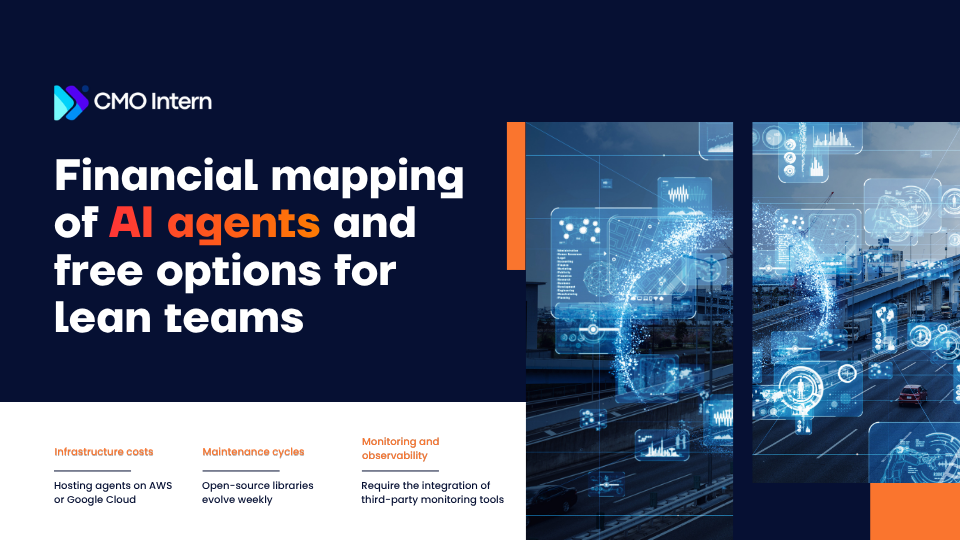
- Infrastructure costs: Hosting agents on AWS or Google Cloud requires GPU-optimized instances, which can cost $200–$600 per month depending on the model size and concurrency needs.
- Maintenance cycles: Open-source libraries evolve weekly. A team member must dedicate 5–10 hours per week just to update dependencies and fix breaking API changes.
- Monitoring and observability: Unlike proprietary tools that offer built-in logs, custom agents require the integration of third-party monitoring tools like LangSmith or Arize Phoenix to track performance and prevent "hallucination loops."
For a lean team, if an engineer earns $80 per hour, spending just 10 hours a month on maintenance effectively costs the company $800. Often, the "free" option is significantly more expensive than a $200 monthly subscription to a managed platform.
Performance benchmarks for free versus paid agentic tools
Free AI agent frameworks often rely on local execution or limited-rate API tiers, which impacts throughput and task completion rates. While paid platforms provide managed infrastructure that ensures consistent uptime and lower latency, free alternatives require significant engineering overhead to maintain stability. Lean teams must weigh the cost of developer time against the subscription fees of enterprise-grade AI agentic suites.
Reliability gaps in open-source LLM agents
Open-source models like Llama 3 or Mistral, when deployed as autonomous agents via frameworks like LangChain or CrewAI, offer high customization but suffer from higher hallucination rates compared to proprietary models like GPT-4o or Claude 3.5 Sonnet. In testing, open-source agents often struggle with complex multi-step reasoning, frequently losing context during long-running tasks.
Error rates in autonomous web-browsing agents can spike when the underlying model fails to parse dynamic DOM structures, leading to broken workflows. Teams opting for free-tier models must implement rigorous validation loops, such as self-correction prompts or human-in-the-loop checkpoints, to mitigate these reliability gaps.
Integration depth in commercial agent suites
Paid platforms such as Microsoft Copilot Studio or specialized agentic SaaS tools provide native, pre-built connectors to enterprise software like Salesforce, SAP, and Slack. These integrations are not merely API wrappers; they include built-in authentication protocols, role-based access control (RBAC), and audit logging that are difficult to replicate in open-source setups.
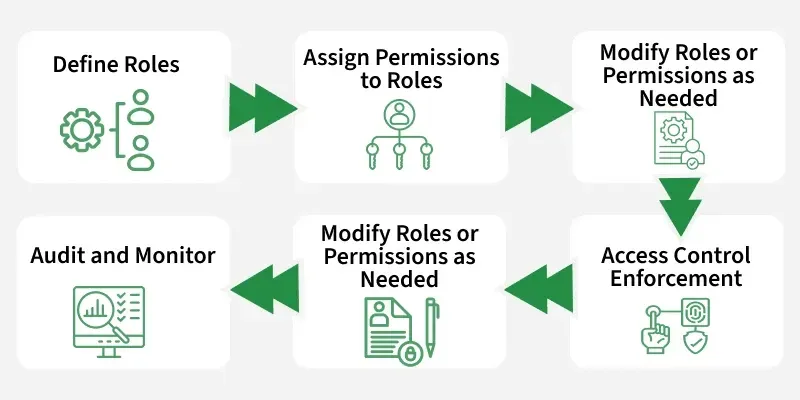
For instance, Microsoft Copilot Studio handles token management and security compliance out of the box, allowing teams to deploy agents that interact with sensitive internal data without building custom middleware. Conversely, using free tools requires developers to manually secure API keys and manage data encryption, which introduces significant security risks if not handled with professional-grade infrastructure.
While the cost of free crypto lawyer cost and free options varies, the primary trade-off is between the upfront licensing expense of commercial suites and the hidden operational cost of maintaining custom-built integrations.
Decision matrix for scaling agentic workflows
Transitioning from free AI tools to enterprise-grade agents requires a shift in how you measure ROI. While free options like Hugging Face spaces or open-source models hosted on local hardware are excellent for prototyping, they often lack the orchestration layer necessary for production-level reliability. A lean team must evaluate whether the time spent debugging self-hosted agents outweighs the subscription cost of a managed platform.
Thresholds for moving beyond free options
The primary indicator that you have outgrown free tools is the "maintenance tax." If your team spends more than five hours per week troubleshooting API rate limits, managing local dependencies, or manually patching security vulnerabilities in open-source libraries, you are losing money. Free options typically lack robust error handling and automated logging.
Once your agentic workflow handles over 500 tasks per day, the probability of a silent failure increases significantly. At this volume, the cost of a managed agent platform—which typically ranges from $50 to $500 per month—is often cheaper than the opportunity cost of an engineer fixing broken scripts.
Risk mitigation in agent deployment
Data privacy remains the most significant barrier to using free or public-tier what are AI agents explained. Most free-to-use models utilize your input data to train their future iterations, which poses a severe risk for proprietary business logic or customer PII (Personally Identifiable Information).
Moving to paid enterprise tiers is not just about features; it is about contractual protection. Enterprise agreements typically include zero-retention policies, SOC 2 compliance, and dedicated VPC (Virtual Private Cloud) hosting. If your agents interact with internal databases or CRM systems, you should avoid free, public-facing endpoints entirely. The cost of a potential data breach far exceeds the monthly licensing fees for enterprise-grade security features, making paid tiers a necessary insurance policy for scaling operations.
Prioritization of high-impact agent use cases
Lean teams must distinguish between tasks requiring high-frequency execution and those demanding high-level reasoning. By categorizing workflows based on their impact on revenue and operational risk, organizations can allocate their limited budget toward the most critical AI infrastructure while utilizing free marketing resources for auxiliary processes.
Automating repetitive data processing
Low-cost and free agents excel in high-volume, low-complexity environments where the primary goal is efficiency rather than creative output. For instance, using open-source frameworks like LangChain or free-tier versions of Zapier and Make, teams can automate data entry, email categorization, and CRM updates without incurring significant overhead.
These agents function best when provided with structured inputs and clear, deterministic rules. Because the cost of how to create an AI agent step-by-step and free options varies significantly, teams should prioritize free agents for tasks where a minor error, such as a mislabeled spreadsheet row, does not compromise the core business model. By offloading these repetitive tasks to free automation agents, staff can focus on high-value strategy.
Complex decision-making requirements
Specialized, paid agents are necessary for high-stakes business logic where accuracy, context-awareness, and multi-step reasoning are non-negotiable. When an agent is responsible for customer-facing communication, financial analysis, or technical AI code review, the cost of a hallucination or a logic error far outweighs the subscription fee of a premium model like GPT-4o or Claude 3.5 Sonnet.
These advanced agents utilize larger context windows and superior reasoning capabilities to handle ambiguity that free, lightweight models often fail to resolve. Investing in paid agents for these specific domains provides access to enterprise-grade security, lower latency, and more robust API integrations. While free options are excellent for internal experimentation, high-stakes operations require the reliability and support structures found only in paid, managed AI agent platforms.
Frequently Asked Questions
Business limitations of free AI agents
Most free AI agents operate on a freemium model. While the base software may be free, costs often emerge through API usage fees, data storage limits, or the requirement for a paid subscription to access advanced features like team collaboration and higher rate limits.
Primary cost drivers when deploying AI agents
The primary cost driver is typically token consumption via API calls. As agents perform more complex tasks or process larger datasets, the cost of the underlying LLM (Large Language Model) usage scales linearly, making usage-based billing the most significant financial factor.

